
Costs vary widely based on your home's size, age, wiring type, and how easy (or hard) it is to access your walls. This guide breaks down realistic pricing ranges, what drives costs up or down, and how Northeast Ohio homeowners can budget for the project.
TL;DR
- Full rewiring averages $3–$5 per sq ft nationally ($6,000–$10,000 for a 2,000 sq ft home)
- Key cost drivers: home size, age, wiring type (knob-and-tube/aluminum), wall material, and panel upgrades
- Newer homes with attic/crawl access cost less; older homes with plaster walls cost more
- Partial rewiring fits isolated problems; full rewiring suits homes with outdated wiring throughout
How Much Does It Cost to Rewire a House? (Pricing Overview)
There's no flat rate for rewiring. Total cost depends on square footage, home age, and how much of the electrical system needs replacing. Homeowners commonly underestimate three things:
- Labor hours: rewiring is labor-intensive, not just a materials purchase
- Permits and inspections: nearly every rewiring job requires them
- Drywall or plaster repair: opening walls means patching them back up
Typical Cost Range
Full-house rewiring generally costs the following by home size:
| Home Size | Estimated Cost Range |
|---|---|
| Small home (up to 1,500 sq ft) | $4,500–$7,500 |
| Medium home (1,500–3,000 sq ft) | $6,000–$15,000 |
| Large home (3,000+ sq ft) | $9,000–$18,000+ |

These ranges typically include labor, wire, and basic outlet installation. They usually exclude panel upgrades, drywall/plaster restoration, and permit fees, so your final bill may run higher.
Partial Rewiring Costs by Room
If you're not ready for a whole-house project, partial rewiring targets specific problem areas:
- Kitchen: $2,000–$8,000 (higher due to GFCI outlets and dedicated appliance circuits)
- Bathroom: roughly $2–$4 per square foot, driven by GFCI requirements
- Garage: $865–$1,440 for a standard 288 sq ft space
- Bedroom: $600–$1,000 for a typical 200 sq ft room
Kitchens and bathrooms cost more per square foot because code requires GFCI protection and often dedicated circuits for appliances. Partial rewiring makes sense when you're solving a specific problem (an underpowered kitchen or a bathroom with no GFCI) rather than replacing an entire home's aging system.

Key Factors That Affect the Cost of Rewiring a House
Pricing depends heavily on your home's physical characteristics and the scope of work required.
Home Size and Layout
More square footage means more wire, more outlets, and more labor hours. Multi-story homes add complexity: running wire vertically between floors takes longer than working on a single level.
Home Age and Existing Wiring Type
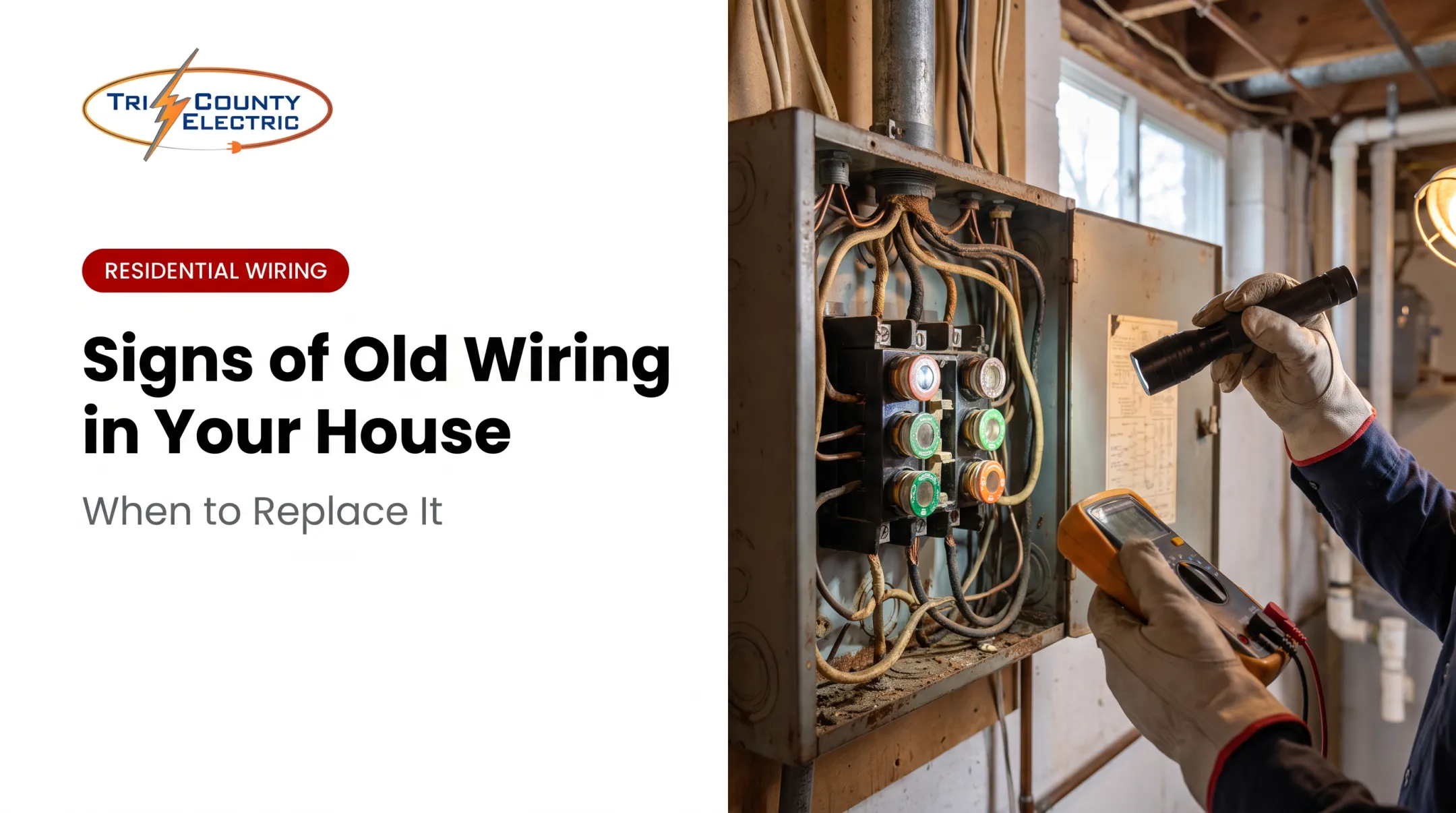
Knob-and-tube and aluminum wiring are the biggest cost drivers you'll encounter in older homes:
- Aluminum wiring was commonly installed between roughly 1965 and 1973 during a copper price spike
- Knob-and-tube systems, dating from the late 1800s through the 1940s, typically lack a grounding conductor
- Both usually require full replacement, which raises project costs compared to updating existing copper
Even older copper wiring can present issues if it lacks grounding or sufficient capacity for modern appliance loads.
Wall Material and Accessibility
Plaster walls are harder to work with than drywall. They're denser, crack more easily, and don't patch as cleanly. Homes with unfinished attics or crawl spaces allow electricians to "fish" wire through existing cavities. Finished walls without that access often require cutting openings.
Electrical Panel Upgrades
Most rewiring projects also require upgrading to 200-amp service to handle modern electrical loads. Installed costs typically run:
- $1,300–$2,000 for a standard installed upgrade
- $1,580–$3,200 depending on whether it's a new install or full replacement
Permits, Inspections, and Labor Rates
Typical add-on costs include:
- Labor: $50–$131 per hour, depending on region and project complexity
- Permits: $250–$900
- Inspections: $150–$250
Additional Circuits, Outlets, and Code Requirements
Modern electrical code sets specific spacing and protection rules:
- No point along a wall can be more than 6 feet from a receptacle (creating the commonly cited "every 12 feet" spacing pattern)
- GFCI protection is required in kitchens and bathrooms
- AFCI protection is required in bedrooms, living areas, and hallways under the 2023 NEC
These requirements mean rewiring often adds more outlets and circuits than your home originally had, which is one reason final costs run higher than many homeowners expect.

Cost Breakdown of Rewiring a House
Total project cost involves more than just the wire itself. These are the cost pieces that usually make up the total.
| Cost Component | Type | Details |
|---|---|---|
| Wiring materials | One-time | NM cable ($0.40–$0.80/ft), THHN/THWN wire ($0.80–$1.60/ft), UF cable ($0.50–$0.75/ft) |
| Labor | One-time | Largest share of the bill—running wire, making connections, and testing circuits |
| Panel upgrade | One-time | $1,300–$3,200 depending on scope |
| Wall opening & restoration | One-time | Can add 20–30% to labor costs |
| Permits & inspections | One-time | $250–$900 permits; $150–$250 inspections |
Materials stay relatively inexpensive next to the skilled hours required on site, which is why labor drives most of the final bill.
Signs Your Home Needs Rewiring & Can It Be Done Without Removing Walls?
These warning signs often mean the wiring is overdue for evaluation:
- Flickering or dimming lights
- Frequently tripped breakers or blown fuses
- Buzzing, sizzling, or cracking sounds from outlets
- Burning smells near switches or receptacles
- Warm or discolored outlet covers
- Two-prong (ungrounded) outlets throughout the house
Homes over 30-40 years old, or those with known knob-and-tube or aluminum wiring, should be evaluated even when these symptoms are absent. As a baseline precaution, get a professional electrical inspection once a home passes the 40-year mark.
Can Rewiring Happen Without Removing Walls?
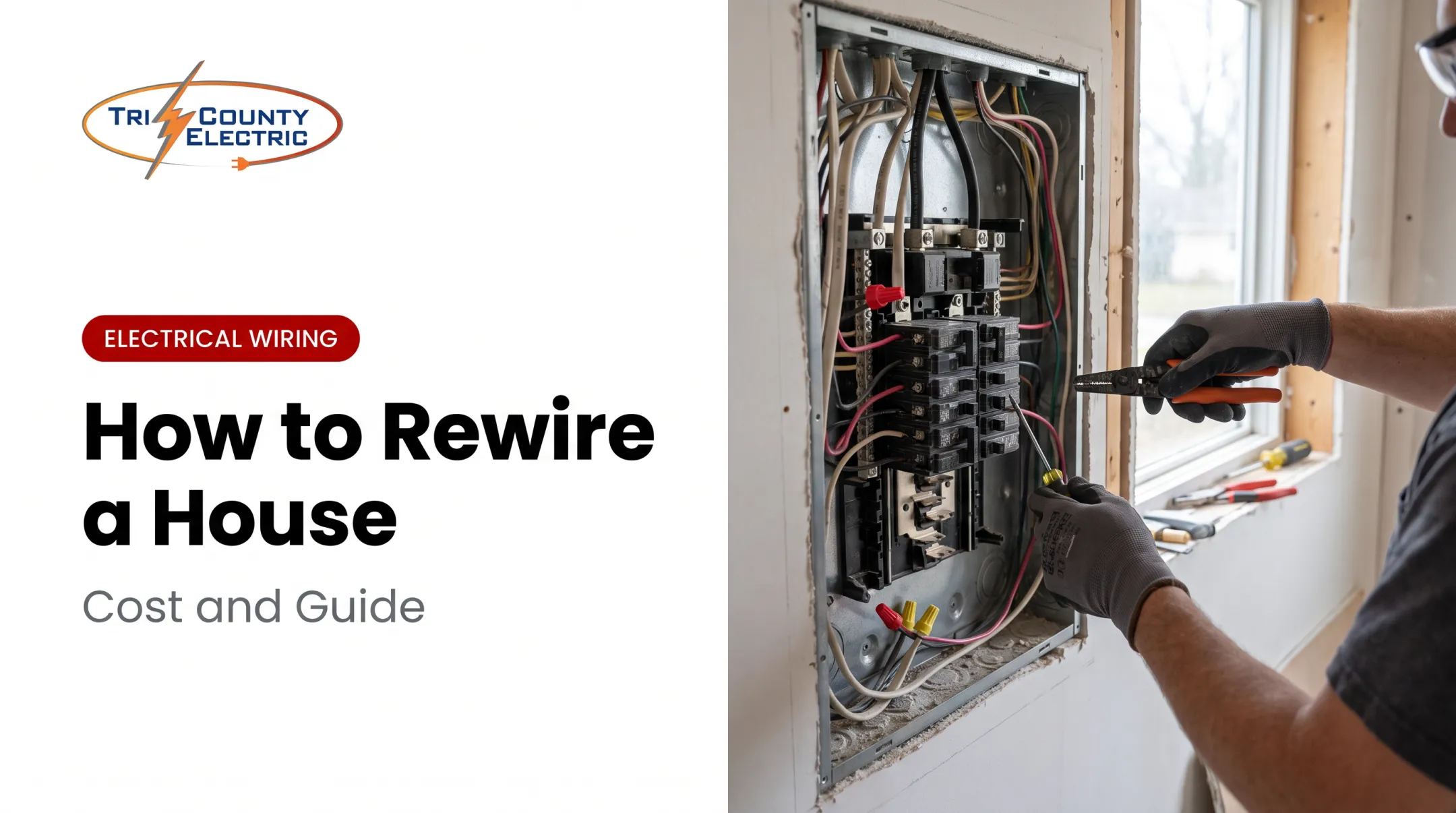
Often, yes, at least partially. Electricians use wire fishing to route new cable through attics, crawl spaces, and existing wall cavities without cutting drywall. How far that goes depends on layout: accessible attics or crawl spaces usually allow fishing with little or no drywall work, while plaster walls and complex multi-story homes more often need some wall openings.

Tri-County Electric Service's licensed electricians assess accessibility before work begins, so you know what wall work, if any, the project will require.
How to Budget for Your Rewiring Project
Rewiring is a major expense, so plan carefully before committing:
- Get at least three itemized quotes from licensed, insured electricians to compare fair market pricing
- Time it with planned renovations. Combining rewiring with a kitchen or bath remodel saves labor since walls are already open
- Ask what's included. Confirm quotes cover permits, inspections, and drywall restoration to avoid surprise costs later
- Explore financing. Larger projects don't have to be paid upfront in full
For financing, Tri-County Services offers access to Hearth financing for qualifying electrical projects, including wiring work:
- Loan amounts from $1,000 to $250,000
- Repayment terms of 2 to 12 years
- Checking personalized offers does not affect your credit score
- Some options include promotional 0% financing
Choose a company that offers free estimates and transparent, upfront pricing. Tri-County Services has served Northeast Ohio homeowners since 1975 with licensed, certified electricians who explain your options in plain language before any work begins.
Frequently Asked Questions
How much does it cost to rewire a house?
Full-house rewiring typically costs $3–$5 per square foot, meaning a 2,000 sq ft home often runs $6,000–$10,000. Costs vary based on home size, age, and wiring condition.
When does a house need rewiring?
Homes over 30-40 years old, or those with knob-and-tube or aluminum wiring, should be evaluated even without visible symptoms. Warning signs include flickering lights, frequent breaker trips, and warm outlet covers.
Can you rewire a house without removing walls?
Often, yes. Electricians use wire fishing through attics and crawl spaces to avoid cutting drywall. However, plaster walls or complex layouts often require some wall openings.
Does rewiring a house increase its value?
Rewiring improves safety, code compliance, and insurability, which can make a home more appealing to buyers and insurers. There's no guaranteed dollar-for-dollar value increase, but outdated wiring can be a dealbreaker in inspections.
How long does it take to rewire a house?
Most rewiring projects take 3 to 10 days, depending on home size and complexity. Homes older than 40 years, or those requiring extensive wall access, often take longer.
Is DIY rewiring a safe way to save money?
No. Rewiring involves code compliance, permits, and serious fire and shock risks if done incorrectly. Licensed electricians ensure the work meets current electrical code and passes required inspections.