
A small surge here and there is nothing unusual. But if it's happening often, something bigger is going on. Repeated surges generate heat inside your wiring and panel, wear down appliance components, and in the worst cases, create real fire risk.
This guide walks through what causes surges, the warning signs to watch for, and the protection strategies that actually work.
TL;DR
- Power surges are voltage spikes that can instantly damage—or slowly degrade—electronics and appliances
- Typical triggers include overloaded circuits, faulty wiring, lightning, appliance cycling, and utility grid issues
- Watch for flickering lights, frequent breaker trips, burning smells, and buzzing outlets
- Layer whole-house surge protection with point-of-use protectors for the strongest defense
- Call a licensed electrician for inspection when surges repeat or wiring damage is suspected
Common Causes of Power Surges at Home
A power surge happens when voltage suddenly spikes above the normal household level. Surges can start inside your home’s wiring and appliances, or arrive from the utility grid outside.
According to the Electrical Safety Foundation International (ESFI), 60-80% of surges originate inside the home or business, based on a National Electrical Manufacturers Association estimate—not from lightning or the grid. Most surge risk sits inside your own walls.
Overloaded Circuits and Outlets
Plugging too many devices into one outlet, daisy-chaining power strips, or using extension cords as permanent wiring overwhelms a circuit. The result: heat, tripped breakers, and unstable power that stresses everything connected.
Picture a winter evening with a space heater, a microwave, and a coffee maker all sharing one kitchen circuit. That's a textbook overload scenario.
Faulty or Aging Wiring
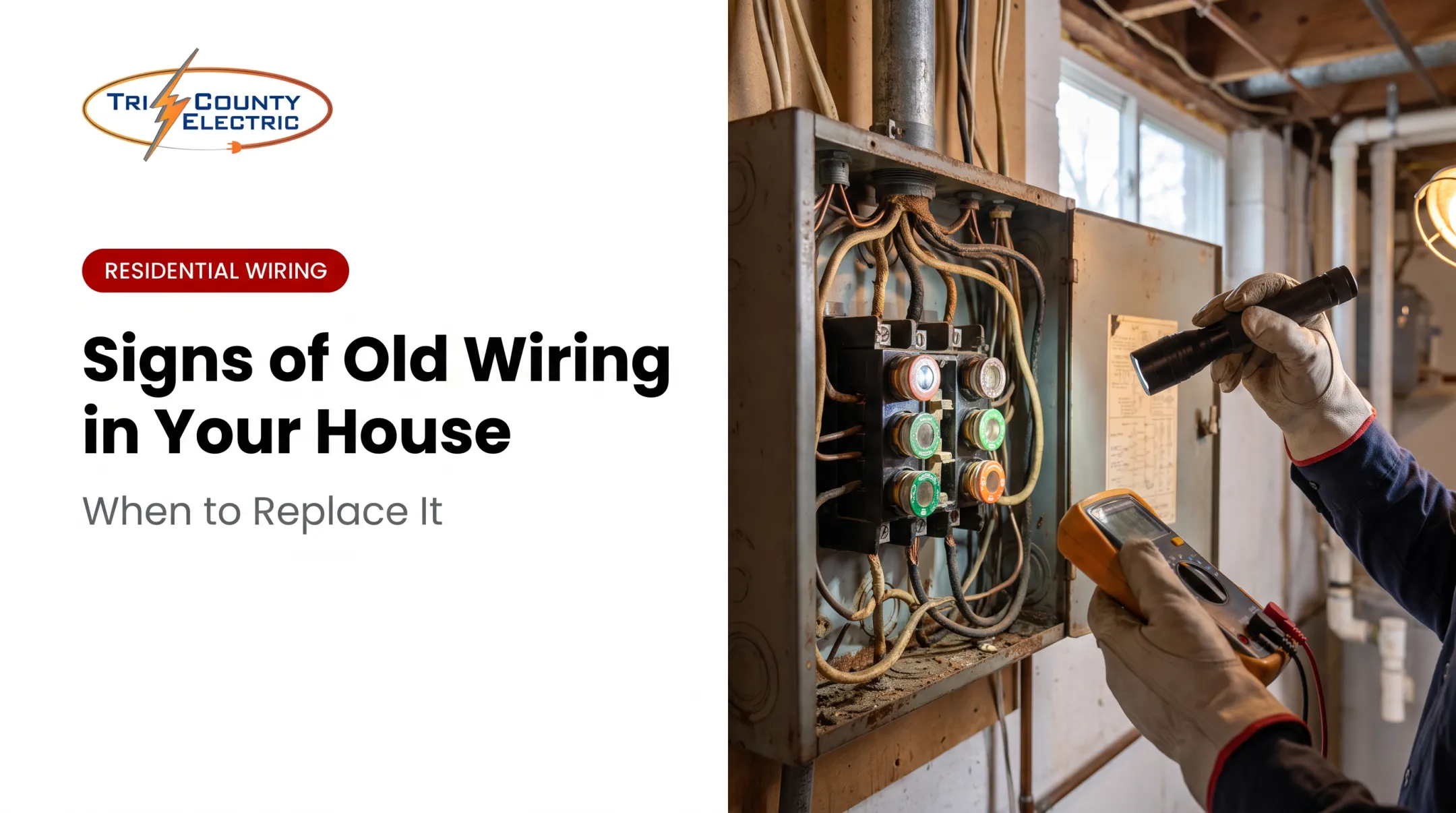
Degraded insulation, loose connections, and corroded components can't safely carry voltage the way they should. Homes over 30 years old that haven't been rewired or inspected recently are the most common candidates.
Lightning Strikes and Storm Activity
A direct or nearby lightning strike sends an enormous, brief voltage spike into power lines and household wiring. Even without a direct hit, a severe thunderstorm nearby can fry devices across a neighborhood.
Large Appliances Cycling On and Off
HVAC compressors, refrigerators, and well pumps all use motors. When those motors shut off, their magnetic fields collapse and release a small internal surge. If your lights dim briefly whenever the AC kicks on, you've felt this firsthand.
Utility Grid Issues and Power Restoration
Grid switching, transformer faults, or power restoration after an outage can send a voltage jump into your home. This often explains why multiple homes on the same street lose or damage devices at the same time.

What Happens If Power Surges Are Ignored
Surges don't just flip a breaker and disappear. Repeated exposure generates heat inside wiring and panels over time, wearing down insulation and connections. ESFI notes that surges can damage, degrade, or destroy electronics — sometimes instantly, sometimes gradually.
Ignoring the pattern is the real risk. A TV that "just stopped working" or a breaker that trips weekly isn't bad luck. It's a signal.
Warning Signs of Surge-Related Damage
Ongoing surge stress usually leaves clues before a major failure:
- Flickering, dimming, or buzzing lights
- Frequent circuit breaker trips or a warm/hot panel
- Burning smells, scorch marks, or discoloration around outlets
Any of these means it's time to stop using that circuit and call an electrician, not reset the breaker and hope for the best.

How to Protect Your Home from Power Surges
No single device covers every scenario. Real protection is layered: one system for the big external spikes, another for the smaller ones happening inside your walls.
Whole-House Surge Protection at the Panel
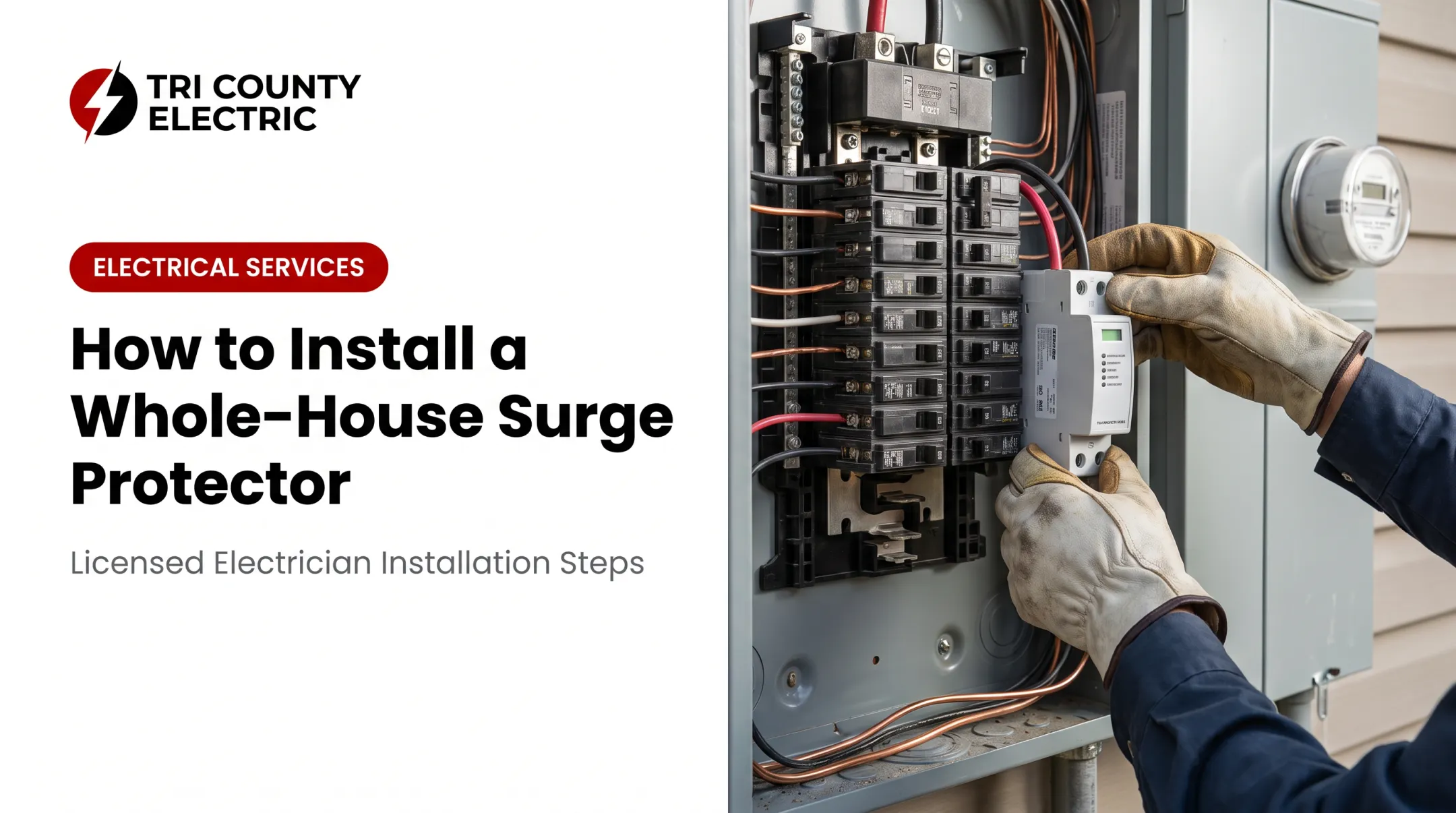
A licensed electrician installs this device directly at your main service panel, where it intercepts surges before they ever reach a single circuit. It's your first line of defense against large utility-side surges and lightning-related spikes.
Tri-County Services' certified electricians can evaluate your panel and install whole-house protection as part of a routine electrical inspection or panel upgrade. Installation typically takes a few hours and meets code requirements. It pairs especially well with a panel upgrade if you're already replacing an aging unit.
Point-of-Use Surge Protectors
Quality power strips with surge suppression catch the smaller internal surges (from appliance cycling) that a whole-house unit might miss. Check the joule rating on the packaging. Eaton recommends:
- Up to 1,000 joules for small electronics
- 1,000–2,000 joules for office equipment
- 2,000+ joules for computers, gaming consoles, and home theater setups
Use these on:
- Computers and home office equipment
- TVs and entertainment systems
- Routers, smart-home hubs, and other hard-to-replace gear
Check the unit's indicator light periodically, and swap it out immediately if it's been through a major surge event.

Wiring, Grounding, and Panel Upgrades
Proper grounding gives excess electricity a safe path to travel instead of through your appliances or walls. Outdated panels simply weren't built for today's power demands: electric vehicles, multiple TVs, and smart home devices all pulling from the same system.
If your home is older or showing warning signs, schedule a professional inspection. Fixing the source reduces surge frequency at the root, not just the symptom.
Smart Habits During Storms and Outages
Before severe weather hits or power comes back after an outage, unplug sensitive electronics. This single habit sidesteps the exact moment when restoration surges are most likely to strike.
Tips for Long-Term Prevention and Control
Beyond individual devices, a few ongoing habits keep your electrical system healthier:
- Schedule a professional electrical inspection every 3 to 5 years, or more often if your home is 20–25+ years old
- Avoid daisy-chaining power strips or overloading a single circuit with high-wattage devices
- Keep a record of surge events, appliance damage, or breaker trips so electricians can spot patterns fast
- Consider a backup generator, such as a Generac system, for homes prone to outages, since power restoration is a common surge trigger
Backup generators can start automatically during an outage and shut down gracefully once utility power returns. Tri-County Services is a certified Generac installer and can help you choose and install a system that fits your home.
Conclusion
Power surges have identifiable, traceable causes — from a refrigerator cycling off to a lightning strike three streets away. These events aren't random, and they're preventable.
Layered prevention works best:
- Whole-house protection at the panel
- Point-of-use devices on sensitive electronics
- Regular inspections to catch wiring problems early
Together, these steps cut both the risk and the long-term cost of surge damage.
If you're noticing flickering lights, frequent breaker trips, or you simply haven't had your panel checked in years, reach out to Tri-County Services for a free estimate on surge protection and electrical safety inspections.
Frequently Asked Questions
What should you do if your power is surging?
Unplug sensitive electronics immediately and avoid repeatedly resetting a breaker that keeps tripping. If you smell burning or see scorch marks, call a licensed electrician right away.
Why does my power keep surging in my house?
Recurring surges are usually internal, caused by faulty wiring, overloaded circuits, or large appliances cycling on and off. A professional inspection can pinpoint the exact source.
What are the symptoms of a power surge in a house?
Flickering lights, tripped breakers, blinking clocks, and appliances shutting off unexpectedly are the most common symptoms.
Can a power surge start a fire?
Repeated surges generate heat that can degrade wiring insulation over time, especially in homes with pre-existing wiring issues. That degraded insulation raises fire risk down the line.
Will a power surge trip a breaker?
Yes. Breakers are designed to trip during surges as a safety measure. But if it's happening repeatedly, that's a sign of an underlying issue that needs professional diagnosis, not just a reset.
How common are electrical surges?
Minor surges happen frequently and often go unnoticed. Damaging surges are less common but still costly. Lightning alone caused $1.04 billion in US homeowners insurance claims in 2024, according to Triple-I.