
Rewiring costs vary widely, from a few thousand dollars for a partial job to $20,000+ for a full whole-house rewire. The right number depends on your home's size, age, and how much of the wiring actually needs to go.
This guide breaks down real cost ranges, the warning signs to watch for, what the rewiring process looks like step by step, and ways to save money without cutting corners on safety.
Key Takeaways
- Whole-house rewiring typically runs $5,000-$13,257, or roughly $2-$4 per square foot
- Home age, wall access, and panel condition are the biggest cost drivers
- Burning smells, warm outlets, and repeated breaker trips need immediate attention
- Partial rewiring or a panel-only upgrade may solve the problem for less money
- Always hire a licensed electrician for code compliance and safety
How Much Does It Cost to Rewire a House?
National cost guides put a complete-house rewire at $5,000 to $13,257, according to Angi's 2026 cost guide and Fixr's pricing data. Most homeowners land somewhere in the $2-$4 per square foot range.
Labor eats up the biggest chunk of that number. Angi estimates labor accounts for 50%-80% of the total bill, at an average hourly rate of $50-$100. Materials make up the rest.
Cost by Home Size
| Home Size | Square Footage | Estimated Cost Range |
|---|---|---|
| Small | Up to 1,500 sq ft | $3,000-$6,000 |
| Medium | 1,500-3,000 sq ft | $6,000-$10,500 |
| Large | 3,000+ sq ft | $10,500-$13,257+ |

These are national planning figures, not a quote. Every home has different wall access, wiring condition, and panel needs, so a licensed electrician still needs to walk the property before you get a real number.
Not every home needs a full rewire. Kitchens, bathrooms, and garages often just need updated circuits, added GFCI protection, or a few new outlets rather than a whole-house overhaul. Tri-County Electric Service handles full rewires and targeted circuit upgrades, and provides free, upfront estimates so you know what you're paying before work starts.
What Else Gets Missed in Budgeting
- Permits and inspections: typically $75-$150 for permits, roughly $100-$125 per inspection (local fees vary by city)
- Panel upgrades: often bundled in when a 200-amp service is needed
- Drywall repair: patching after wall access, especially in older plaster homes
- Wire materials: general cable pricing runs about $0.20-$3.50 per linear foot depending on gauge and type
Cost to Replace a Single Wire or Circuit
Replacing one circuit or a section of wire is a much smaller job, generally $200-$1,500 depending on the wire's length and how easy it is to reach. If a specific outlet or room is acting up, that targeted fix is often all you need.
What Drives Rewiring Costs Up or Down
Home Age and Wiring Type
Older homes almost always cost more to rewire, mainly because of what's hiding behind the walls:
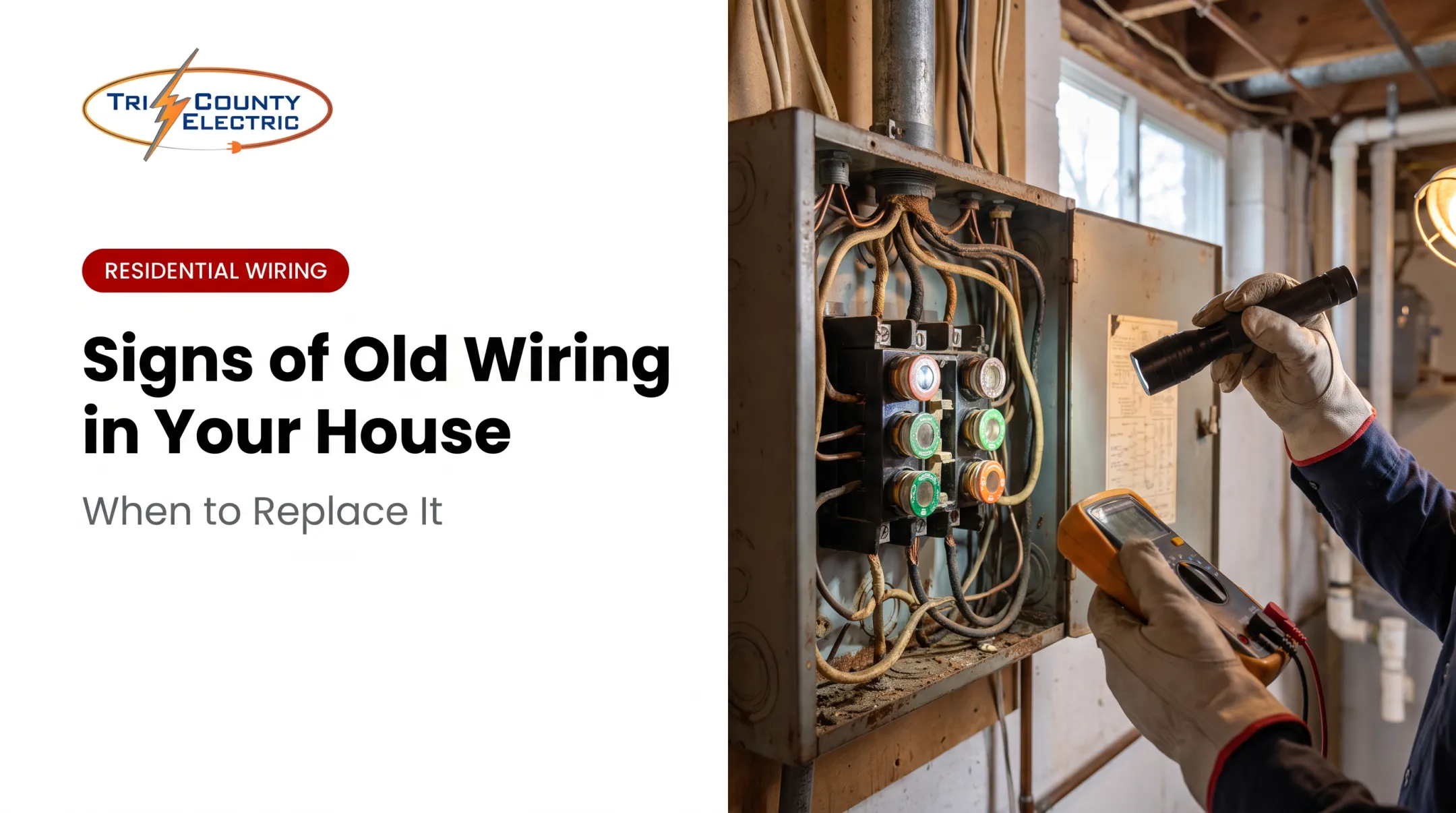
- Knob-and-tube wiring (common pre-1950s) requires full replacement, adding complexity and labor
- Aluminum wiring (roughly 1965–1973) needs careful handling and is rarely a simple patch job
Neither type is usually safe to repair in place, so the work tends to become a full rewire. The CPSC advises homeowners with aluminum wiring to call an experienced electrician rather than attempt repairs themselves.
Wall Construction and Access
Access and finish materials change labor time fast:
- Plaster walls are thicker and tougher than drywall, which slows demolition and patching
- Limited attic or crawlspace access forces crews to fish wire through tighter paths and adds hours
Labor Rates and Code Requirements
- Ohio-area electrician rates generally track the national average of $50-$100/hour
- Current code often requires GFCI/AFCI protection and outlets spaced no more than 12 feet apart along a wall
- These code upgrades add material and labor that many homeowners don't budget for upfront
A licensed electrician can scope these variables accurately before work begins. Tri-County Services electricians are Generac Certified and Tesla EV Charger Certified installers, and they use flat-rate, upfront pricing—so the quote you get is the price you pay.
Signs Your Home Needs Rewiring
Watch for these red flags:
- Flickering or dimming lights, especially when appliances turn on
- Breakers that trip frequently or won't reset
- Buzzing sounds near outlets or switches
- Burning or rubbery smells near outlets or panels
- Warm or discolored outlet covers
- Two-prong outlets (a sign of ungrounded, outdated wiring)
Homes built before 1990, or any home with known aluminum or knob-and-tube wiring, are strong candidates for a professional electrical evaluation. Don't wait for a bigger problem to show up.
The NFPA reports an average of 46,652 home electrical fires per year between 2020-2024, causing 527 deaths and $2.4 billion in direct property damage annually. Their data also shows electrical failure or malfunction contributes to 77% of these fires.

Delaying a needed rewire doesn't just risk a fire. It can also complicate homeowners insurance if an inspector later flags outdated wiring.
The Rewiring Process: What to Expect
Most residential rewiring projects follow a similar sequence:
- Inspection - An electrician evaluates wiring, panels, outlets, and switches for damage, wear, and code violations
- Planning and permitting - The electrician finalizes the scope and pulls permits
- Power shut-off - Crews shut power off in phases to limit disruption; temporary housing is rarely needed
- Wire removal and installation - Old wiring comes out, new wiring goes in
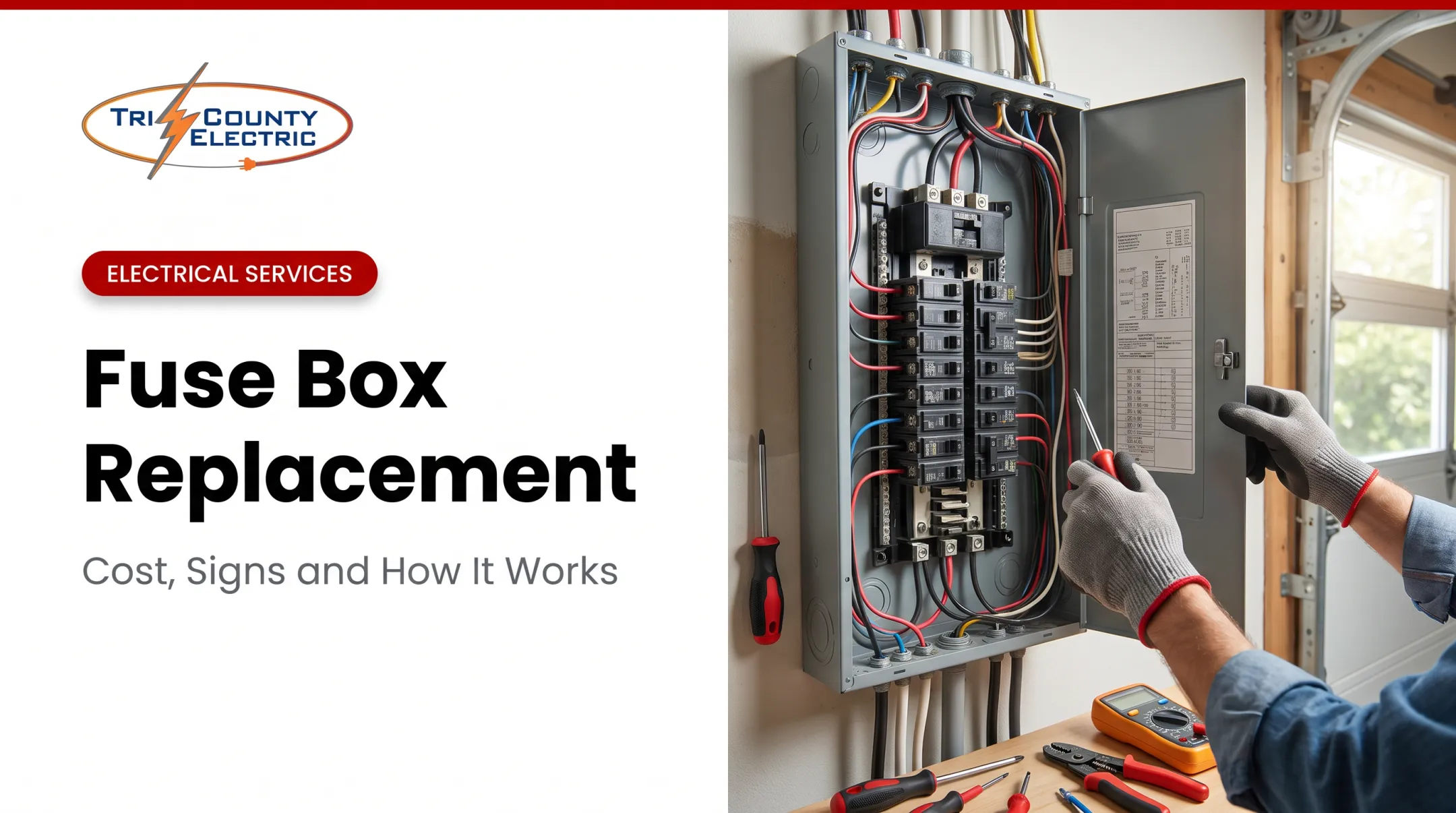
- Panel upgrade (if needed) - Service panel is replaced or upgraded to handle new capacity
- Testing and final inspection - The electrician verifies everything against code before the job closes out

Most whole-house projects take three to seven days, though this varies with home size and wiring condition.
During that window, the biggest disruption question is usually how much of the house gets opened up.
Do You Have to Remove Drywall?
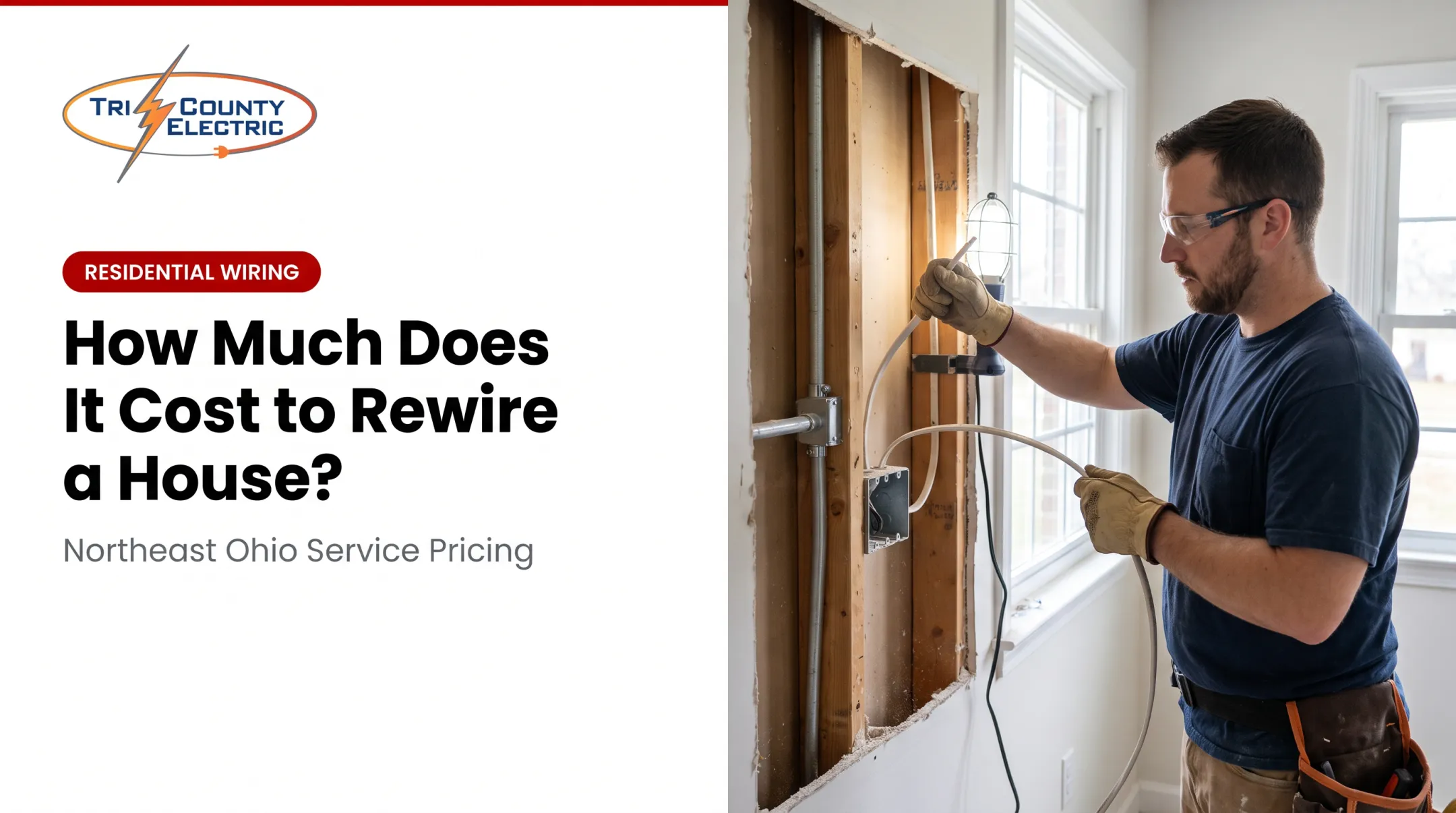
Not always. Wire fishing lets electricians pull new wire through attics, crawlspaces, and floor joists without opening every wall. It's a faster, less invasive option when the layout cooperates.
That said, some routes simply can't be fished, particularly in plaster homes or homes with unusual framing. In those cases, targeted wall openings become unavoidable.
A good electrician will tell you upfront which rooms are likely to need access, rather than surprising you mid-project.
Always choose a licensed, fully insured electrician who provides transparent pricing before work begins. Surprise costs are the most common complaint homeowners have about rewiring projects, and they're almost always avoidable with a clear, upfront scope.
Alternatives to Full Rewiring & Ways to Save
A full rewire isn't always necessary. Many homes only need targeted work.
Scope alternatives worth considering first:
- Panel upgrade only — When existing wiring is still safe and code-compliant, a new panel can fix capacity issues and tripped breakers without opening walls
- Partial rewiring — Replace outdated wiring in one room or a few circuits instead of the whole house
- Bundle with renovations — If you're already remodeling a kitchen or finishing a basement, run new wiring while walls are open

Ways to keep labor costs down:
- Clear furniture and attic or crawlspace access before the crew arrives
- Get multiple quotes and compare scope of work, not just the bottom-line price
- Ask which circuits truly need replacement versus which can stay
A licensed electrician can inspect your system and spell out what must be rewired versus what a panel upgrade or partial job can handle. Tri-County Services offers free estimates on residential electrical upgrades across Northeast Ohio and surrounding service areas.
Frequently Asked Questions
How much does home rewiring cost?
Whole-house rewiring typically costs $5,000-$13,257, or about $2-$4 per square foot. Home size, age, and wiring condition are the main variables affecting where you'll land in that range.
How much does it cost to replace an electrical wire?
Replacing a single circuit or wire section typically runs $200-$1,500, depending on the wire's length and how accessible it is behind walls or floors.
When should a home be rewired?
Homes over 30-40 years old, or those with aluminum or knob-and-tube wiring, should be evaluated by a licensed electrician. Warning signs like frequent breaker trips or warm outlets also signal it's time for an inspection.
Is it worth rewiring an old home?
Yes. Rewiring improves safety, can lower homeowner's insurance costs, and often increases resale value since buyers and inspectors flag outdated wiring as a red flag.
Can I upgrade my electrical panel without rewiring my home?
Yes, if an inspection confirms your existing branch wiring is safe and code-compliant. A panel upgrade alone can resolve capacity issues without a full rewire.
Can you rewire a home without removing drywall or walls?
Wire-fishing techniques can minimize wall openings by routing cable through attics and crawlspaces. However, some layouts, especially plaster homes, may still require targeted wall access.
If you're seeing warning signs or just want a clear picture of what your home actually needs, Tri-County Electric Service has been rewiring homes across Northeast Ohio, Southwestern Ohio, and Northern Kentucky since 1975. Free estimates, upfront pricing, and licensed electricians who'll tell you straight whether you need a full rewire or something smaller.