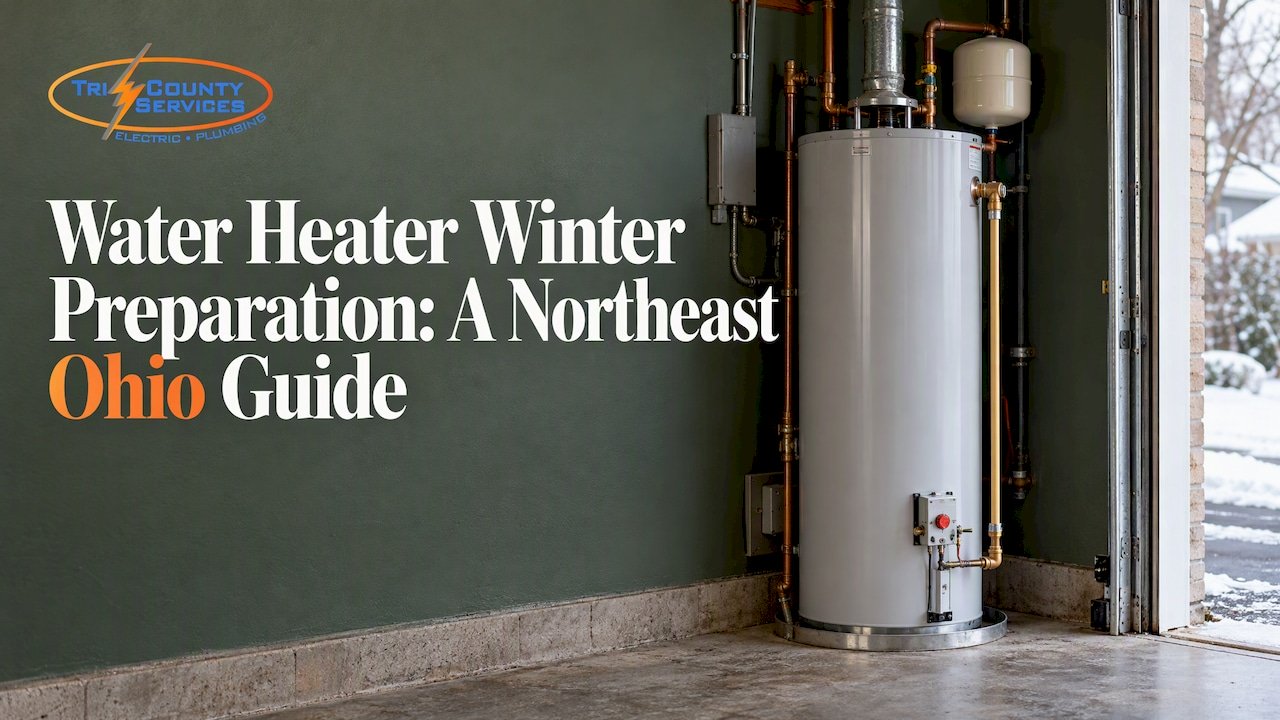

The short version of water heater winter preparation: set a tank to 120°F, insulate the pipes around the heater, keep a tankless unit powered so its freeze protection works, clear the vents, and have a professional inspect anything that looks old, rusty or noisy before the first hard freeze. Cold incoming water makes your heater work harder, and a failure in January costs far more than a check in October. Here is what matters, what to leave to a pro, and why.
TL;DR
- Set a storage water heater to 120°F. It covers most household needs, saves energy and lowers scald risk.
- Insulate exposed hot and cold pipes near the heater, especially in a garage, crawl space or unheated basement.
- Never unplug a tankless heater in winter. Its freeze protection only works with power, and it does not protect the pipes outside the unit.
- Have a professional inspect the relief valve, anode rod, venting and any sediment problem before freezing weather arrives.
- Call Tri-County Services Electric & Plumbing at (440) 253-0332 if your heater is old, leaking, rumbling or slow to heat.
Table of Contents
- Why winter is hard on a water heater
- Set the right temperature
- Protect pipes and valves around the heater
- Storage tank heaters: what to check
- Tankless water heaters: winter specifics
- If the house will be empty or unheated
- Why we ask you to call first, not tinker
- What to do if a heater fails or a pipe freezes
- Our perspective
- Get your water heater checked before the freeze
- FAQ
- Sources
Why winter is hard on a water heater
In winter the water entering your home is colder, so the heater has to raise it by a bigger margin to reach the same temperature at the tap. Add a garage or basement that drops toward freezing, and you have a heater working harder while its pipes and vents face the cold.
Tankless units have their own risk. Rinnai notes that tankless heaters can be more susceptible to freezing because they do not hold a large volume of heated water. Tank models hold warm water, but the pipes feeding them are just as exposed.
Northeast Ohio makes this a real concern. Lake-effect cold snaps, older homes with plumbing in exterior walls, and power outages during storms all show up in our service calls. Preparing in October or early November, before the first hard freeze, is when the work is cheapest and the schedule is open.
Set the right temperature
For a tank heater, 120°F is the winter setting to aim for. Energy Trust says it typically meets household needs, saves energy, slows mineral buildup and corrosion, and reduces scald risk.
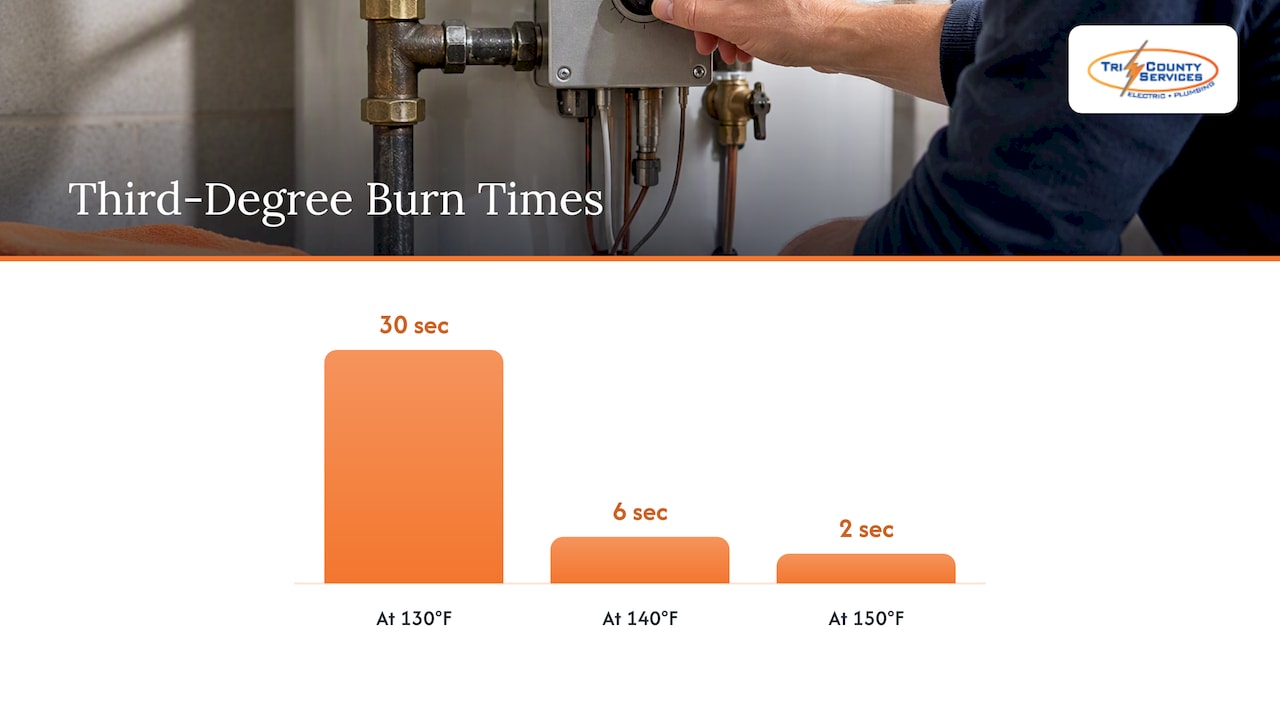
The safety case is the stronger one. The U.S. Consumer Product Safety Commission reports that third-degree burns can occur after about 30 seconds at 130°F, six seconds at 140°F, and two seconds at 150°F. The agency urges lowering water heaters to 120°F to reduce or eliminate most tap-water scald injuries. Households with young children or older adults have the most reason to check.
It is tempting to raise the thermostat when the house feels cold and showers feel short. Resist that. If 120°F no longer gives you enough hot water, the cause is usually sediment, a failing element or burner, a dip tube problem, or a heater that has simply reached the end of its life. A professional can tell you which, and a higher setting only hides the problem while raising the scald risk.
Tankless units are different. Manufacturers commonly suggest staying around 120°F to 125°F, but each model has its own controls and limits, so follow the owner’s guide or have a technician set it.
Protect pipes and valves around the heater
The heater itself rarely freezes first. The pipes and fittings attached to it do.
Insulate the first stretch of pipe
Energy Trust recommends insulating the first three feet of exposed hot-water pipe leaving the heater. That cuts heat loss and keeps the warmest part of the line from cooling as fast. Cold-water lines in unheated spaces need protection too, since a split pipe causes damage whether it is hot or cold.
Heat tape and cable for exposed runs
For a tankless unit installed outdoors, Rheem recommends insulating hot and cold pipes and valves and using heat tape or heating cable plugged into a nearby 120-volt outlet. This is where plumbing and electrical work overlap. A heat cable on an overloaded extension cord or an outlet with no ground-fault protection is a fire risk. If you are not sure the outlet and circuit are right for it, a professional electrician should check before you plug anything in. We handle both trades, so one visit can cover the pipes and the power.
Know the vulnerable spots
Look at where water lines pass through exterior walls, rim joists, garage ceilings and crawl spaces. Our guides on preventing frozen pipes in winter and protecting your home during Ohio’s harsh winter walk through the usual trouble areas. Outdoor spigots are a separate weak point, covered in our piece on hose bib freeze protection.
Storage tank heaters: what to check
A standard gas or electric tank is simpler to prepare than a tankless unit, but it hides its problems well. Several checks are worth doing every fall, and some are best left to a professional.
Insulation blankets
Energy Trust says storage tanks may benefit from blanket insulation, but you should check the data plate or manual first. That caution matters. On a gas heater, a blanket placed over the burner access, air intake or flue can block combustion air or create a hazard. On an electric heater, covering the wrong area can interfere with controls. Many newer tanks are already well insulated and gain little.
Temperature and pressure relief valve
The relief valve is the safety device that keeps a overheated or over-pressurized tank from becoming a danger. The Department of Energy’s Building America fact sheet lists checking the temperature-and-pressure relief valve every six months as part of routine storage-heater maintenance. A valve that drips constantly, or is corroded shut, needs a professional’s attention. Testing and replacing it involves hot water at pressure, which is a good reason not to improvise.
Sediment, flushing and the anode rod
The same DOE fact sheet describes flushing a quart of water every three months and inspecting the anode rod every three to four years. Notice what it does not say: it does not call for fully draining the tank every year. If your heater is more than a few years old and has never been flushed, sediment can be hardened, and opening a stuck drain valve can cause it to break or leak. That is a call for a technician, who can flush it properly and tell you whether the tank is worth keeping.
Gas, venting and combustion air
Gas heaters need clear venting and fresh air. Winter is when homeowners close up basements, stack storage near the heater and seal drafts, all of which can cause problems. Soot, a yellow burner flame, a flue that feels cold or a pilot that keeps going out should prompt a call to us the same day. If you smell gas, leave the house and contact your gas utility or 911 from outside.
Age check
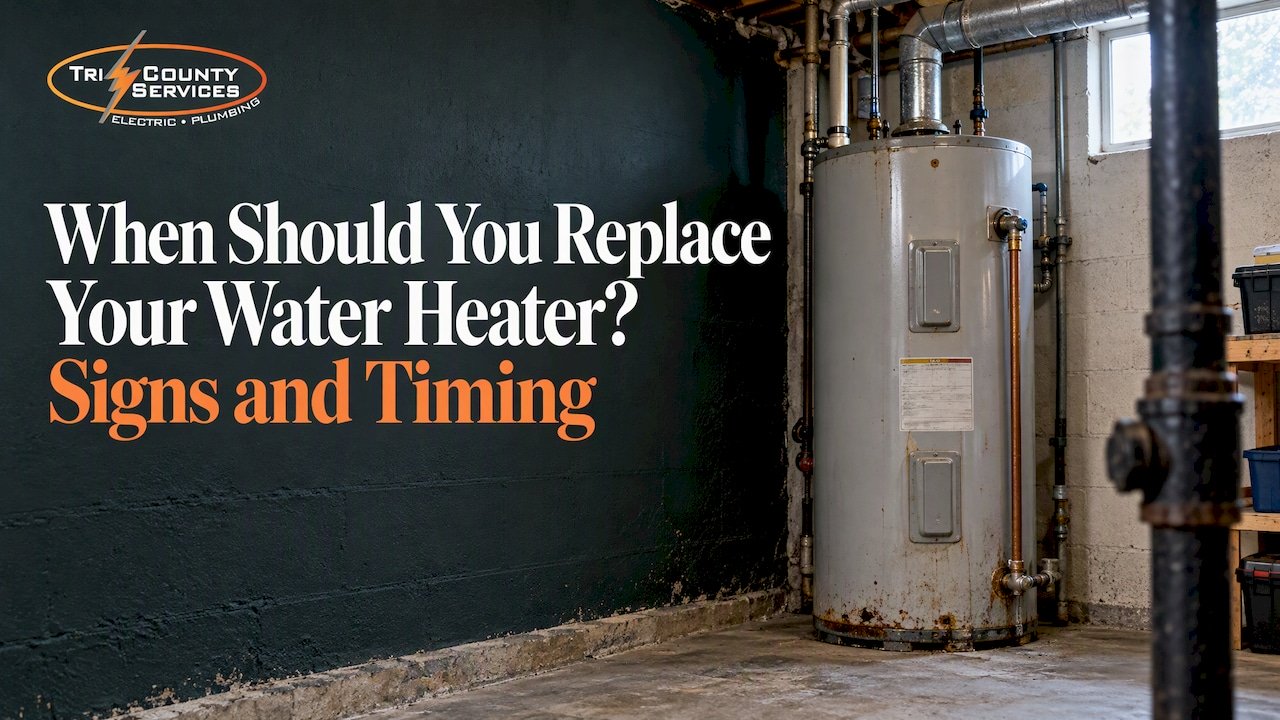
If your tank is approaching or past the 10 to 12 year mark, rusty water, rumbling noises, puddles at the base or lukewarm showers all point toward replacement. Replacing on your schedule in the fall beats replacing in an emergency during a cold snap. Our hot water tank repair and replacement page explains what that involves.
Tankless water heaters: winter specifics
Tankless heaters have freeze protection built in, but only if you let it work.
Keep it powered
Rheem recommends keeping gas, water and electrical power connected so the internal freeze protection in tankless gas heaters stays active. Noritz is direct about it: its freeze-prevention heaters cannot operate when the unit is unplugged, and they do not protect plumbing outside the heater. Its bulletin lists internal freeze-prevention ratings of -30°F for indoor installations and -4°F for outdoor installations on current models, with the NC380 series rated -4°F both indoors and outdoors.
Those ratings apply to the unit, not to the pipes, the vent or the condensate line. A well-protected heater can still sit on a frozen supply line.
Clear the vents and condensate drain
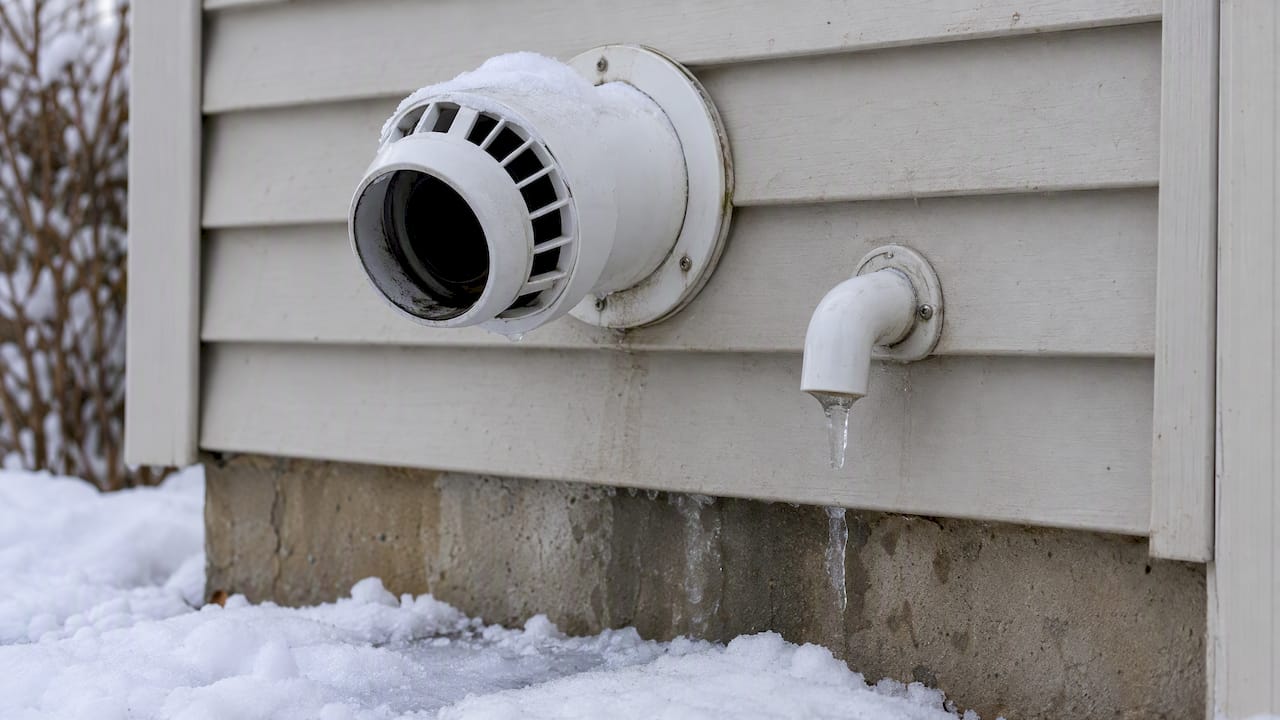
Rinnai advises insulating exposed pipes in outside or unheated areas and clearing snow and ice from vents and condensate drains. After a snowstorm, walk outside and look at the termination. A blocked intake or exhaust can shut the unit down, and a frozen condensate line can cause error codes and lockouts.
Plan for a power outage
This is the Northeast Ohio scenario that catches people. If power is out long enough for the house to cool well below freezing, the heater’s protection is offline. Rinnai’s prolonged-outage procedure involves shutting off the cold-water and gas supplies, turning off the controller, disconnecting power, closing the isolation valves, opening the relief valve and drain valves, and draining the condensate trap and pump where applicable. That is a multi-step shutdown on a gas appliance, and the steps vary by model. If you have never done it, ask a professional to show you where your valves are before winter, or to do it for you. Our guide to getting hot water back after an outage covers the restart side.
A home generator keeps the heater’s protection, circulation and heat sources running during a long outage. If outages are a recurring problem for you, see our generator installations.
Annual service
Scale on the heat exchanger and a clogged inlet filter cut performance, and cold water makes it worse. We cover the routine in our annual tankless maintenance guide. If you are weighing a switch, read about why tankless heaters are a smart upgrade.
If the house will be empty or unheated
A vacation home, a seasonal property or a rental between tenants needs a different plan. Standing water in a cold house freezes. Noritz says extended absences warrant draining a tankless heater because standing water can freeze and damage internal plastic components, and the heater should be isolated with its hot and cold valves.
For a vacant home, the safest approach is to have a professional shut off and drain the system as a whole: the heater, the supply lines, the fixtures and the outdoor connections. A heater drained but left connected to a full, unheated plumbing system still leaves risk elsewhere. If the house is staying heated, simply setting the thermostat to a safe temperature and having someone check in regularly is often the better plan. Ask us which fits your situation.
Do you leave faucets open after winterizing?
This is a common question, and the honest answer depends on the method. The usual approach for a fully drained system is to leave a few fixtures open so air can enter and any remaining water can escape. Methods that use antifreeze are different, and the products and steps depend on the type of plumbing and the heater. Do not put antifreeze in a domestic potable line unless the product is rated for it, and never into a water heater. Because the correct answer depends on your system, we set up and document the winterization ourselves rather than leave you guessing. For the outdoor side, see our guide to winterizing outdoor faucets.
Why we ask you to call first, not tinker
Water heaters combine gas or high-voltage electricity, pressurized hot water and venting. A mistake with any one of those can mean a burn, a flood, a carbon monoxide leak or a fire. People often start with a how-to video and end up with a bigger repair bill, or a heater that no longer meets the manufacturer’s installation requirements.
A professional visit before winter does several things you cannot easily do yourself:
- Identifies whether the heater is near the end of its life, so you can plan rather than scramble.
- Tests the relief valve, venting, gas connections and electrical supply together.
- Flushes sediment safely and checks the anode rod.
- Checks that the circuit, breaker and outlet can handle any heat tape or accessory.
- Documents what was done so your warranty and insurance records are clean.
If you have already started and something went wrong, stop. Shut off the water to the heater, turn off its power or gas if you can do so safely, and call us.
What to do if a heater fails or a pipe freezes
If you find a frozen pipe, do not use an open flame, and do not keep running a tap if you see water spraying. Shut off the main water valve, then follow the steps in our frozen pipe safety guide and call us.
If a tank bursts, the priority is stopping the water and power, then limiting damage. A restoration company’s walkthrough on what to do when a water heater bursts shows how much water a full tank can release and why quick cleanup matters. For the plumbing repair, we can be there to stop the leak and replace the unit.
Our perspective
We have served Northeast Ohio homes since 1975, and the same pattern repeats every winter: the heater that fails in January usually showed signs in October. Rumbling, rust-colored water, a slow recovery, a small puddle, a pilot that kept going out. Homeowners often notice and decide to wait.
Our advice is to treat the first cold week as your deadline. Have someone qualified look at the heater, the pipes around it and the power or gas feeding it. We do both plumbing and electrical work, so when a heater problem turns out to be a breaker, a dedicated circuit or a heat cable outlet, we do not send you to a second company. We schedule flexibly to limit disruption, and we treat your home the way we would treat our own.
The cheapest fix is almost always the one done before the emergency.
— Lindsay Paramore
Get your water heater checked before the freeze
Tri-County Services Electric & Plumbing handles water heater repair, traditional replacement, tankless installation and pipe leak repair, along with drain cleaning and sewer camera inspections, for homes and businesses across Northeast Ohio. Our plumbing pricing guide shows what to expect, including published ranges for drain cleaning and sewer camera inspection. Water heater work is quoted after we see your system.

If your heater is making noise, leaking or struggling, call our office at (440) 253-0332. Or see our water heater repair, installation and maintenance page for free estimates.
FAQ
What should my water heater be set at in winter?
Set a storage tank to 120°F. That is enough for most households, it saves energy, and it reduces scald risk compared with higher settings. Tankless units usually run around 120°F to 125°F, but check your model’s owner’s guide.
Do I need to drain my water heater every year?
Not necessarily. Federal guidance describes flushing a small amount of water from a tank regularly, checking the relief valve twice a year and inspecting the anode rod every few years, rather than a full annual drain. If yours has never been flushed, have a professional do it, since old sediment and stuck drain valves can cause leaks.
How do I keep a tankless water heater from freezing?
Keep it plugged in and connected to gas and water so its built-in freeze protection works. Insulate exposed pipes, clear snow and ice from vents and the condensate drain, and ask a professional about heat tape and what to do in a long power outage.
Should I insulate my water heater tank?
Sometimes. A blanket can help on some older tanks, but newer ones are often already insulated, and a blanket in the wrong place on a gas unit can block air or the flue. Check the data plate and manual, or let us look at it first.
When should I replace the heater instead of preparing it?
If it is 10 to 12 years old and shows rust, leaks, rumbling or slow heating, replacement before winter is usually smarter than another repair. A technician can inspect it and give you a straight answer. Call (440) 253-0332 to schedule.
Sources
- Prepping your water heater for winter, Energy Trust of Oregon
- Publication 5098, Tap Water Scalds, U.S. Consumer Product Safety Commission
- Winter Prep Tips for Water Heating Systems, Rheem
- Freeze Protect Your Rinnai Product, Rinnai
- Winter Notes and Precautions Bulletin, Noritz
- How to Prevent Your Tankless Water Heater from Freezing, Noritz
- Water Heating fact sheet, U.S. Department of Energy Building America
- What to do when a water heater bursts