

Most holiday displays need three things from your home’s electrical system: an outdoor outlet with GFCI protection, a circuit with enough spare capacity for the total wattage you plan to run, and a way to switch everything on and off safely. If your house is missing any of those, an upgrade is cheaper than a tripped breaker on a cold December night, or something worse. Here is how to tell what your home needs before you hang a single strand.
TL;DR
- Add up the watts of everything you will run at once and compare the total with the circuit’s rating. A 15-amp circuit supplies 1,800 watts.
- Outdoor lights belong on a GFCI-protected, weather-resistant outlet with a weatherproof in-use cover. No outdoor outlet means calling a professional electrician to install one.
- The upgrades that pay off most are a new exterior outlet, a dedicated circuit, a GFCI breaker at the panel, a timer or switched soffit outlets, and whole-home surge protection.
- Repeated breaker trips, warm outlets or an older panel are signs to have the system checked before you add load. Call Tri-County Services Electric & Plumbing at (440) 253-0332.
Table of Contents
- Start With the Load: How Many Amps Do Holiday Lights Use?
- Upgrade 1: A GFCI-Protected Outdoor Outlet
- Upgrade 2: An Outdoor Outlet Where You Actually Need One
- Upgrade 3: A Dedicated Circuit for the Display
- Upgrade 4: A GFCI Breaker at the Panel
- Upgrade 5: Timers and Switched Outlets
- Upgrade 6: Surge Protection for the Season
- Should You Switch to LEDs?
- When the Panel Itself Is the Problem
- What the Upgrades Cost
- Perspective: Why We Tell Homeowners to Call Before They Climb
- A Quick Pre-Season Checklist
- Get Your Home Ready With Tri-County Services Electric & Plumbing
- FAQ
- Sources
Start With the Load: How Many Amps Do Holiday Lights Use?
There is no single number, because it depends on the type of light and how many strands you run. The method is the same every time: add up the watt rating of everything you plan to use at the same time on one branch circuit, then compare that total with what the circuit can deliver. Electrical Safety Foundation International (ESFI) notes that a 15-amp circuit supplies 1,800 watts, and that the breaker or fuse shows the circuit’s amperage.
To estimate wattage for a string, multiply the number of bulbs by each bulb’s wattage. The package also lists maximum strands that can be connected end to end, so follow it.
A quick worked example, using round numbers to show the math:
- Your display adds up to 1,200 watts of lights, plus a 300-watt inflatable.
- Total: 1,500 watts.
- Divide by 120 volts: about 12.5 amps.
- On a 15-amp circuit, that leaves very little room. And if that same circuit also feeds a garage freezer, a workbench or porch lights, you are already over.
That last point is where most homeowners get caught. An exterior outlet is often shared with other outlets in the garage or a bathroom. You do not know what else is on the circuit until someone traces it.
Find the circuit in your panel
The outdoor branch circuit should be listed on the directory in your electrical panel. ESFI advises you to locate your outdoor circuit on that listing. If the directory is blank, outdated or wrong, that is a reason to have a professional map the panel. It is the single most useful bit of information for planning any display, and it is quick work for an electrician on a service call.
Upgrade 1: A GFCI-Protected Outdoor Outlet
Outdoor lights should be plugged into a GFCI receptacle that has been tested to confirm it works. That guidance comes from the National Fire Protection Association (NFPA). The reason is simple: GFCI devices sense an imbalance in current and shut off power before a shock can occur. Snow, sleet and wet lawns are exactly where that matters.
Three details separate a compliant outdoor outlet from a risky one:
- GFCI protection. Exterior outlets and circuits require it. ESFI notes that the National Electrical Code requires GFCI protection for outdoor outlets in new homes, which means many older houses were built without it.
- Weather-resistant receptacle. The NEC requires outdoor GFCI receptacles in damp and wet locations to be weather-resistant, and the enclosure must stay weatherproof whether or not a cord is plugged in. That is why you see the hinged “while-in-use” cover.
- A working test. Press the test and reset buttons before the season. If it will not reset or does not cut power, it needs replacement.
If your outdoor outlet is a plain two-slot or three-slot receptacle with a flat cover, it is a candidate for an upgrade. So is any outlet with a cracked cover, rust, or signs of water inside. Swapping a receptacle is not a job to improvise: the wiring behind an old outlet is often not what you expect, and a mistake can leave you with an outlet that looks protected but is not. Our team handles this as part of electrical repair service calls across Northeast Ohio.

Upgrade 2: An Outdoor Outlet Where You Actually Need One
A common question is how to plug in outdoor Christmas lights when there is no outlet nearby. ESFI’s answer: if there is no outdoor wall outlet, call a qualified electrician to install one.
The shortcuts people reach for instead create their own hazards:
- Running a cord through a window, door or wall. ESFI says not to run cords through walls, ceilings or floors or under doors, and not to pinch cords in doors, windows or under heavy furniture, because that can damage the insulation.
- Chaining extension cords. The NFPA states extension cords must be plugged into an approved receptacle, power tap or adapter, not into other extension cords, and must not be fastened to a structure.
- Leaving cords where they can be crushed, soaked or chewed. The same guidance says cords should not sit where they face environmental or physical damage, and should be free of splices and wear.
A permanent exterior outlet near the front of the house, the roofline or the landscaping turns all of that into a non-issue. Placement matters, and so does the circuit it ties into. That is why the best time to have it added is before you need it, not on the first cold weekend of the season.
Upgrade 3: A Dedicated Circuit for the Display
If your display keeps tripping a breaker, or you want to add inflatables, a lit roofline and a pathway all at once, a dedicated circuit is the cleanest fix. It gives the lights their own breaker, so they are not competing with the freezer in the garage or the vacuum in the hall.
Signs you need one:
- The breaker trips when you plug in the full display, even though each part works alone.
- Your load calculation lands near or over the circuit’s rating.
- The same circuit serves rooms or appliances you rely on.
- You cannot tell what is causing the trips. ESFI lists that as a reason to call a qualified electrician, along with having no outdoor outlet or being unsure about GFCI installation.
Dedicated circuit installation is one of the services listed on our electrical pricing guide. If you want to know why breakers trip at home in the first place, our article on who fixes frequent circuit breaker trips explains what a technician looks for.
Upgrade 4: A GFCI Breaker at the Panel
Exterior GFCI outlets live outdoors, and moisture is hard on them. Electrical contractor Paul Kennedy, quoted by This Old House, suggests considering a GFCI breaker at the panel inside the home, because exterior GFCI outlets can have moisture-related false trips even with weatherproof covers. Moving the protection indoors keeps the sensing device dry.
This is an especially good fit if your lights go out every time it drizzles, and you are tired of walking out in the cold to press a reset button. The tradeoff is that a breaker-level GFCI protects the whole circuit, so a trip shuts off everything on it. That is one more reason to put the display on its own circuit.
Upgrade 5: Timers and Switched Outlets
The easiest upgrade to love is the one that turns your lights on at dusk and off at bedtime without you. A programmable timer helps ensure lights are not accidentally left on, and it helps regulate energy use and cost. This Old House also recommends covers to keep moisture out of outdoor cord connections.
For a more permanent setup, there are two options:
- Outdoor-rated plug-in timers. Cheap, flexible and fine for a modest display. Plug them into the GFCI outlet, not the other way around.
- Switched outlets in the soffit. A receptacle tucked under the eave, controlled by an indoor switch or smart switch, lets you plug in roofline lights without cords dangling down the siding. It also keeps connections up out of snow and puddles. This is the kind of installation a professional should plan, since it involves running new wiring, locating a power source and placing the box correctly.
Our own post on holiday outdoor lighting installation tips covers how we approach roofline and landscape lighting. If you are thinking beyond the holidays, outdoor electrical improvements such as permanent outlets and landscape lighting can serve you all year.
Upgrade 6: Surge Protection for the Season
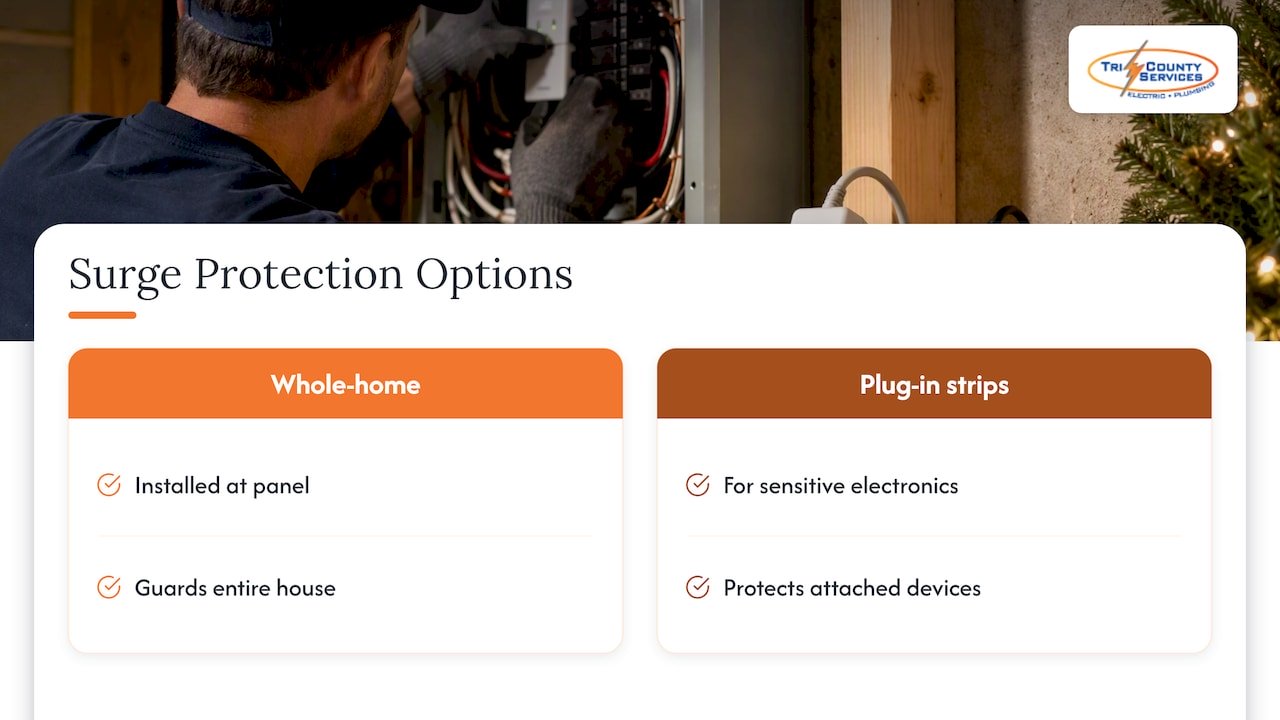
Holiday weeks put more electronics, chargers, lights, inflatables and kitchen appliances on your circuits than any other time of year. A surge will not care that the tree is lit. Whole-home surge protection installed at the panel guards everything in the house, not only what is plugged into a power strip. We install it as a standalone service, listed on our electrical pricing guide. Plug-in strips still have a place for sensitive electronics, but they only protect what is attached to them.
Should You Switch to LEDs?
It is the cheapest “electrical upgrade” on the list. The Department of Energy says LED holiday lights use 70% less energy than conventional incandescent strands and are far less likely to burn out or break. Because they draw less, you can run more of them on the same circuit. Do the wattage math again with the new ratings and you may find a display that overloaded a 15-amp circuit now fits comfortably.
There is a small technical difference too. According to the DOE, incandescent strings typically fail by creating an open circuit, while LEDs typically fail by creating a short circuit, which is why LED strings can stay lit when one bulb fails. Do not mix old and new strings on the same run unless the packaging says you can.
When the Panel Itself Is the Problem
Sometimes the issue is not the outlet or the lights. It is the electrical panel behind them. Warning signs that go beyond holiday decorating:
- Breakers that trip often, even with a normal load.
- Fuses that blow, or a fuse box instead of a breaker panel.
- A panel with no open slots for new circuits.
- Buzzing, a burning smell, or warm spots on the panel or outlets.
- Flickering lights when large appliances turn on.
If you plan to add a dedicated circuit, an EV charger, a generator or a hot tub in the next year, a panel upgrade may make more sense than patching things one circuit at a time. Our electrical panel upgrade page explains what the work involves. If the lights inside your home are acting up, our guide to why lights aren’t working is a good place to see what a technician checks first.
What the Upgrades Cost
Prices depend on the home. A new exterior outlet on an easy wall is a different job from a switched soffit outlet, and a dedicated circuit from a crowded panel is different again. We publish what we can on our electrical pricing guide. Electrical troubleshooting, the visit where a technician finds out why a circuit trips or what else shares it, is listed at $300 to $500. Panel upgrades, dedicated circuit installation and whole-home surge protection do not have a published price, because they depend on what we find at your home. We give clear, upfront pricing before the work begins.
Perspective: Why We Tell Homeowners to Call Before They Climb
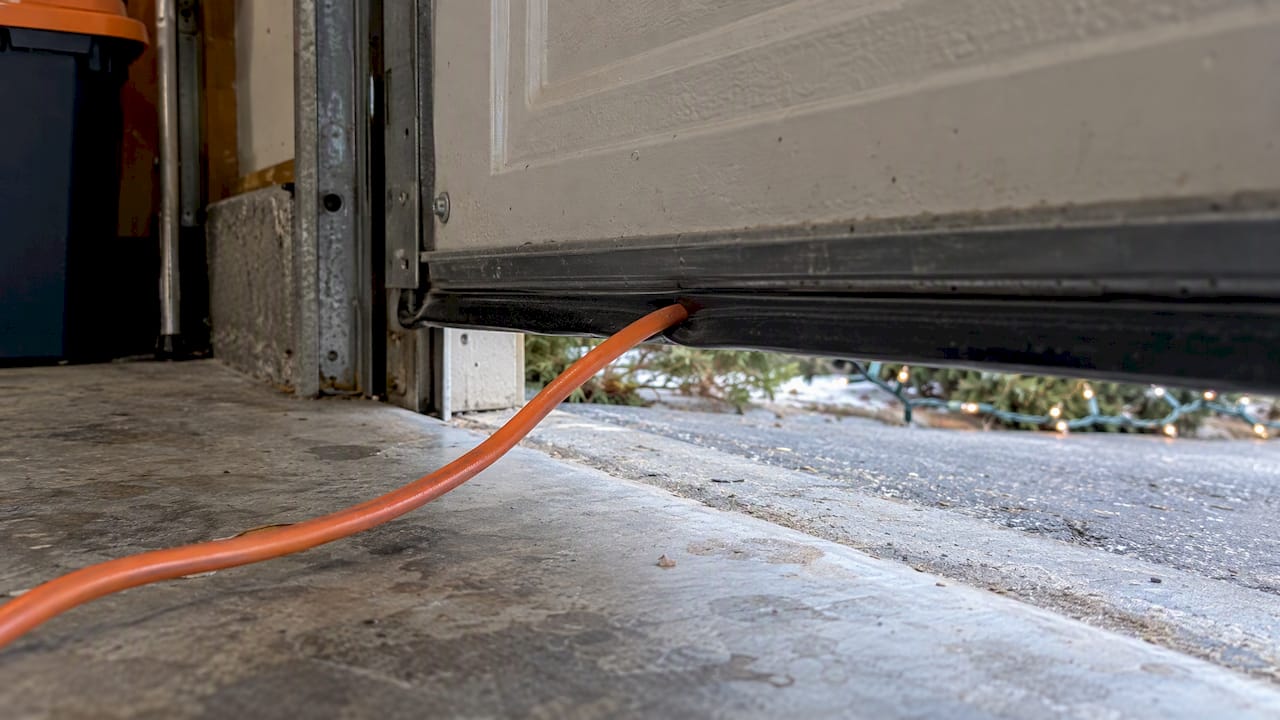
We have been serving Northeast Ohio families since 1975, and every December we see the same pattern. Someone strings up a beautiful display, plugs it into the one outlet they can reach, and a breaker trips. Then the extension cord comes out, a cord goes under the garage door, and a quick fix becomes a risk.
Our advice is to treat the electrical side of your display as something to plan before the ladder comes out, not something to solve while you are standing in the snow. A GFCI outlet that works, a circuit with room, and a clear way to switch it all off are not luxuries. They are the difference between a display you enjoy and one you worry about. A short visit from a professional electrician can tell you what is on your circuit, whether your outdoor outlet is protected and whether your panel can take the load. That is far cheaper than a damaged panel, a ruined display or a fire.
We would rather answer a question in November than respond to an emergency in December. If something about your setup does not look right, call us first.
— Lindsay Paramore
A Quick Pre-Season Checklist
Before you plug in this year, run through this list:
- Check the panel directory and identify the outdoor circuit’s amperage.
- Add up the watts you plan to run on that circuit, including anything else sharing it.
- Test the GFCI outlet. If it fails, or you do not have one, call for installation.
- Confirm the outdoor receptacle has a working in-use cover.
- Inspect every cord for cuts, bare spots and splices, and retire anything damaged.
- Use outdoor-rated cords plugged straight into the outlet, not chained.
- Add a timer or switched outlet so lights are not left on around the clock. The NEC also limits holiday lighting installations to no more than 90 days, so plan to take them down.
- If anything trips, smells, buzzes or feels warm, stop and call a professional.
Get Your Home Ready With Tri-County Services Electric & Plumbing
Whether you need a new outdoor outlet, a dedicated circuit for the display, whole-home surge protection or a panel that can keep up, our technicians can look at your home, explain what is needed and do the work on a schedule that fits yours. Call our office at (440) 253-0332 to book a visit, or see our full list of electrical services and pricing. Spots on the calendar fill up in November and December, so call early.
FAQ
How many amps do Christmas lights use?
It depends on the lights. Divide the total wattage by 120 volts to get amps. For example, 1,500 watts of lights draws about 12.5 amps. Compare that with the circuit’s rating: a 15-amp circuit supplies 1,800 watts, and other devices on the same circuit count against that number.
Do outdoor Christmas lights need a GFCI outlet?
Yes. Outdoor holiday lights should be plugged into a GFCI receptacle, and exterior receptacles must be weather-resistant with a weatherproof in-use cover. If your outdoor outlet lacks GFCI protection, have a professional electrician replace it or add protection at the panel.
How do I plug in outdoor Christmas lights without an outlet?
The safe answer is to have an outlet installed. Running cords through windows, doors or walls, or chaining extension cords together, can damage the insulation and create a fire or shock hazard. A new exterior outlet on a GFCI-protected circuit solves the problem for every season.
Can I run holiday lights on the same circuit as other outlets?
You can, but it is a common reason breakers trip. Everything on a circuit shares its capacity, so a garage freezer or space heater leaves less room for lights. If you do not know what else is on the circuit, or it keeps tripping, a dedicated circuit is the better fix.
When should I call an electrician about holiday lights?
Call if you have no outdoor outlet, are unsure about GFCI protection, or cannot work out why a breaker trips or a fuse blows. Also call for buzzing, burning smells or warm outlets. Reach our office at (440) 253-0332.
Sources
- ESFI, Outdoor Electrical Safety Check booklet
- ESFI, Avoid Serious Electrical and Fire Hazards Decorating Your Home
- NFPA, Electrical and Fire Safety Considerations At Home
- NFPA, Electrical Safety Tips for Halloween
- Fine Homebuilding, Tools and Materials for Outdoor Wiring
- This Old House, How to Safely Hang Outdoor Christmas Lights
- Department of Energy, How Do Holiday Lights Work?
- Eversource, Holiday Light Safety
- MGED, Frequently Asked Questions