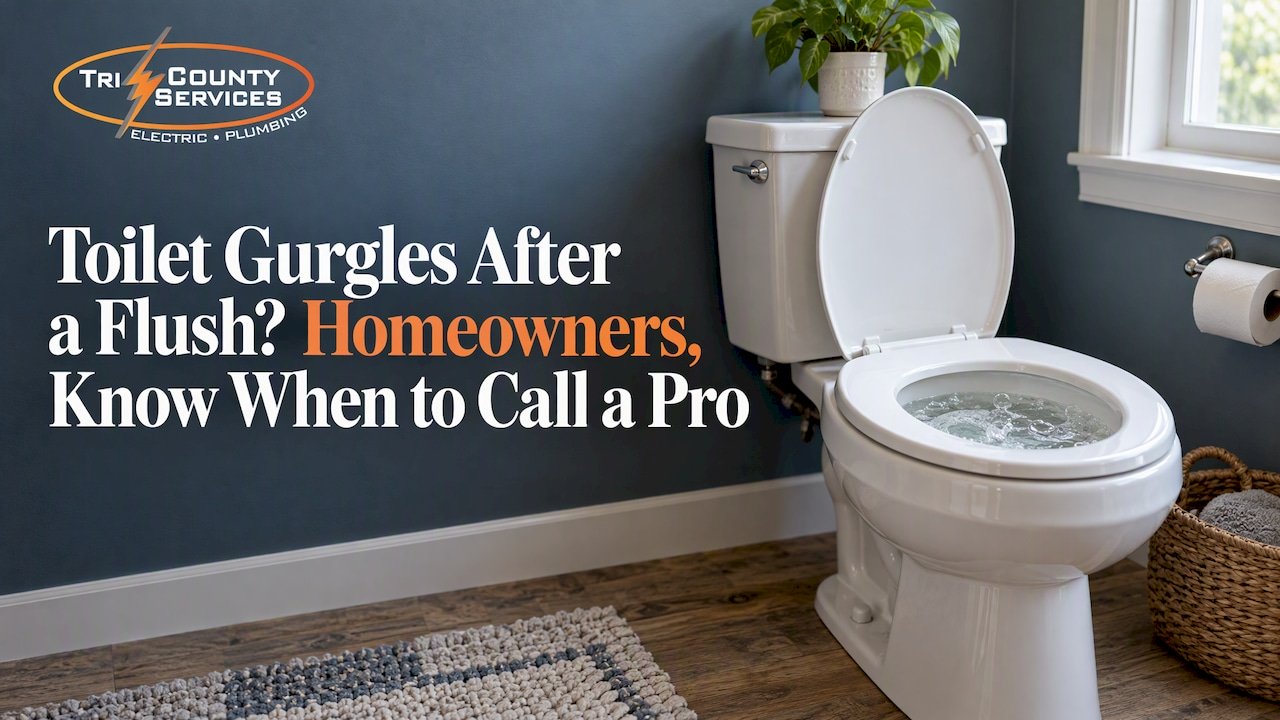


A gurgling toilet can indicate disrupted air or water flow in the drainage system, often from a partial clog or blocked vent. If water rises or other drains react, stop using the affected fixtures and call a professional to diagnose the cause.
TL;DR:
- If the bowl rises, wastewater backs up, sewage odors appear, or multiple fixtures react, stop using them and call a professional promptly.
- Try one round of 10 to 15 vigorous plunges with a flange plunger; if symptoms persist or return within a day or two, arrange an inspection.
- Gurgling across fixtures, slow drains, sewage odors, or wet ground near a drainfield can signal a main line or septic problem requiring professional diagnosis.
- Leave roof vent inspection and clearing to a professional; nests, leaves, or ice can block airflow, and roof access creates a fall risk.
- Avoid chemical drain cleaners and never flush wipes, especially on septic systems, because they can disrupt tank bacteria and contribute to recurring clogs.
Table of Contents
- Quick checklist to diagnose the cause of the gurgling
- Safe first steps before you decide to call for help
- How a blocked vent causes that gurgling sound
- When the problem is your main line or septic system
- When to stop troubleshooting and call a professional
- Keeping your drains clear after the gurgling stops
- Why professional diagnosis beats repeated DIY attempts
- Get your gurgling toilet checked by Tri-County Services Electric & Plumbing
- FAQ
- Sources
Quick checklist to diagnose the cause of the gurgling
Before deciding whether this is a quick fix or a bigger problem, run a few fast checks. Turn on the sink or shower closest to the toilet and listen for gurgling there too; if multiple fixtures react, the restriction is likely system-wide rather than isolated to the toilet.
- Note whether the gurgle happens only right after you flush or whenever any nearby fixture drains.
- Check for sewage odors, slower draining elsewhere in the house, or soggy spots in the yard, all signs tied to septic malfunctions.
- Try one round of plunging and watch whether the sound improves or returns within a day.
- Watch the bowl level during a flush. Rising water instead of draining normally points to a blockage further down the line.
These observations tell you whether you are dealing with a local clog, a vent issue, or something that reaches your main line or septic system, which determines your next move.
Safe first steps before you decide to call for help
Because gurgling can point to a vent, main-line, or septic issue, contacting a professional first is the safer choice. Avoid repeated DIY attempts, which can waste time and delay finding the underlying problem.
- Use a flange plunger, not a flat sink plunger, and keep enough water in the bowl to fully cover the rubber cup.
- Seal the plunger over the drain opening and apply 10 to 15 vigorous plunges as a starting point, stopping if the water nears the rim.
- If plunging does not help, a toilet auger (closet auger) can reach deeper into the trapway. Wear gloves and avoid scraping the porcelain.
- For a suspected soft, organic clog, hot (not boiling) water with a bit of dish soap poured into the bowl can sometimes loosen the blockage.
Pro Tip: Avoid repeated chemical drain cleaners, especially if you’re on a septic system. They can delay finding the actual fault when the problem keeps coming back.
If none of these steps resolve the gurgle quickly, that is your signal to stop troubleshooting and bring in a professional rather than repeating the same steps with stronger chemicals or more force.
How a blocked vent causes that gurgling sound
Plumbing vents let outside air into your drainage system so water can flow smoothly without creating a vacuum. When a vent is blocked, the system has to pull air from somewhere else, and it often pulls it through your toilet’s water trap, which produces the gurgle. A plumbing expert’s explanation describes this as the drain line “gulping for air” because normal airflow is restricted.
- Bird nests, leaves, and other debris are common culprits inside a roof vent stack.
- Ice buildup in cold weather can block a vent opening temporarily.
- A professional typically inspects the roof vent, clears it with an auger or snake, and uses a camera when the blockage isn’t visible from above.
Climbing onto your roof to inspect or clear a vent carries real fall risk and is exactly the kind of job better left to a professional plumbing camera inspection that can confirm the blockage without guesswork.
When the problem is your main line or septic system
A clog in your main sewer line or trouble in a septic tank traps air inside the system, and that air escapes through whatever path is easiest, frequently your toilet. This is why gurgling that affects several fixtures at once often points to something bigger than a single clogged drain.
- Multiple fixtures gurgling together, house-wide slow drains, sewage odor, or backups are signs of a system-level restriction.
- Wet or spongy ground over a drainfield is a warning sign of septic malfunction according to EPA guidance, which also lists gurgling sounds, standing water, and odors among the symptoms to report.
- A practical diagnostic approach treats gurgling plus multiple slow drains as a reason to schedule septic pumping or inspection, especially if it has been several years since the last service.
- Professionals use sewer cameras, extended augers, or hydro jetting to clear main lines, and septic pumping or inspection to address tank-level issues.
If you’re unsure whether your line or tank is at fault, a sewer line inspection can clarify what’s actually happening underground before any repair work begins.
When to stop troubleshooting and call a professional
Certain signs mean you should skip further DIY attempts entirely and get a professional diagnosis right away.
- Call immediately if the bowl rises toward the rim, wastewater backs up, you smell sewage, or more than one fixture is affected.
- If plunging or an auger doesn’t resolve the gurgle, or it returns within a day or two, schedule a professional camera inspection rather than repeating the attempt.
- On a septic system, treat gurgling alongside slow drains, odors, or wet ground as a signal of septic failure and contact a septic professional promptly, since persistent symptoms can reflect damaged lines rather than something a chemical product can fix.
These triggers exist because a DIYer poking at a vent, a main line, or a septic tank without the right equipment risks turning a contained issue into a much larger repair.
Keeping your drains clear after the gurgling stops
A few habits reduce how often this problem comes back. Flush only human waste and toilet paper. Wipes and similar products don’t break down the same way and are a common cause of partial clogs.
- Follow a regular septic inspection and pumping schedule rather than waiting for symptoms to appear.
- Skip chemical drain cleaners on a septic system since they can disrupt the bacteria your tank relies on.
- Keep roof vents clear of debris and trim back branches that could drop material onto the vent stack.
- If partial clogs keep recurring, periodic professional drain cleaning or a camera check can catch a developing problem early.
Why professional diagnosis beats repeated DIY attempts
A gurgling toilet is often treated like a nuisance to plunge away, but the sound itself is just a symptom. The real question is where the air is being forced from, and that’s not always visible from inside your bathroom. Homeowners can spend time cycling through plungers and chemical cleaners when a professional camera inspection could help identify the underlying problem.
Our view is simple: one safe plunge attempt is reasonable, but repeated attempts on a symptom that keeps returning usually mean you’re treating the wrong problem. If you want a second opinion before booking anyone, resources like Workily’s guide to booking a vetted plumber explain why confirming credentials and insurance matters before letting someone work on your home.
— Lindsay Paramore
Get your gurgling toilet checked by Tri-County Services Electric & Plumbing

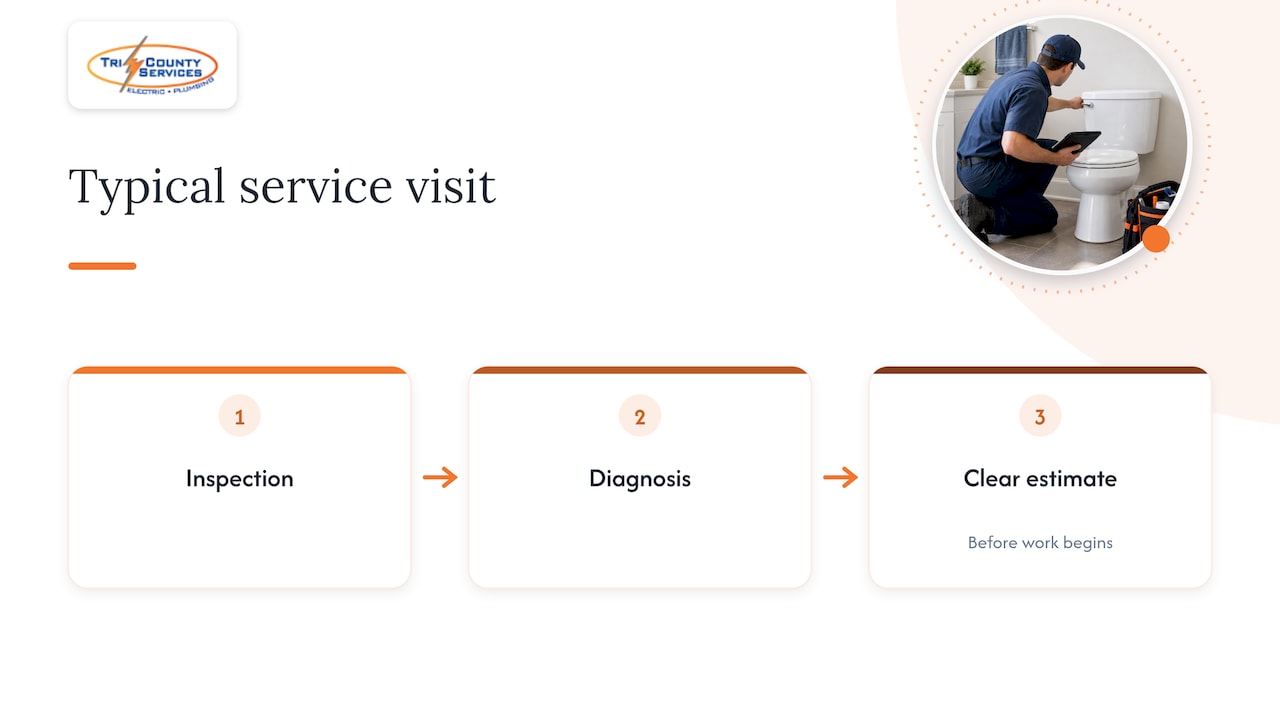
A gurgling toilet rarely fixes itself, and guessing at the cause can mean paying twice: once for the wrong fix, once for the right one. We offer drain cleaning, sewer camera inspection, and hydro jetting, and a typical visit includes inspection, diagnosis, and a clear estimate before any work begins.
Call our office at (440) 253-0332 or visit our plumbing pricing guide to see service details and book an estimate today.
FAQ
How often should I clean my toilet?
Regular cleaning with a toilet bowl brush and cleaner can help limit mineral buildup and residue in the trapway. Regular cleaning doesn’t prevent vent or main-line clogs, but it reduces one source of partial blockages inside the bowl itself.
How does a toilet work?
When you flush, water from the tank rushes into the bowl and through the trapway, using gravity and siphon action to push waste into the drain line. A vent stack allows air into the system during this process so water can flow without creating suction that pulls air back through the trap, which is what causes gurgling when a vent is blocked.
What’s the best way to unclog a toilet?
Start with a flange plunger, keeping enough water in the bowl to cover the rubber cup, and use 10 to 15 vigorous plunges as a starting point. If that doesn’t clear it, a toilet auger can reach deeper clogs, and a professional camera inspection is the next step if the clog persists or returns.
What could be causing gurgling under my sink?
A gurgling sink often shares the same cause as a gurgling toilet: a vent or drain line that can’t move air and water freely, forcing air through the nearest trap. If your sink gurgles when the toilet flushes or another fixture drains, treat it as a sign of a shared vent or line restriction rather than an isolated sink problem.
Sources
-
Why Your Toilet Bubbles When Flushed – Toilet Venting Issues | Family Handyman
-
Signs of Septic System Failure | Washington State Department of Health
-
[Why Is My Toilet Gurgling? Causes, Septic vs Plumbing, What to Do
– SeptiCorp](https://www.septicorp.com/blogs/education/why-is-my-toilet-gurgling-causes-septic-vs-plumbing-what-to-do)