
Slow drains. Gurgling toilets. Sewage odors. Wet spots in the yard that won’t go away.
When something’s wrong with your main sewer line, it doesn’t stay a small problem for long — and it doesn’t stay underground, either. It shows up in your sinks, your yard, and eventually your peace of mind.
The good news? Once you know what actually happens after you make the call, the whole thing feels a lot less overwhelming.
Signs Something’s Wrong Underground
A sewer line problem usually announces itself before it becomes an emergency. Keep an eye out for:
- Multiple drains backing up or draining slowly at the same time
- Gurgling sounds coming from toilets or floor drains
- Sewage odors inside or outside the home
- Soggy, unusually green, or sunken patches in the yard
- Toilets that won’t flush properly no matter what you try
Any one of these on its own might not mean much. A few of them together usually mean the problem is at the main line, not just one fixture.
How We Find the Problem
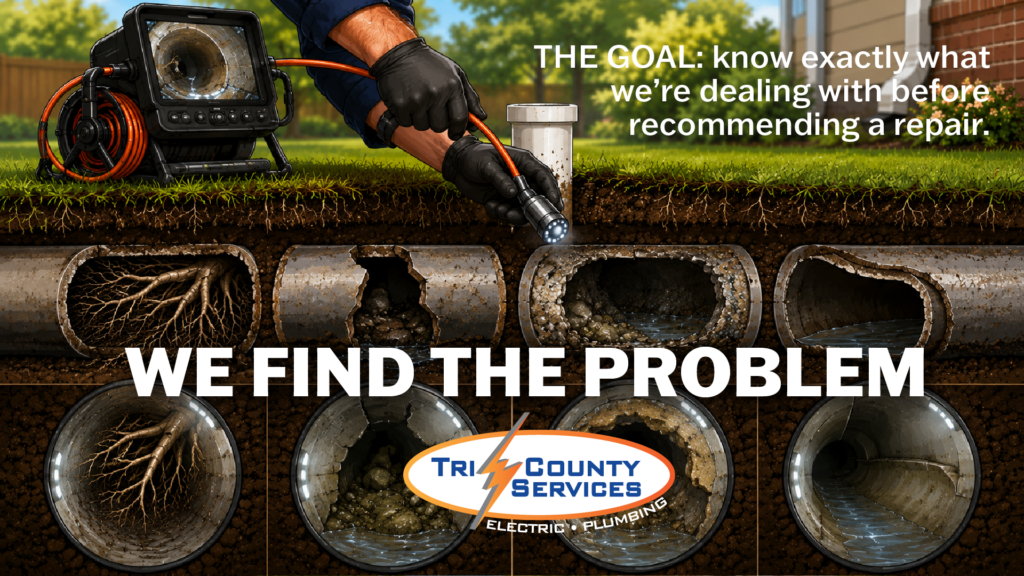
Before anyone recommends a repair, we need to know exactly what we’re dealing with — not guess at it.
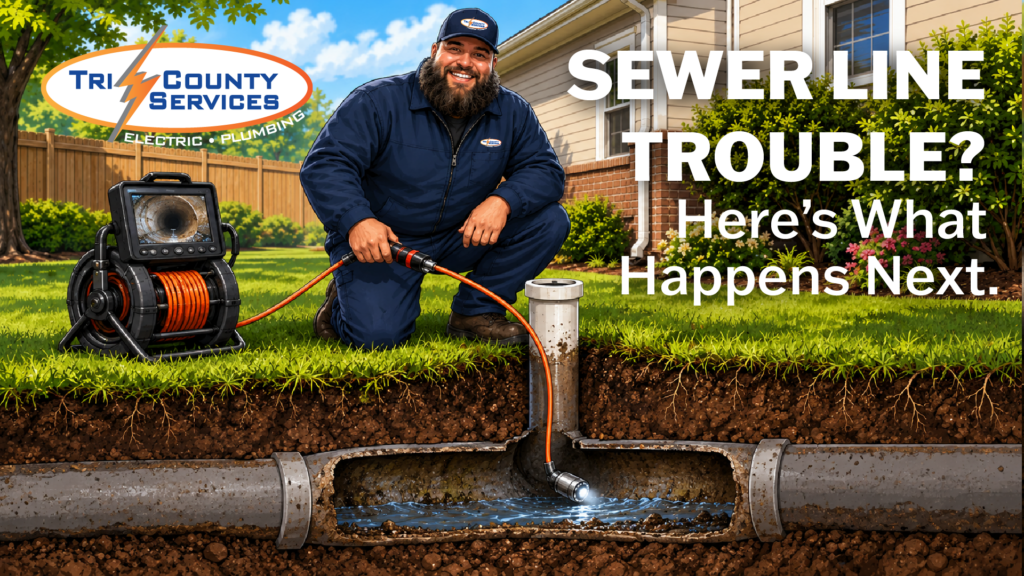
That starts with a sewer camera inspection. We feed a camera directly into the line to see the actual condition of the pipe: whether it’s tree roots growing through a joint, a buildup of grease and debris, a cracked section, or a pipe that’s simply collapsed after decades in the ground. The camera feed shows us precisely where the problem is and how bad it’s gotten, which means the repair plan is based on what’s really happening below the surface — not a guess.

Repair or Replace? Not Every Problem Needs the Same Fix
This is where a lot of homeowners brace for the worst, but not every sewer problem means tearing up the whole yard. Depending on what the camera shows, there are a few different paths forward:
Spot Repair — If the damage is limited to a small section of pipe, we can repair just that section rather than the whole line.
Pipe Lining — A durable liner is inserted into the existing pipe, creating a new interior surface without removing the old pipe.
Pipe Bursting — The old pipe is broken apart while a new one is pulled into its place, replacing it with minimal excavation.
Trenchless Replacement — Underground pipe is replaced with a technique that avoids digging up the entire line.
Full Replacement — In some cases, the old pipe genuinely needs to come out and be replaced start to finish.
We walk through which option fits your situation, what the work actually involves, and what to expect before anything begins. You shouldn’t have to become a sewer expert overnight just to make the right call for your home.
Getting Your Home Back to Normal
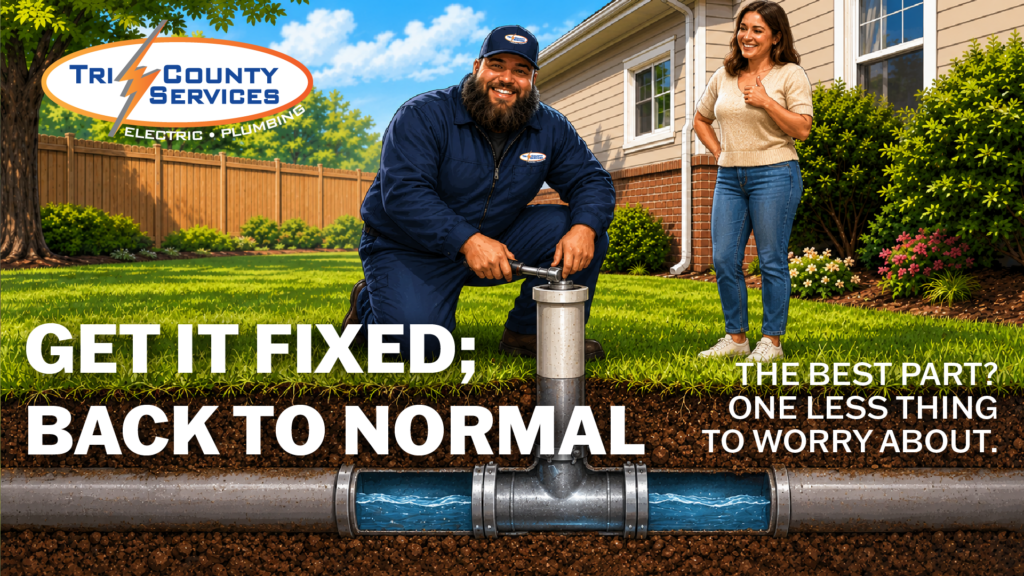
At the end of the day, the goal was never just “repair a pipe.” It’s getting your drains working, your yard protected, and one less thing hanging over your head. A sewer line repair done right means you stop thinking about it — which is exactly the point.
Seeing the Warning Signs?
A small sewer line issue rarely stays small for long. If you’re noticing slow drains, odors, or wet spots in the yard, it’s worth getting a camera inspection before it turns into a bigger — and more expensive — mess.
📞 Call Tri-County Services Electric and Plumbing at (440) 207-0521 to get your sewer line checked out.