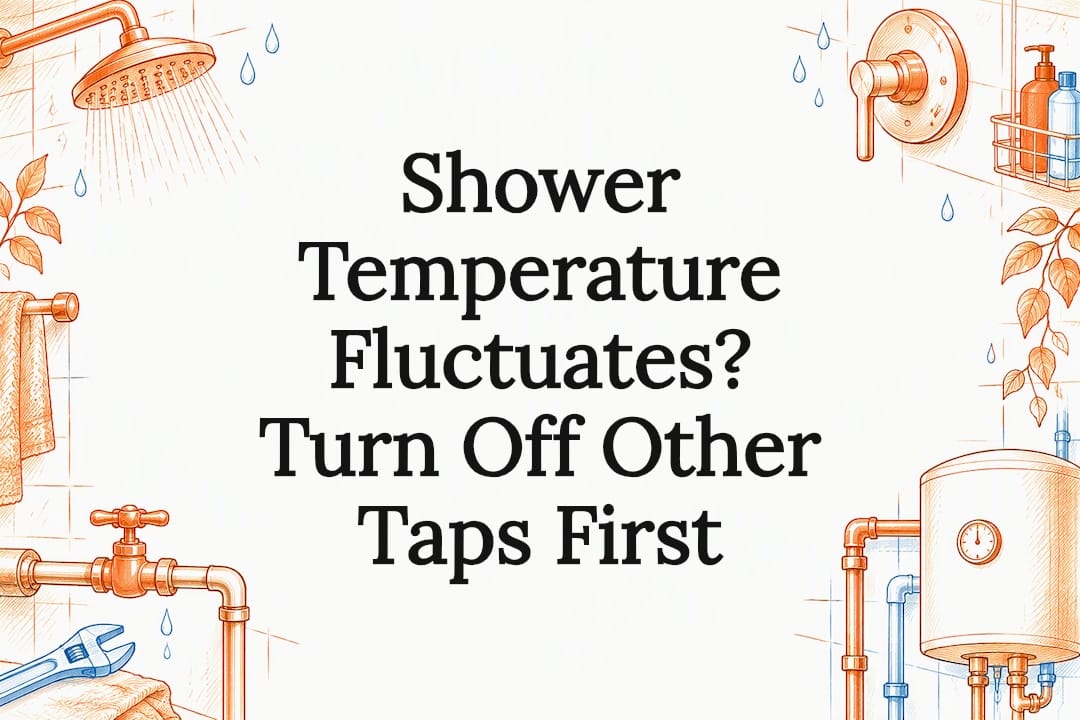


Sudden hot and cold swings usually come from one of three places: a pressure event elsewhere in the house, a worn or failing shower valve, or a water heater problem like sediment buildup or a broken dip tube. The safe first move is simple: stop all other water use, retest the shower alone, and if the swings continue, arrange a professional inspection rather than opening up the valve or heater yourself.
TL;DR:
- Test whether swings stop with other fixtures off, then compare another shower or faucet; a single fixture points toward its valve.
- Pressure balancing valves should hold outlet temperature within about ±3.6°F during inlet pressure shifts; larger swings suggest a mechanical fault.
- Tankless heaters can stop heating when flow falls below their minimum, so reduced flow at a fixture may cause cold water without a heater failure.
- Record when the swing occurs, which other fixtures are running, and the heater’s model and age; technicians use these details to test components before replacing parts.
- Scalding swings, leaks, pipe banging, or repeated heater cycling warrant professional service; avoid opening valve trim or heater panels yourself.
Table of Contents
- Fast, Low-Risk Checks to Stabilize Your Shower
- How Valves, Pressure Events, and Water Heaters Cause Fluctuations
- A Safe Checklist Before You Call for Help
- When to Call a Professional and What Happens Next
- What Our Technicians See Most Often
- A Technician’s Take on Fixing It Right the First Time
- How We Fix Fluctuating Shower Temperatures
- FAQ
- Sources
Fast, Low-Risk Checks to Stabilize Your Shower
Before touching anything, gather information. These checks take a few minutes and won’t void a warranty or create a bigger problem.
- Turn off every other fixture in the house, then run the shower alone to see if the swings stop.
- Test a different shower or faucet to learn whether the issue is limited to one fixture or affects the whole house.
- Look at your water heater’s visible settings and any status lights, but don’t open its panels or adjust internal components.
- If your shower has separate volume and temperature controls, set the temperature first, then adjust flow with the volume handle.
Pro Tip: Write down exactly when the temperature shifts from hot to cold or cold to hot, and what you were doing at the time. That detail alone can tell a technician whether the cause is a valve or the heater.
Avoid taking apart the valve trim or working near the water heater’s gas or electrical connections. Those repairs carry real risk, and misdiagnosing the part can mean paying for a replacement you didn’t need.
How Valves, Pressure Events, and Water Heaters Cause Fluctuations
Most fluctuation complaints trace back to one of three systems acting up, sometimes together.
- Pressure events: Flushing a toilet or running a dishwasher briefly drops cold or hot inlet pressure, and a healthy pressure-balancing valve is built to compensate for that.
- Pressure-balance or cartridge failure: A sudden brief drop, unusual noise, or a problem that only shows up on one shower points to a worn spool or cartridge.
- Thermostatic valve issues: These often show up as overshooting past your set temperature or sticking at one setting, which behaves differently from a pressure-balance fault.
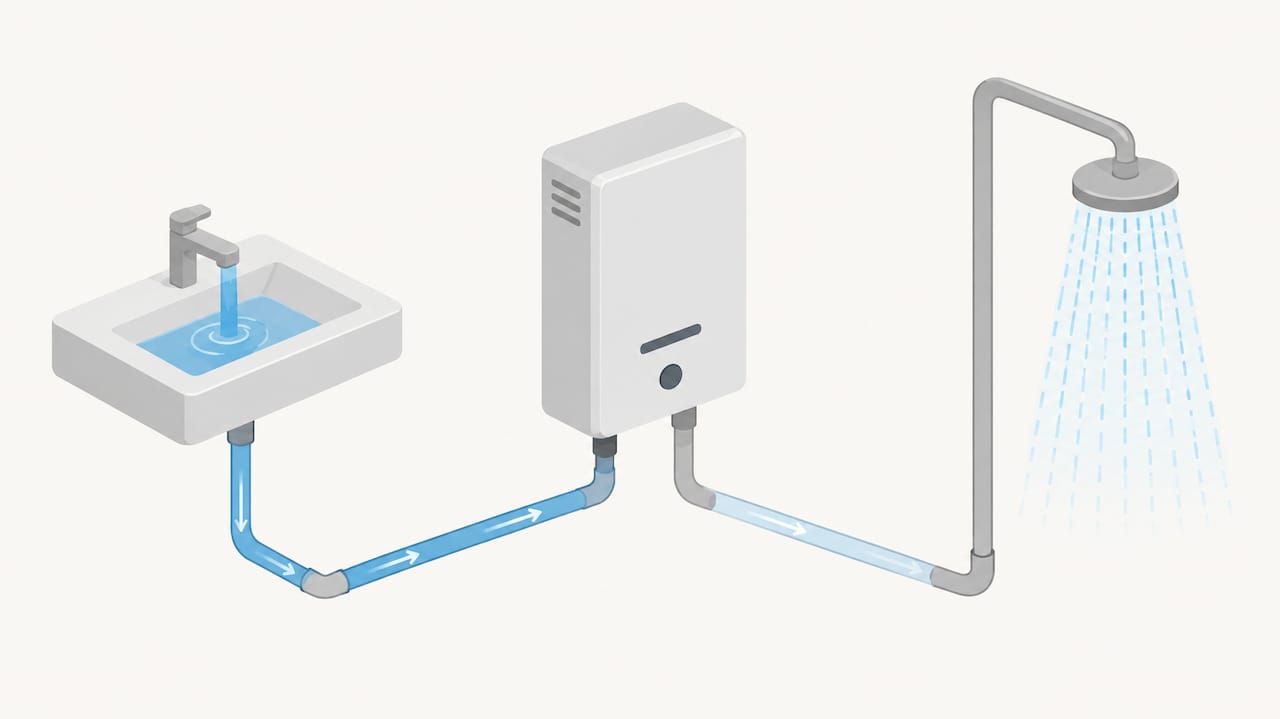
- Water heater problems: A broken dip tube lets cold water mix in at the top of the tank, sediment reduces usable hot water capacity, an undersized tank runs out faster than expected, and tankless units can stop heating when flow drops below their minimum.
- Piping and thermal shock: Undersized pipes or missing damping devices can cause rapid, sharp temperature spikes that feel worse than the actual pressure change.
Modern pressure-balancing valves are engineered to hold outlet temperature within about ±3.6°F even when inlet pressure shifts, which is why a swing beyond that range usually signals a mechanical fault rather than normal household demand. Delta Faucet’s technical notes describe how an internal spool equalizes hot and cold pressure to protect against sudden changes, but that same spool is the part most likely to stick or wear over time, making it the single most common fixture-level cause of shower temperature swings.
Tankless water heaters add a wrinkle: manufacturer documentation notes these units require a minimum flow rate to keep heating, so a low-flow fixture or a partially closed valve elsewhere can make the water run cold even though nothing is actually broken.
A Safe Checklist Before You Call for Help
Reproducing the problem on purpose, safely, gives a technician far more to work with than “it happens sometimes.”
- Run the shower until the fluctuation happens, and note what else was running in the house at that moment.
- Test other fixtures the same way to see if the pattern repeats.
- Time how long it takes for the swing to occur and whether it’s tied to flow rate or temperature alone.
- Record your water heater’s make, model, and approximate age, along with any recent plumbing work.
Pro Tip: A short video of the shower mid-swing, timestamped against another fixture running, is one of the most useful things you can hand a technician before they even arrive.
Note whether the shower runs hot-first or cold-first, and whether it cycles repeatedly or just dips once. Skip opening the valve trim or the heater’s access covers. Those checks belong to the low water pressure diagnostics we recommend before any service call, not a full teardown.
When to Call a Professional and What Happens Next
Some signs mean it’s time to stop troubleshooting and pick up the phone.
- Scalding water or temperatures that swing repeatedly without warning.
- Visible leaks, loud banging in the pipes, or a water heater that seems to be cycling on and off.
- Quick checks that don’t resolve or explain the pattern.
During a visit, a technician typically tests the valve cartridge and pressure-balance function, checks thermostatic elements, runs flow tests on the piping, and inspects the water heater for dip tube failure, sediment, or thermostat issues. Common fixes include replacing a worn cartridge or valve, installing a pressure-balancing or thermostatic valve where one is missing, flushing or servicing the heater, or correcting a piping restriction with a damping device. Ask the technician to show you the failed part and walk through a written estimate before any work begins.
What Our Technicians See Most Often
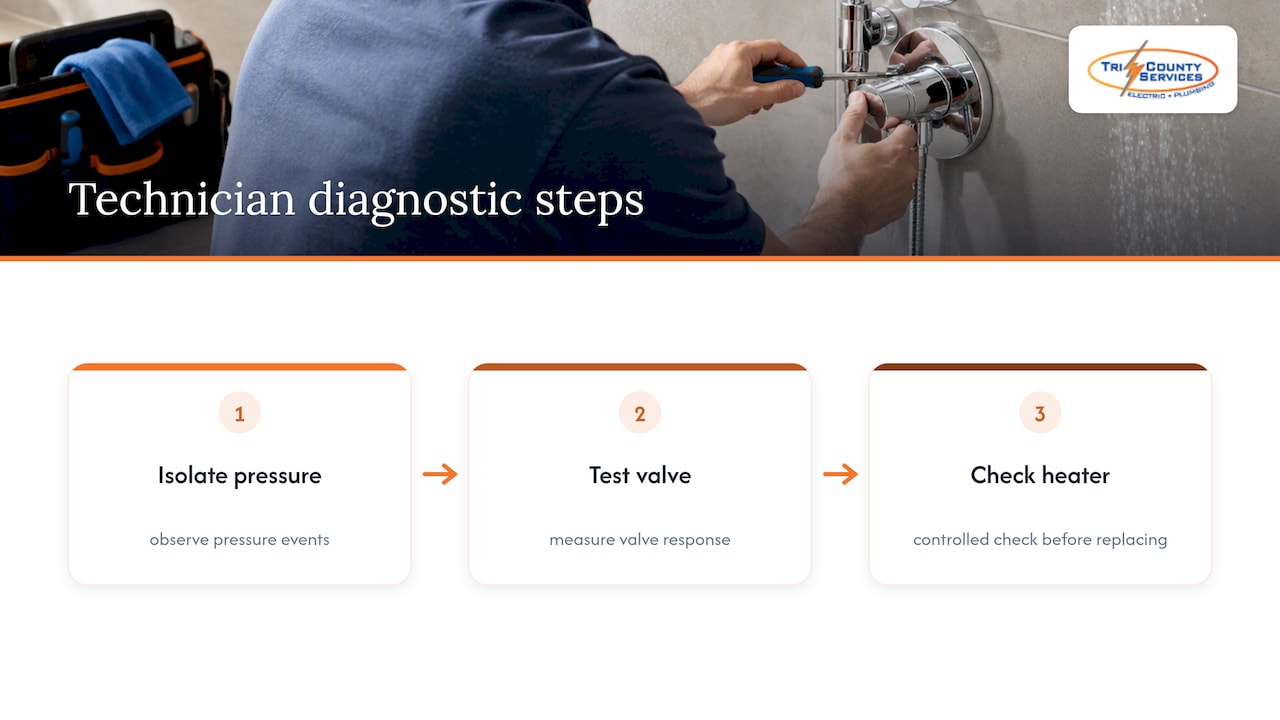
On recurring temperature-fluctuation calls, our technicians most often find a worn cartridge or a sediment-restricted water heater, not a mystery problem. The standard approach is to isolate pressure events first, test the valve’s actual response, then run a controlled check on the heater before replacing anything. That order avoids swapping parts that weren’t the problem in the first place. Have your heater’s age and a description of when the swings happen ready when you call (440) 253-0332.
A Technician’s Take on Fixing It Right the First Time
The instinct to open up a valve or heater yourself is understandable, but it’s also how a small fix turns into a bigger repair bill. Getting the diagnosis right the first time saves both money and repeat visits.
— Lindsay Paramore
How We Fix Fluctuating Shower Temperatures
We handle the full range of causes behind shower temperature swings, from water heater repair and tank replacement to valve and cartridge replacement and pressure and flow diagnostics.

Family-owned since 1975, we send professional technicians who test before they replace, and we schedule around your day rather than the other way around.
| Service | Typical cost |
|---|---|
| Faucet installation | See our website for current pricing |
| Water heater repair or tankless installation | See our website for current pricing |
- Flushing or servicing a sediment-filled tank often helps resolve temperature fluctuations without the need for valve replacement.
- A tankless unit cycling below its minimum flow may just need a flow adjustment, not a new heater.
Call us at (440) 253-0332, or schedule a water heater inspection online to get a straight answer on what’s causing your swings.
FAQ
Why does my shower get hot then cold then hot again?
This cycling pattern usually points to a pressure-balance valve that’s struggling to compensate for repeated pressure changes, or a tankless heater cycling near its minimum flow. A technician can test the valve’s response and check the heater’s flow threshold to confirm which one it is.
Why does my shower not regulate temperature?
A shower that won’t hold a set temperature often has a worn cartridge or a failed thermostatic element inside the valve. Manufacturer design notes describe how these parts are supposed to equalize pressure and hold temperature steady, so a failure there is the most common fixture-level explanation.
Why does one of my showers get hotter than the other?
When only one shower runs hotter or colder than the rest, the cause is almost always isolated to that fixture’s valve rather than the water heater. Testing other showers on the same line helps confirm whether it’s a single faulty cartridge or a broader supply issue.
Why won’t my shower stay at a constant temperature?
Inconsistent temperature can come from pressure events, a worn valve, or heater issues like sediment buildup or a broken dip tube. Safety guidance generally recommends keeping water heaters at or below 120°F to limit scald risk, with a comfortable shower range closer to 90°F to 110°F.
Sources
- Kohler: Monitor / Rite-Temp pressure balance performance note
- IAPMO / codespotlight guidance on temperature-limiting devices
- Delta Faucet technical note on Monitor pressure-balance valves
- Rinnai installation and operation manual (tankless notes)