

Do this now: disconnect every hose, shut off the interior valve feeding each exterior spigot, open the spigot to drain it completely, and install an insulated cover. Frost-proof faucets still need the hose removed to drain properly. If you cannot find or operate the shutoff valve, that is the point to call a professional rather than guess at it.
TL;DR:
- Disconnect hoses and attachments from outdoor spigots to prevent trapped water that can cause freezing and damage.
- Locate the interior shutoff valve feeding each spigot and ensure it is fully turned off before opening the outdoor faucet to drain residual water.
- Frost-proof spigots self-drain with proper installation and hose removal, but must be pitched downward and kept open during winter; standard spigots require manual draining.
- Installing insulated faucet covers snugly against the wall prevents cold air infiltration, but should not be tightly wrapped around wet or un-drained spigots.
- Call a professional if you cannot find or operate the shutoff valve, notice leaks, or suspect a frozen or burst line to avoid costly repairs.
Table of Contents
- A 6-step quick checklist you can finish in 10 minutes
- Step-by-step winterization for standard and frost-proof faucets
- Tools, materials, and upgrade options
- Identify frozen lines and safe thawing methods
- When it’s safer or smarter to hire a professional
- Publisher perspective: the local, professional view
- Tri-County Services Electric & Plumbing: services and how we help
- FAQ
- Sources
A 6-step quick checklist you can finish in 10 minutes
Cold snaps in Northeast Ohio arrive fast, so this sequence covers the basics before the first hard freeze.
- Disconnect hoses, splitters, and any attachments from every outdoor spigot.
- Find the indoor shutoff valve feeding that spigot, usually in the basement or crawlspace, and turn it off.
- Open the outdoor spigot so remaining water drains out, then leave it open.
- Fit an insulated faucet cover snugly against the exterior wall so no gaps let cold air in to keep the cold out like recommended in how to winterize your doors.
- Check unheated areas like crawlspaces for exposed pipe and add insulation or seal drafts around the foundation.
- Call a professional if you cannot locate the shutoff, notice a leak, or the spigot has frozen before.
Disconnecting hoses and shutting off and draining outdoor spigots are the core steps municipal guidance points to for preventing spigot and pipe bursts in freezing weather.
Step-by-step winterization for standard and frost-proof faucets
Start by locating the interior shutoff valve that feeds your outdoor spigot. It is typically mounted on the pipe where it enters from outside, near the foundation wall in a basement or crawlspace. If you trace the pipe and still cannot find a dedicated valve, or the one you find is painted shut, corroded, or otherwise won’t turn, stop there. Forcing a stuck valve can crack it, and a professional can locate, label, or replace it safely.
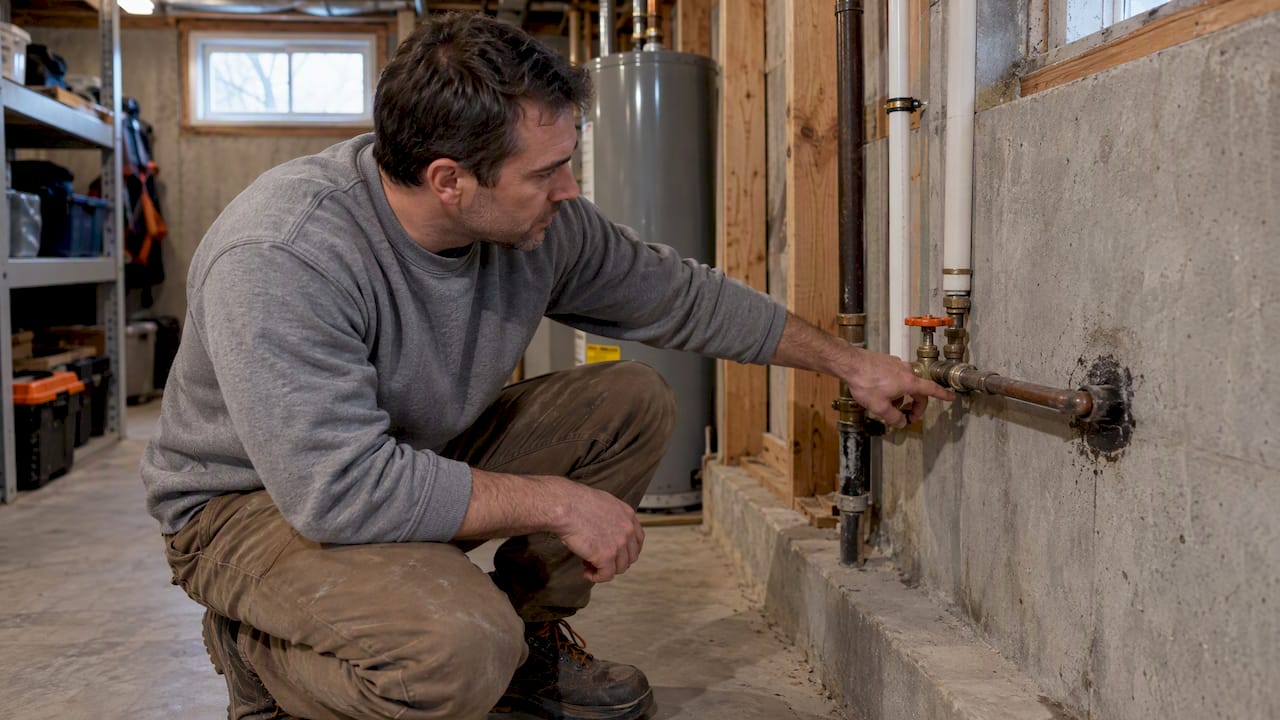
Once you find a working valve, the sequence is simple: shut the interior valve, open the outside faucet, let it drain fully, then leave the spigot open through winter so any residual water has somewhere to go besides the pipe walls.
Frost-proof, or frost-free, spigots work differently than standard ones. These fixtures close the water supply several inches inside the wall, so the exposed outdoor portion self-drains when installed correctly. That design still fails if a hose stays connected, because the hose traps water in the barrel and blocks proper drainage. Removing every hose is not optional, even on a frost-proof model.
- Standard spigots need the interior valve shut and the line drained manually.
- Frost-proof spigots self-drain but only with hoses disconnected and the spigot pitched slightly downward.
- Either type can still freeze if installation or pitch is off.
When you install a faucet cover, seat it firmly against the siding or brick so no gap lets in cold air, but don’t wrap it so tightly over a spigot that’s still dripping or hasn’t fully drained, since trapped moisture inside the cover can freeze and cause the same damage you’re trying to prevent.
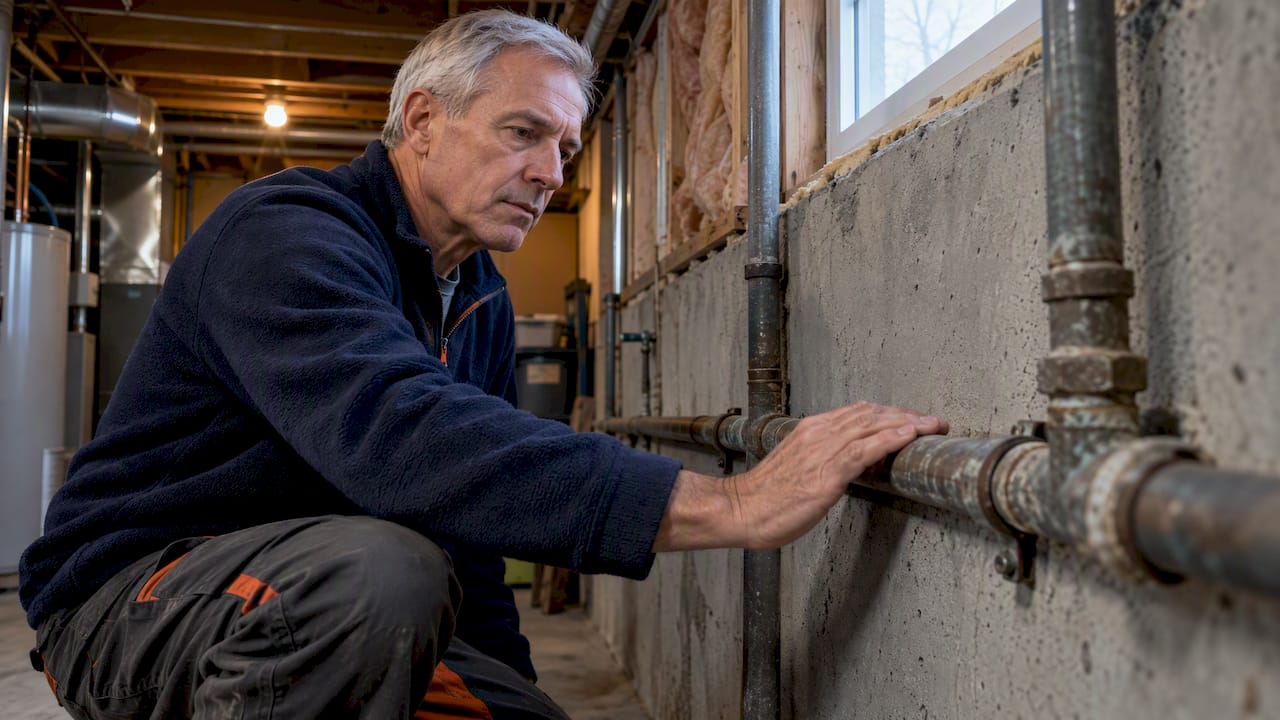
Pro Tip: After draining, run your hand along the exposed pipe section indoors for a few days during the first cold snap to check for unusual cold spots or moisture, a quick sign something isn’t sealed right.
Never use an open flame anywhere near pipes, even if you suspect a freeze has already started. That safety rule applies throughout the colder months, not just during initial winterization.
Tools, materials, and upgrade options
Most of what you need for basic winterization is inexpensive and available at any hardware store.
- Insulated faucet covers: rigid foam domes or fabric-lined covers typically run $5 to $15 and work best seated tightly against the wall.
- Pipe insulation sleeves and caulk: useful for sealing gaps and wrapping exposed lines in unheated crawlspaces or garages.
- Basic tools: an adjustable wrench and a small bucket handle most of the draining process.
- Heat tape: can help protect vulnerable pipe runs, but it involves an electrical connection near plumbing, and that pairing is worth having a professional handle rather than wiring it yourself.
If a spigot freezes repeatedly despite these steps, replacing it with a frost-proof model is often the better long-term fix. That’s a plumbing installation job, not a weekend project, since it involves cutting into the supply line and getting the pitch right so the fixture actually self-drains.
Identify frozen lines and safe thawing methods
A frozen outdoor line usually shows itself through no water flow at the spigot, visible frost on the exposed pipe, or a pipe that looks slightly swollen. The moment you notice any of these, open the faucet served by that line. That relieves pressure as the ice begins to melt and gives trapped water somewhere to go.
- Apply gentle heat with a hair dryer, an electric heating pad, or warm towels along the frozen section.
- Raise the indoor temperature near the affected pipe run if it passes through an unheated space.
- Never use a propane torch, candle, or other open flame near a pipe, frozen or not.
- If you see water leaking anywhere as the ice thaws, shut off the main water supply and call a professional right away.
Safe thawing avoids open flames entirely, relying instead on gentle, steady heat. A cracked pipe discovered mid-thaw can flood a wall cavity in minutes, which is exactly why catching leaks early and cutting water at the main matters more than finishing the thaw yourself.
When it’s safer or smarter to hire a professional
Some situations call for a professional visit rather than a weekend fix, especially when water and electricity or hidden plumbing are involved.
- You can’t find the shutoff valve, or the one you find won’t turn.
- The spigot has frozen or burst in previous winters despite your prep work.
- You notice a leak, bulge, or dampness on a wall near an outdoor faucet line.
- The frozen section runs through a wall cavity or crawlspace you can’t safely reach.
A typical visit covers locating and labeling your shutoff valve, installing a new one if needed, replacing a failing spigot with a frost-proof model, or repairing a leak uncovered during thawing. If any of this sounds like your situation, call Tri-County Services Electric & Plumbing at (440) 253-0332 before the next cold snap makes it worse.
Publisher perspective: the local, professional view
We have experience working on homes across Northeast Ohio and handle both electrical and plumbing work. That local knowledge matters here: Cleveland winters are unpredictable, and a spigot that behaved fine last year can still catch a homeowner off guard this year.
A faucet cover is a helpful layer, but it’s not a substitute for an accessible shutoff valve or a properly installed frost-proof spigot. If you’re not confident locating your valve or you’ve dealt with a frozen line before, it’s worth a call rather than a guess. Reach us at (440) 253-0332.
— Lindsay Paramore
Tri-County Services Electric & Plumbing: services and how we help
Winterizing a faucet is only half the job when the valve is missing, stuck, or the fixture itself keeps freezing. Our services include shutoff valve location and installation, faucet repair and replacement, pipe leak repair, insulation guidance for exposed lines, and emergency service when a pipe bursts without warning.

As a local team with professional technicians, we have built our reputation on showing up, explaining what we find, and fixing it right the first time. Fitting a new frost-proof spigot, replacing a shutoff valve, or tracking down a slow leak before it becomes a flooded basement are all jobs we handle on flexible scheduling that works around your home.
- Shutoff valve location, labeling, and replacement
- Frost-proof spigot installation and faucet repair
- Pipe leak repair and emergency plumbing response
Call us at (440) 253-0332 or check our plumbing pricing guide to book a visit before the next freeze hits.
FAQ
Do outside faucets need to be winterized every year?
Yes, every outdoor spigot needs winterizing each year regardless of how last winter went, since even a mild season doesn’t guarantee the line was fully protected. Disconnecting hoses and draining the line remains the standard recommendation before the first hard freeze.
Will outdoor faucets freeze at 30 degrees Fahrenheit?
A short dip above freezing temperature rarely freezes a properly drained spigot, but sustained freezing temperatures over several hours raise the risk significantly, especially if water is still sitting in the line. The safest approach is finishing winterization before temperatures drop consistently below freezing, not waiting to see how cold it gets.
Does wrapping a towel around an outdoor faucet stop it from freezing?
A towel offers minimal, temporary insulation at best and isn’t a reliable substitute for draining the line and shutting off the interior valve. Insulated covers provide some additional protection when seated tightly against the wall, but they work as a secondary layer, not the main defense.
What’s the best way to shut off an outdoor faucet for winter?
The most reliable method is shutting off the interior valve feeding that specific spigot, then opening the outdoor faucet to let it drain fully before leaving it open through the cold months. If you can’t locate that valve or it won’t turn, that’s a sign to get help rather than leave the line unprotected.
What if my irrigation system also needs winterizing?
Irrigation systems have their own winterization rules that differ from a simple hose spigot, and improper handling of certain components can cause damage. Follow manufacturer guidance and local code for your specific system rather than treating it the same as an outdoor faucet.
Sources
- Winterizing Pipes | Cleveland Water
- Should you cover outdoor faucets in winter? – EPM (Stanford)
- How to winterize outside faucets – The Spruce
- Home sprinkler systems: preparing your sprinkler system for winter – Colorado State Extension