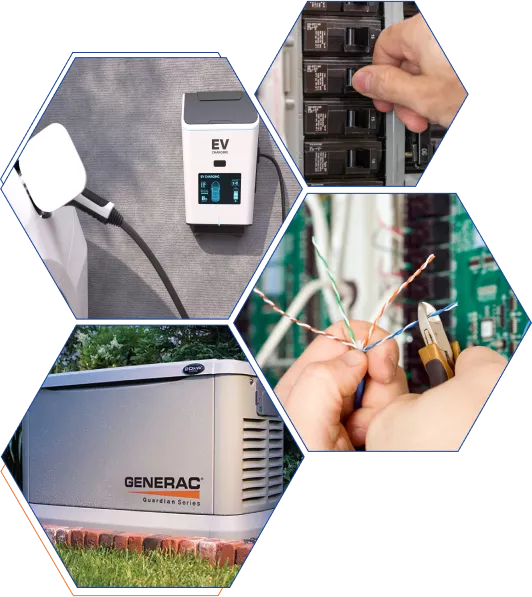


If the work adds, moves, upgrades or replaces permanent wiring, you almost certainly need an electrical permit. That includes new outlets, new circuits, service panel changes and EV charger wiring. Like-for-like swaps, such as replacing a worn outlet, a fuse or a lamp, are often exempt. The exact line is set by your city or county, not by one national rule. In Northeast Ohio, the safest first step is a call to a professional electrician and your local building department before any wire is touched.
We are Tri-County Services Electric & Plumbing, a family-owned business serving Northeast Ohio since 1975. Below is how permits work for homeowners, with examples from Ohio cities and other states so you can see the pattern. Questions about your own project? Call our office at (440) 253-0332.
TL;DR
- Permits are generally required when you add, extend, alter or upgrade permanent wiring, including panels, circuits, outlets and fixtures. Strictly like-for-like replacements are often exempt.
- Rules are local. Cleveland, Toledo and Fairfield each handle homeowner permits differently, so confirm with your building department.
- Even where a homeowner may pull a permit, the owner carries responsibility for code compliance and every inspection.
- Inspections usually happen at rough-in, before walls close, and again at final. Skipping them can stall a home sale or an insurance claim.
- Calling a professional first keeps the permit, the work and the inspections in one accountable hands. Call (440) 253-0332.
Table of Contents
- When an electrical permit is required
- Can a homeowner pull their own permit in Ohio?
- Who must pull the permit when you hire a pro
- What happens after the permit is issued
- Why permitted work matters later
- Permits and large or design-heavy projects
- Our perspective
- Let us handle the permit and the work
- FAQ
- Sources
When an electrical permit is required
The pattern is consistent across the country. Permits attach to changes in permanent wiring, not to plugging something in or changing a bulb.
Toledo’s published requirements say a permit is needed for alterations, additions or upgrades to wiring systems, including new light-fixture or receptacle outlets and wiring that has to be relocated after structural alterations. Cleveland says permits are required for electrical work, fixtures, equipment and devices, both new and temporary.
Other states draw the line in a similar place. Portland, Oregon requires permits for added wiring, outlets or fixtures, fuse-box conversions, air conditioners and service-panel replacements. Washington requires one for most electrical work and says it must be obtained before work starts.
Projects that usually need a permit
These are the jobs homeowners ask us about most, and the ones that almost always involve a permit:
- Replacing or upgrading a main service panel
- Adding a dedicated circuit for an appliance, a workshop or a hot tub
- Installing an EV charger
- Installing a whole-home generator or transfer switch
- Adding outlets, switches or fixtures where none existed
- Wiring a finished basement, addition or garage
- Whole-home surge protection tied into the panel
If you are planning a panel project, our electrical panel upgrade service includes handling this paperwork as part of the job, so you are not left sorting out forms yourself.
Work that is often exempt
Exemptions are narrow and usually describe repairs that restore what is already there. Washington exempts plug-in household appliances and specified like-in-kind replacements, including lamps, fuses, circuit breakers and residential luminaires. Oregon lists like-for-like replacement of outlets, fixtures or switches, bulbs, approved fuses, defective breakers and existing doorbells as work that does not need one.
Two cautions come with exemptions. First, “like for like” means the same type, rating and location. If the old wiring behind the device is damaged, undersized or ungrounded, replacing the device does not make the situation exempt or safe. Second, Chicago’s guidance notes that exempt work must still comply with applicable construction codes. No permit does not mean no rules.
A quick test: if you would need to open a wall, run a new cable, touch the panel or change a circuit’s size, assume a permit applies and ask.
Can a homeowner pull their own permit in Ohio?
Often, yes, but the conditions vary by city, and the permit does not make the work easier.
Ohio does not require residential contractors to hold a state license, according to the Ohio Department of Commerce. The same page advises homeowners to check whether their city, county or township requires local licensing or registration, to ask about training and to request proof of insurance.
Here is how three Ohio jurisdictions handle it:
| Jurisdiction | Homeowner permit | Key conditions |
|---|---|---|
| Cleveland | Allowed through a homeowner’s affidavit | Homeowners need not be registered contractors; contractors must be bonded, insured and registered with the city |
| Toledo | Allowed for an owner of record | Owner occupies or will occupy a single-family home as an established residence and personally does the work |
| Fairfield | Allowed for owner-occupants | Single-family home, permit and required inspections still apply; others must use a registered electrical contractor |
Montgomery County’s building office adds a useful reminder: it says homeowners need not register to work on their own property there, but other jurisdictions may impose different requirements. Rules in Cuyahoga, Summit, Stark, Lorain and Medina communities can differ again, so the building department for your address is the final word.
Why a homeowner permit is not the same as a green light
A homeowner permit is a legal allowance, not a safety net. Toledo’s rules make the trade-off plain: the owner avoids the contractor requirement but stays accountable for code compliance, inspections and approvals. Other cities go further. Boise’s April 2026 guide limits its homeowner permit to a deed-listed owner doing basic work personally, without professional or other assistance.
And many homeowner permits exclude the biggest jobs. Ames, Iowa excludes electrical-service upgrades from its homeowner exception, and Lincoln, Nebraska requires an electrical contractor for services, alternate-energy systems, pools and hot tubs.
There is also a practical problem. Electrical mistakes are rarely visible. A loose connection in a panel or an undersized wire can work fine for months, then overheat. A professional electrician works with the code every week, knows what the inspector will look for and carries the responsibility for the result. If you are weighing whether to take a project on yourself, we would encourage you to call first. A short conversation can tell you what the job really involves, and our electrical repair service team can take it from there.
Worth knowing: Washington states that whoever performs the electrical work is responsible for obtaining the permit, and a permit purchased by someone else is invalid. Permits belong to the person doing the work, which is one reason hiring out the job and pulling a permit yourself do not mix.

Who must pull the permit when you hire a pro
When you hire a professional electrical company, the company normally applies for the permit, schedules inspections and meets the inspector. Cleveland, for example, expects contractors to be bonded, insured and registered with the city. You should still ask three things before work starts:
- Will you pull the permit, and is its cost in my estimate?
- Who schedules the rough-in and final inspections?
- Will I receive a copy of the passed final inspection?
A reputable company answers these without hesitation. If someone suggests skipping the permit to save time or money, treat that as a warning. Unpermitted work becomes the homeowner’s problem later, not the installer’s.
If you are comparing contractors, Ohio’s guidance on verifying contractors is a good checklist: ask about training and request proof of insurance. Our residential electrical company page explains how we work.
What happens after the permit is issued
A permit is the start of the process. Inspections are where the work is checked.
Rough-in inspection
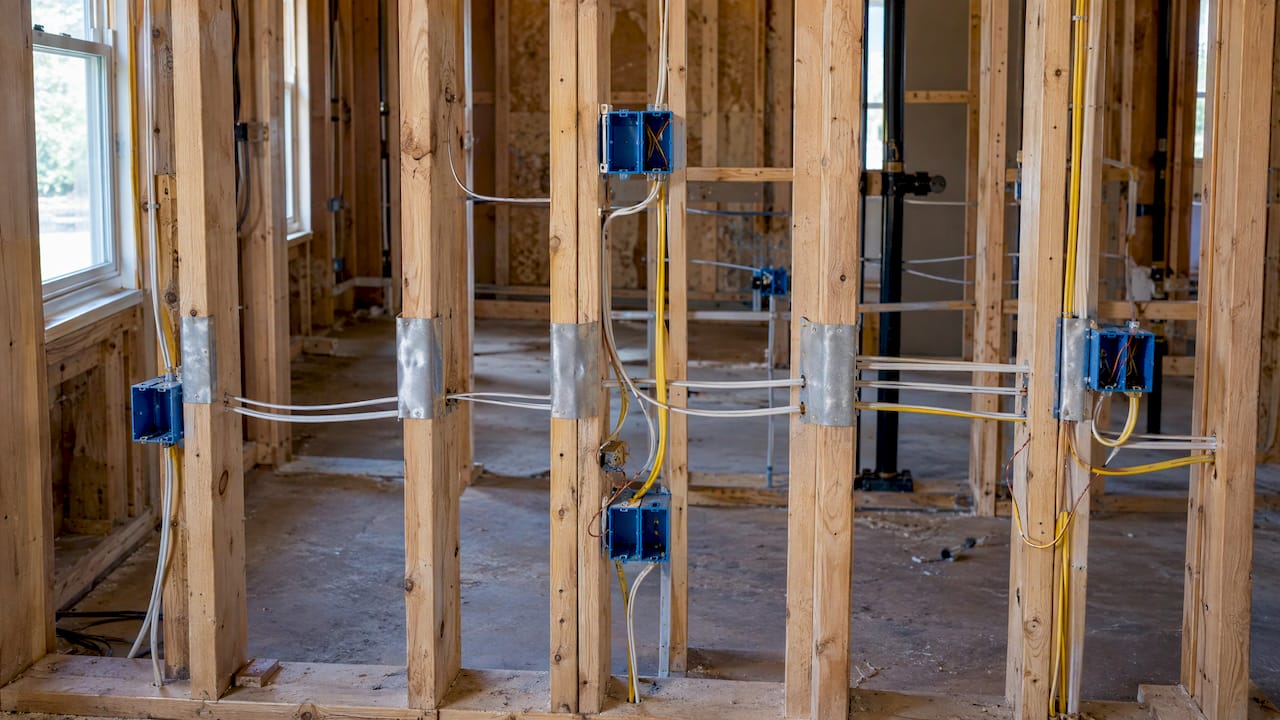
This happens before walls, insulation or finishes cover the wiring. Portland’s rough inspection occurs after wiring, boxes, grounding conductors and nail plates are installed but before insulation or finishes. Montgomery County, Ohio likewise requires rough inspections before work is covered, and says electric service generally cannot be energized until required rough inspections and related approvals are complete.
Final inspection
The final comes when the installation is complete. Boise requires a final inspection when the work is 100% complete, and Portland’s final follows completion, labeling, cover plates, grounding and energization, and is required to close the permit. Panels need to be labeled clearly, which is a detail many people forget.
Timing and paperwork
Deadlines are strict in some places. Washington requires an inspection request before work is covered, no later than three business days after completion or one business day after any part is energized, and failure can bring civil penalties. Toledo requires a circuit schedule on site for inspection on one-, two- and three-family homes. Atlanta’s homeowner guide describes a separate service inspection after the mast, meter base, panels and grounding are installed.
The specifics differ, but the sequence holds: permit, rough-in, final, then sign-off.

Why permitted work matters later
A closed permit is a record that a third party looked at your wiring. That record helps when:
- You sell the house and the buyer’s inspector or the municipality asks about past electrical changes
- You file an insurance claim after a fire or surge and the insurer asks who did the work
- You add more load later, such as an EV charger or generator, and the installer needs to know the panel’s condition
- You want confidence that connections inside walls were checked before they were covered
If you have bought a home with work you suspect was never inspected, we can look at it. Our code corrections page explains how we bring existing electrical work up to standard, and our guide on how to tell whether home wiring is safe lists warning signs such as flickering lights, warm outlets and breakers that trip often.
Permits and large or design-heavy projects
Bigger renovations often need drawings along with the electrical permit. Rules for these differ by country and province. For homeowners north of the border, permit drawing services in Ontario cover residential building plans for projects such as basement units and garages. In Ohio, ask your building department whether a plan review applies; Cleveland says its department circulates plans to other city departments when additional reviews are required.
Our perspective
We have worked on Northeast Ohio homes since 1975, and the permit conversation almost always starts the same way. A homeowner wants to know whether they can skip it, or whether they can do the job themselves. Our honest answer is that the better question is who is going to be accountable for the work once the walls are closed.
Electrical work does not fail loudly. A panel with a poor connection or a circuit that is too small can run for months before it causes a problem. That is why we encourage you to call a professional electrician first, before you buy materials or open a panel cover. We handle the permit, schedule the inspections and stand behind the result.
We also know a disruption to your day is a cost. That is why we offer flexible scheduling, clear and upfront pricing, and technicians who respect your home. Whether it is a panel upgrade, an EV charger or a new circuit, we want you to have safe power and a clean inspection record to show for it.
Lindsay Paramore
Let us handle the permit and the work
From panel upgrades to dedicated circuits, EV chargers and whole-home surge protection, Tri-County Services Electric & Plumbing takes care of the job from the first visit through the final inspection. Electrical troubleshooting is published at $300-$500 as a one-off service, and you can see every service on our electrical pricing guide. Not sure whether your project needs a permit? Call our office at (440) 253-0332 and we will walk you through it.

Plumbing projects often need permits too. Our plumbing pricing guide lists drain cleaning, sewer camera inspection, water heater work and more.
FAQ
Do I need a permit for electrical work in my home?
For most work that adds, alters or upgrades permanent wiring, yes. That includes new circuits, new outlets, panel changes and EV chargers. Some like-for-like replacements are exempt, but the exemptions vary by city. Call your building department or call us at (440) 253-0332 before you start.
When is a permit required for electrical work?
A permit is generally required before work begins on added wiring, outlets or fixtures, service-panel replacements and similar changes. It is not typically required for changing bulbs or plugging in appliances. Because Ohio cities set their own procedures, confirm the rule for your address.
Can I pull my own electrical permit in Ohio?
Some Ohio cities allow it. Cleveland accepts a homeowner’s affidavit, while Toledo and Fairfield limit it to owner-occupants of single-family homes. You remain responsible for code compliance and inspections, which is why we recommend having a professional electrician handle the work and the permit.
Can you do electrical work without a license in Ohio?
Ohio has no state license requirement for residential contractors, but local licensing or registration may apply in your city, county or township. Always ask a contractor about training and proof of insurance. We are happy to answer those questions about our own team at (440) 253-0332.
Sources
- Electrical Permits, City of Cleveland
- When Is an Electrical Permit Required, City of Toledo
- Verifying Licensed Contractors, Ohio Department of Commerce
- Building Permits, Fairfield, OH
- Building Regulations FAQs, Montgomery County, OH
- Residential Electrical Permits, Portland.gov
- Electrical Permit Basics, Washington L&I
- About Oregon Residential Permits, Building Codes Division
- Electrical Work, City of Chicago
- Homeowner Electrical Permit Guide, City of Boise
- Permitting and Inspections, City of Ames
- Homeowner Electrical Projects, City of Lincoln
- Why Would I Need an Electrical Permit, City of Atlanta