

The three actions that cut electrical risk for children fastest are constant supervision near outlets and cords, permanent upgrades like tamper-resistant receptacles (TRRs) and GFCIs, and a quick call to a professional for any wiring that looks or smells wrong. The Electrical Safety Foundation International backs TRRs over plastic caps, and we can inspect your home’s protections. Call (440) 253-0332 to schedule a visit.
TL;DR:
- Installing tamper-resistant receptacles and GFCIs where required significantly reduces the risk of electrical shock and burns for children.
- Using outlet covers alone fails because children can remove or bypass them; permanent hardware like TRRs provides continuous protection.
- Regular testing of GFCIs every month and immediate inspection of warm, sparking, or damaged outlets prevent potential hazards.
- A house with overloaded circuits, frequent breaker tripping, or warm outlets should be professionally inspected and upgraded to avoid serious injuries.
- Teaching children appropriate electrical safety rules, combined with hardware upgrades, offers the most effective ongoing protection.
Table of Contents
- Quick parent-and-teacher rules checklist
- Teaching kids about electricity by age
- Home hazards and the permanent fixes that solve them
- When to call a professional for an inspection or repair
- Resources and activities that teach kids safely
- What to do during an electrical shock or fire
- Room-by-room safety walk-through
- Why layered protection beats any single fix
- Child-safety electrical upgrades from Tri-County Services Electric & Plumbing
- FAQ
- Sources
Quick parent-and-teacher rules checklist
Kids absorb short, repeated rules better than long explanations, and the right rule paired with a permanent fix beats a warning alone. Use this list as a starting point, then back it up with hardware that doesn’t depend on a child remembering anything.
- Never put fingers, toys, or metal objects into an outlet, even “just to look.”
- Keep cords and electronics away from water, bathtubs, and sinks at all times.
- Unplug small appliances like hair dryers and toasters when they aren’t in use.
- Treat every outlet as if it’s on, even ones that look unused.
- Don’t overload an outlet or power strip with multiple high-draw devices.
- Tell an adult immediately about a warm outlet, a sparking plug, or a frayed cord.
- Stay away from downed wires outdoors and never touch one, even with a stick.
- Keep kites, drones, and balloons far from power lines.
Plastic outlet caps are common but removable: a Temple University study found that every 2 to 4-year-old in the test group pulled one type of cap out within 10 seconds. Tamper-resistant receptacles, which use spring-loaded internal shutters, solve that problem permanently and are required by the National Electrical Code in new construction. GFCI outlets, required in kitchens, bathrooms, and outdoor areas, cut off power the instant they detect a ground fault, which matters most anywhere water and electricity meet.
Teaching kids about electricity by age
What a toddler needs to hear is different from what a ten-year-old can actually apply, so match the lesson and the independence you grant to the developmental stage in front of you.
- Toddlers (1 to 3): Use one firm word, “hot” or “no touch,” paired with physically redirecting them from outlets. Supervision is constant here, not a teaching moment.
- Preschool (4 to 5): Introduce “electricity lives in the wall and it’s not a toy.” Let them help you “check” outlet covers together as a game, with you doing the actual checking.
- Early elementary (6 to 9): Explain why water and electricity don’t mix and have them point out household cords that look damaged during a walk-through you lead.
- Older kids (10 and up): Teach them to recognize a tripped breaker, unplug something that smells hot, and know your home’s panel location. Test readiness by asking them to walk you through what they’d do in a shock scenario before giving them any unsupervised appliance use.
Home hazards and the permanent fixes that solve them
Most electrical injuries to children trace back to a handful of fixable conditions rather than freak accidents. Addressing the hardware removes the risk even when supervision lapses.
Tamper-resistant receptacles matter because the alternative, a plastic cap, fails the moment a toddler figures it out, and the ESFI notes that roughly seven children a day suffer severe shocks or burns from inserting objects into standard outlets. GFCIs and AFCIs add another layer: GFCIs cut power on a ground fault near water, while AFCIs detect the arcing that precedes an electrical fire. The CPSC recommends testing GFCIs monthly by pressing the “test” button and confirming the outlet cuts power, then pressing “reset” to restore it.
Extension cords and power strips are meant to be temporary. Heavy daily reliance on them is a sign your home doesn’t have enough outlets, and pediatric injury prevention guidance points to adding a real circuit or outlet rather than stacking cords indefinitely.
Watch for these warning signs that call for a professional, not a workaround:
- Outlets or switch plates that feel warm to the touch.
- Lights that flicker or dim when an appliance turns on.
- A breaker that trips repeatedly.
- Any burning smell near outlets, panels, or cords.
Pro Tip: Before an inspection, write down which outlets feel warm, which breakers trip, and which rooms rely on extension cords, then hand that list to your electrician.
When to call a professional for an inspection or repair
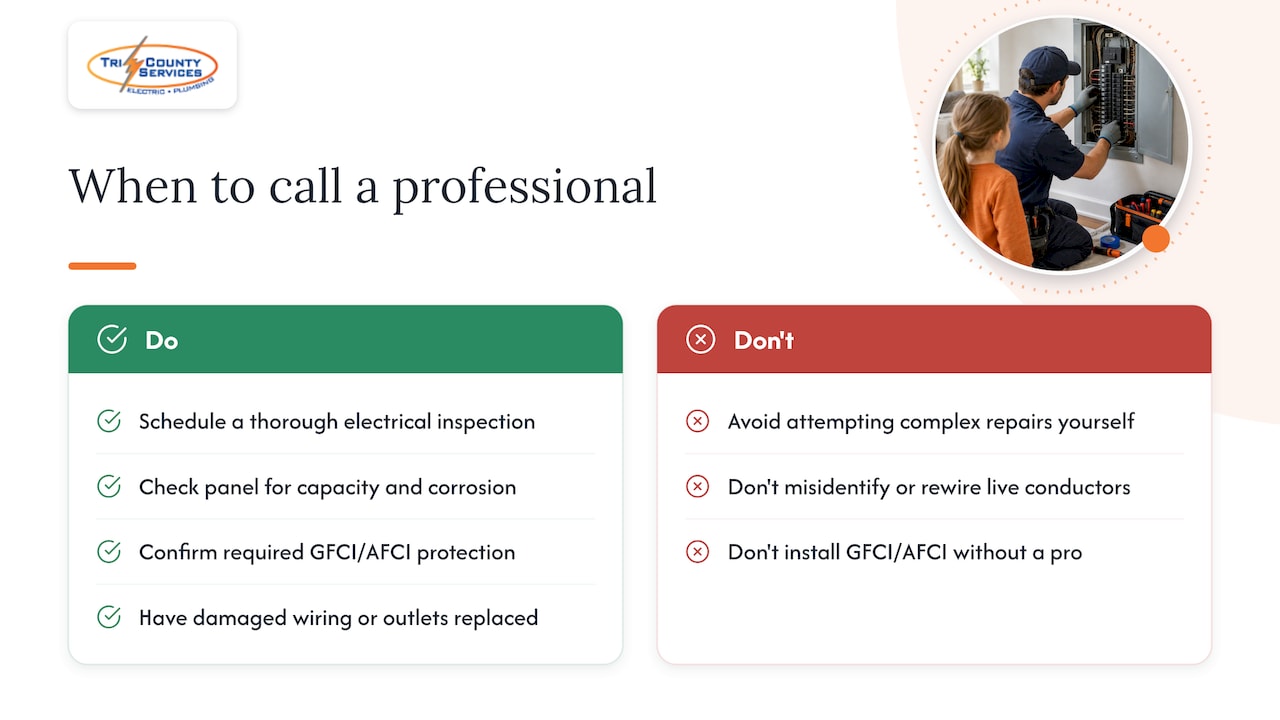
A thorough electrical inspection checks the panel for capacity and corrosion, confirms GFCI and AFCI protection is working where required, finds loose or aging wiring, and verifies outlets near water are the correct type. Common fixes that follow include swapping in tamper-resistant receptacles, adding dedicated circuits so you can retire extension cords, installing GFCI or AFCI protection, and replacing damaged wiring or outlets outright.
Attempting these repairs yourself raises fire and shock risk rather than lowering it, since misidentifying a live wire or miswiring a GFCI can leave a hazard that looks fixed but isn’t. We handle these inspections and repairs directly. Our electrical pricing guide outlines what’s involved, and you can reach us at (440) 253-0332.
Resources and activities that teach kids safely
Several organizations publish free, vetted tools that make electrical safety concrete instead of abstract. ESFI’s Kid’s Corner offers coloring books, posters, and games built around a “Mr. Plug” character for younger children. The CPSC’s room-by-room checklist gives families a walk-through format to spot hazards together. Healthychildren, from the American Academy of Pediatrics, breaks safety guidance down by age.
Four activities worth running at home or in class:
- A “cord detective” walk where kids spot frayed or pinched cords with an adult.
- A coloring activity using ESFI’s printable sheets to reinforce outlet rules.
- A breaker-box tour where older kids learn which switch powers which room.
- A “water and electricity” sorting game separating safe from unsafe pairings.
Classrooms can compress these into a single session; at home, spread them across a week and repeat seasonally.
What to do during an electrical shock or fire
Fast, correct action in the first seconds after a shock or fire matters more than anything taught beforehand.
- If a child is still in contact with the source, cut the power at the breaker or unplug the device before touching them.
- If you can’t reach the power source, use a dry, nonconductive object, like a wooden broom handle, to separate the child from it. Never use anything metal or damp.
- Check breathing and responsiveness, then call 911 immediately.
- Seek medical evaluation even if the child seems fine, since internal injuries from shock aren’t always visible.
- For a fire, evacuate first and call 911 from outside; only use an extinguisher on a small, contained fire if you’re trained to do so.
- Test smoke alarms monthly and replace batteries at least once a year.
Room-by-room safety walk-through
A quick pass through the house, room by room, catches most of the hazards that cause injuries.
- Kitchen: Keep cords for toasters and mixers away from the sink, store small appliances when unplugged, and confirm GFCI protection near water.
- Bathroom: Unplug hair dryers and styling tools after use, verify GFCI coverage, and keep cords out of reach of curious hands.
- Bedroom or play area: Install tamper-resistant receptacles, route cords behind furniture, and anchor furniture so kids can’t climb toward outlets or cords.
- Outdoors: Use weatherproof outlet covers, store tools and cords away from play spaces, and keep kids clear of downed lines.
Why layered protection beats any single fix
Rules fade from memory, caps get pulled off, and supervision has gaps. What holds up over time is combining taught habits with permanent hardware and a professional backstop. Teaching a toddler to avoid outlets matters less once a tamper-resistant receptacle makes the outlet itself safer, and a GFCI catches what a rule can’t. Call (440) 253-0332 when you want a professional to close the gaps supervision and caps leave open.
— Lindsay Paramore
Child-safety electrical upgrades from Tri-County Services Electric & Plumbing
We install tamper-resistant receptacles, GFCI and AFCI protection, and new circuits that replace risky extension cord setups throughout homes.

Call (440) 253-0332 or check our electrical pricing guide to schedule an inspection.
FAQ
What are 5 electrical safety rules for kids?
Never insert objects into outlets, keep cords and electronics away from water, unplug unused small appliances, avoid overloading outlets, and tell an adult about any warm outlet or frayed cord right away. Pairing these rules with tamper-resistant receptacles, which ESFI recommends over plastic caps, adds a permanent layer of protection.
What are 10 safety rules for kids at home?
Beyond outlet and cord rules, home safety includes staying away from downed power lines, keeping kites and balloons clear of overhead wires, never touching a breaker panel without an adult, and reporting any burning smell immediately. The CPSC’s room-by-room checklist covers these hazards room by room for a full walk-through.
What are the 5 main electrical hazards in a home?
The main hazards are damaged or overloaded cords, outlets without tamper-resistant protection, missing GFCI coverage near water, aging or loose wiring, and overloaded circuits from stacked power strips. NFPA data shows an estimated annual average of 46,652 residential electrical fires from 2020 through 2024, many tied to these same conditions.
What should I do if my child gets an electric shock?
Cut power at the source first, or use a dry, nonconductive object to separate your child from it if you can’t reach the breaker. Call 911 and seek medical evaluation afterward, since internal injuries aren’t always visible right away.
How often should GFCI outlets be tested?
GFCI outlets should be tested monthly by pressing the test button and confirming power cuts off, then pressing reset. The CPSC includes this check in its recommended home electrical safety routine.
Sources
- Tamper Resistant Receptacles (TRRs)
- NFPA home electrical fire statistics
- Home Electrical Safety Checklist (CPSC)
- Healthychildren