


Tiny, fuzzy flies hovering around your bathroom sink or shower mean something is growing inside the drain, and the flies you see are only the last stage. The larvae live in the slime lining your pipes, so the lasting fix is removing that buildup and checking the plumbing behind it. A professional drain cleaning and, when the flies keep returning, a camera inspection do exactly that. At Tri-County Services Electric & Plumbing, you can reach our office at (440) 253-0332 to get a plumber out and find the source.
TL;DR
- Drain flies breed in the gelatinous film of soap, hair and organic matter inside drains and traps, so the flies are a symptom of buildup, not the problem itself.
- Swatting adults, spraying, bleach and boiling water do not reach the film where larvae feed, which is why the flies return.
- A persistent problem can point to a slow drain, a leak, or a sewer issue that needs a trained eye.
- Drain cleaning at Tri-County Services Electric & Plumbing is $250 to $600, and a sewer camera inspection is $250 to $400.
- Call (440) 253-0332 and we will find where the flies are coming from.
Table of Contents
- What drain flies are and why they show up in bathrooms
- What causes drain flies: the short life cycle
- Do drain flies mean you have a plumbing problem?
- Why the usual home remedies do not last
- How a plumber finds the real breeding site
- Signs the flies point to something bigger
- Fixing it once: what to expect with Tri-County Services Electric & Plumbing
- Perspective: why we treat flies as a drain problem
- Keeping drain flies from coming back
- FAQ
- Sources
What drain flies are and why they show up in bathrooms
Drain flies, also called moth flies or sewer flies, are small, delicate and fuzzy. University of Maryland Extension describes them as 1/16 to 1/4 inch long and pale brownish-gray to black, found mostly in rooms with drains: kitchens, bathrooms and basements near floor drains. They fly weakly, so you tend to see them resting on bathroom walls, near the sink, or around the tub.
They do not bite or sting, and Kansas State Research and Extension notes they do not damage household materials. Still, nobody wants a cloud of them over the vanity, and a steady supply of new flies tells you the conditions in your pipes are right for breeding.
Where they breed
Per University of Arkansas Extension, drain flies mostly inhabit drains used infrequently, such as a guest bathroom shower drain, where water collects in the trap and sits for long periods. The larvae develop in that stagnant water, feeding on soap scum and the organic sludge of algae, fungi and bacteria that coats the inside of drains and plumbing.
Alabama Cooperative Extension lists the breeding spots that matter in a bathroom:
- Sink drains and traps with slime buildup
- Overflow holes and overflow pipes
- Bathtub and shower drains
- The base or tank of a toilet
- Leaking pipes behind a wall or under a concrete slab
The same source names slow drainage, bubbling and foul odors as signs of a possible breeding site. If your bathroom drain does any of those things and you also see flies, the two are almost certainly connected.
What causes drain flies: the short life cycle
The speed of the cycle explains why a few flies become dozens. Kansas State reports that each female can produce around 100 eggs, and that larvae can pupate and emerge as adults in as little as two weeks. The University of Maryland puts total development from egg to adult at 7 to 28 days, with flies emerging daily once an infestation is underway. University of Kentucky Entomology gives about 10 to 15 days at roughly 70°F, a typical indoor temperature.
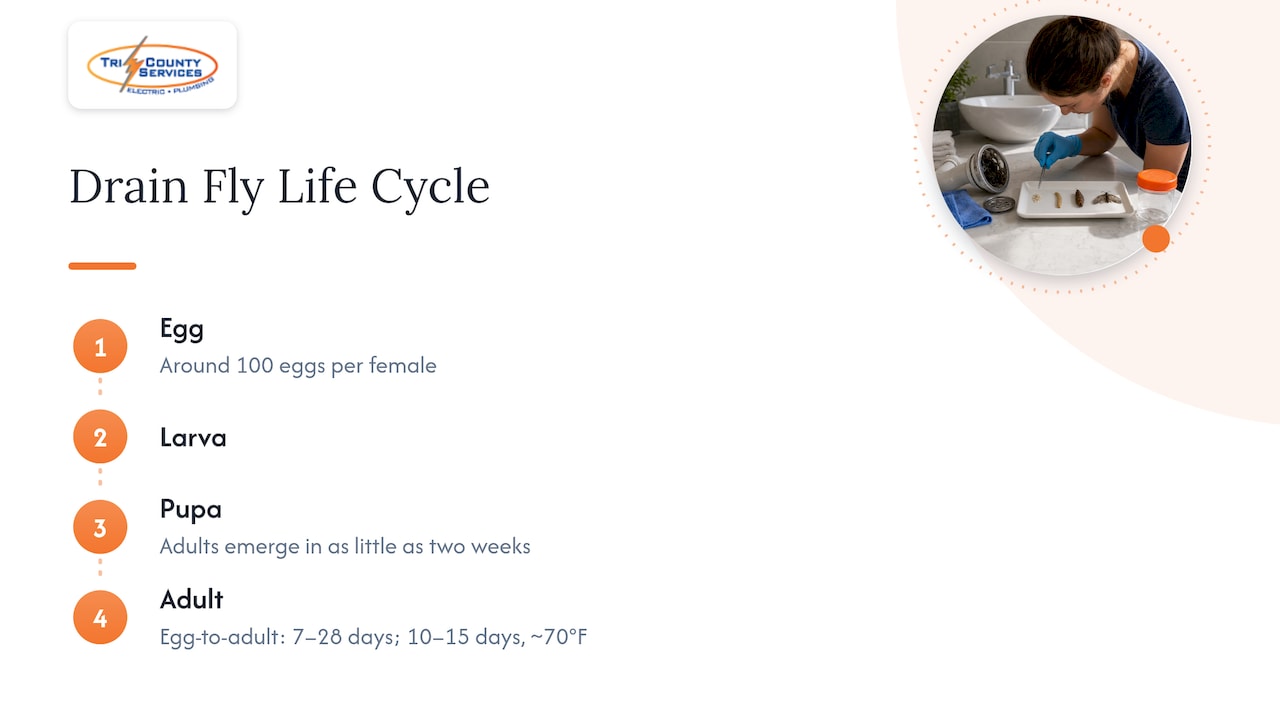
That means one neglected drain keeps producing a new generation every couple of weeks. Killing the adults you can see does nothing to the larvae below.
Do drain flies mean you have a plumbing problem?
Often, yes. Alabama Cooperative Extension states that adult drain flies in the home usually indicate a slow or clogged drain that needs cleaning. Sometimes the cause is simple, like a rarely used shower where the trap water has sat for weeks. Other times the breeding site is something you cannot see or reach:
- A partial clog deeper in the line. Soap, hair and grease build up past the part of the drain you can see.
- A slow leak. Water that collects beneath leaking pipes can support breeding, according to the Arkansas extension.
- A sewer problem. The same source notes flies may be introduced from sewer pipes that burp or back up into a home.
If flies are paired with gurgling, a toilet that bubbles when another fixture drains, or odors that come and go, read our guide on what it means when a toilet gurgles after a flush. Those symptoms point past the trap to the line itself.
Are drain flies harmful?
They are mainly a nuisance. The University of Minnesota Extension and others describe them as generally not considered a health problem. Because they develop in filthy material, they can carry bacteria onto surfaces, and Alabama Extension notes they may trigger allergic reactions in sensitive people. UC IPM adds that dead flies in high numbers can break down into potential allergens. If anyone in your home has allergies or asthma, or if the flies are near food preparation areas, deal with the source promptly rather than waiting for them to fade.
Why the usual home remedies do not last
Search results are full of pour-and-wait tricks. The extension research explains why they disappoint.
Bleach and boiling water. UC IPM calls pouring boiling water or bleach down a drain a common misconception: these treatments do not remove the organic film in the drain and give at best short-term control. Virginia Cooperative Extension adds that bleach or vinegar may damage pipes if not properly diluted and will not penetrate the organic material. It also warns that ammonia must never be combined with bleach, because the reaction releases toxic gases. Kansas State notes the larvae are not harmed by hot water or soap flowing through drains.
Sprays and traps for adults. The Arkansas extension’s entomologist explains that killing adults is not effective control. Aerosol flying-insect sprays are not very effective, and sticky paper or UV traps catch some adults without ending an infestation. Only removing the larvae’s food source interrupts the cycle.
Drowning the larvae. Kentucky Entomology reports larvae can trap air bubbles and stay submerged for a day or more, so simply flooding a drain does not settle it.
The pattern is consistent: the flies are the visible end of a problem that lives in the pipe. Virginia Extension says thick accumulated material calls for physical cleaning, and that foaming cleaners and hot water only reach surface larvae. Sometimes it means removing and cleaning the trap or running a snake through a soapy hair clog in a shower line. That is plumbing work, and it is faster and more thorough in the hands of a trained plumber with the right equipment.
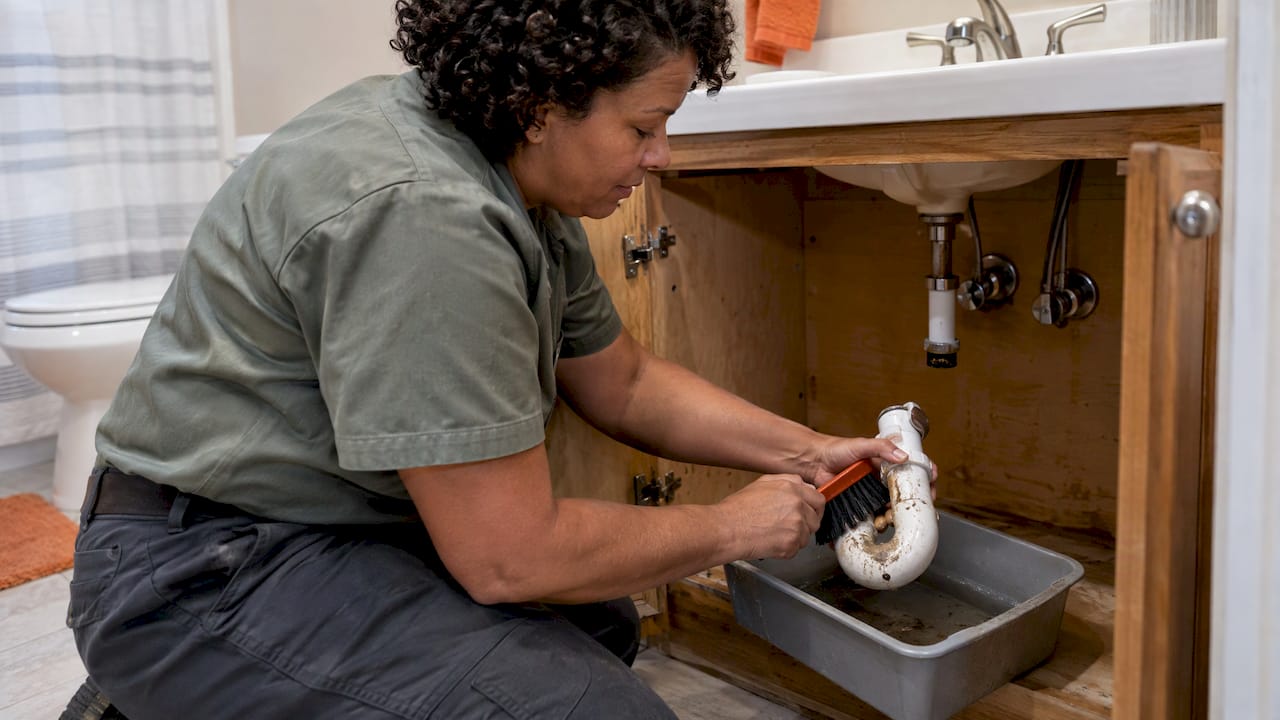
We do not recommend experimenting with chemical drain products in an older bathroom. Mixing products or pouring harsh chemicals into a trap can damage fittings and create hazards, and it still leaves the film in place. A professional cleaning avoids all of that.
How a plumber finds the real breeding site
A population may be emerging from more than one site at once, so the Arkansas extension advises cleaning every potential drain nearby, not only the one where you spotted the fly. UC IPM states that adults are usually found very near their development site, because they are weak flyers. That helps narrow down the room, but the exact source can be a shower drain, an overflow, a floor drain, or something inside a wall.
Kentucky Entomology points out that breeding sites are hard to recognize because larvae are small and easy to overlook. This is where an experienced plumber saves you weeks of guessing. A typical visit involves:
- Checking every fixture in the room. Sink, tub or shower, toilet, and any floor drain are looked at, including drains you rarely use.
- Clearing the buildup. Drain cleaning removes the film and sludge the larvae feed on. Our drain cleaning is $250 to $600, depending on the job.
- Looking inside the line. If drains are slow, or flies come back after cleaning, a sewer camera inspection shows what is happening further down. Ours is $250 to $400, and we explain more in our post on plumbing camera inspections that find hidden drain and sewer problems.
- Fixing what the camera finds. That may be a leak repair, a deeper clog, or a sewer line issue.
When a line is heavily coated, hydro jetting is another service we offer for clearing it. Published prices for both drain cleaning and camera inspection are on our plumbing pricing guide.

Signs the flies point to something bigger
Call a plumber promptly, rather than waiting for the flies to go away, if you notice any of these:
- Drains that are slow in more than one fixture
- Gurgling, bubbling or sewage odor
- Flies that return within days after you have cleaned the visible part of the drain
- Damp spots, stains or musty smells near walls and floors around the bathroom
- Water backing up in a tub or floor drain when another fixture runs
Alabama Extension advises that when a breeding site is inaccessible, for example inside a wall void, or the source is a septic or sewage system, the best step is a plumbing service. Our posts on the signs of a main sewer clog and what to expect from sewer line repair or replacement explain what is at stake when the problem is in the main line. If you are seeing water where it should not be, our guide to emergency leak repair covers what gets fixed right away.
Fixing it once: what to expect with Tri-County Services Electric & Plumbing
We are a family-owned business based in Northeast Ohio since 1975, and we offer plumbing work including drain cleaning, sewer camera inspections, hydro jetting and pipe leak repair. Our technicians are skilled and certified, we use flexible scheduling to keep disruption to your day low, and we give clear, upfront pricing.
If you are dealing with flies in a guest bathroom, a basement floor drain, or a master bath that keeps coming back, a single visit can tell you whether it is simple buildup or something deeper. Book drain cleaning or an inspection through our plumbing services and pricing page, or call our office at (440) 253-0332.

If the drain is slow enough that water is standing, our post on who offers emergency drain unclogging explains what to expect from a same-day call.
Perspective: why we treat flies as a drain problem
When a homeowner calls about tiny flies in the bathroom, we hear the same story. They have swatted, sprayed and poured something down the drain, and a week later the flies are back. That makes sense, because the flies are not the issue. The buildup inside the pipe is.
Our view is simple: bring in a professional early. A drain that smells, drains slowly or keeps producing flies is telling you something about the line. A professional drain cleaning clears the film the larvae feed on, and a camera inspection answers the bigger question of whether there is a clog, a leak or a sewer issue behind it. Guessing with store-bought products risks damaging fixtures and putting off the real repair.
We have been serving Northeast Ohio families since 1975, and we build our work around respect for your home, clear pricing up front and a schedule that fits yours. If the flies are in your bathroom, call us at (440) 253-0332 and let us look at the drain.
Lindsay Paramore
Keeping drain flies from coming back
Once the drains are properly cleaned, a few habits keep the conditions from returning:
- Use every drain. In the Family Handyman piece, a pest expert explains that drain flies often start in infrequently used drains like a guest bathroom or basement sink, so prevention means making sure drains see normal use and that leaks and blocked drains are fixed. Running water in a seldom-used shower or sink on a regular basis keeps the trap full and moving.
- Keep moisture sources in check. Maryland Extension lists other breeding spots: dirty garbage cans, saucers under potted plants, and condensate pans under refrigerators and air conditioners. Keep them dry and clean.
- Do not let sludge accumulate. Washington State University’s Pestsense guidance is to keep bathtub, sink and shower drains clear of sludge and avoid letting moist organic debris build up in and around the house.
- Stay on schedule. The Arkansas extension recommends maintaining cleaning for at least three weeks to break the life cycle, because eggs and larvae you missed will keep emerging.
- Fix slow drains right away. A drain that empties slowly is already holding the film that feeds larvae.
If you want the first things to look at before scheduling, our article on three things to check before calling a plumber is a quick read. A slow or damaged sink is covered in our sink repair and replacement guide.
FAQ
Why do I have drain flies in my bathroom?
There is almost certainly organic buildup in a bathroom drain or trap. Drain flies lay eggs on the gelatinous film of soap scum, hair and bacteria inside pipes, and rarely used drains with standing trap water are the most common spot. Slow drains, leaks and sewer issues can also supply the conditions.
How do I get rid of drain flies for good?
Remove the breeding site, not the adults. That means clearing the film from every nearby drain and keeping it clear for several weeks to break the life cycle. If the flies return or the drains are slow, have a plumber clean the line and inspect it. You can reach our office at (440) 253-0332.
Do drain flies mean I have a sewer problem?
Not always, but they can. Extension sources say adult drain flies usually point to a slow or clogged drain, and they can also come from leaks or sewer backups. A sewer camera inspection shows whether the line is the cause. Ours is $250 to $400.
Will bleach kill drain flies?
No. UC IPM says bleach and boiling water do not remove the film in the drain and give only short-term control. Virginia Extension adds that bleach may damage pipes if not properly diluted and must never be mixed with ammonia. A professional cleaning removes the film the larvae live in.
Are tiny flies in the sink dangerous?
They do not bite or sting, and they are generally considered a nuisance rather than a health threat. They can carry bacteria from the drain onto surfaces and may trigger allergies in sensitive people, so it is worth fixing the source quickly, especially near food preparation areas.
Sources
- University of Arkansas Extension: Drain Flies
- University of Maryland Extension: Drain Flies
- Kansas State Research and Extension: Household Pests of Kansas
- Alabama Cooperative Extension System: Drain Flies in the Home
- UC IPM: Moth or Drain Flies
- Virginia Cooperative Extension: Drain Fly
- University of Kentucky Entomology: Drain Flies or Moth Flies
- Washington State University Pestsense: Moth Flies
- Family Handyman: How to Get Rid of Drain Flies