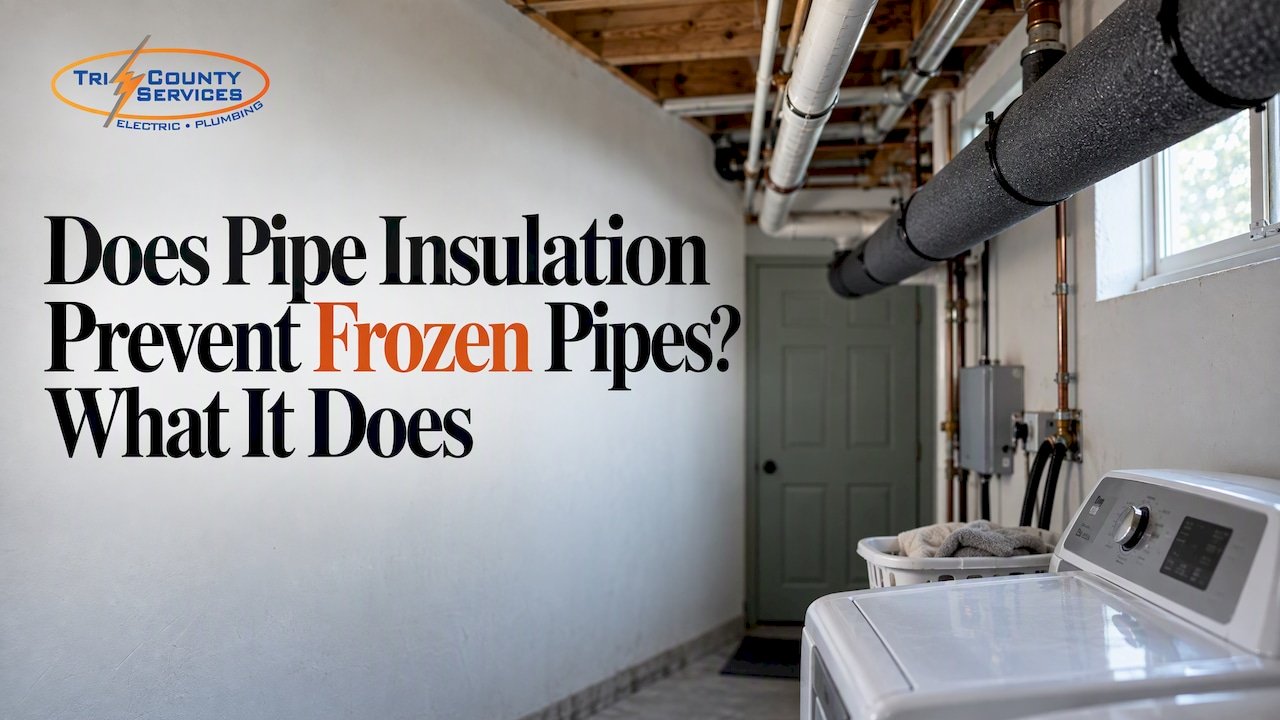


Pipe insulation helps, but it does not make a pipe freeze-proof. Insulation slows the loss of heat, so water takes longer to freeze. It doesn’t create heat. In a long Northeast Ohio cold snap, a pipe with insulation and no heat source can still freeze. The pipes that stay safe are the ones with insulation, a source of warmth, and no cold drafts hitting them.
This guide explains how insulation works, where it is enough, where it isn’t, and what a plumbing professional adds. We’re Tri-County Services Electric & Plumbing, a family-owned Northeast Ohio company since 1975, and we see the results of frozen pipes every winter. If you’re not sure how exposed your pipes are, call our office at (440) 253-0332 before the deep freeze arrives.
TL;DR
- Insulation slows heat loss and buys time. On its own it does not stop water from freezing during long stretches below freezing.
- It works best on pipes that still get some warmth or water movement. It works worst on pipes in unheated spaces with cold air blowing on them.
- Sealing drafts, keeping the thermostat steady, and adding heat tape where needed make insulation far more effective.
- If a pipe freezes, shut off the main water supply and call a professional. Don’t use an open flame.
- A professional can check your home before winter. Call (440) 253-0332.
Table of Contents
- What pipe insulation actually does
- Where insulation helps most
- When insulation alone isn’t enough
- Which insulation to choose
- Steps that make insulation work better
- Why a professional should look first
- Perspective
- What to do if a pipe freezes anyway
- Get your pipes checked before winter
- FAQ
- Sources
What pipe insulation actually does
Think of a pipe sleeve like a winter coat. A coat doesn’t heat you. It holds in the warmth you already make. Pipe insulation works the same way. It slows the transfer of heat out of the water and into the cold air around the pipe.
That matters because of time. According to Insulation Outlook Magazine, insulation delays heat loss and lengthens the time before pipes freeze. The same article notes that pipes with no water moving through them will freeze during extended subfreezing temperatures unless heat tape makes up for the lost heat.
So the honest answer to the question is: sometimes. Insulation prevents freezing when the cold doesn’t last long enough to win. It fails when the cold outlasts the delay.
Why a short cold night is different from a week of cold
The same article says insulation alone can be a reasonable choice in the southern frost belt, where temperatures dip below freezing only briefly at night and water moves through the pipes during the day. That is not the Cleveland, Akron or Canton winter. Here we get multi-day stretches of single-digit lows and wind that drives cold air through every gap in a house.
The article also points out that it is hard to say how thick insulation needs to be. The answer depends on how long the cold lasts and how low it drops, and neither is easy to predict. That is one reason a guess at the hardware store can leave a weak spot in your system.
Why moving water matters
Water in motion carries heat from the warmer parts of your home. A pipe that’s in constant use during the day has a built-in advantage. A pipe to an outdoor spigot, a guest bathroom or a seldom-used laundry room just sits there. The insulation on that pipe is only delaying the inevitable.
Where insulation helps most
Pipes freeze first where they are exposed to the cold. In Northeast Ohio homes, the usual trouble spots are:
- Pipes in unheated basements, crawl spaces and attics
- Pipes along exterior walls, especially where the wall has thin or missing insulation
- Pipes in garages
- Lines running to outdoor faucets and hose bibs
- Kitchen and bathroom supply lines in cabinets on outside walls
The American Red Cross recommends pipe sleeves or UL-listed heat tape for pipes in unheated spaces such as basements, attics and crawl spaces. The International Code Council lists foam rubber or fiberglass sleeves as suitable materials.
Basements deserve special attention because they often combine cold, damp air and plumbing along the rim of the foundation. If your basement has moisture problems too, it helps to understand basement waterproofing costs while you’re planning winter work in that space.
Outdoor and exterior pipes
For pipes that run outside, the ICC guidance is to drain them and shut them off at an interior valve. Where a section has to stay exposed, it should be enclosed in insulation sleeves 2 inches thick. Outdoor faucets are the classic failure point. Our guides on winterizing outdoor faucets and hose bib freeze protection walk through what protects them in an Ohio winter.
When insulation alone isn’t enough
Three situations defeat insulation on its own.
1. A long, hard freeze. Insulation only stretches the clock. When temperatures stay below freezing for a prolonged period, the Insulation Outlook article says extra heat is needed from ambient warmth, water flow or heat trace tape.
2. Gaps in coverage. A pipe that’s wrapped everywhere except one elbow, valve or joint will freeze at that one spot. The ICC says insulation should cover exposed pipes without gaps. Ice in a single short section is enough to cause trouble.
3. Cold air leaks. Insulation doesn’t stop a direct draft. University of Nebraska extension guidance, published in 2025, advises sealing leaks that let cold air in near pipes, including around electrical wiring, dryer vents and the pipes themselves. It notes that a tiny opening can let in enough cold air to freeze a pipe during severe wind chill.
That last point is where electrical and plumbing overlap. A wire penetration through a rim joist can be exactly where the cold gets in. Because we handle both trades, our crews often see these problems from both angles.
Which insulation to choose
There is no single best product. The right choice depends on where the pipe runs and how it’s used.
| Option | Best for | What to know |
|---|---|---|
| Foam rubber or foam sleeves | Straight runs in basements, crawl spaces, garages | Slip over the pipe; need tight seams and sealed joints |
| Fiberglass sleeves | Pipes in unheated areas | Listed by the ICC as suitable; must stay dry and gap-free |
| Heat tape or heating cable | Pipes that stay cold for long periods or can’t be protected another way | Use only UL-listed products and follow the instructions exactly |
| Thick exterior sleeves (2 inches) | Exposed outdoor sections | Used when a pipe can’t be drained and shut off |
Heat tape: a safety matter, not just a product choice
Electric heat tape adds warmth, which is exactly what insulation lacks. It also carries a fire risk when it’s old, damaged or installed wrong. The U.S. Consumer Product Safety Commission has estimated about 1,500 fires a year from faulty electric heat tapes, and it urged homeowners to replace uncertified heat tapes more than three years old with certified models. That release dates from 1996, but the principle holds: use only UL-listed tape.
The Building America Solution Center notes that heat tape should be applied directly to the pipe, not over insulation, unless the manufacturer specifies otherwise.
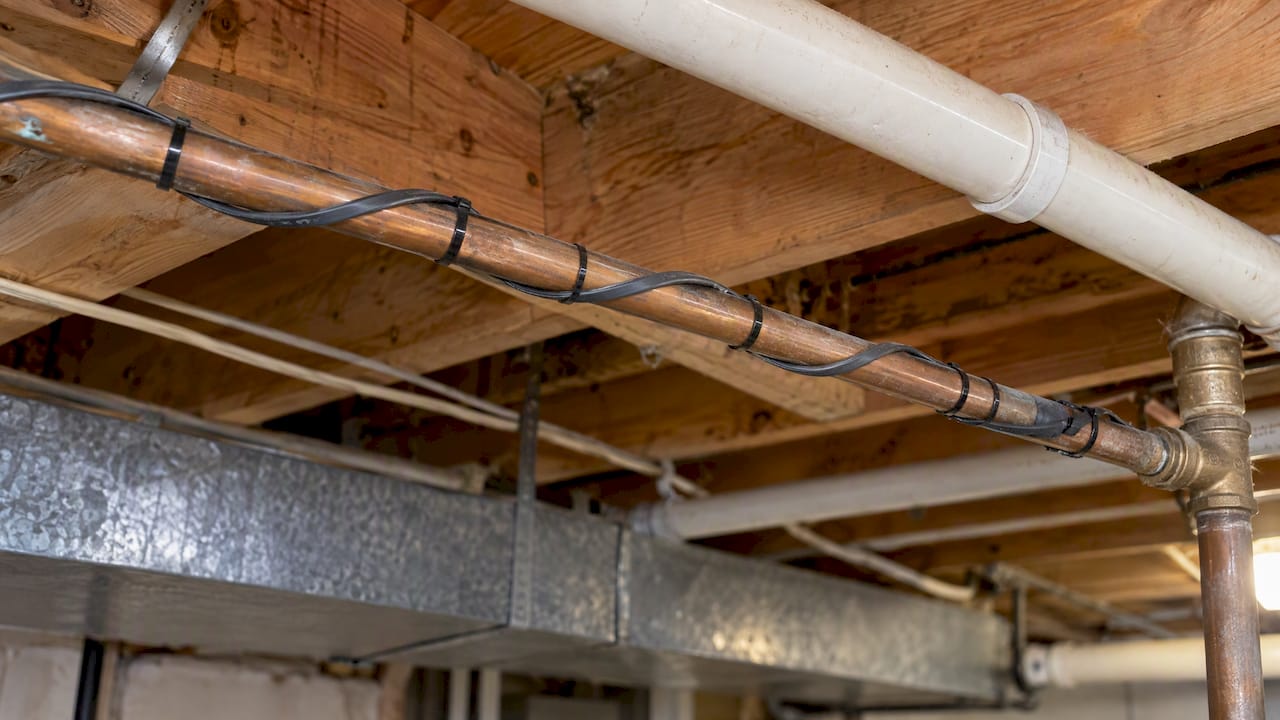
This is a good example of why we encourage you to call a professional first. Heat tape needs a safe power source, the correct circuit and proper placement. A mistake can mean a fire, not just a frozen pipe. Our team handles the electrical side and the plumbing side in a single visit, so the tape, the outlet and the pipe are all checked together. If you need a dedicated circuit or outlet near a vulnerable pipe, see our electrical pricing guide.
Steps that make insulation work better
Insulation does its best work as part of a system. The American Red Cross recommends several habits for severe cold:
- Keep the thermostat at the same temperature day and night.
- If you’re away, set it no lower than 55°F.
- Open cabinet doors under sinks so warm air reaches the pipes.
Another step is to let water move. Consumer Reports advises letting cold water drip from a faucet served by exposed pipes, because running water, even a trickle, helps prevent freezing.
Is a trickle of water enough?
A trickle helps, and it is worth doing on the coldest nights for faucets on exposed pipes. It isn’t a guarantee. If the faucet is on the wrong pipe, the flow is too small, or the pipe is already restricted by ice, it may not save you. Think of it as a backup to insulation and a warm house, not a substitute. And don’t walk away from a dripping faucet during a cold snap if your drain is slow or backing up. Call us if that happens.
Walk the house before the first hard freeze
A quick look in late fall is worth the time. Check the basement, the garage and any cabinet on an exterior wall. Look for pipes with no sleeve, sleeves with split seams, gaps at elbows, and any draft you can feel with your hand. Our winter plumbing checklist and seasonal plumbing maintenance guide cover what to look for. If you find weak spots, though, bring in a professional rather than patching them yourself. A pipe that looks fine can hide a bigger problem inside the wall.
Why a professional should look first
We know it’s tempting to grab a few foam sleeves and call it done. We’d rather you didn’t start there. A pro looks at the whole picture, not just the visible pipe.
- Routing matters. Pipes in an exterior wall may need to be moved or the wall better insulated. That is plumbing work, and insulation alone won’t fix it.
- Electrical safety matters. Heat tape and heating cable draw power. They need the right circuit and good connections.
- Hidden risk. Pipes behind finished walls and ceilings can’t be wrapped from the outside. A professional can tell you whether they’re a real risk.
- Aftermath. A burst pipe causes water damage fast. Preventing it is far less costly than repairing a flooded basement.
At Tri-County Services Electric & Plumbing, our certified technicians treat your home with respect and work on a flexible schedule to keep disruption low. Our satisfaction guarantees and clear, upfront pricing mean you know where you stand before work begins.
Perspective
After decades serving Northeast Ohio families, we’ve seen the same pattern every January. A homeowner wrapped a few pipes in foam, felt good about it, and then a week of single-digit nights left one unprotected elbow, one drafty rim joist or one outdoor line frozen solid.
Our view is that insulation is a smart first layer, and not the whole plan. The best protection comes from looking at the entire system: where the pipes run, where the cold gets in, and what keeps them warm. That’s why we like to send a professional to look before the freeze, not after the flood.
Because we handle both plumbing and electrical, we can assess heat tape, circuits and pipe routing in one visit. That’s something we think sets us apart. If your home has pipes in a garage, crawl space or exterior wall, call us at (440) 253-0332 and we’ll help you build a plan that fits your house.
Lindsay Paramore
What to do if a pipe freezes anyway
Even well-insulated pipes can freeze. If you turn on a faucet and only a trickle comes out, or nothing, a frozen pipe is likely.
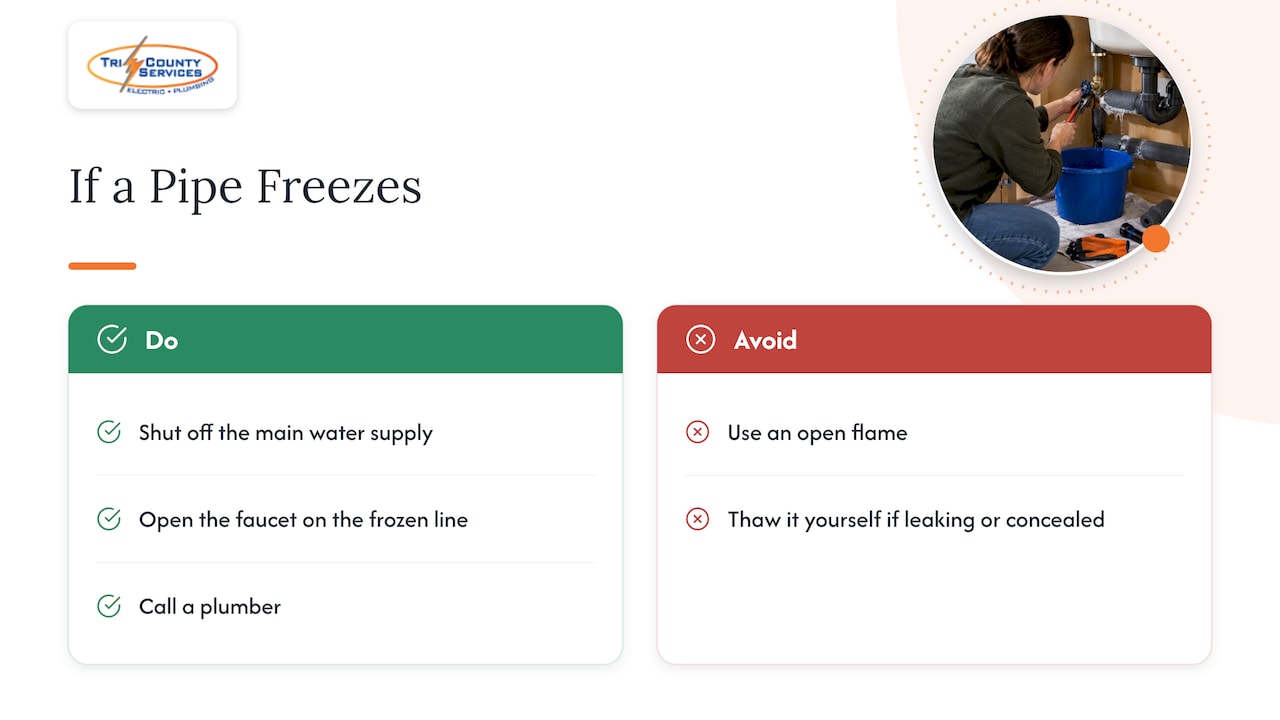
Utah State University Extension says to shut off the main water supply and open the faucet on the frozen line, and notes that a plumber may be your best contact. The same source mentions that heat sources such as a hair dryer, a heat lamp or towels soaked in hot water are used for thawing, and it warns never to use an open flame because of the fire hazard.
Our recommendation is simpler: shut off the water, then call us. Pipes burst because pressure builds in a section blocked by ice, so a pipe that looks intact may already be cracked. If you see a leak, or the pipe is in a wall or ceiling, don’t try to thaw it yourself. Our guide to what to do if your pipes freeze has the full safety steps, and our Ohio winter frozen pipe guide explains why our climate is so hard on plumbing.
Don’t forget your water heater either. It works harder in winter, and a cold, neglected unit is more likely to fail. See our water heater winter preparation guide for details.
Get your pipes checked before winter
We help Northeast Ohio homeowners protect their plumbing before problems start. Our team can look at exposed pipes, find the drafts and weak spots, and make sure any heat source is installed safely. If a pipe has already failed, we handle leak repair and the related cleanup steps, and we can check your lines with a sewer camera if drains are involved.

See what our plumbing work costs in our plumbing pricing guide, or start with our home page. To book a visit, call our office at (440) 253-0332.
FAQ
Does pipe insulation prevent frozen pipes?
It helps, but it doesn’t guarantee it. Insulation slows heat loss and delays freezing, but during a prolonged freeze it needs support from household warmth, water movement or heat tape. Gaps and drafts can undo it quickly.
What is the best insulation for pipes in a cold space?
Foam rubber and fiberglass sleeves are both recognized as suitable. The best choice depends on the pipe’s location, how dry the space stays, and how long it stays cold. For hard-to-protect pipes, a professional can recommend a sleeve, heat tape or a reroute.
Is a trickle of water enough to keep pipes from freezing?
A slow drip from a faucet on an exposed line helps because moving water is harder to freeze. It isn’t a sure thing, so use it alongside insulation, a steady thermostat and sealed drafts. If flow stops, call a plumber.
Can I put insulation over heat tape?
Only if the manufacturer says so. Heat tape is generally applied directly to the pipe, and it must be UL-listed. Because misuse creates a fire risk, have a professional install it and check the circuit.
What should I do if my pipe freezes despite insulation?
Shut off the main water supply, open the faucet on the affected line, and call a plumbing professional. Never use an open flame. Call Tri-County Services Electric & Plumbing at (440) 253-0332.
Sources
- Avoiding the Deep Freeze, Insulation Outlook Magazine
- Freezing and Bursting Pipes, International Code Council
- Preventing & Thawing Frozen Pipes, American Red Cross
- CPSC Re-Issues Heat Tape Guidelines, U.S. Consumer Product Safety Commission
- Insulate Hot Water Pipes, Building America Solution Center
- Problematic frozen pipes can be prevented with routine pre-winter maintenance, University of Nebraska
- Advice to Prevent Frozen Pipes, Utah State University Extension
- How to Keep Your Pipes From Freezing and Bursting, Consumer Reports