

Install a carbon monoxide alarm on every level of your home, plus one outside each sleeping area, or near the bedrooms if you only have one unit. Beyond that, mounting height and exact location depend on your specific model, so the manufacturer’s manual is your real guide. The CPSC, the EPA, and the NFPA all back this approach, and Professional electricians can help when placement or wiring questions go beyond the basics.
TL;DR:
- Every home level, including the basement, needs its own carbon monoxide alarm for reliable warning during sleep hours, with at least three units for a typical two-story house.
- Mounting height varies by model, so always follow the manufacturer’s instructions, avoiding drafty areas, vents, and spaces near fuel-burning appliances.
- Kitchens, garages, and humid areas are poor locations because they can cause false alarms or sensor damage, especially when near fuel sources or with high moisture.
- During a CO alarm event, evacuate immediately, confirm everyone’s safety, and call emergency services without attempting to silence or investigate the source yourself.
- Regular testing monthly, replacing batteries annually, and replacing alarms within 5 to 10 years ensures the equipment remains effective and reliable.
Table of Contents
- Which rooms and floors actually need a detector
- Why mounting height varies by model and what to check
- Common placement mistakes that undermine protection
- What to do the moment an alarm sounds
- Keeping alarms working through regular testing
- Tri-County Services Electric & Plumbing: when to call a professional
- Scheduling an inspection with Tri-County Services Electric & Plumbing
- Sources
- FAQ
Which rooms and floors actually need a detector
Every level of your home needs its own carbon monoxide alarm, including the basement, according to the CPSC. That means a typical two-story house with a basement needs at least three units, not one for the whole property. The goal is coverage that reaches you while you sleep, since CO poisoning often happens overnight without warning.
If your budget or setup only allows for a single alarm, place it near the sleeping areas so it can wake everyone in the house. Many local codes require an alarm within 15 feet of bedroom doors, a detail the EPA also points to when discussing sleeping-area coverage.
A few situations call for extra thought:
- Finished basements: treat them as a full level and add a dedicated alarm, especially if a furnace or water heater lives down there.
- Attic bedrooms: add an alarm on that level too, since heat and air patterns in converted attics differ from the floors below.
- Multi-family units: each separate living unit needs its own alarms; shared hallways do not count as coverage for an individual apartment.
- One-story homes: one alarm outside the sleeping area may satisfy the letter of the guidance, but a second unit on the opposite end of the house adds a real margin of safety.
Why mounting height varies by model and what to check
There is no single mounting height that works for every carbon monoxide alarm, which is where a lot of homeowners get tripped up. Some units are built for wall mounting, others for ceiling mounting, and some are simple plug-in models that sit near an outlet. The EPA is direct about this: follow the manufacturer’s installation instructions rather than a blanket rule you saw somewhere else, since different sensor technologies and enclosures were tested at different heights.
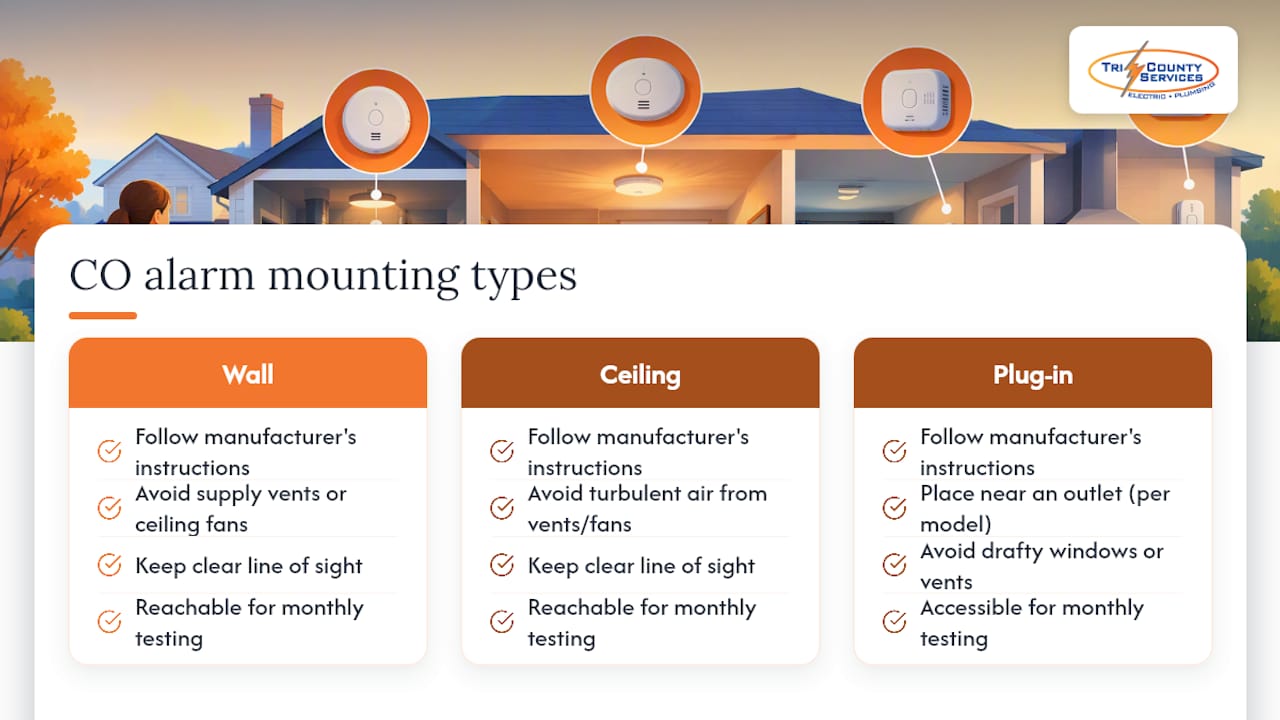
Airflow matters just as much as height. Avoid spots near supply vents, ceiling fans, or drafty windows, since turbulent air can dilute a CO pocket before the sensor catches it. Before you settle on a spot, check that the unit has a clear line of sight in the room, that you can reach it easily for monthly testing, and that it is not tucked behind curtains, furniture, or a closet door where sound and airflow both suffer.
Common placement mistakes that undermine protection
Certain rooms sound logical for a CO alarm but actually work against you. Kitchens, garages, and furnace rooms are all poor choices because normal cooking fumes, car exhaust, and appliance startup cycles can trigger nuisance alarms or desensitize the unit over time.
- Skip the space directly above a furnace, water heater, or stove. Local guidance commonly recommends several feet of clearance, with some jurisdictions citing roughly 15 feet from fuel-burning appliances.
- Keep alarms out of garages entirely. Vehicle exhaust and stored fuel containers make garages one of the least reliable locations for a household CO alarm.
- Avoid bathrooms and areas with heavy humidity or grease buildup, since moisture and residue can coat sensors and shorten their working life.
The EPA advises against mounting alarms directly next to or above fuel-burning appliances for this reason. Dust, grease, and humidity all reduce sensor reliability over time, even in a technically correct location.
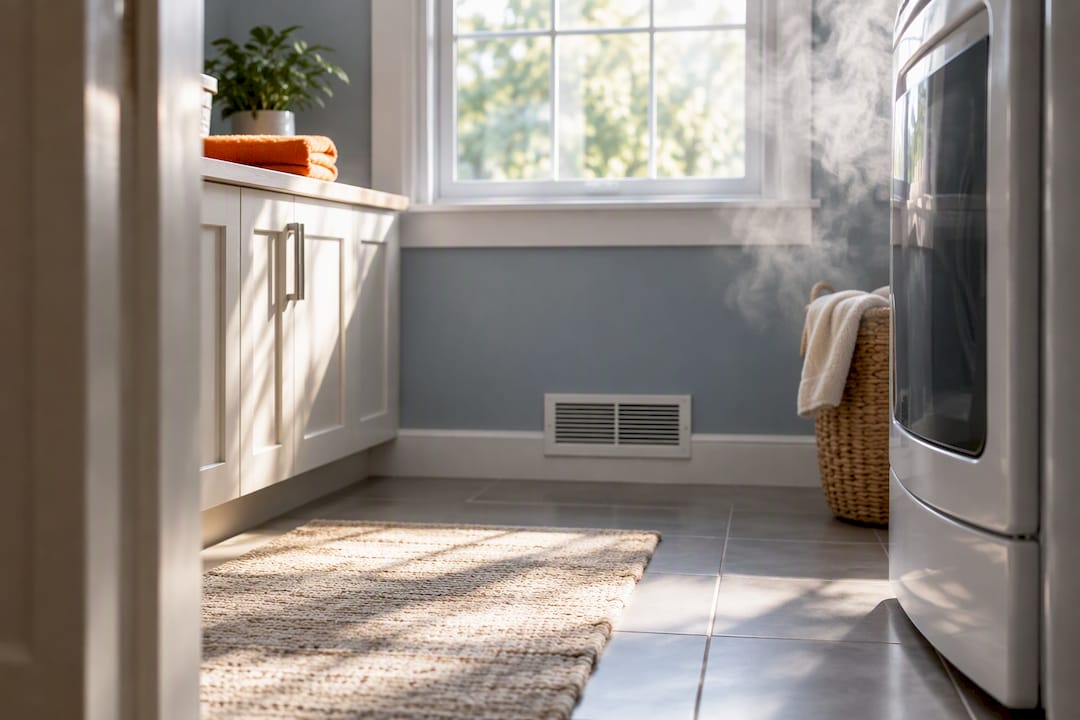
Pro Tip: If a room already runs warm or steamy, like a laundry area near a gas dryer, that is a sign the air there is not stable enough for a dependable CO reading.
What to do the moment an alarm sounds
A sounding CO alarm is not a maintenance issue. It is an emergency, and the response should be immediate.
- Leave the building right away and get everyone to fresh air outside.
- Count heads to confirm every occupant made it out, including pets if possible.
- Call emergency services from outside, never from inside the home, and stay out until responders confirm it is safe to return.
- Do not silence the alarm or go looking for the source yourself. Call a professional afterward to find and fix whatever triggered it.
This sequence lines up with guidance from the CPSC, which stresses evacuating first and investigating later, with trained help.
Keeping alarms working through regular testing
A carbon monoxide alarm only protects you if it is actually working, and testing is quick. Press the test button monthly, and treat a seasonal clock change as your reminder to swap batteries if your unit uses them.
- Test monthly using the built-in test button, per CPSC guidance.
- Replace batteries annually, or on whatever schedule the manufacturer lists in the manual.
- Replace the entire unit once it reaches the end of its rated life, typically somewhere in the 5 to 10 year range depending on the model.
Interconnected alarms sound together across the whole house when any single unit detects CO, a setup the NFPA recommends for multilevel homes so a warning in the basement still reaches bedrooms upstairs. If you run a generator during outages, look for a unit with a digital peak reading and battery backup, since that combination catches brief CO spikes that a basic alarm might miss. Our generator installation guide covers safe setup if you are adding one.
Tri-County Services Electric & Plumbing: when to call a professional
Placement and testing cover a lot, but some situations need equipment and training a homeowner simply does not have. Checking appliance venting, inspecting combustion at the source, and measuring CO levels with calibrated instruments are jobs for a trained professional, not a weekend project.
Call in help if an alarm keeps going off with no obvious cause, right after running a generator, following a new gas appliance installation, or whenever the source of a CO reading is not clear. Interconnecting alarms across multiple levels also often means running or verifying wiring, which is worth having checked by someone who does it regularly. Local electricians have served Northeast Ohio homes for many years, offering technicians who treat every property with care.
— Lindsay Paramore
Scheduling an inspection with Tri-County Services Electric & Plumbing
If a CO alarm has you second-guessing your home’s wiring, appliance venting, or generator hookup, a proper inspection settles the question faster than guesswork ever will. Experienced electrical and plumbing professionals can help homeowners get straight answers and lasting fixes, backed by flexible scheduling that works around your day instead of the other way around.

We can help with:
- CO source inspection to trace an unexplained alarm back to its cause.
- Appliance venting checks for furnaces, water heaters, and gas stoves.
- Interconnection wiring so every alarm in the house sounds together.
- Generator hookup checks to confirm safe, code-aware installation.
Call (440) 253-0332 or visit our electrical services and pricing guide to schedule an inspection today.
Sources
- Carbon monoxide fact sheet | CPSC
- Where should I place a carbon monoxide detector? | EPA
- Carbon monoxide | NFPA
- CO Alarms | CPSC
FAQ
How many carbon monoxide detectors does a house need?
Most homes need at least one alarm per level, including the basement, plus coverage near sleeping areas, according to the CPSC. A two-story home with a finished basement typically needs three or more units total.
What is the correct height to mount a CO detector?
There is no universal height requirement, since it depends on the specific alarm model. The EPA advises following the manufacturer’s own installation instructions rather than a one-size height rule.
Can I put a carbon monoxide detector in the kitchen or garage?
Kitchens and garages are generally poor locations because cooking fumes and vehicle exhaust can trigger nuisance alarms or wear down the sensor. The EPA recommends keeping alarms away from fuel-burning appliances and vehicle exhaust sources.
Should carbon monoxide alarms be interconnected?
Yes, interconnected alarms sound together throughout the house whenever any single unit detects CO, which the NFPA recommends for the best protection in multilevel homes. A professional can wire or pair compatible units so the whole house gets the same warning at once.
What should I do if my CO alarm keeps going off with no clear cause?
Leave the home and call emergency services first if you have any doubt about safety. Once everyone is safe, a professional inspection can check venting, appliances, and CO levels to find the actual source, which Tri-County Services Electric & Plumbing can help schedule at (440) 253-0332.