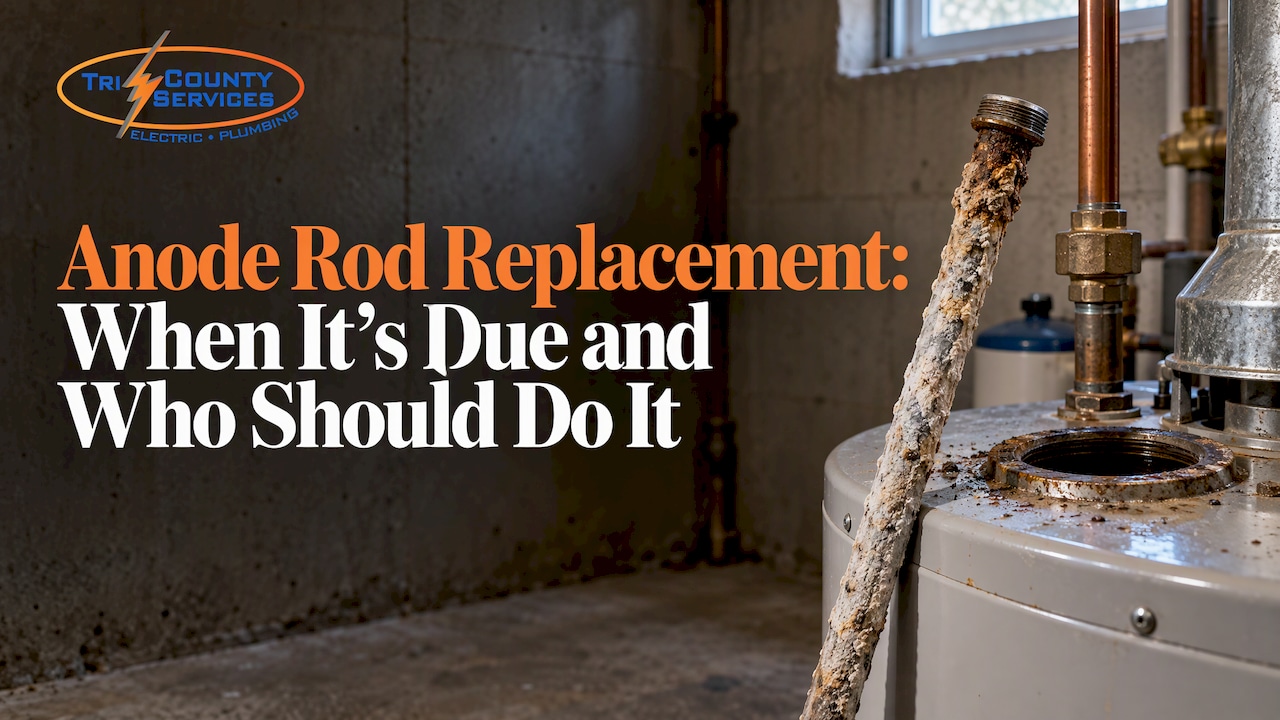


An anode rod is the part inside your water heater that rusts so the tank doesn’t. When it is used up, the tank starts corroding, and a leaking tank means replacement, not repair. Most rods need to be checked every year or so and replaced every few years, depending on your water. The rod itself is cheap. The risk is in pulling it: a stuck fitting, a tank full of hot water and a threaded port that can leak afterward. That is why this is a job for a professional plumber, and why a call to Tri-County Services Electric & Plumbing at (440) 253-0332 is the safest first step.
TL;DR
- The anode rod is a sacrificial metal rod that corrodes in place of your steel tank. Once it is consumed, the tank is next.
- Plan on an inspection after 3 to 4 years, then yearly. If you have a water softener, check yearly from the start.
- Replace the rod when more than 6 inches of core wire shows, when it is thinner than half its original diameter, or when it is heavily pitted or split.
- A plumber typically charges about $200 to $300 for the job, and the part alone runs about $20 to $50. A damaged tank costs far more.
- Call (440) 253-0332 before you pick up a wrench. A stuck rod, a shock hazard or a leak at the threads is cheaper to prevent than to fix.
Table of Contents
- What an anode rod does inside your water heater
- When to replace an anode rod
- Why you should call a professional instead of doing it yourself
- What a professional anode rod replacement involves
- What anode rod replacement costs
- What if the tank has already failed?
- Getting a Northeast Ohio water heater ready for winter
- Water heater service from Tri-County Services Electric & Plumbing
- Our view on anode rods
- FAQ
- Sources
What an anode rod does inside your water heater
Your tank is steel with a glass lining. Glass lining is never perfect, so water finds tiny bare spots. The anode rod is made of magnesium, aluminum, or zinc, and it is deliberately more reactive than steel. According to This Old House, the rod attracts the corrosive elements that would otherwise attack the tank. Their plumbing and heating expert Richard Trethewey describes it as the rod sacrificing itself so the tank doesn’t have to.
That is the whole logic. The rod is a consumable, like a brake pad. It is supposed to wear out. The only question is whether you replace it before it is gone or after the tank has started to rust through.
Why the rod matters more than most homeowners think
The Pacific Northwest National Laboratory (a U.S. Department of Energy lab) found in its report on water quality and residential water heating that water quality is the primary cause of premature water heater failure. It also found that extremely soft water can cut tank life by 50% or more. A healthy anode rod is the main defense against that.
One more point from the manufacturer side: GE Appliances states that failing to replace a consumed rod voids the tank warranty. So a neglected rod can cost you the coverage as well as the tank.
When to replace an anode rod
There is no single number of years that fits every home. Published guidance varies because water varies:
| Source | Inspection guidance |
|---|---|
| PNNL-22921 | Inspect after 3 to 4 years, then annually. Annually from the start with softened water. |
| GE Appliances | Inspect annually. Softened water consumes the rod more rapidly. |
| Forbes Home | Inspect annually. Most rods need replacing every two to three years. |
The common thread: if you have never had yours looked at and your heater is more than three years old, it is due. If you run a water softener, it is due sooner.
The signs that a rod is finished
The PNNL report gives three replacement triggers, and This Old House and GE agree on the first:
- More than 6 inches of bare core wire is showing.
- The rod is less than half its original diameter. This Old House puts the line at less than half an inch thick.
- The rod shows heavy pitting or splitting.
You can’t see any of this from outside the tank. The rod sits under a hex head on top of the heater, and judging it means pulling it out of a pressurized, hot vessel. That is the first reason to bring in a professional: the inspection itself is the risky part.
What speeds up the wear
The rod wears faster with water softeners, high household usage, low pH water and the rod type itself, according to Forbes Home. If your water smells like rotten eggs, or you hear popping from sediment in the tank, that can also be a sign the heater needs attention. Our guide on why sediment is costing you money explains how a flush fits in.
Why you should call a professional instead of doing it yourself
Videos make this look like a ten-minute swap. Here is what they tend to skip.
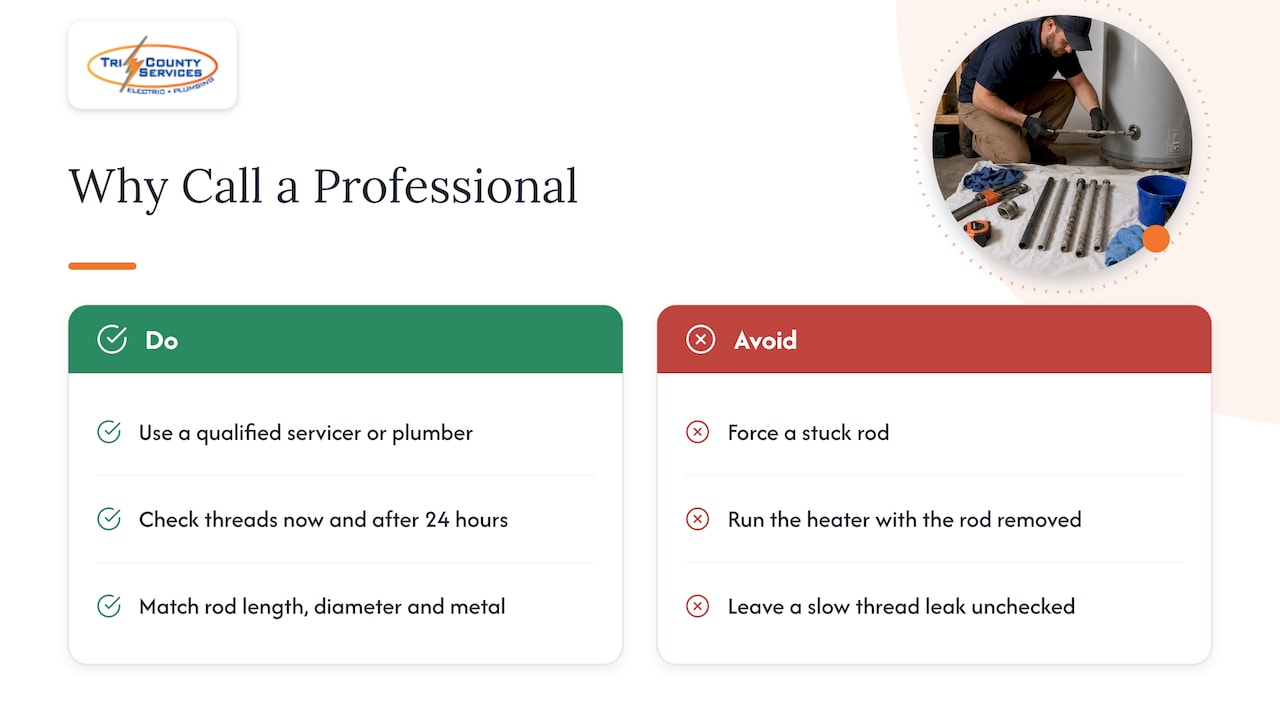
The rod is often stuck. The rod has sat in a threaded port for years, exposed to heat and minerals. The tank can spin or dent when you lean on a long breaker bar, and a damaged tank is a replacement. A professional brings the leverage, the tank support and the experience to know when to stop pushing.
There is a shock and scald hazard. GE’s service content says the inspection should be done by a qualified servicer or plumber because of the shock hazard and the leak risk. Electric heaters must be de-energized correctly. Gas heaters carry their own considerations. The water inside is hot.
The fit matters. Rods come in different lengths, diameters and metals. Some tanks have limited headroom above them and need a flexible rod. Some have a combination anode in the hot outlet, which means disconnecting plumbing. Buying the wrong rod means a second trip and a tank that sits open.
A leak at the threads shows up later. The manufacturer guidance in A.O. Smith’s service bulletin calls for checking the threads for leaks right away and again 24 hours later. A pro reseals the threads correctly and knows what a slow weep looks like before it becomes a wet floor.
Skipping the job costs more. GE also notes that running the heater with the rod removed shortens the life of the glass-lined tank and voids warranty coverage. Doing it halfway is worse than not doing it.
When you call Tri-County Services Electric & Plumbing, our plumbing team handles water heater repair and replacement across Northeast Ohio, and we schedule flexibly so a repair doesn’t take over your day.
What a professional anode rod replacement involves
You don’t need to do these steps. It helps to know what you are paying for, so here is what a careful visit looks like:
- Shut down the heater safely. Power is cut at the breaker for an electric unit, or the gas control is set to off, and the cold water supply is closed.
- Relieve pressure and drain a little water. Only a small amount needs to come out, enough to bring the level below the rod port. The A.O. Smith bulletin mentions about 2 gallons.
- Break the rod loose. This takes a 1-1/16 inch socket and real leverage, applied without twisting the tank.
- Inspect the old rod. The condition of the rod tells the plumber how your water behaves. A rod gone in under a year can point to a stray-current problem that needs a grounding fix, according to Bosch Home Comfort’s anode bulletin.
- Fit the right new rod. The correct length and metal are matched to the tank, and the threads are sealed.
- Refill, purge air, and check for leaks. Only after the tank is full are the burners or elements turned back on.
That last point is a safety item. The manufacturer guidance summarized in the research notes that a hot water system left unused for two weeks or more can build up flammable hydrogen gas. Running a hot tap for several minutes before use, with no flame nearby, clears it. If your heater has sat unused, mention it when you call.

What anode rod replacement costs
The numbers are small compared with what they protect. Bob Vila’s guide (published December 2022) puts a plumber’s replacement at about $200 to $300, with the rod itself at about $20 to $50. Prices vary by rod type, tank access and region, so treat these as a published range from that year, not a quote.
The real comparison is this: a replacement rod visit versus a leaking tank. If the tank has corroded, you are shopping for a new water heater, a bigger and more disruptive bill. Our guide on when to replace your water heater walks through the signs that mean the tank itself is past saving.
Which rod type fits your home
- Magnesium rods are the common choice for standard tanks and usually give the strongest protection in softer water.
- Aluminum or aluminum/zinc rods are often chosen where water has a sulfur smell or is very hard.
- Powered anode rods use a small electrical current instead of wearing away, and Forbes Home notes they can sometimes last the life of the heater.
Picking among these depends on your water and your tank, which is another reason to let a plumber look at the heater first.
What if the tank has already failed?
If the old rod is gone, or you already see rust-colored water, moisture at the base, or a heater over about a decade old, a new rod will not reverse the damage. At that point the better move is a new unit. We install traditional and tankless water heaters, and our hot water tank repair and replacement page shows what that looks like. Tankless units have no tank to corrode, which is why some homeowners choose to retire the tank, and our tankless maintenance guide covers the upkeep that replaces anode checks.
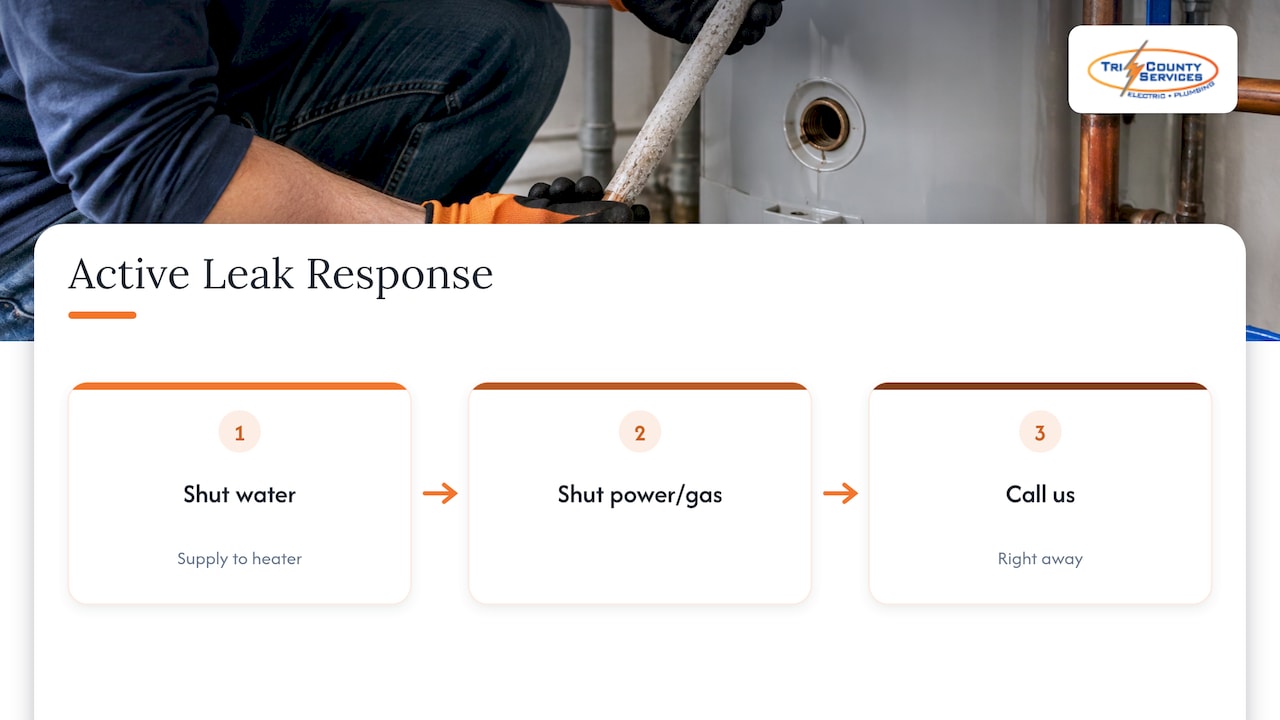
If a leak is active, shut off the water supply to the heater and the power or gas, then call us right away.
Getting a Northeast Ohio water heater ready for winter
Cold months put the heaviest load on a water heater, and a tank near its end tends to fail when demand peaks. An anode check belongs with your other fall and winter prep, and our Northeast Ohio water heater winter guide covers the rest of that checklist.
Water heater service from Tri-County Services Electric & Plumbing
We are a family-owned business based in Northeast Ohio since 1975, and our certified technicians treat your home with respect. Our plumbing side covers water heater repair, traditional water heater replacement and tankless installation, with clear, upfront pricing and a satisfaction guarantee.

If your heater is past the three-year mark, runs on softened water, or has never had its anode rod checked, call our office at (440) 253-0332. See our plumbing pricing guide for published rates, or our water heater repair, installation and maintenance page for free estimates.
Our view on anode rods
Most water heaters we see don’t die of old age. They die of neglect that was cheap to prevent. The anode rod is the clearest example: a small part, a short visit, and a tank that can keep going for years.
We believe the right time to deal with the rod is before there is a problem, and the right person to do it is someone who does this every day. A stuck rod, a dented tank or a weeping thread can turn a small maintenance job into a replacement, and nobody wants that call on a cold January morning.
That is why we build our water heater service around long-term relationships. We would rather see you for a planned visit than an emergency, and we schedule flexibly to keep the disruption to your day small. Call us at (440) 253-0332 and we will talk through where your heater stands.
Lindsay Paramore
FAQ
How often should you replace an anode rod?
There is no single interval. The Department of Energy lab PNNL recommends inspecting after 3 to 4 years and annually after that, or yearly from the start with softened water. Forbes Home says most rods need replacing every two to three years. Replace based on condition, using the 6-inch bare wire and half-diameter rules.
Can I replace an anode rod myself?
We recommend against it. Rods are often stuck, the tank can be damaged by the leverage needed, and GE’s service content says the inspection should be done by a qualified servicer or plumber because of shock and leak risks. Call us at (440) 253-0332 and a professional will take care of it.
How much does it cost to replace an anode rod?
Bob Vila’s December 2022 guide gives about $200 to $300 for a plumber and about $20 to $50 for the rod alone. Your actual cost depends on the rod type and how easy the tank is to reach. Call our office for guidance on your heater.
What happens if I never replace the anode rod?
Once the rod is consumed, the corrosion moves to the steel tank, which shortens its life. GE notes that failing to replace a consumed rod also voids the tank warranty. A leak from a corroded tank usually means a full replacement.
Does a water softener change the schedule?
Yes. PNNL recommends yearly inspection from the start with softened water, and GE warns softened water consumes the rod more rapidly. If you have a softener, don’t wait the full 3 to 4 years.
Sources
- This Old House: How to Replace an Anode Rod on a Water Heater
- PNNL-22921: Impacts of Water Quality on Residential Water Heating
- GE Appliances: Water Heater Anode Rod Maintenance and Service
- Forbes Home: What Does A Water Heater Anode Rod Do?
- Bosch Home Comfort: Anode Rod Inspection bulletin
- Bob Vila: Anode Rod Replacement