

A toilet leaking at the base signals a failed seal between the toilet and the floor, most often caused by a worn wax ring, loose closet bolts, or damage to the closet flange. These failures allow wastewater to seep out with every flush, creating a health hazard and a real risk of subfloor rot and mold. Left unaddressed, even a slow toilet leak can destroy the flooring beneath your bathroom in a matter of months. This guide explains every major toilet base leak cause, how to diagnose which one you have, and what it takes to fix it right.
Why does my toilet leak at the base?
A toilet base leak is defined by water appearing at the floor level around the toilet’s base, typically after flushing. The industry term for the seal that prevents this is the wax ring, a soft wax gasket that sits between the toilet horn and the closet flange embedded in your floor. When that seal fails, wastewater escapes downward and outward with each flush.
The four main toilet base leak causes are:
- Failed wax ring. The wax ring hardens and cracks over time due to age, house settling, or repeated toilet movement. Once the wax is compromised, simply tightening the floor bolts will not fix the leak.
- Loose closet bolts. The two bolts anchoring your toilet to the floor are called closet bolts. When they loosen, the toilet rocks slightly with each use, breaking the wax seal and allowing water to escape.
- Damaged or misaligned closet flange. The flange is the pipe fitting that connects the toilet to the drain. A cracked or sunken flange prevents the wax ring from compressing properly, so no seal forms.
- Cracked toilet base. Hairline cracks in the porcelain base allow water to seep out continuously, not just after flushing.
One more cause that homeowners frequently mistake for a leak is condensation. Cold water in the tank can cause moisture to form on the outside of the porcelain in humid conditions, drip to the floor, and look exactly like a base leak. Anti-sweat valves and foam tank liners solve this problem without any plumbing work.
Pro Tip: Press your hand firmly against the toilet base and rock it gently. Any movement at all means the closet bolts are loose, and the wax ring is likely already compromised.
How to diagnose a toilet base leak
Accurate diagnosis saves you from replacing a wax ring when the real problem is condensation, or from tightening bolts when the flange is actually broken. Follow these steps before touching a single tool.
- Dry the base completely. Wipe the entire base and surrounding floor with a dry towel. Leave it dry for 30 minutes without flushing. If moisture returns during that time, the source is condensation or a supply line, not the wax ring.
- Flush and watch. After the dry period, flush the toilet and watch the base closely. Water appearing only after flushing points directly to a wax ring or flange failure.
- Check for rocking. Sit on the toilet and shift your weight side to side. Any rocking confirms loose closet bolts. Tighten them gently and retest.
- Inspect the flange. If the toilet still rocks after tightening the bolts, the closet flange may be broken or the subfloor beneath it may be damaged. This requires a deeper repair before any resealing attempt will hold.
- Look for cracks. Inspect the porcelain base in good light. Run your fingers along the base perimeter. Even a hairline crack will feel rough and may show discoloration from mineral deposits.
A continuous leak that does not depend on flushing almost always comes from the supply line or shut-off valve, not the wax ring. Replacing the wax ring in that scenario wastes time and money.
Pro Tip: Place a few sheets of dry paper towel around the base before flushing. The exact location where the paper gets wet tells you which side of the flange or seal has failed.
DIY and professional repair options for toilet base leaks
Once you know the cause, you have a clear path to fixing it. Here is what each repair actually involves.
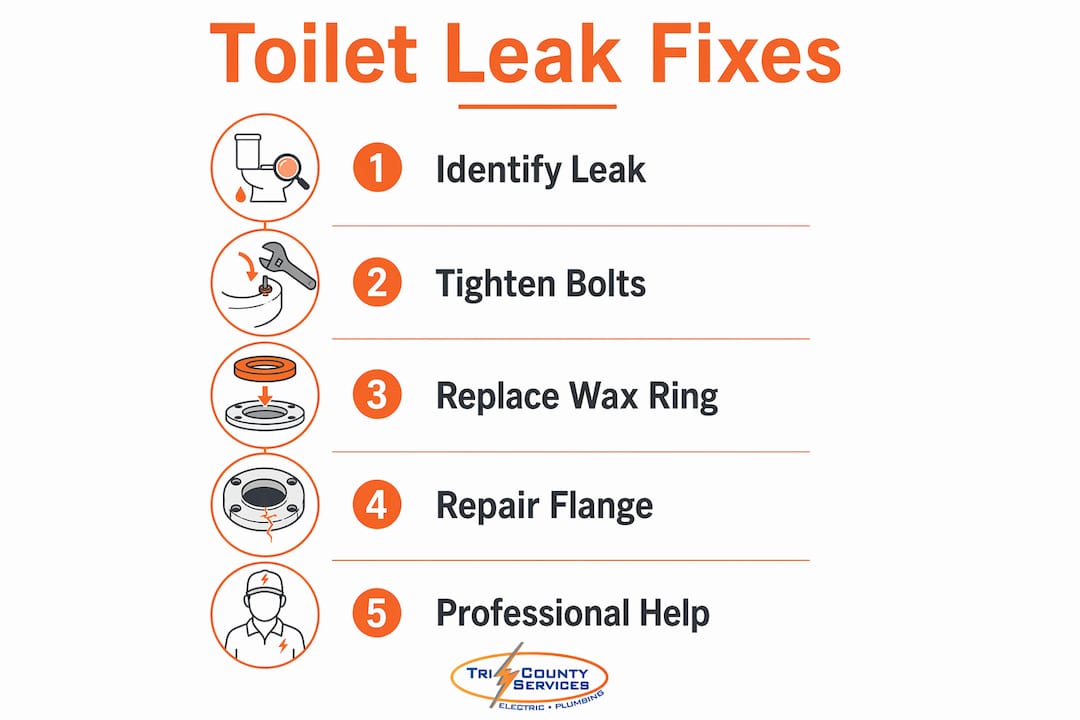
Replacing the wax ring
A wax ring replacement is the most common toilet leak repair. DIY repairs take 60–120 minutes and cost $5–$25 in parts, while professional repairs typically run $200–$400 depending on labor rates in your area. That cost gap is real, but so is the difficulty.
The toilet must be completely disconnected from the water supply, emptied, and lifted straight up off the flange. A standard toilet weighs 50–100 lbs, and improper lifting risks cracking the porcelain or damaging the floor. For most homeowners, this is a two-person job at minimum.
Tightening or replacing closet bolts
Loose closet bolts are the simplest fix. Locate the plastic caps at the base of the toilet, pop them off, and check the nuts beneath. Tighten them by hand first, then add only a quarter turn with a wrench. Overtightening closet bolts is a leading cause of cracked porcelain bases, so resist the urge to crank them down hard. If the bolts spin freely without tightening, they need to be replaced entirely.
Repairing a damaged flange
A broken flange is the repair that catches most homeowners off guard. The flange sits at floor level, and if it has cracked or dropped below the floor surface, the wax ring cannot compress correctly no matter how many times you replace it. Flange repair kits exist for minor cracks, but a severely damaged or sunken flange requires cutting into the floor and replacing the fitting. At that point, calling a professional is the right call for most homeowners in the Cleveland-Akron area.
Addressing a cracked toilet base
A cracked porcelain base cannot be permanently repaired. Epoxy and sealants are temporary at best. The toilet needs to be replaced. This is also true if the subfloor beneath the flange has rotted from a long-standing leak. Water damage to subfloors is one of the most costly consequences of ignoring a base leak, and Northeast Ohio homes with older construction are especially vulnerable.
Pro Tip: Buy a wax ring with a plastic horn extension if your flange sits slightly below floor level. The extended ring compensates for the gap and creates a better seal without shimming.
Preventive maintenance tips to avoid future leaks
The best toilet leak repair is the one you never need. A few simple habits protect your wax ring and closet bolts for years.
- Check for wobble every six months. Sit on the toilet and test for any rocking. Catching a loose bolt early prevents wax ring damage entirely. Regular inspection for wobble is one of the most effective ways to prevent seal failure.
- Do not lean or sit sideways on the toilet. Repeated lateral pressure is the fastest way to break a wax seal. This is especially true for toilets in bathrooms used by children.
- Adjust the flange height when installing new flooring. Adding tile or hardwood raises the floor level. If the flange is not raised to match, the wax ring will be over-compressed and fail prematurely.
- Caulk the base perimeter strategically. Leave a small gap at the back of the toilet when caulking. This lets any future leak escape visibly to the floor rather than seeping silently under the subfloor where it causes rot.
- Check for condensation seasonally. In humid Cleveland summers, tank condensation can mimic a base leak. Improved bathroom ventilation or an anti-sweat valve eliminates the problem before it causes confusion or unnecessary repairs.
Water damage from leaks is not limited to your bathroom floor. Unchecked moisture can affect your home’s structural integrity the same way gutter leaks cause foundation damage over time. Staying ahead of small leaks in every part of your home is always cheaper than repairing the damage they leave behind.
Pro Tip: Set a phone reminder every six months to do a quick toilet check. It takes two minutes and can save thousands in water damage repairs.
Key takeaways
A toilet leaking at the base is almost always caused by a failed wax ring, loose closet bolts, or a damaged flange, and every one of these problems gets worse and more expensive the longer it goes unfixed.
| Point | Details |
|---|---|
| Wax ring failure is the top cause | The wax ring hardens and cracks with age or movement, and tightening bolts alone will not fix it. |
| Diagnose before you repair | Dry the base, then flush and watch; water after flushing confirms a wax ring or flange issue. |
| DIY has real limits | Lifting a 50–100 lb toilet safely requires two people; flange and subfloor damage need a professional. |
| Overtightening breaks porcelain | Hand-tighten closet bolts, then add only a quarter turn with a wrench to avoid cracking the base. |
| Prevention costs almost nothing | A six-month wobble check and proper caulking technique protect your seal and catch problems early. |
What I have learned from watching homeowners tackle this repair
I have seen the same mistake play out dozens of times. A homeowner notices water at the base of the toilet, tightens the closet bolts, and considers the problem solved. Two weeks later, the leak is back. The wax ring was already compromised, and no amount of bolt tightening restores a cracked or hardened wax seal.
The second most common mistake is skipping the diagnosis entirely. Homeowners assume the wax ring is the culprit and replace it, only to find the toilet still leaks because the actual problem was a cracked flange or a supply line drip. Spending 15 minutes on diagnosis before touching any tools is never wasted time.
The repair that surprises people most is the flange replacement. Most homeowners have never heard of a closet flange until it breaks. When it does, the repair goes from a $20 DIY job to a project that involves cutting into the floor, and sometimes into the subfloor below. If you get to that point and the wood underneath is soft or discolored, you are looking at water damage that has been building for months. That is when the cost of delay becomes very real.
My honest advice: do the diagnosis, respect the weight of the toilet, and do not overtighten those bolts. If the flange is broken or the subfloor is soft, call a professional before the repair turns into a renovation.
— Lindsay Paramore
Toilet leak repairs handled by Tri-County Services Electric & Plumbing
Tri-County Services Electric & Plumbing has served Northeast Ohio homeowners since 1975, and the team now brings that same trusted, family-owned approach to full plumbing repairs.
Whether you are dealing with a failed wax ring, a broken flange, or water damage you cannot quite identify, Tri-County’s plumbing technicians diagnose the problem correctly the first time. No guesswork, no repeat visits. The team works around your schedule to minimize disruption, and every repair is backed by the same commitment to quality that Cleveland-Akron homeowners have relied on for decades. Visit Tri-County Services Electric & Plumbing to book a plumbing appointment or call (440) 325-0136 today.
FAQ
What is the most common reason a toilet leaks at the base?
A failed wax ring is the most common cause. The wax hardens or cracks over time, allowing wastewater to escape at the base with each flush.
Can I fix a toilet base leak myself?
Yes, if the cause is a loose closet bolt or a straightforward wax ring replacement. However, a broken flange or subfloor damage requires professional repair to avoid making the problem worse.
How do I know if it is a leak or just condensation?
Wipe the base dry and wait 30 minutes without flushing. If moisture returns before you flush, the source is condensation or a supply line, not the wax ring.
How much does it cost to fix a toilet base leak?
DIY wax ring replacement costs $5–$25 in parts and takes 60–120 minutes. Professional repairs typically cost $200–$400 depending on the extent of the damage and local labor rates.
What happens if I ignore a toilet base leak?
Ignoring a base leak leads to subfloor rot, mold growth, and structural damage beneath your bathroom floor. These repairs cost far more than fixing the original leak.