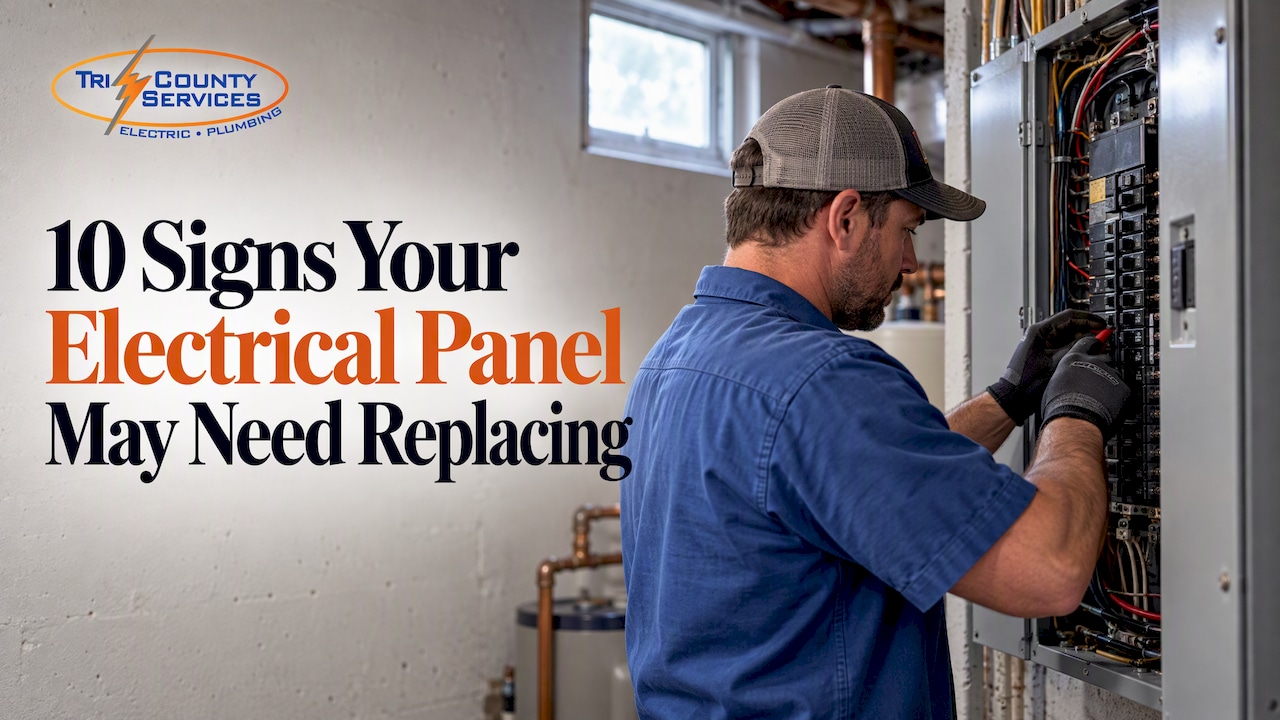

If your breaker box trips often, gives off a burning smell, shows scorch marks, or is over 25 years old, you likely need a professional panel inspection and very possibly a replacement or upgrade now. Those symptoms point to real fire and shock risks, not nuisance quirks. Shut off power to any affected circuit and call a professional before using it again.
TL;DR:
- A single breaker that trips under one known load may need repair, but repeated faults across circuits favor replacement; HVAC cycling can indicate equipment trouble.
- Adding an EV charger, central air, or workshop equipment can exceed an older panel rated at 100 amps; an upgrade to 200 amps is common.
- Schneider Electric recalled about 1.4 million Square D load centers installed from February 2020 through January 2022; check panel date codes against recall notices.
- Replacement averages about $1,342, with costs from roughly $125 to $4,500 or more; insurance varies and often excludes preexisting deficiencies.
- Before scheduling work, photograph the label and date code, record symptoms and planned equipment, and confirm the contractor will obtain permits and arrange inspection.
Table of Contents
- Warning signs your electrical panel needs attention
- What your panel actually does and the terms worth knowing
- Why panel age and recalled components create hidden risk
- Deciding between a repair, a replacement, and a full upgrade
- What to do right now if you spot a warning sign
- How we inspect and evaluate panels in the field
- The checklist matters less than acting on it
- Get your panel inspected before small signs become big problems
- FAQ
- Sources
Warning signs your electrical panel needs attention
Some signs are mild annoyances. Others mean you should stop using the circuit immediately. Here is how to read them.
- Frequent breaker trips. One trip during a storm is normal. Trips that repeat weekly, or happen the moment you plug in a specific appliance, usually mean the circuit is overloaded or the panel itself can no longer handle your household’s demand.
- Dimming or flickering lights. If it happens only in one room when you run a hair dryer, that’s likely a circuit issue. If it happens house-wide, especially when larger appliances cycle on, that points to a panel-level voltage problem.
- Burning smells, scorch marks, smoke, or discolored wiring. These are not warning signs to monitor. They mean a wire or breaker is already overheating, and continued use risks fire. Cut power and call a professional right away.
- Buzzing or humming from the panel. Healthy panels are silent. A buzz usually means arcing or a loose connection, both associated with higher fire risk.
- A panel older than 25 to 40 years. Older panels often lack modern arc fault and ground fault protections and were never built for today’s electronics and appliance loads.
- Hazardous or recalled panel brands. Panels and breakers from certain manufacturers have documented failure histories and recalls. Check the label and date code inside the panel door against manufacturer and CPSC recall notices.
- A fuse box instead of a breaker panel. Fuse systems can’t support modern circuit protections like AFCI or GFCI, and homeowners often rig in oversized fuses that defeat the safety margin entirely.
- Warm or sparking outlets, or mild shocks when touching appliances. These often trace back to failing connections at the panel, not just the outlet itself.
- Heavy reliance on extension cords and power strips. If you need them everywhere, your panel likely doesn’t have enough circuits for how you actually use the house.
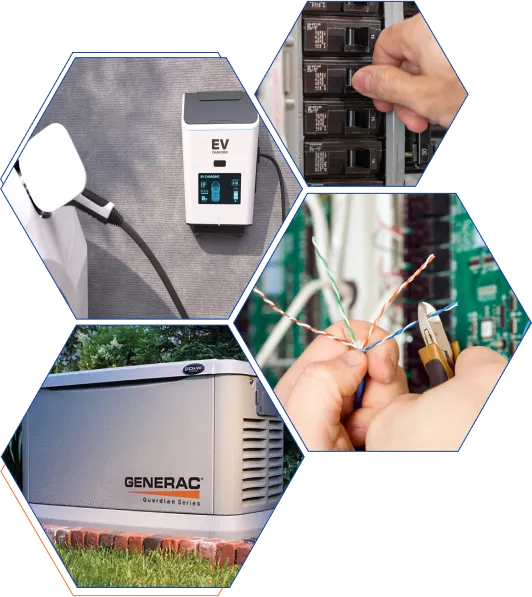
- Plans to add high-load equipment. An EV charger, central air conditioning, or a workshop with heavy tools often pushes demand past what an older 100-amp panel can safely deliver, which usually means an amperage upgrade.
We’ve also laid out five signs you need an electrical panel upgrade if you want a shorter field checklist to keep handy.
Pro Tip: Take a photo of your panel’s interior label and date code before you call anyone. It speeds up diagnosis and helps confirm whether your panel matches a known recall.
What your panel actually does and the terms worth knowing
Your panel distributes incoming power to every circuit in your home and is sized by service amperage, the maximum load it can safely carry. Most modern homes run on 200 amps, though older homes may still have 60 or 100-amp service, which struggles with today’s appliance and electronics load.
Breakers trip and reset; fuses burn out and must be replaced, and a home still running on fuses is generally a strong replacement candidate. AFCI (arc fault) and GFCI (ground fault) breakers detect dangerous arcing and shock hazards that standard breakers miss, and many jurisdictions now require them in specific rooms.
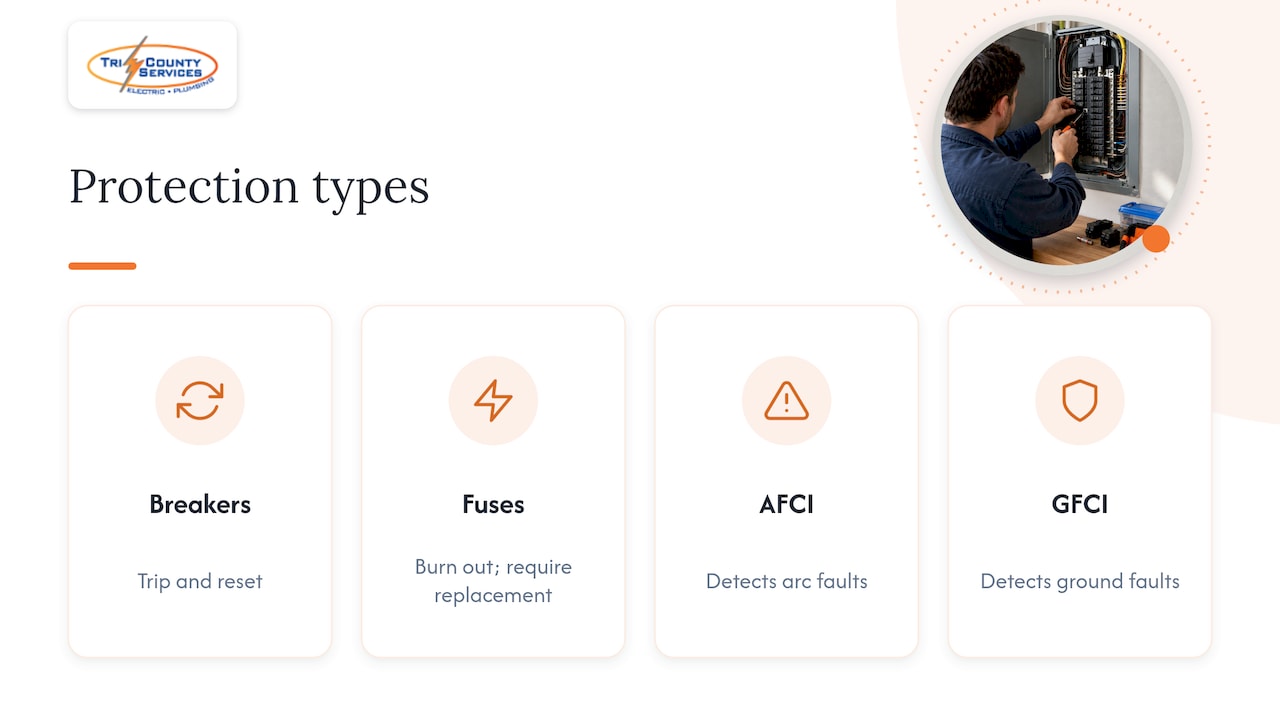
Inside the panel, the main breaker controls all power, the bus bar distributes it to individual breakers, and a “full” panel means every breaker slot is occupied, often a sign it’s time to discuss capacity with a professional.
Why panel age and recalled components create hidden risk
Panels typically last several decades before internal components degrade enough to matter, and age alone is often reason enough to plan a replacement before a failure forces the issue.
Recalls compound the risk because the hazard is often invisible from outside the panel:
- Schneider Electric recalled about 1.4 million Square D load centers installed between February 2020 and January 2022 over thermal burn and fire hazards, with free inspection and repair available.
- Siemens and Murray breakers and load centers sold around mid-2010 were recalled for spring-clip failures that can cause arcing and overheating.
- Counterfeit breakers mislabeled as trusted brands have also been recalled for failing to trip when they should.
Recalls like these affect a very large number of panels, and the defect is usually only confirmed by opening the panel and checking date codes against manufacturer records, which is exactly why a visual glance from the homeowner side isn’t enough. Water exposure adds another layer: ESFI guidance notes that breakers, AFCIs, GFCIs, and outlets exposed to water typically need full replacement rather than drying out and reuse.
Deciding between a repair, a replacement, and a full upgrade
A single faulty breaker that trips consistently under one known load is often a simple repair. Full panel replacement becomes the right call when you’re dealing with recalled components, a fuse box, a panel past 25 to 40 years old, or repeated faults across multiple circuits.
- Repair fits when the panel itself is sound and only one breaker or connection is failing.
- Replacement fits when the panel is aged, recalled, fuse-based, or showing multiple independent faults.
- A full amperage upgrade, commonly to 200 amps, makes sense when you’re adding an EV charger, central air, or other heavy loads, and it’s frequently bundled into a replacement since the labor overlaps.
Cost varies widely by scope. Industry cost data puts typical replacement costs around $1,342 on average, with a realistic range from roughly $125 for a straightforward panel swap up to $4,500 or more when rewiring is involved. Homeowners often choose to upgrade to 200 amps at replacement time rather than pay for a like-for-like swap, since much of the labor is the same either way. Check your homeowner’s insurance policy specifics, since coverage for panel failure varies and pre-existing deficiencies are often excluded.
What to do right now if you spot a warning sign
If you’re seeing burning smells, smoke, or sparking, cut power to that circuit at the panel and avoid the area until a professional arrives; if the smell or heat is severe, leave the house and call from outside.
For less urgent signs, prepare for your inspection call:
- Photograph the panel label and interior, including any visible date codes or model numbers.
- Write down symptoms and timing, like which appliance triggers a trip or when the buzzing started.
- Note your upgrade plans, such as an EV charger or new HVAC system, so the estimate accounts for future load.
- Ask whether the job requires a permit. Most panel replacements and new installations do, and ESFI’s safety guidance recommends confirming your contractor will pull permits and schedule the required inspection rather than skip that step.
During an on-site visit, expect a walkthrough of your symptoms, an inspection of the panel’s interior and wiring condition, and a written estimate before any work begins.
Pro Tip: If your breaker trips specifically when your HVAC system cycles on, the fault may originate in the HVAC unit rather than the panel. Target Air Systems breaks down common HVAC-related causes worth ruling out before assuming it’s a panel problem.
How we inspect and evaluate panels in the field
We’ve worked on homes across Northeast Ohio since 1975, and panel evaluations follow the same thorough process every time, regardless of the home’s age or panel brand.
- We check the interior label, model number, and date code against known recall and hazard lists.
- We inspect bus bar condition, breaker fit, and wiring for heat damage, looseness, or corrosion.
- We verify whether AFCI and GFCI protections are present where current code expects them.
- We look for moisture intrusion or rust, both inside the panel enclosure and around its mounting location.
- We handle permit filing and inspection scheduling as part of panel upgrade and replacement work, so you’re not coordinating that separately.
If you want more detail on what a routine upgrade job actually involves, we’ve outlined the full scope of a panel upgrade service on our blog. For a direct answer about your own panel, call us at (440) 253-0332.
The checklist matters less than acting on it
Most homeowners already have at least one of these signs and explain it away: the breaker that “just needs a reset,” the flicker that “only happens sometimes.” The conventional advice treats each sign in isolation, as if a single flicker or a single trip needs its own diagnosis. In practice, panels fail as a system. A panel buzzing quietly today and a panel that overheats next year are often the same panel at two different points on one timeline.
What gets underrated is age. Homeowners fixate on dramatic signs like scorch marks and overlook that a 30-year-old panel with zero visible symptoms can still be carrying a recalled component or a bus bar connection that’s slowly loosening. The symptom often shows up only after the damage has been building for years.
If you take one thing from this, let it be this: don’t wait for the dramatic sign. A panel inspection costs far less than the aftermath of a basement fire, and age or a questionable brand name is reason enough to have someone look.
— Lindsay Paramore
Get your panel inspected before small signs become big problems
We handle electrical panel upgrades and replacements, and every job starts with an inspection and a written estimate before anything is scheduled. We work around your household’s timeline rather than forcing a one-size-fits-all appointment window.

- Panel inspections identify recalls, wear, and capacity issues before they become emergencies.
- Upgrades to 200-amp service are common when adding an EV charger, central air, or other major equipment.
- Permit filing and inspection scheduling are handled as part of the job.
| What you get | Details |
|---|---|
| Inspection and estimate | Written estimate provided before work begins |
| Common upgrade target | 200-amp service for modern household loads |
| Permit handling | Filed and scheduled as part of the project |
Call us at (440) 253-0332 or visit our electrical panel upgrades page to schedule an inspection.
FAQ
How can you tell if an electrical panel needs replacing?
Frequent breaker trips, a burning smell, scorch marks, buzzing from the panel, or a panel older than 25 to 40 years are the clearest signs. A fuse box instead of a breaker panel, or a brand tied to a known CPSC recall, also points to replacement rather than repair.
What are the signage and labeling requirements for electrical panels?
Electrical codes generally require panels to be clearly labeled showing which breaker controls which circuit, with the main breaker identified and the panel accessible and unobstructed. Requirements vary by jurisdiction, so your local code authority or the electrician handling your permit can confirm the specifics that apply to your home.
What is the 80% rule for electrical panels?
Panels that are maxed out or frequently tripping need a capacity review rather than just a breaker swap.
What are the labeling requirements under the National Electrical Code?
The National Electrical Code requires panels to have a directory identifying each circuit, legible labeling, and clear, unobstructed access to the panel itself. A professional handling a replacement or upgrade will bring labeling into compliance as part of the job and the permitted inspection.
Does homeowner’s insurance cover electrical panel replacement?
Coverage depends on your specific policy and the cause of failure, and many policies exclude damage tied to a pre-existing deficiency like an aged or recalled panel. Check your policy directly or ask your insurer before assuming a replacement will be covered.
Sources
- Schneider Electric™ recalls 1.4 million electrical panels due to thermal burn and fire hazards | CPSC
- How much does it cost to replace an electrical panel? | NerdWallet