
Preventative sewer services inspect, clean, and repair the private sewer lateral running from a home or business to the main line, catching cracks, root intrusion, and buildup before they cause a backup. Routine inspections and cleaning cost far less than an emergency repair or basement flood. Call Tri-County Services Electric & Plumbing at (440) 253-0332 to schedule an inspection before a small clog turns into a bigger problem.
TL;DR:
- Seattle Public Utilities recommends camera inspections every 8 to 10 years under normal conditions, shortening the interval to 2 to 3 years when trees grow nearby.
- Snaking suits single blockages, while hydrojetting clears buildup across the pipe; neither method repairs cracked, offset, or collapsed lines.
- Sewer camera inspections commonly cost $230 to $845, depending on access and pipe condition; request a written scope and confirm whether the quote can change.
- If water backs up while no fixtures are running, the city main may be involved; stop using water and mention the timing when requesting service.
- Restaurants and food service properties need shorter cleaning intervals because grease enters the line continually, and local rules may require grease trap maintenance records.
Table of Contents
- What preventative sewer services include
- How sewer camera inspections work and what they reveal
- Cleaning and root control: choosing the right method
- Building a preventative maintenance schedule that fits your property
- Warning signs you need sewer service now
- What affects the cost of inspections, cleaning, and repairs
- How we approach preventative sewer maintenance
- How preventative service protects uptime for businesses
- Compliance considerations for commercial sewer systems
- Beyond the camera: other ways technicians detect sewer problems
- Why regular maintenance pays off for commercial properties
- Matching the plan to the system: offices, restaurants, and multi-unit buildings
- Why we treat prevention as the smarter investment
- Schedule a preventative sewer inspection today
- FAQ
- Sources
What preventative sewer services include
A preventative sewer visit typically combines three things: a look inside the line, a cleaning pass, and any small fixes the inspection turns up. The private lateral, the section running from the building to the city connection or septic tank, is the homeowner’s responsibility to maintain, even though the municipality usually owns and maintains the main line itself.
A routine visit generally covers:
- A video camera inspection to check pipe condition and locate blockages or defects.
- Mechanical cleaning (snaking) or high-pressure water cleaning (hydrojetting) to clear roots, grease, and debris.
- Spot repairs such as sealing small cracks, removing isolated root intrusion, or resetting a minor pipe offset.
- A written summary of findings with a recommendation for next steps or follow-up timing.
Knowing what belongs to you versus the city matters here. Fairfax County explains that homeowners are responsible for maintaining the private building sewer lateral, while the municipality typically handles the main line. That split is exactly why a professional visit focuses on your section of pipe rather than the street.
How sewer camera inspections work and what they reveal
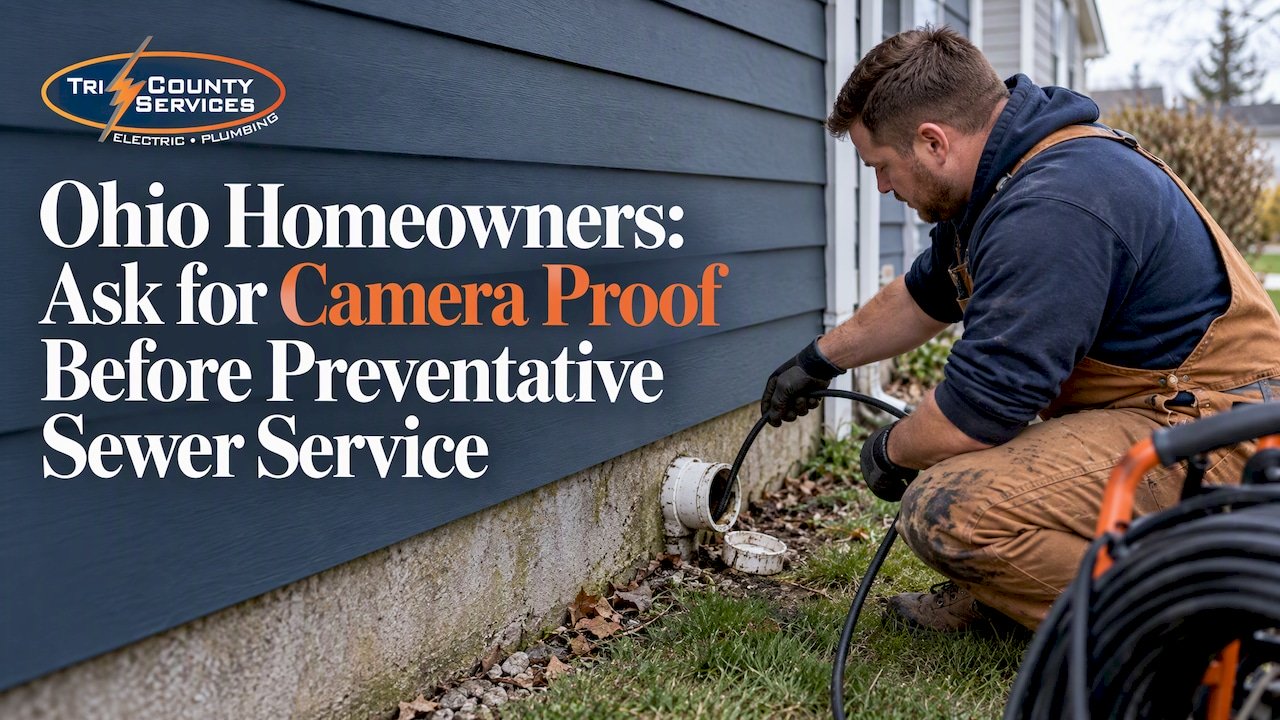
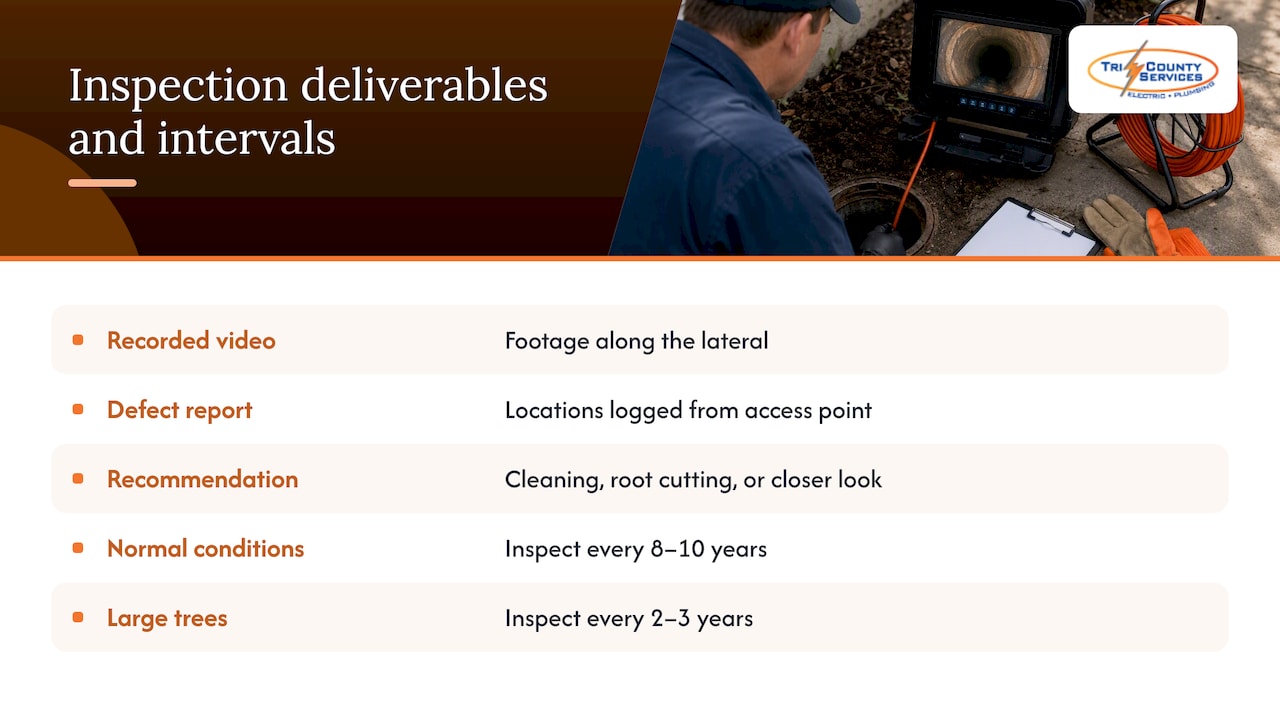
A sewer camera scope involves feeding a waterproof camera on a flexible cable through a cleanout or access point, recording footage as it travels the length of the lateral. Technicians watch for cracks, pipe offsets, root intrusion, grease buildup, bellies (low spots where the pipe has sagged), and corrosion in older cast-iron lines. Each defect gets logged against its distance from the access point, which pinpoints exactly where a repair crew would need to dig if excavation ever became necessary.
The deliverable from a thorough inspection is a recorded video plus an annotated report noting defect locations and a recommendation, whether that’s routine cleaning, root cutting, or a closer look at a specific segment. Seattle Public Utilities recommends inspecting a private side sewer every 8 to 10 years under normal conditions, and every 2 to 3 years when large trees sit near the line.
Pro Tip: Ask for a copy of the inspection video and report for your records. It becomes useful if you sell the property or need to compare conditions at your next inspection.
Cleaning and root control: choosing the right method
Snaking (mechanical cleaning) pushes a rotating cable through the line to break up clogs and cut roots at the point of contact. It works well for localized blockages but doesn’t scrub the full pipe wall. Hydrojetting uses high-pressure water to blast grease, scale, and root hairs off the entire interior surface, which makes it the more thorough option for lines with buildup along their length rather than a single clog.
Descaling, a slower, controlled version of jetting, removes mineral and grease buildup from aging cast-iron pipe without damaging the pipe wall. None of these methods fix a structural problem: a pipe that’s cracked, offset, or collapsed still needs repair or replacement regardless of how well it’s cleaned.
A few things worth knowing before you choose a method:
- Snaking suits a single clog; hydrojetting suits recurring buildup or grease-heavy lines.
- Descaling can restore flow in old cast-iron pipe without replacing it.
- Professional guidance advises against chemical drain openers, since they can damage pipe linings without clearing the underlying cause.
Pouring chemicals down a slow drain treats a symptom, not the blockage itself, and it’s one more reason to call a professional before a minor clog becomes a bigger repair.
Building a preventative maintenance schedule that fits your property
Not every property needs the same cadence. Baseline guidance calls for inspecting a private lateral every 8 to 10 years, but Seattle Public Utilities shortens that to every 2 to 3 years for properties with large trees nearby, since roots are a leading cause of lateral damage. Rental units, commercial kitchens, and any property with heavy grease use also warrant more frequent cleaning.
A sound plan generally follows these steps, incorporating approaches detailed in five proactive maintenance approaches every landlord needs:
- Start with a baseline camera inspection to document current pipe condition.
- Set a cleaning interval based on tree risk, grease volume, and past clog history.
- Schedule follow-up inspections at the recommended interval and compare footage over time.
- Keep written records of every visit to track changes and support future decisions.
EPA guidance on collection system operations notes that planned inspections and scheduled cleaning reduce emergency failures, which is the entire point of shifting from reactive fixes to a maintenance calendar.
Warning signs you need sewer service now
Some symptoms call for routine scheduling, while others mean you should call immediately. Slow drains in multiple fixtures, gurgling sounds, and recurring clogs in the same spot usually point to a developing blockage that benefits from a camera inspection before it worsens. Sewage odors, water backing up into a tub or floor drain, or multiple fixtures backing up at once are signs of a more urgent problem.
Watch for these indicators:
- Multiple drains running slow at the same time, not just one fixture.
- Gurgling noises from drains or toilets after use.
- Sewage odors near floor drains, cleanouts, or the yard.
- Backups that occur even when no fixtures are currently in use.
If water backs up when nobody in the house is running water, City of Tacoma guidance suggests that may point to a city-side main line issue rather than your private lateral, worth mentioning when you call for service. Until help arrives, avoid running additional water and stay away from standing sewage.
What affects the cost of inspections, cleaning, and repairs
Price depends on a handful of factors: how long the line is, how hard it is to access, what cleaning method the job requires, and whether any repair work turns up during inspection. A straightforward inspection on an accessible cleanout costs less than one requiring a technician to locate and open a buried access point.
Sewer video inspections commonly run $230 to $845 depending on pipe condition and access, a range that reflects why a flat-rate quote over the phone rarely holds up once a technician sees the actual line.
For context, our own published ranges list sewer camera inspections between $250 and $400 and drain cleaning between $250 and $600, one-off pricing that falls within the same general band municipal guidance describes.
Before agreeing to any work, ask for:
- A written scope describing exactly what will be inspected or cleaned.
- The method being used (snaking versus hydrojetting) and why.
- Whether the quoted price is fixed or could change based on findings.
A written quote protects you from surprise charges and gives you something to compare if you ever get a second opinion.
How we approach preventative sewer maintenance
We lead every sewer job with a camera inspection, because fixing the right problem the first time costs less than guessing. That approach is what let us restore an aging cast-iron sewer line with hydrojetting and descaling rather than recommending a full excavation.
As a family-owned business serving Northeast Ohio since 1975, we send certified technicians who document findings with video and a written report, then recommend a realistic follow-up schedule rather than a one-size-fits-all calendar. We work around your schedule to minimize disruption, and every visit ends with a clear, upfront quote. Call us at (440) 253-0332 to get a camera inspection on the books.
How preventative service protects uptime for businesses
A sewer backup at a commercial property doesn’t just mean a mess. It can shut down a kitchen, close a restroom bank, or force a building to turn away customers until the line clears. The cost of that closure, lost revenue, rescheduled staff, spoiled inventory in a food service setting, usually outweighs what a scheduled cleaning would have cost.
Preventative visits scheduled during off-hours or slow periods avoid the disruption that comes with an emergency call during business hours. A property manager who knows the condition of their lateral can also plan cleaning around slow seasons instead of responding to a backup during a busy one. EPA guidance on collection systems points to scheduled maintenance as a way to avoid the emergency failures that cause exactly this kind of downtime.
For multi-tenant buildings, a backup in one unit can affect shared lines serving several tenants at once, multiplying the disruption. Routine inspection catches a developing problem in one segment of pipe before it backs up into neighboring units.
Compliance considerations for commercial sewer systems
Commercial properties often face a different standard than single-family homes when it comes to what goes down the drain. Restaurants, food service businesses, and some commercial kitchens are subject to local pretreatment requirements aimed at limiting fats, oils, and grease (FOG) entering the sewer system, since FOG buildup is a recurring cause of blockages in both private laterals and municipal lines.
Local health and public works departments may require grease trap maintenance records, and some jurisdictions inspect commercial kitchens specifically for compliance with grease management rules. Metropolitan Sewer District of Greater Cincinnati guidance on grease and flushing practices reflects the kind of standard many municipalities apply, even where the exact rule varies by city.
Keeping documentation from every preventative visit, cleaning dates, inspection footage, grease trap service records, gives a property manager something concrete to show an inspector or insurer if a question ever comes up. It also makes it easier to demonstrate due diligence if a backup ever affects a neighboring property or the public sewer main.
Beyond the camera: other ways technicians detect sewer problems
A camera scope answers most questions about pipe condition, but a few other tools come into play for specific situations. Smoke testing pushes non-toxic smoke through the system to reveal where sewer gas escapes through cracks or improper connections, useful for finding leaks that don’t show up clearly on camera. Dye testing uses colored dye flushed through fixtures to trace where wastewater actually flows, which helps confirm cross-connections or misrouted lines in older buildings.
Locating equipment that emits a signal from inside the pipe, picked up by a receiver on the surface, pinpoints the exact depth and position of a defect found on camera, information a repair crew needs before digging. For larger commercial systems, acoustic or flow monitoring can track changes in how wastewater moves through a line over time, flagging a developing blockage before it becomes visible on a routine camera pass.
None of these tools replace a camera inspection. They supplement it, giving a clearer picture when a camera alone raises a question it can’t fully answer, like why gas is escaping somewhere a camera hasn’t reached yet, or where exactly a buried defect sits relative to a parking lot or foundation.
Why regular maintenance pays off for commercial properties
A commercial sewer system serves more fixtures, more often, than a typical home, which means buildup and wear accumulate faster. Regular inspection and cleaning catch that wear before it becomes a shutdown. A property that schedules cleaning on a set interval also avoids the premium that comes with emergency, after-hours service calls.
Multi-tenant buildings benefit in a specific way: a backup in a shared line can affect every tenant connected to it, not just the one whose fixtures triggered the clog. Catching a developing problem early protects every business on that line, not just the one that reports a slow drain first.
EPA’s guidance on collection system operations ties planned maintenance directly to fewer emergency failures, a point that applies just as much to a commercial lateral serving a strip mall as it does to a municipal main. Fewer emergencies also means fewer insurance claims and less property damage to document and repair, which adds up over the life of a building.
Regular service also creates a paper trail. A property manager with years of inspection footage and cleaning records has real evidence of maintenance history, useful for insurance purposes, lease negotiations, or simply knowing when a pipe is nearing the end of its useful life instead of finding out the hard way.
Matching the plan to the system: offices, restaurants, and multi-unit buildings
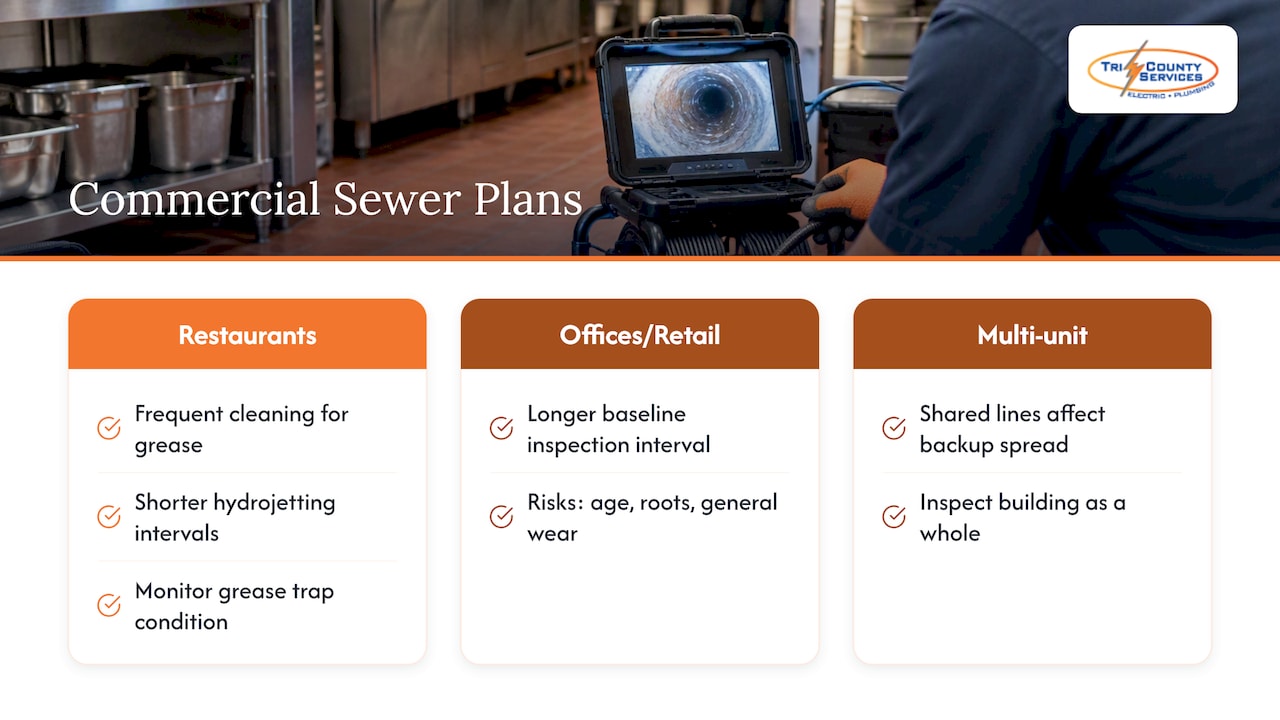
A commercial sewer system isn’t one thing. An office building with standard restrooms has very different needs than a restaurant running a full kitchen, and a multi-unit residential or retail building shares lines in ways that affect how a backup spreads.
Restaurants and food service properties need more frequent cleaning because grease is a constant input, and a plan built around that reality usually includes shorter intervals between hydrojetting visits and closer attention to grease trap condition. Office buildings and retail spaces without kitchens can typically run on a longer interval, closer to the baseline inspection schedule, since the main risks are age, root intrusion, and general wear rather than grease.
Multi-tenant buildings benefit from a plan that accounts for shared lines: a single lateral problem can affect several tenants, so inspection timing often needs to consider the building as a whole rather than unit by unit. A property manager working with a provider who tailors inspection frequency and cleaning method to the actual use of the building, rather than applying the same calendar to every property, ends up with a plan that matches real risk instead of a generic default.
Why we treat prevention as the smarter investment
The biggest misconception about sewer maintenance is that it’s optional until something goes wrong. In practice, a camera inspection costs a fraction of what a collapsed line or a flooded basement costs to fix, and most of the defects we find on camera were avoidable with earlier attention. Scheduling routine service isn’t an extra expense. It’s the cheaper path, almost every time.
We’d rather send a technician out for a quick inspection than get the emergency call at 2 a.m. Call us for an honest assessment of your line’s condition.
— Lindsay Paramore
Schedule a preventative sewer inspection today
Waiting for a backup costs more than booking an inspection. Our camera-first approach means we see exactly what’s happening in your line before recommending hydrojetting, root cutting, or a repair, so you’re never paying for guesswork.

Our preventative sewer plans can include:
- A video camera inspection documenting your lateral’s current condition.
- Hydrojetting or snaking matched to what the camera finds.
- Root control and descaling for older or tree-affected lines.
- A written quote before any work begins, with scheduling built around your day.
Call (440) 253-0332 to book an inspection, or review our plumbing pricing guide for current service ranges. We work around your schedule, not the other way around.
FAQ
Can I clean my sewer line myself?
A homeowner can sometimes clear a minor clog near a fixture, but a full sewer lateral requires professional equipment to clean safely and effectively. Snaking or hydrojetting the main line without proper training risks damaging the pipe or missing a structural problem a camera would catch, so it’s worth calling a professional before attempting a DIY fix on anything beyond a single slow drain.
How do I prevent sewage backup in my house?
Avoid flushing wipes, grease, and other non-dissolvable items, since municipal guidance identifies these as common causes of clogs and backups. Scheduling a camera inspection on the interval your provider recommends, and addressing roots or buildup early, catches most problems before they turn into a backup.
Is it worth getting a sewer line inspection?
Yes. A video inspection typically costs far less than an emergency repair, and commonly runs $230 to $845 depending on pipe condition and access. Catching a crack or root intrusion early, before it causes a backup, usually saves money compared to responding after a failure.
Is there a difference between a sewer line and a sanitary sewer?
The private sewer lateral or side sewer is the pipe running from a building to the public sewer connection, and it’s the homeowner’s responsibility to maintain. The sanitary sewer main, which carries wastewater from multiple properties to treatment, is typically owned and maintained by the municipality, as Fairfax County guidance explains.
Sources
- Taking Care of Your Sewer Pipe — Seattle Public Utilities
- Optimizing Collection System Operations and Maintenance — EPA
- Prevention & Protection Tips — Metropolitan Sewer District of Greater Cincinnati
- Residential Wastewater Management — Fairfax County Public Works