
TL;DR:
- A portable generator in the 7,000–8,000 watt range can power essential home appliances during outages. Professional transfer switch installation ensures safe operation and prevents dangerous backfeed into the utility grid. Proper placement, fuel management, and load evaluation are critical for safety and effectiveness.
What are the best portable generators for a home power outage?
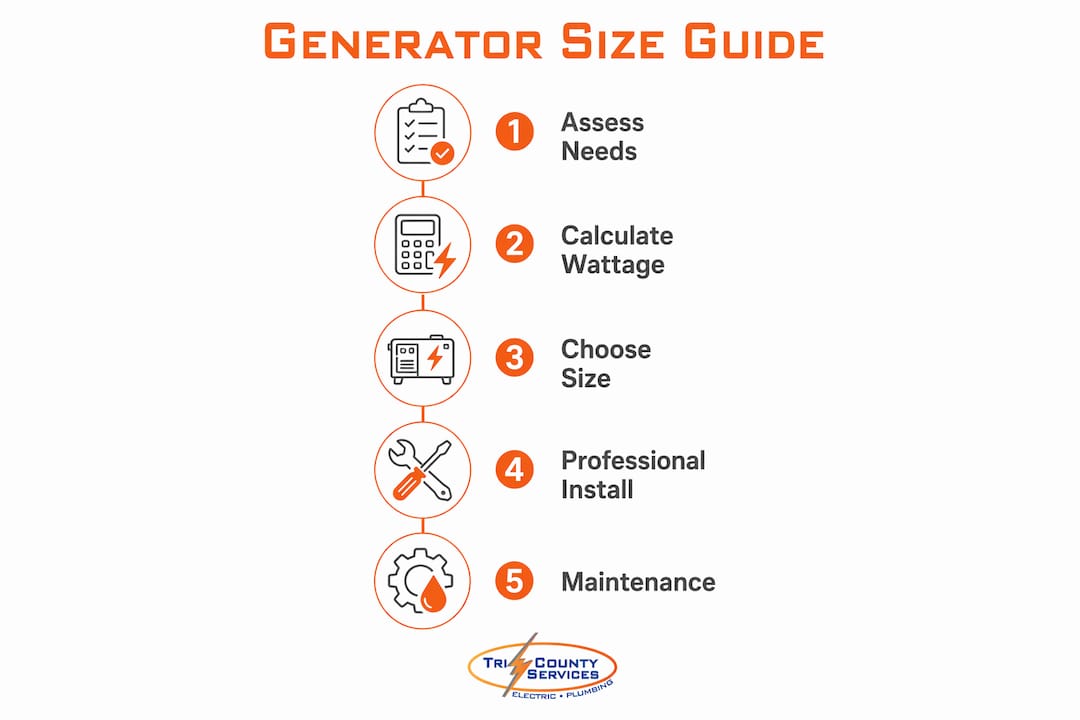
For most Northeast Ohio homeowners, a portable generator in the 7,000–8,000 watt range covers the essentials during a power outage: refrigerator, lights, sump pump, and a few outlets. If you want fuel flexibility across a multi-day storm, a tri-fuel unit running on gasoline, propane, or natural gas gives you the most options. And no matter which generator you choose, a professional transfer switch installation is the step that separates a safe setup from a dangerous one.
Cleveland and Akron sit in a region where winter storms regularly knock out power for days at a stretch. Having the right backup unit matters, but so does knowing where to buy it and who should wire it in.
Key local providers serving the Cleveland-Akron (Canton) area:
- Tri-County Services Electric & Plumbing (Northeast Ohio, since 1975): residential and commercial generator wiring, transfer switch installation, load evaluations, and panel upgrades
- Generator One LLC: professional installation, repair, and maintenance with a 12-year exclusive warranty on Generac products; service plans from $284.95 to $599.95
- Buckeye Power Sales (Cleveland): residential, commercial, and industrial generator sales with factory-trained technicians and BBB accreditation
- Backup Power Solutions: standby generator installation with free onsite estimates and flexible financing; authorized for Generac, Briggs & Stratton, Cummins, and Kohler
- Generator Systems LLC: backup power distribution and 24/7 emergency service, focused on commercial and industrial systems since 1984
- ARP Electric & Power Systems: locally owned since 1996, offering portable generator sales alongside standby units and electrical services
- Atomic Electric & Generators Inc. (Garfield Heights): generator installation and repair paired with full electrical services including panel upgrades since 2005
Pro Tip: Before you buy anything, call a professional electrician to assess your panel capacity and determine which circuits you actually need to back up. That conversation shapes the generator size you need and prevents costly mistakes.
| Provider | Services | Certifications | Customer Focus | Service Plans | Financing |
|---|---|---|---|---|---|
| Tri-County Services Electric & Plumbing | Wiring, transfer switches, load evaluations | Certified technicians, since 1975 | Residential and commercial | Available | Contact for details |
| Generator One LLC | Install, repair, maintenance | Generac authorized dealer | Residential and commercial | $284.95–$599.95 | Not publicly listed |
| Buckeye Power Sales | Sales, install, service, rental | BBB accredited, factory-trained | Residential, commercial, industrial | Planned maintenance | Not publicly listed |
| Backup Power Solutions | Install, repair, lifetime maintenance | Generac, Briggs & Stratton, Cummins, Kohler authorized | Residential and commercial | Lifetime maintenance | Online application |
| Generator Systems LLC | Distribution, project management, 24/7 service | Generac Industrial authorized | Commercial and industrial | Planned maintenance | Not publicly listed |
| ARP Electric & Power Systems | Sales, install, repair, electrical | Locally owned since 1996 | Residential, commercial, industrial | Not publicly listed | Not publicly listed |
| Atomic Electric & Generators Inc. | Install, repair, panel upgrades | Established 2005 | Residential and commercial | Not publicly listed | Not publicly listed |
Table of Contents
- How do you safely set up and operate a portable generator during a power outage?
- How do you choose the right generator size and type for your home?
- Which local providers in Cleveland-Akron should you consider?
- What does Tri-County Services Electric & Plumbing recommend for safe generator installation?
- Tri-County Services Electric & Plumbing handles your generator installation right
- Key Takeaways
- FAQ
How do you safely set up and operate a portable generator during a power outage?
Safety is where most homeowners get into serious trouble, and the risks are not abstract. About 90 people die each year in the U.S. from generator-related carbon monoxide poisoning. That number drops sharply when generators are placed correctly and connected by a professional.
Placement and exhaust rules:
- Place the generator at least 20 feet from your home, with exhaust directed away from windows, doors, and neighboring structures
- Never run a generator in a garage, even with the door open
- Look for models with automatic CO shutdown systems, such as CO SECURE or CO-MINDER technology, which stop the engine when gas reaches dangerous levels
Connection and electrical safety:
- DIY wiring using “suicide cords” or plugging directly into a wall outlet is dangerous and often illegal. It risks electrocution, fire, and backfeed into the utility grid
- Backfeeding electricity through an improper connection can electrocute utility workers restoring power on your street
- A professional transfer switch or interlock kit, installed by a certified electrician from commercial electrical services, isolates your home from the grid and protects everyone
Fuel and load management:
- Store gasoline with a fuel stabilizer if the generator sits unused for months; stale fuel is the top reason generators fail to start during an outage
- Overloading a generator by running more appliances than its continuous watt rating causes voltage drops and can damage electronics
- Start appliances one at a time to avoid simultaneous surge loads
Pro Tip: Calling a professional electrician before your first use is not overcautious. Improper generator hookups are one of the most common causes of house fires and utility worker injuries during storm recovery. A certified electrician installs the connection correctly the first time.
How do you choose the right generator size and type for your home?
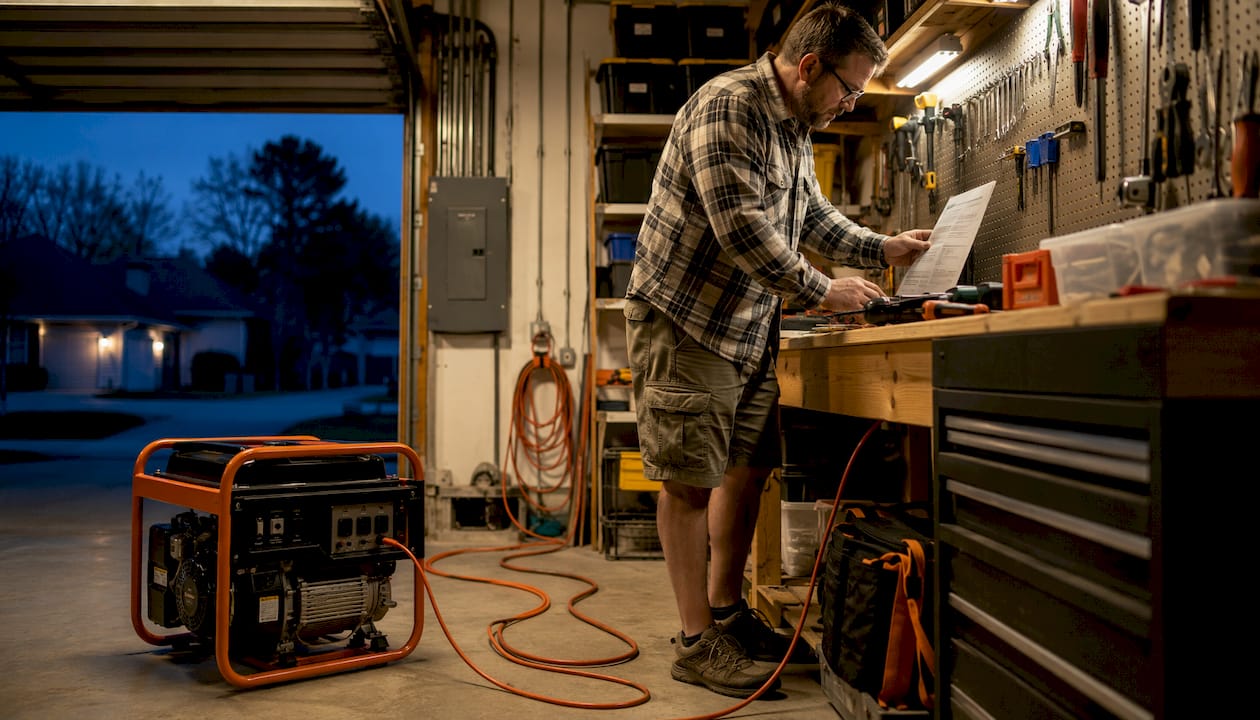
Sizing is the decision most homeowners get wrong, usually by overestimating what a single generator can handle. The most common mistake is assuming a portable unit can power the whole house. Experts consistently recommend focusing on essential circuits only, then having a professional run a load calculation to confirm the numbers.
Wattage tiers that match real outage needs:
- 3,000–5,000 watts: covers a refrigerator, lights, phone chargers, and a router. Good for short outages where you rotate loads
- 6,000–8,000 watts: handles critical circuits including a refrigerator, freezer, sump pump, lights, and some 240V loads when connected through a transfer switch
- 10,000+ watts: supports broader home coverage during multi-day outages without constantly shutting off one appliance to run another
Running watts and starting watts are different figures, and both matter. A sump pump or refrigerator compressor draws a surge of starting watts when it kicks on, often two to three times its running draw. Size your generator to handle both, with roughly 20% headroom.
Fuel type comparison:
- Gasoline: widely available, powers most portable generators, but requires active refueling and fuel stabilizer for storage
- Propane: cleaner burn, longer shelf life, no carburetor clogging, but you need tanks on hand before the storm hits
- Tri-fuel (gasoline, propane, natural gas): the most flexible option for multi-day outages when gas stations run dry
Noise, maintenance, and cost factors:
- Inverter generators run quieter (often under 60 dB) and produce cleaner power for sensitive electronics, but they typically top out around 2,500–4,000 watts
- Many municipalities have noise ordinances; check local rules before buying a unit rated above 72 dB
- Annual maintenance, including oil changes, spark plug checks, and air filter replacements, keeps a generator ready when you need it
- Total cost of ownership includes the unit price, fuel, annual servicing, and the cost of a professional transfer switch installation
Which local providers in Cleveland-Akron should you consider?
Each of the seven providers serving the Cleveland-Akron (Canton) area brings a different strength, so the right fit depends on what you need most.
Tri-County Services Electric & Plumbing has operated in Northeast Ohio since 1975, offering home generator wiring, load evaluations, and transfer switch installations for residential and commercial clients. The focus is on long-term relationships and code-compliant work.
Generator One LLC is positioned as Ohio’s leading Generac dealer, with certified technicians and a 12-year exclusive warranty that goes well beyond standard coverage. Their tiered service plans give homeowners predictable annual maintenance costs.
Buckeye Power Sales covers the widest product range, from residential units to industrial and marine generators, backed by factory-trained technicians and BBB accreditation. Useful if you need parts or rental equipment alongside a residential purchase.
Backup Power Solutions stands out for its free onsite estimates and its authorization across four major brands: Generac, Briggs & Stratton, Cummins, and Kohler. Online financing makes larger standby installations more accessible.
Generator Systems LLC focuses almost entirely on commercial and industrial backup power, with 24/7 emergency service and project management for large installations. Residential buyers will find limited options here.
ARP Electric & Power Systems combines portable generator sales with full electrical services, which is useful when you want one contractor handling both the unit and the wiring.
Atomic Electric & Generators Inc. pairs generator work with panel upgrades and code violation corrections, making them a practical choice if your existing electrical panel needs attention before a generator can be safely connected.
What does Tri-County Services Electric & Plumbing recommend for safe generator installation?
Professional installation is not a luxury. Portable generators can weigh over 200 pounds, and moving one during a storm while managing fuel, extension cords, and a dark house creates real injury risk. The electrical connection is where the danger compounds.
Tri-County Services Electric & Plumbing has seen the results of improper setups: scorched outlets, tripped breakers, and in the worst cases, backfeed incidents that put utility crews at risk. Professional electrical service providers significantly reduce backfeeding risk and code violations, protecting both homeowners and the workers restoring power on your street.
What a professional installation covers:
- Load evaluation to confirm your panel can support the generator connection
- Transfer switch or interlock kit installation, properly sized for your circuits
- Weatherproof inlet box placement at a safe, accessible location
- Inspection to confirm code compliance before the first use
Pro Tip: Schedule a generator maintenance check every spring, before storm season. A professional technician will test the battery, check oil and fuel lines, and confirm the transfer switch operates correctly. A generator that hasn’t been serviced in two years is a generator you cannot count on.
Tri-County Services Electric & Plumbing handles your generator installation right
Northeast Ohio winters are not forgiving, and a generator that isn’t wired correctly is worse than no generator at all. Tri-County Services Electric & Plumbing has been doing this work since 1975, and the team brings the same certified expertise to a portable generator hookup as to a full panel upgrade or new construction wiring project.

What you get is a professional who evaluates your actual load, installs a proper transfer switch, and leaves your home code-compliant and ready for the next outage. No guesswork, no dangerous workarounds. Tri-County Services Electric & Plumbing serves homeowners and businesses across Northeast Ohio, from Cleveland to Akron and the surrounding communities. Call (440) 325-0136 or visit the website to schedule your generator installation consultation today.
Key Takeaways
A portable generator for a home power outage requires correct sizing, safe placement, and a professionally installed transfer switch to protect your home and utility workers.
| Point | Details |
|---|---|
| Right wattage tier | Choose 6,000–8,000 watts for critical circuits; 10,000+ watts for broader coverage during multi-day outages. |
| Transfer switch required | Professional installation of a transfer switch prevents dangerous backfeed to the utility grid. |
| Placement distance | Run the generator at least 20 feet from your home with exhaust directed away from all structures. |
| Fuel flexibility | Tri-fuel generators running on gasoline, propane, or natural gas offer the most resilience during extended outages. |
| Tri-County Services Electric & Plumbing | Serving Northeast Ohio since 1975, Tri-County handles load evaluations, transfer switch installs, and code-compliant generator wiring for homeowners. |
FAQ
What size generator do I need during a power outage?
For most homes, a 6,000–8,000 watt generator covers critical circuits including a refrigerator, sump pump, lights, and outlets. Add up your appliances’ running watts and starting watts, then choose a unit with roughly 20% headroom above that total.
Will a portable generator work during a power outage?
Yes, a portable generator works independently of the utility grid and can power selected circuits or appliances during an outage. It must be connected through a proper transfer switch or interlock kit installed by a professional electrician to operate safely.
Can a portable generator run a whole house?
Most portable generators cannot power an entire house simultaneously. A 10,000+ watt tri-fuel unit can cover a broad set of circuits through a transfer switch, but a professional load evaluation is the only reliable way to know what your specific home requires.
What is the safest way to connect a portable generator to my home?
A professional transfer switch or interlock kit, installed by a certified electrician, is the only safe connection method. Plugging a generator directly into a wall outlet using an extension cord or “suicide cord” risks electrocution, fire, and backfeed that can injure utility workers.