
A plumbing emergency is any situation involving uncontrollable water flow, an active health hazard like sewage backup, or a safety threat such as a gas smell near plumbing fixtures that demands immediate professional intervention. Water damage accounts for nearly 28% of all homeowners insurance claims in the U.S., with average costs exceeding $13,000 per claim. That number tells you one thing clearly: waiting too long on the wrong problem is expensive. For homeowners in the Cleveland-Akron area, where winter temperatures push pipes to their limits, knowing what is considered a plumbing emergency is not optional knowledge. It is the difference between a repair bill and a gut renovation.
What is considered a plumbing emergency?
A plumbing issue qualifies as an emergency when it meets at least one of three criteria: active, uncontrollable water flow; an immediate health or safety risk such as sewage backup or a gas smell; or the potential for significant structural damage within 24–48 hours if left unaddressed. These criteria come from standard industry classification used by professional plumbers. They are not a sliding scale. If your situation checks any one of these boxes, you are dealing with a true plumbing crisis, not a scheduled repair.
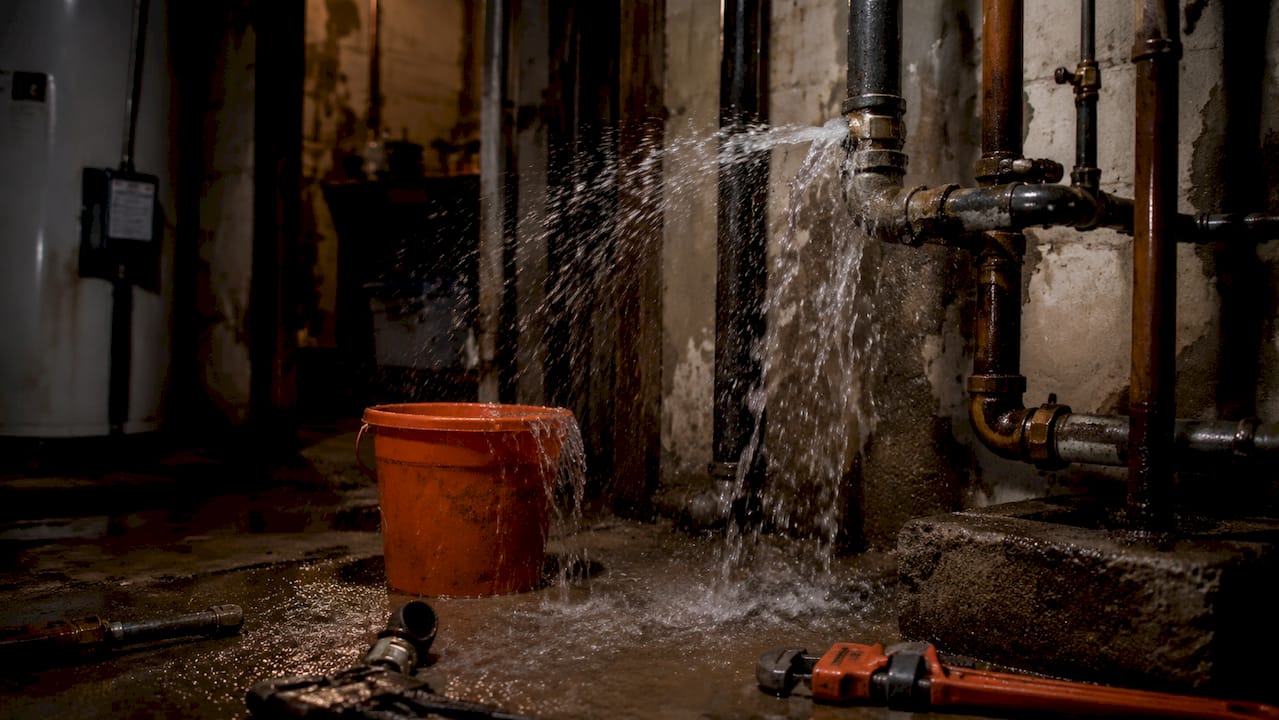
The 24–48 hour damage window is the part most homeowners underestimate. A standard residential pipe under pressure can release more than 50 gallons of water per hour, creating 3 inches of standing water on a 10×10 floor in just 60 minutes. That is enough water to warp hardwood floors, saturate drywall, and create conditions for mold growth within days. Speed is not just about convenience. It is about limiting how much of your home gets destroyed.
Common plumbing emergency examples every homeowner should know
Recognizing emergency plumbing situations before they escalate is the fastest way to protect your home. These are the most common scenarios that qualify:
- Burst or ruptured pipes. Any pipe that has split open and cannot be shut off at a local fixture valve is an emergency. Northeast Ohio winters make this especially common in january and february when uninsulated pipes in crawl spaces freeze and crack.
- Sewage backup. Raw sewage entering your home through floor drains or toilets is a critical health hazard that demands immediate intervention. Sewage contains bacteria and pathogens that pose serious health risks to your household.
- Overflowing toilet that cannot be stopped. If shutting off the toilet’s supply valve does not stop the overflow, the blockage is deeper in the line and the situation escalates quickly.
- Complete loss of water with no municipal outage. A sudden total loss of water pressure across all fixtures can signal a main line break or a serious valve failure.
- Gas smell near plumbing fixtures. Water heaters and boilers run on gas lines. A sulfur or rotten egg odor near these fixtures is a gas leak until proven otherwise.
- Active leak from a water heater tank body. A dripping pressure relief valve is often manageable. A leak from the tank body itself means the tank is failing and flooding is imminent.
Pro Tip: Before any plumber arrives, check your signs of emergency plumbing against this list. Knowing what you are dealing with helps you give the dispatcher accurate information and speeds up the response.
How do you tell a plumbing emergency from a routine repair?
The fastest way to sort an emergency from a non-emergency is the containment test. If a leak can be safely contained by turning off an individual fixture valve or catching the drip in a bucket, it is an urgent repair that can wait for a scheduled appointment. If you cannot stop the water, or if stopping it requires shutting off the entire home’s main supply, you have an emergency plumbing situation.
Dripping faucets and running toilets waste water but rarely cause structural damage. They belong in the scheduled repair category. Slow drains, minor sink leaks under a cabinet, and low water pressure in one fixture follow the same logic. These are real problems worth fixing, but they do not require a 2:00 AM call.
The financial stakes of getting this wrong cut both ways. Emergency after-hours plumbing calls typically add a trip charge of $150–$350 plus higher hourly labor rates, often costing $200–$500 more than the same repair scheduled during business hours. Calling for emergency service on a dripping faucet wastes money. Waiting on a burst pipe costs far more.
| Situation | Emergency or scheduled? |
|---|---|
| Burst pipe with uncontrollable flow | Emergency: call now |
| Sewage backup in floor drain | Emergency: call now |
| Dripping faucet | Scheduled repair |
| Running toilet | Scheduled repair |
| Slow drain in one sink | Scheduled repair |
| Overflowing toilet that won’t stop | Emergency: call now |
| Active water heater tank leak | Emergency: call now |
Pro Tip: Before you call anyone, check three things first to confirm whether the issue is truly beyond your ability to contain. This saves time and gives the plumber better information.
What should you do immediately during a plumbing emergency?
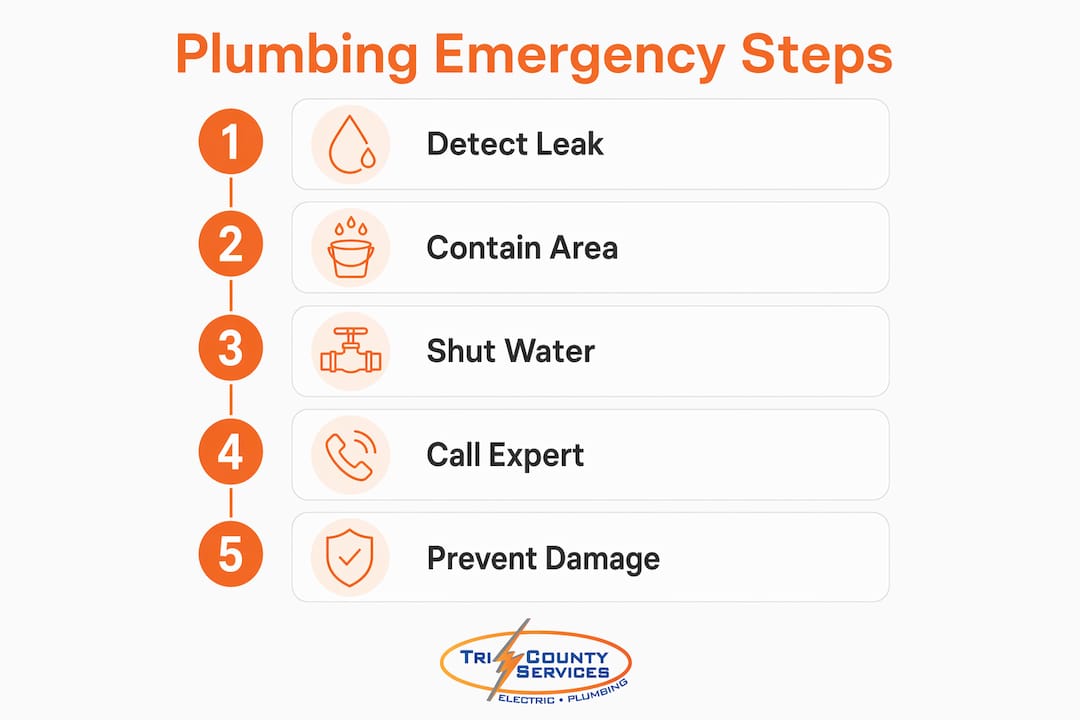
Your first action in any plumbing emergency is containment, not repair. Turning off the home’s main water shut-off valve is the single most effective first step to prevent catastrophic damage before a professional arrives. In most Cleveland-area homes, the main shut-off is located near the water meter, either in the basement or on an exterior wall facing the street. Find it now, before you need it.
For gas-related emergencies near plumbing fixtures, the sequence is different. Follow these steps in order:
- Leave the building immediately. Do not stop to gather belongings or investigate the smell.
- Do not operate any electrical switches or devices. A single spark can ignite gas that has accumulated indoors.
- Call your gas utility from outside or from a neighbor’s home. Gas leaks require evacuation and contact with the gas company before any plumber is involved.
- Call Tri-County Services Electric & Plumbing once the utility has confirmed it is safe to re-enter.
- Do not re-enter until cleared by the utility. This is non-negotiable.
For sewage backups, protective gear is not optional. Sewage contains live pathogens. If you must move through an affected area before help arrives, wear rubber gloves and waterproof boots. Do not attempt to clean up sewage without professional guidance. The health risks of sewage exposure require professional-grade cleanup, not a mop and bucket.
Water and electricity are a deadly combination. If flooding has reached any electrical outlets, panels, or appliances, do not enter the area. Shut off the electrical breaker for the affected zone from a dry location, or call for help before going near standing water.
Attempting DIY repairs during an active emergency carries real risk beyond personal safety. Many homeowners insurance policies include clauses that reduce or deny coverage when improper repairs worsen the damage. A professional assessment protects both your home and your claim.
When should you call Tri-County Services Electric & Plumbing for emergency help?
Call Tri-County Services Electric & Plumbing the moment you confirm the situation meets any one of the three emergency criteria: uncontrollable water, a health hazard, or a safety threat. Waiting even an hour on a burst pipe or sewage backup multiplies the damage and the repair cost. Complete loss of water may not always demand a midnight call unless vulnerable residents are affected, but sewage backups are always critical and require immediate response.
Tri-County Services Electric & Plumbing has served Northeast Ohio homeowners since 1975. The team brings professional expertise to immediate containment and repair, assessing the full scope of damage before starting work. Here is what you get when you call:
- Rapid response to active leaks, burst pipes, sewage backups, and water heater failures
- Professional assessment that identifies the root cause, not just the visible symptom
- Containment and repair that meets local code requirements in the Cleveland-Akron area
- Guidance on what to document for your insurance claim
- A local Cleveland plumber who knows Northeast Ohio homes, their common failure points, and the seasonal pressures that drive them
Delaying a call to save money on after-hours rates is the most common mistake homeowners make. The cost of a professional emergency call is almost always lower than the cost of the water damage that accumulates while you wait.
Key Takeaways
A true plumbing emergency involves uncontrollable water, an active health hazard, or a safety threat that causes significant damage within 24–48 hours if left unaddressed.
| Point | Details |
|---|---|
| Emergency definition | Active water flow, health risk, or safety threat that cannot be contained locally. |
| Containment test | If a local valve stops the leak, it is urgent but not an emergency requiring an after-hours call. |
| Financial risk of waiting | Burst pipes and sewage backups cause damage that far exceeds the cost of an emergency service call. |
| Gas leak protocol | Evacuate first, call the gas utility second, then contact a plumber once cleared to re-enter. |
| Shut-off valve knowledge | Knowing your main shut-off location is the single most effective way to limit damage before help arrives. |
What I’ve learned watching homeowners handle plumbing crises
The most consistent mistake I see is not misidentifying the emergency. It is the paralysis that follows. Homeowners stand in a flooded basement debating whether to call, whether it will stop on its own, whether it is “bad enough.” That hesitation costs thousands of dollars in avoidable damage every single time.
The second mistake is not knowing where the main shut-off valve is. I cannot count how many times a homeowner has watched water pour across their floor for 20 minutes because they could not find the valve. Walk your home this week. Find the valve. Show every adult in your household where it is. That one piece of knowledge is worth more than any emergency preparedness checklist.
The third thing I have noticed is that homeowners who attempt DIY repairs during active emergencies almost always make the situation worse, not because they lack skill, but because the conditions are wrong. Flooded floors, pressurized lines, and stress are not the right environment for learning plumbing. Call a professional first. Every time.
Tri-County Services Electric & Plumbing exists precisely for these moments. A family-owned team that has been in Northeast Ohio homes since 1975 knows what these houses look like from the inside. That local knowledge speeds up diagnosis and repair in ways that generic service cannot match.
— Lindsay Paramore
Tri-County Services Electric & Plumbing is ready when you need help most
When a pipe bursts at midnight in Akron or a sewage line backs up on a Sunday morning in Canton, you need a team that picks up the phone and shows up fast.
Tri-County Services Electric & Plumbing offers professional plumbing services across the Cleveland-Akron area, with the expertise to handle true emergencies and the honesty to tell you when something can wait. The team handles burst pipes, sewage backups, water heater failures, and leak detection with the same care they have brought to Northeast Ohio homes for nearly 50 years. If you are facing an urgent plumbing situation right now, do not wait to see if it resolves. Call Tri-County Services Electric & Plumbing and get a professional on the way.
FAQ
What qualifies as a plumbing emergency?
A plumbing emergency is any situation with uncontrollable water flow, an active health hazard like sewage backup, or a safety threat such as a gas smell that risks significant structural damage within 24–48 hours.
Is a burst pipe always a plumbing emergency?
Yes. A burst pipe that cannot be stopped at a local fixture valve is a plumbing emergency because a pressurized residential pipe can release more than 50 gallons of water per hour, causing severe structural damage rapidly.
Can a running toilet wait until morning?
A running toilet is an urgent repair but not an emergency. It wastes water and should be fixed promptly, but it does not cause immediate structural damage and can be scheduled during regular business hours.
What should I do first when a pipe bursts?
Turn off the home’s main water shut-off valve immediately. That single action stops the flow and limits damage before Tri-County Services Electric & Plumbing or any professional arrives.
Is sewage backup a plumbing emergency?
Sewage backup is always a plumbing emergency. It introduces bacteria and pathogens into your home and requires professional cleanup and repair. Do not attempt to clean it up without proper protective equipment and professional guidance.