
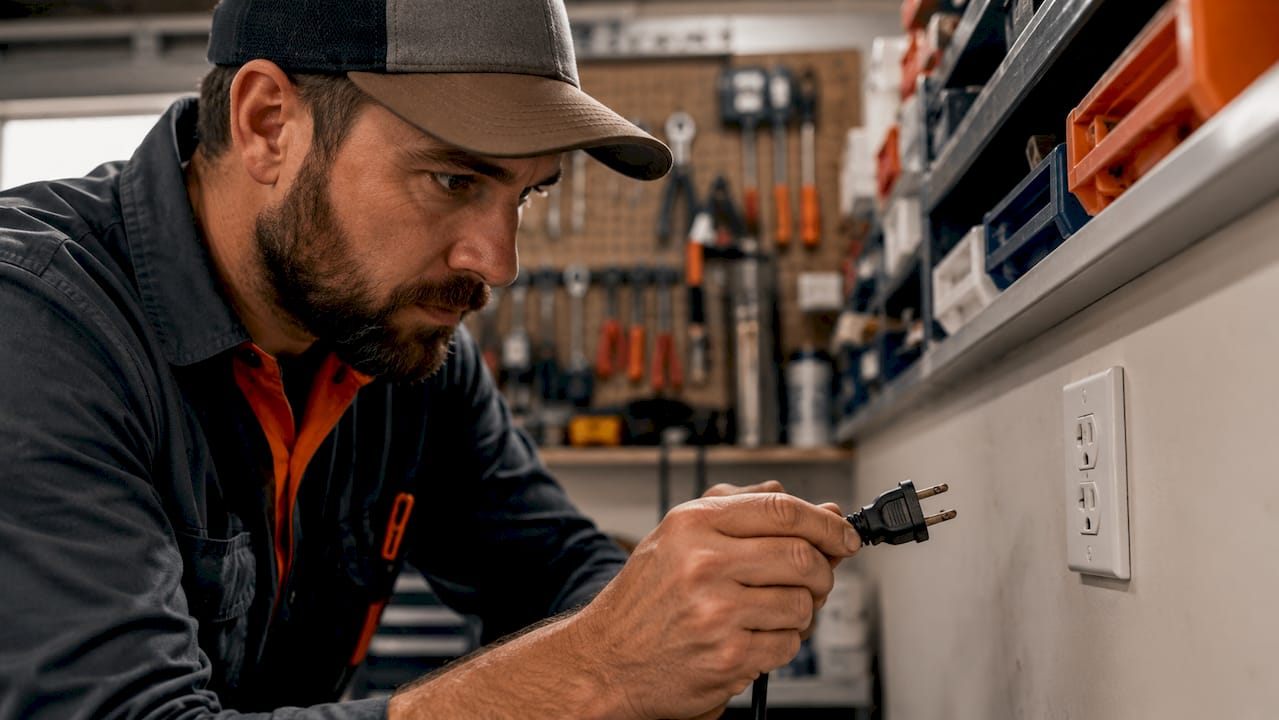
A small blue spark when plugging in an appliance is a normal electrical event caused by a brief arc as the circuit completes. That said, not every spark is harmless. Certain characteristics, including color, size, sound, and frequency, separate a routine flash from a serious hazard. Homeowners in the Cleveland-Akron area who notice unusual sparking at their outlets should understand what they are seeing before assuming everything is fine. Tri-County Services Electric & Plumbing has helped Northeast Ohio families navigate exactly these concerns since 1975.
Why does a blue spark appear when plugging in an appliance?
A brief blue arc forms the instant a plug makes contact with an outlet. Electricity flows the moment the circuit closes, and that tiny jump of current across the remaining air gap produces the visible blue flash. The color comes from ionized air molecules reacting to the sudden surge of electrons.
High-draw appliances make this effect more visible. A space heater, a vacuum cleaner, or a window air conditioner pulls a large amount of current the moment it connects. That demand creates a stronger arc than a phone charger or a lamp would. The physics are the same, but the scale differs.
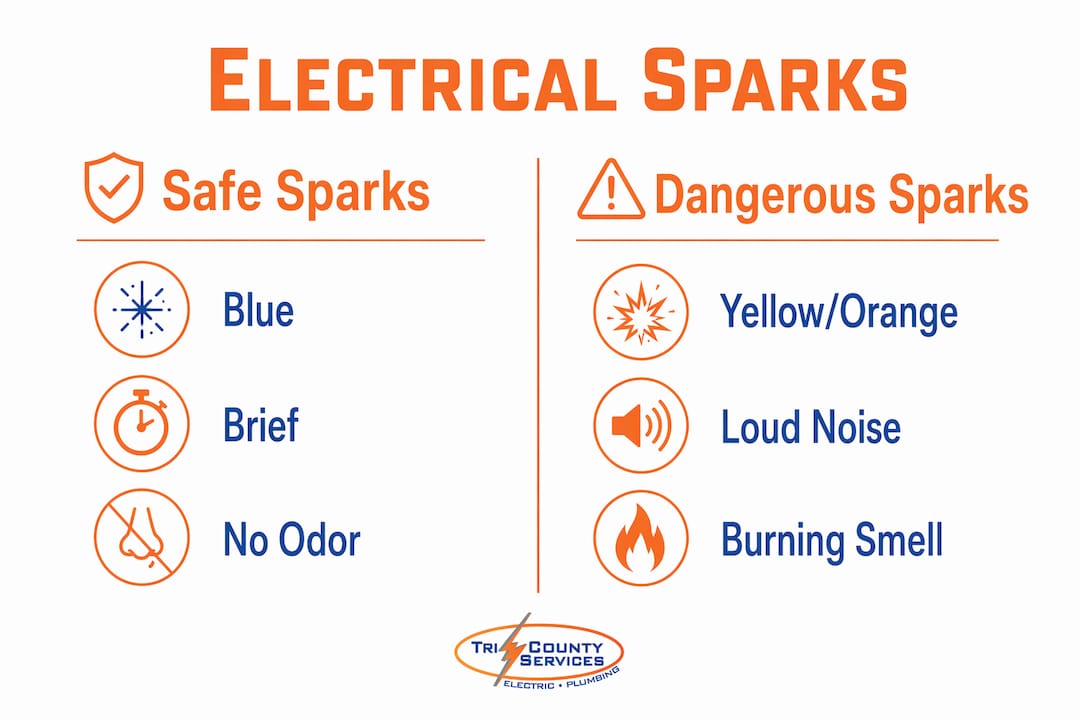
Normal sparks share three consistent traits:
- Brief. The flash lasts a fraction of a second. It disappears the instant the plug seats fully.
- Silent. No pop, no crack, no hiss accompanies a healthy arc.
- Blue. The color stays blue, not yellow, orange, or white.
A small blue spark occurs once per insertion and produces no odor or heat. If the spark matches all three traits above, the outlet is behaving normally.
Pro Tip: If you notice a spark every time you plug in a device, pay attention to whether it happens before the plug fully seats. A spark that fires before full contact signals a wiring or contact problem, not normal arcing.
Worn plug blades also change the picture. Damaged or corroded blades create a wider air gap, which makes the visible spark more intense even when the outlet itself is sound. The appliance cord deserves inspection alongside the outlet.
What are the warning signs that a spark is dangerous?
The key difference between a harmless and a dangerous spark is consistency and color. Normal blue flashes occur once at insertion, while yellow or orange flashes indicate burning or extreme heat. That distinction matters because arcing temperatures can exceed 3,000°C and ignite surrounding wall material.
Stop using the outlet immediately if you notice any of the following:
- Yellow or orange sparks. These colors signal burning rather than clean arcing.
- Loud popping or cracking sounds. Healthy arcs are silent. Noise means something is wrong.
- Repeated sparks after the plug is fully inserted. Normal arcing stops the moment contact is made.
- Burning smell or the odor of melting plastic. This points to overheating insulation or contacts.
- Warmth or heat on the outlet cover plate. Outlets should never feel warm to the touch.
- Visible discoloration, scorch marks, or melting. These are signs of prior overheating events.
- A loose or wobbly plug fit. Loose spring-loaded contacts cause repeated arcing and accelerate wear.
- Buzzing or crackling sounds from the wall. Electrical noise without any plug activity points to wiring faults.
Yellow or orange sparks with loud popping and burning odors represent an immediate fire hazard requiring professional attention. These are not symptoms to monitor over time. They are symptoms to act on right now.
Pro Tip: Run your hand near (not on) the outlet cover plate after unplugging a device. If you feel warmth radiating from the plate, treat it as a warning sign and stop using that outlet until a professional inspects it.
Outlets that do not grip plugs firmly also belong on this list. A plug that slides in and out too easily indicates worn internal contacts. Those contacts will arc every time a device is inserted, building up carbon deposits that increase resistance and heat with every use.
What safety steps should homeowners take after noticing unusual sparks?
The right response to a dangerous spark is not to test the outlet again. Repeated testing builds carbon deposits on the contacts and makes the problem worse. Here is the correct sequence of actions:
- Unplug the device carefully. If the spark was large, yellow, or accompanied by a smell, remove the plug without touching the outlet plate directly. Use the plug body, not the cord.
- Stop using that outlet. Do not plug anything else into it while the cause is unknown.
- Switch off the circuit at your breaker panel. If sparks persist, smoke appears, or you smell burning, cut power to that circuit immediately. This removes the risk of an electrical fire starting inside the wall.
- Ventilate the area. If you smell burning plastic or smoke, open windows and leave the room. Burning insulation releases toxic fumes.
- Do not attempt to open or repair the outlet yourself. Outlet repairs require working with live wiring, which carries serious shock and fire risks. This is not a task for a homeowner without professional training.
- Call a professional electrician. Frequent sparking requires immediate inspection because it can lead to electrical fires and property damage. A professional can safely diagnose worn contacts, loose wiring, or a faulty appliance connection.
Isolating power at the main breaker protects your home from fire risk while you wait for help. That single step removes the energy source that could turn a sparking outlet into a house fire.
Homeowners often underestimate how quickly an electrical fault can escalate. A spark that seems minor on monday can become a smoldering fire inside the wall by friday. The wall cavity provides oxygen, insulation material, and wood framing, all of which burn readily once ignited by an arc.
When should you call Tri-County Services Electric & Plumbing?
Professional inspection is the right call any time a spark falls outside the “brief, silent, blue, once” standard. Tri-County Services Electric & Plumbing serves homeowners across the Cleveland-Akron area with the kind of thorough electrical diagnosis that protects both property and family.
A professional inspection covers what a homeowner cannot safely see or test:
- Worn outlet contacts. Internal spring tension degrades over years of use. A technician can measure contact resistance and confirm whether replacement is needed.
- Loose wiring connections. A wire that has worked loose inside the wall box creates arcing that is invisible from the outside but generates significant heat.
- Appliance plug condition. Damaged plug blades widen the air gap and increase spark intensity. A technician evaluates both the outlet and the device.
- Circuit load issues. An overloaded circuit runs hotter than it should, which accelerates insulation breakdown and increases arcing risk.
- Code compliance. Tri-County Services Electric & Plumbing checks that outlets meet current safety standards, including proper grounding and GFCI protection where required.
Tri-County’s certified technicians have handled outlet installation and repair across Northeast Ohio for decades. They bring the tools and training to diagnose sparking safely, without the guesswork that comes with a homeowner poking at a live outlet. Scheduling an inspection before a minor issue becomes a fire is always the right call.
The top reasons to hire a professional electrician come down to one core fact: electrical faults inside walls are invisible until they fail. A professional finds the failure before it finds you.
Key takeaways
A brief, silent, blue spark at plug insertion is normal electrical arcing, but yellow, orange, repeated, or loud sparks require immediate professional inspection to prevent electrical fires.
| Point | Details |
|---|---|
| Normal sparks are brief and blue | A healthy arc lasts a fraction of a second, stays blue, and occurs only once per insertion. |
| Color and sound reveal danger | Yellow or orange sparks with popping sounds signal burning and require immediate action. |
| Repeated testing makes it worse | Plugging in repeatedly builds carbon on contacts, increasing resistance and fire risk. |
| Cut power before calling for help | Switching off the circuit at the breaker removes the energy source that could start a fire. |
| Professional inspection finds hidden faults | Worn contacts, loose wiring, and overloaded circuits are invisible without proper diagnostic tools. |
What I’ve learned from watching homeowners handle sparking outlets
By Lindsay Paramore
The most common mistake I see is the “wait and see” approach. A homeowner notices a larger-than-usual spark, decides it was probably nothing, and plugs the same device back in three more times to check. Each test deposits more carbon on the contacts. Each test makes the next spark worse. By the time they call a professional, what started as a worn outlet has become a scorched wall box.
The second mistake is assuming the appliance is the problem. Sometimes it is. Worn plug blades do create more visible arcing. But the outlet and the wiring behind it deserve equal scrutiny. I have seen cases where a homeowner threw out a perfectly good appliance because they blamed it for sparking, only to have the next device spark just as badly at the same outlet.
My honest advice is this: trust the “brief, silent, blue, once” standard. If a spark matches all four of those traits, you are watching normal physics. If it breaks any one of them, stop using the outlet and call someone who can open the wall safely. Northeast Ohio winters put real strain on older homes, and electrical systems in houses built before the 1980s often have wiring that was never designed for today’s appliance loads. A home electrical safety check once a year costs far less than a fire restoration.
The outlets that worry me most are the quiet ones. No dramatic spark, just a plug that fits loosely, a faint smell that comes and goes, and a homeowner who has learned to ignore it. That combination is exactly how electrical fires start.
— Lindsay Paramore
Tri-County Services Electric & Plumbing is ready to help
Sparking outlets are not a problem to put off until next month. Tri-County Services Electric & Plumbing has served Cleveland-Akron homeowners since 1975 with honest, professional electrical service built on real relationships, not quick fixes.
If you have noticed repeated sparks, burning smells, warm outlet covers, or any of the warning signs covered here, the right step is a professional inspection. Tri-County’s technicians diagnose the root cause safely and restore your outlet to proper working condition. Call for residential electrical repair or visit Tri-County Services Electric & Plumbing to schedule service. Northeast Ohio homeowners trust Tri-County because the work gets done right the first time.
FAQ
What causes a blue spark when plugging in a device?
A blue spark forms when electricity arcs across the small air gap between the plug and outlet contacts as the circuit closes. This is normal with high-draw appliances and stops the instant the plug seats fully.
Is a blue flash while charging my phone dangerous?
A phone charger draws very little current, so a visible spark at insertion is uncommon. If you see a flash when connecting a low-draw device, have the outlet inspected, as it may indicate a wiring fault rather than normal arcing.
When should I stop using an outlet after seeing a spark?
Stop immediately if the spark is yellow or orange, accompanied by a sound or smell, or repeats after the plug is fully inserted. These warning signs indicate a hazard that requires professional evaluation before the outlet is used again.
Can I fix a sparking outlet myself?
Outlet repairs require working inside a live wall box, which carries serious shock and fire risks. A professional electrician has the tools and training to diagnose and repair the fault safely, without the risk of making the problem worse.
How do I find a reliable electrician in the Cleveland-Akron area?
Tri-County Services Electric & Plumbing has served Northeast Ohio since 1975 with certified technicians and a flexible service schedule. Contact them directly for outlet inspections, repairs, and full residential electrical services across the Cleveland-Akron region.