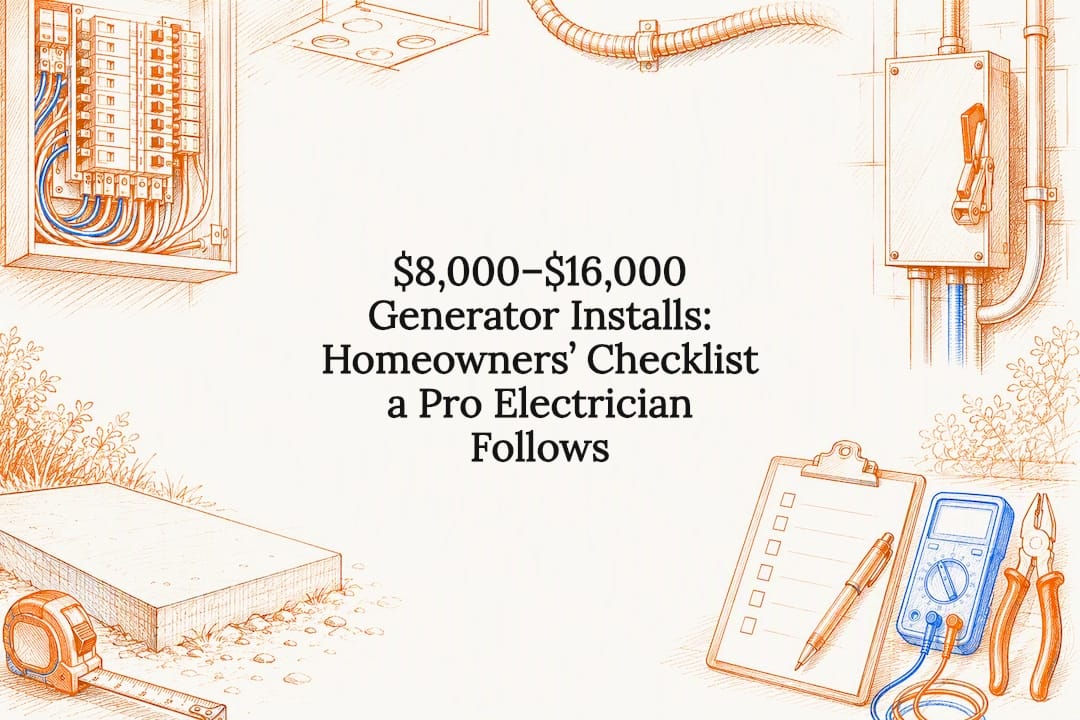


Yes, whole-home standby generator installations require a professional. The work spans electrical wiring, fuel plumbing, and engine integration, and a mistake in any of those areas risks fire, carbon monoxide exposure, or dangerous backfeed into utility lines. The right next step is booking an on-site assessment with a professional installer like Tri-County Services Electric & Plumbing. Expect the estimate to cover a load calculation under NEC 702.5, a transfer switch, permits, fuel hookup, and post-install testing.
TL;DR:
- Proper installation requires an on-site assessment to accurately determine load needs, site requirements, and specific wiring and fuel needs.
- A licensed professional should handle permits, wiring, fuel connections, and testing to ensure safety, code compliance, and system reliability.
- Full installation costs typically range from $8,000 to $16,000, depending on generator size, site complexities, and permit requirements.
- Comparing quotes effectively involves verifying installer experience, permit handling, test procedures, and having a detailed, written scope of work.
- Surprises are often avoided when an installer conducts a site review, carefully estimates costs, and manages every step from permits to final testing.
Table of Contents
- Why Hiring a Professional Installer Matters
- What Happens During a Professional Installation
- How Much Does Generator Installation Cost?
- Questions to Ask Before You Hire
- Permits, Code, and Safety Checkpoints
- How Tri-County Services Electric & Plumbing Approaches Generator Installs
- Schedule Your Generator Assessment Today
- Sources
- FAQ
Why Hiring a Professional Installer Matters
A whole-home generator is not a single-trade job. It combines electrical wiring, fuel line plumbing, and engine and controls integration into one system that has to work correctly every time the power drops. Get one part wrong and the consequences aren’t cosmetic. Improper fuel connections can leak gas. Backfeed into utility lines can electrocute a lineworker repairing the grid outside your house. Ad hoc wiring and non dedicated outlets are a common source of these hazards, which is exactly why manufacturers and installers insist on dedicated circuits and proper transfer switches instead of makeshift connections.
A professional also carries the code knowledge and permitting relationships that keep the project legal and insurable. A general handyman who has wired a few outlets is not the same as someone who installs standby systems regularly. Before hiring anyone, ask for:
- Proof of prior whole-home generator installations, not just general electrical work
- References you can actually call
- Photos of completed jobs with transfer switches and fuel connections visible
- Confirmation they pull permits and coordinate inspections themselves
Pro Tip: Ask any installer how many standby generator systems they’ve installed in the past year. A vague answer or a long pause tells you more than their sales pitch does.
What Happens During a Professional Installation
A standby generator installation follows a fairly consistent sequence, even though the details shift based on your home’s layout and your utility setup.
- On-site assessment and load calculation. The installer walks your property, reviews your panel, and calculates the load your home actually needs. This determines generator size and which circuits count as essential.
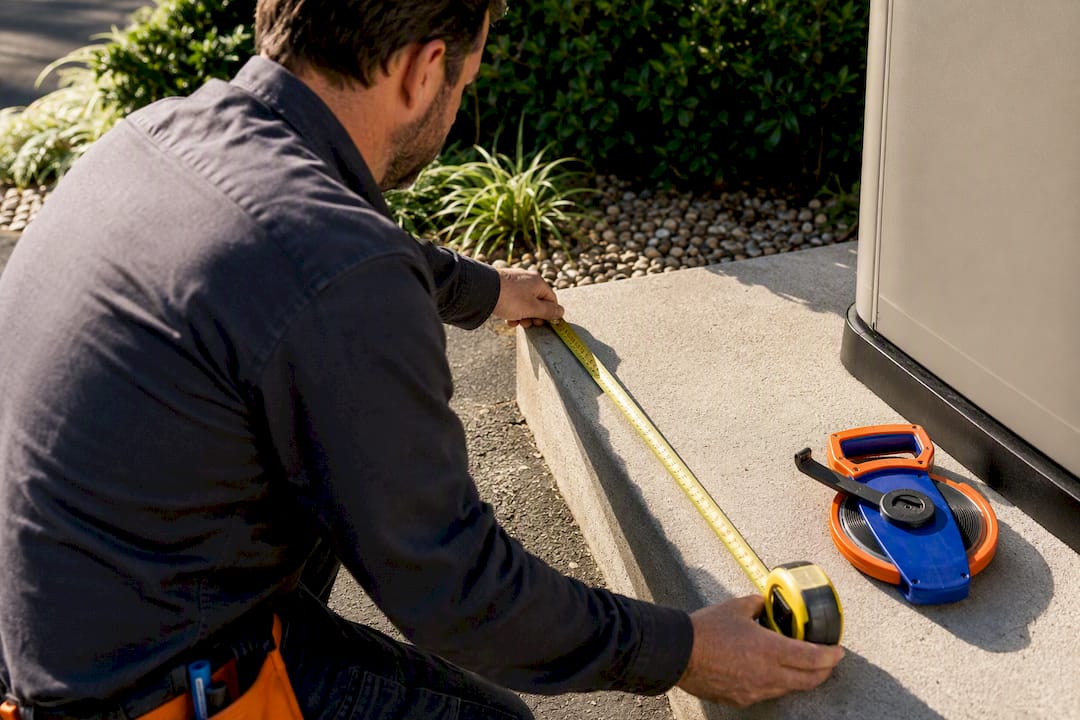
- Site selection and pad prep. The generator needs a level, code-compliant pad, usually concrete or compacted pea gravel, positioned with attention to proximity to your gas line and electric meter, since distance affects both labor and material costs.
- Transfer switch and wiring. The installer sets the transfer switch, runs wiring to your main panel, and connects the generator’s output circuits so it can take over seamlessly when utility power fails.
- Fuel connection. Natural gas or propane hookup often requires coordination with a gas contractor or your utility company, depending on your existing service.
- Permits, inspection, and testing. The installer pulls permits, schedules the inspection, and runs a simulated outage to confirm the system performs correctly before final sign-off.
Each step matters on its own, but the sequence also protects you from the biggest source of quote surprises: an in-person site review catching issues that a phone estimate simply can’t.
How Much Does Generator Installation Cost?
Total installed costs for a whole-home standby generator, including the unit itself, commonly run from about $8,000 to $16,000. That range usually covers the generator, pad, transfer switch, wiring, fuel hookup, and testing.
If you already own a generator and only need the electrical work, installer-only pricing for a transfer switch and wiring runs lower, often in the lower thousands, while a full turnkey standby system climbs toward the higher end of that range or beyond depending on scope.
Several variables push costs up or down:
- Electrical service upgrades if your panel can’t handle the added load
- Long fuel line runs from the meter to the generator pad
- Difficult site prep, such as sloped yards or rocky soil
- Permit fees and HOA approval requirements that add both cost and time
Timeline depends heavily on permitting speed, generator delivery lead time, and how quickly gas or plumbing work can be scheduled around the electrical install. A straightforward job might wrap in a few days once the unit arrives; a project needing a panel upgrade or a long fuel run can stretch into weeks.
Questions to Ask Before You Hire
Comparing quotes gets a lot easier once you know what to ask. Use this checklist when you’re on the phone or sitting across the table from an installer:
- How many whole-home standby systems have you installed, and can I see recent examples?
- Who pulls the permits, and are permit fees included in this quote?
- Will you install a manual or automatic transfer switch, and how do you calculate my home’s load?
- How will you test the system before you consider the job finished?
- Can I get a written scope listing labor, materials, fuel-line allowances, and warranty terms?
A written scope is non-negotiable. It’s the document that protects you if something goes wrong later, and it’s also the fastest way to compare two installers who quoted wildly different numbers.
Pro Tip: If an installer hesitates to put the scope in writing or gets vague about who handles permits, treat that as your answer. Move on to someone who won’t blink at either question.
Watch for other red flags too: installers who quote a price without ever seeing your property, who can’t explain how they’ll size your generator, or who wave off the inspection step as unnecessary paperwork.
Permits, Code, and Safety Checkpoints
A few compliance items separate a safe installation from a liability. The transfer switch is the most important one. It physically isolates your generator from the utility grid, which prevents backfeed that could injure utility workers or damage equipment.
Permits and final inspection aren’t bureaucratic overhead. They confirm the work meets code and protect you if you ever sell the house or file an insurance claim. Confirm upfront that your installer pulls the permits rather than leaving that step to you.
- Check local noise ordinances and setback rules before finalizing generator placement
- Ask if your HOA has restrictions on generator visibility or location
- Confirm the installer runs a simulated outage test after installation
- Ask about recommended maintenance intervals and what a service plan includes
How Tri-County Services Electric & Plumbing Approaches Generator Installs
Tri-County Services Electric & Plumbing has served Northeast Ohio families since 1975, and that kind of longevity comes from treating every job like it’s for a neighbor, not a number. A generator installation with our team starts the same way it should with any reputable installer: an on-site visit, a real load calculation, and a conversation about what circuits actually need to stay powered during an outage.
From there, our technicians coordinate the permit process, manage the fuel hookup, wire the transfer switch, and run the system through testing before we call the job done. If you’re tempted to handle any part of this yourself, don’t. Fuel connections and transfer switch wiring carry real risk, and a professional’s job is to remove that risk from your household, not just install a machine in your yard.
— Lindsay Paramore
Schedule Your Generator Assessment Today
Every homeowner comparing generator quotes eventually hits the same wall: online estimates never account for your actual panel, your actual gas line distance, or your actual yard. Tri-County Services Electric & Plumbing solves that by starting with a real site visit instead of a guess, so the number you get is the number you pay.

Call (440) 253-0332 to schedule an on-site assessment and quote. Our team handles the permits, the transfer switch wiring, the fuel coordination, and the final testing, and we’ll walk you through our generator installation services and current electrical pricing guide before any work begins. Ask for a written scope and a realistic timeline during that first call. If your home also needs a panel evaluation before the generator can go in, mention it up front. We handle both in the same visit.
Sources
For more on installation steps and planning, see our whole home generator installation guide and our breakdown of how transfer switches work.
- Backup Generator Installation | Generac Power Systems
- Whole-home generator installation tips | American Home Shield (AHS)
- How to install a standby generator | This Old House
FAQ
How Much Does an Electrician Charge to Install a Whole House Generator?
Total installed costs for a whole-home standby generator, including the unit, typically range from $8,000 to $16,000, while installer-only electrical work like a transfer switch runs lower if you already own the generator.
Can a Regular Electrician Install a Generac Generator?
An electrician with specific standby generator experience can install a Generac unit, but general electrical experience alone often isn’t enough. Ask for proof of prior standby installations and references before hiring anyone for the job.
How Much Does Home Depot Charge to Install a Generac Generator?
Home Depot doesn’t publish standard generator installation pricing, since costs depend on your home’s electrical setup, site conditions, and fuel access. Getting an on-site quote from a professional installer, like Tri-County Services Electric & Plumbing, gives you a number based on your actual property rather than a generic estimate.
How Much Does It Cost to Have an Electrician Install a Generator Outlet?
A dedicated generator outlet and transfer switch installation without a full standby system typically costs less than a complete turnkey install, though exact pricing depends on your panel and how far the wiring run needs to travel. Tri-County Services Electric & Plumbing’s current pricing details are available on our electrical pricing guide.