
A water softener protects the plumbing and appliances you already paid for. It keeps mineral scale from building up inside pipes, fixtures, and your water heater, and it makes soap and detergent work the way they should. If you live in Northeast Ohio, where Lake Erie water sits in the moderate-hardness range, the real question is how much of that benefit your home would actually see. At Tri-County Services Electric & Plumbing, we start that conversation with a professional looking at your water heater, fixtures, and piping, because that is where hard water leaves its evidence. Call our office at (440) 253-0332 if you would like someone to look.
TL;DR
- Softeners swap calcium and magnesium for sodium or potassium, which reduces scale on fixtures, in pipes, and inside water heaters, dishwashers, and washing machines.
- Less scale means better heat transfer, so a water heater on softened water holds its efficiency, and you use less soap, detergent, and cleaner.
- Cleveland Water reports hardness of about 7 grains per gallon, right at the threshold where softening starts to be worth considering. Your own tap and your own appliances decide the rest.
- Expect roughly $400 to $2,700 for the unit, plus installation and salt. Sizing and plumbing connections are a job for a professional.
- Salt-based softeners add sodium to drinking water, so people watching their blood pressure should talk with a doctor.
Table of Contents
- What a water softener actually does
- The benefits, one by one
- Do you need one? Start with your hardness number
- What a softener costs
- Why the install belongs to a professional
- Using a softener well
- Our perspective
- Get your water heater and plumbing checked first
- FAQ
- Sources
What a water softener actually does
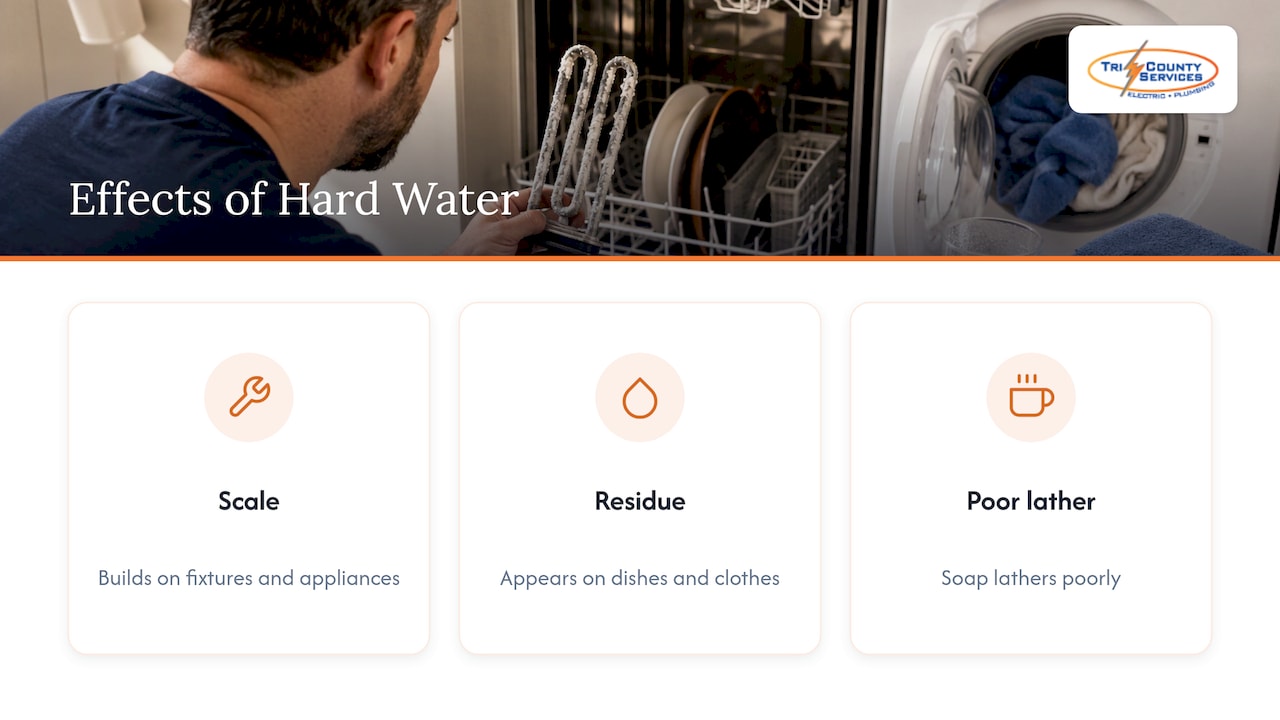
Hard water is water carrying a lot of dissolved calcium and magnesium. These minerals are not a health problem. The EPA’s WaterSense guide says hard water is not a health concern but causes scale on fixtures and appliances, residue on dishes and clothes, and poor soap lathering. The damage is to your house, not to you.
A typical softener is a tank of resin beads. As water passes through, the beads trap calcium and magnesium and release sodium or potassium in their place. Consumer Reports describes this ion-exchange process and notes that the result is less scale, better lather, and water that is safe to drink for most people, with a bit of added sodium. Periodically the system flushes the beads with brine and starts over, which is why it needs salt.
The benefits, one by one
Cleaner pipes and fixtures
When hard water evaporates or heats up, it leaves minerals behind. That is the white crust on a showerhead, the film on a glass shower door, and the chalky ring around a faucet aerator. The University of Minnesota’s Water Resources Center lists preventing scale on fixtures and extending appliance life among the main reasons homeowners soften.
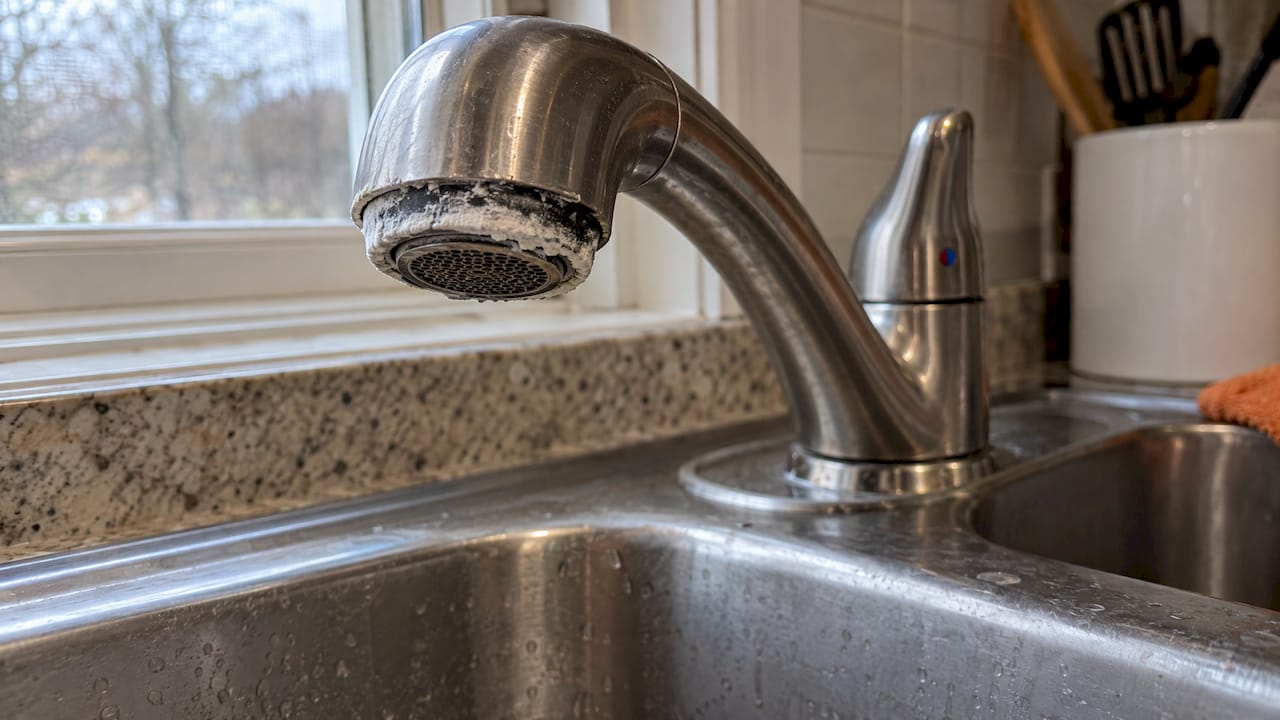
Inside pipes the same minerals narrow the passage over time. The EPA notes that scale can impede water flow and heat conductivity. Lower flow from a faucet or showerhead is often the first thing a homeowner notices, and it is also the sort of symptom our plumbers are asked to track down.
A water heater that keeps its efficiency
This is the benefit with the best numbers behind it. Your water heater is the one appliance that heats hard water all day, and minerals settle out most when water is hot. A layer of scale on a heating element or the bottom of a tank acts like insulation between the heat source and the water.
A Battelle study for the Water Quality Research Foundation found that gas storage and instantaneous heaters on softened water held their efficiency, while units on unsoftened water lost it. Instantaneous gas heaters on hard water dropped from 80% to 72% efficiency before they were descaled at about 1.6 years of equivalent use. The researchers concluded that the savings could recover a softener’s cost in as little as a year where the incoming water is hard enough. Your result depends on your hardness and your usage, but the direction is clear.
If you want to see what sediment does inside a tank, our post on why water heater sediment costs you money walks through it. Our piece on whether your water heater is behind a high electric bill covers the energy side.
Appliances that last longer
Dishwashers, washing machines, and water heaters all move hard water through narrow passages and heating parts. The EPA’s guide says scale can reduce appliance lifespan, and Consumer Reports agrees that softening may extend the life of the water heater, washer, and dishwasher. Note the careful wording: softening reduces one cause of wear. It does not make an old appliance immortal, and it does not replace sound installation.
If your water heater is already showing its age, our guide on when to replace a water heater lists the signs to watch for.
Less soap, less detergent, less scrubbing
Calcium and magnesium bind with soap to form scum instead of suds. That is why hard water leaves a film on the tub and why laundry can feel stiff. The Madison Metropolitan Sewerage District reports it takes 50% to 75% less detergent to clean laundry in soft water than in hard water. Spotted glassware and dishes are another common complaint that goes away.
NDSU Extension lists dingy, scratchy laundry, spotted dishes, soap scum, and sticky hair among the usual hard-water problems. Homeowners often describe the everyday effects of hard water as a change in how cleaning, laundry, and bathing feel once the minerals are gone.
Skin and hair
Here the evidence is more modest, and it is worth stating plainly. A Tap Score research scientist told Consumer Reports that hardness can dry out skin and that there is some evidence high hardness can aggravate eczema. The simpler explanation is that fewer minerals react with soap, so less residue stays on skin and hair. Many people notice that difference in the first week.
Do you need one? Start with your hardness number
Water hardness is measured in grains per gallon (gpg) or milligrams per liter (mg/L). The EPA’s guide says water above 120 mg/L, or 7 gpg, is generally considered hard and may benefit from softening, and that softeners are often recommended above 180 mg/L, or 10 gpg. The Minnesota Department of Health gives the same 7 gpg line and says you can find your number through a test kit, an independent lab, or your community water system.
Here is where Northeast Ohio lands:
| Area | Reported hardness | Where that sits |
|---|---|---|
| Cleveland Water service area | About 7 gpg (120 mg/L), from Lake Erie | Moderate, right at the EPA’s “hard” threshold |
| Akron | About 135 mg/L (7.9 gpg) | Moderate to hard |
So most of our service area is not extreme, but it is right at the line where scale shows up. Your own house tells you more than the average does. Signs worth noting:
- White crust on faucets, showerheads, and glass doors that returns soon after cleaning
- Cloudy glasses and spots on dishes even with a rinse aid
- A water heater that is noisy, slow to recover, or running up energy bills
- Weak flow at fixtures that used to run strong
- Laundry that feels stiff, or soap that never seems to lather
If you recognize several of these, scale is likely at work. Someone who can open up the water heater, inspect fixtures, and look at the pipe runs can tell you how far it has gone. That is a plumbing visit, and it is the right first call before you spend $1,000 or more on equipment.
What a softener costs
Budget for three things: the unit, the installation, and the salt.
- The unit. NDSU Extension reports retail prices for home softeners from about $400 to $2,700, depending on size and type. Realtor.com puts a high-end 75,000-grain unit at about $1,800.
- Installation. The same Realtor.com report says professional installation can run $400 to $4,000, a wide range that depends on how much plumbing work your layout requires.
- Salt. NDSU lists sodium chloride at $5 to $10 per 40-pound bag, and potassium chloride at up to $25 per bag. Realtor.com estimates salt refills at roughly $100 per year.
A worked example: a mid-range $1,000 unit, $600 for installation, and $100 a year in salt comes to about $1,600 up front and $100 a year after. If a water heater holds its efficiency and lasts longer, and you use less detergent and cleaner, the unit begins paying you back. The Battelle result above shows payback can be as short as a year in very hard water, though homes at moderate hardness should expect it to take longer.
Why the install belongs to a professional
A softener is not a plug-in appliance. It ties into your main water line, needs a drain for its regeneration cycle, and needs a bypass so you can still get water while it is serviced. A poor connection can leak, backflow into the wrong line, or leave outdoor spigots and the water heater on the wrong water. Sizing matters too: the EPA’s guide advises choosing capacity by grain rating and household use, picking demand-initiated regeneration over timer-based systems, and looking for NSF/ANSI 44 certification with strong salt and water efficiency.
That is a lot of decisions that all interact with the plumbing behind your walls. If a connection is made wrong, the leak shows up weeks later inside a wall or ceiling. Having a professional plumber look at the whole system first means the unit, the pipes, and the water heater work together.
Using a softener well
A good setup is about using the benefits without the side effects. Public agencies name those side effects, and each has a straightforward answer.
- Sodium. Salt-based softeners add sodium to drinking water. The Minnesota Department of Health advises people with a history of high blood pressure to consult a doctor, and says potassium chloride regeneration or an unsoftened tap for drinking can lower sodium intake.
- Salt and water use. Brine from regeneration goes down the drain. The Madison Metropolitan Sewerage District recommends using the lowest amount of salt possible. A properly sized, demand-initiated unit does that automatically.
- Maintenance. The Minnesota Department of Health recommends regular water testing and softener maintenance so the system keeps working as intended.
If you want drinking water handled separately, our whole-home filtration system installation page describes that option.
Our perspective
Most homeowners come to us after the symptoms, not before: a water heater that has lost its punch, a faucet that has slowed to a trickle, a dishwasher that leaves everything cloudy. Hard water is rarely the whole story, and that is why we like to see the house before anyone buys equipment.
We have been a family-owned business in Northeast Ohio since 1975, and we got into plumbing because our customers asked for one team they could trust with both their electrical and their water. Our approach is simple. We look at the real condition of your water heater, fixtures, and piping, we explain what we find in plain terms, and we schedule around your day so the work does not take over your week.
If you are weighing a softener, ask for a professional assessment first. The right system, sized correctly and connected correctly, protects the water heater and pipes you already depend on. A wrong guess costs far more than the visit.
Lindsay Paramore
Get your water heater and plumbing checked first
If scale is wearing on your water heater, we can repair it, replace it, or install a tankless model. Our plumbing team works across Northeast Ohio, and our published pricing guide lists drain cleaning at $250 to $600 and sewer camera inspection at $250 to $400 so you know what to expect. See the plumbing pricing guide for every service we list, or look at our water heater repair, installation, and maintenance page.
When you are ready, call Tri-County Services Electric & Plumbing at (440) 253-0332 and our office will set up a visit. If you are considering a tankless upgrade, our tankless water heater services page explains the process.
FAQ
Are water softeners good for your health?
Hard water is not a health concern, per the EPA, so a softener is mainly a home-protection choice. Skin and hair often feel better because less soap residue stays behind. Salt-based softeners add sodium, so anyone with a history of high blood pressure should check with their doctor.
Do I need a water softener in Cleveland?
Cleveland Water reports about 7 gpg, which is moderate and right at the point where scale becomes noticeable. Whether you need one depends on what you see at your fixtures and in your water heater. A professional plumbing inspection is the quickest way to see how much scale your home has.
How much does a water softener cost?
Units generally run about $400 to $2,700 depending on size and features, per NDSU Extension. Installation can add $400 to $4,000 depending on your plumbing layout, and salt averages about $100 a year. Get the sizing and connection assessed before you buy.
Will a softener make my water heater last longer?
Scale is one of the main things that cuts into a water heater’s efficiency and service life, and softened water keeps that scale from forming. The Battelle study found heaters on softened water held their efficiency, while those on hard water lost it. Age, usage, and installation quality still matter.
Does a softener need a lot of maintenance?
Mostly it needs salt refills and an occasional check of the system. Choosing a demand-initiated unit reduces salt and water use. Regular testing, as the Minnesota Department of Health recommends, confirms the system is working properly.
Sources
- EPA WaterSense: Soften Water Without Wasting It
- Consumer Reports: Got Hard Water? What to Know About Water Softeners
- University of Minnesota Water Resources Center: Residential softening
- Water Quality Research Foundation: Softened Water Benefits Study
- Madison Metropolitan Sewerage District: Water Hardness and Softening
- NDSU Extension: Water Softening (Ion Exchange)
- Minnesota Department of Health: Home Water Softening FAQ
- Realtor.com: Is a Water Softener a Good Investment?
- Cleveland Water: What is Hard Water and Should You Worry About It?
- Check My Tap: Akron, OH water quality