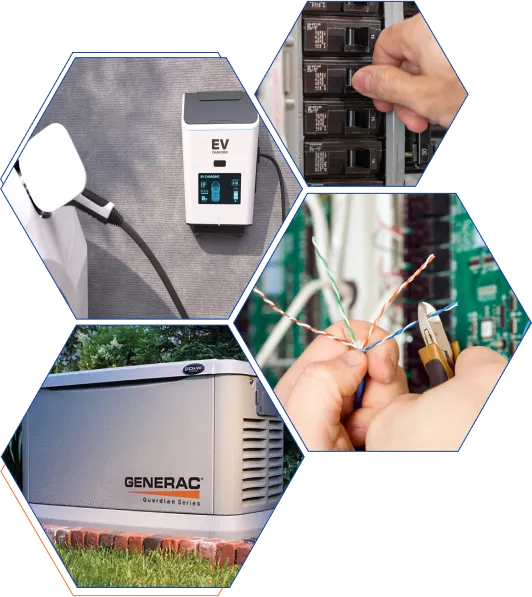

When upgrading a home, the services to hire first are: a panel or service upgrade (200-amp where needed), rewiring or repair of unsafe wiring, whole-home surge protection with AFCI/GFCI safety devices, EV charger circuit installation, and targeted lighting, outlet, and smart-switch wiring. That order is not arbitrary. It follows safety first, then capacity, then convenience.
Priority services at a glance:
- Panel and service upgrade — the foundation for everything else; required before adding EV chargers, electric ranges, or major new circuits
- Rewiring unsafe wiring — knob-and-tube, cloth-insulated, and deteriorated aluminum wiring are fire risks that no amount of smart switches can fix
- Whole-home surge protection and AFCI/GFCI devices — high-return safety upgrades that protect both people and equipment
- EV charger circuit — a dedicated 240V circuit with a load calculation to confirm panel capacity
- Lighting, outlets, USB charging, and smart switches — best done while walls are open during a remodel
The National Electrical Code (NEC) sets the minimum standards for all of this work, and every project requires permits and inspections. Call a professional to run a load calculation and confirm permit requirements before scheduling any major trade work. Tri-County Services Electric & Plumbing handles all of the above for Northeast Ohio homeowners.
Pro Tip: Schedule your electrical assessment before finalizing your remodel timeline. Permit lead times and utility coordination can add days to a project, and discovering a panel deficiency after drywall is up costs significantly more to fix.
Key Takeaways
The single most important step before any home electrical upgrade is a professional load calculation, which determines whether your panel can support new circuits before any equipment is purchased or scheduled.
| Point | Details |
|---|---|
| Panel upgrade comes first | A 200-amp service upgrade is the foundation for EV chargers, major appliances, and modern loads. |
| Fix unsafe wiring before adding circuits | Knob-and-tube, cloth-insulated, and deteriorated aluminum wiring must be assessed and remediated by a professional. |
| Safety devices are high-return upgrades | Whole-home surge protection, AFCI breakers, and GFCI outlets protect both people and equipment at relatively low cost. |
| Stage electrical work during remodels | Bundling panel, rewiring, and EV circuit work while walls are open reduces labor cost and site visits. |
| Tri-County Services Electric & Plumbing | Serves Northeast Ohio with panel upgrades, EV installs, surge protection, and full residential electrical upgrades, permit-to-warranty. |
Useful sources for further reading
- Tri-County Services Electric & Plumbing — Panel Upgrades: Technical detail and examples of completed 100–400 amp upgrades in Northeast Ohio.
- Residential Surge Protection | Tri-County Service Electric & Plumbing: How whole-home surge protection works and what homeowners should know before installation.
- What Is Whole House Surge Protection?: Plain-language explanation of surge protector function and when to install one.
- Home Energy Efficiency Upgrade Guide: Cross-discipline planning resource for lighting, smart-home, and energy-efficiency upgrades, including rebate guidance.
Table of Contents
- When does your electrical panel actually need an upgrade?
- Is your home’s wiring safe enough to upgrade around?
- Which lighting upgrades give you the best return?
- Where should you add outlets and what code rules apply?
- Are smart switches and home automation worth the wiring effort?
- What does EV charger installation actually involve?
- What safety upgrades should every homeowner install?
- What do home electrical upgrades actually cost, and how do they affect home value?
- How do you hire the right professional for electrical upgrades?
- How Tri-County Services Electric & Plumbing handles home electrical upgrades
- Tri-County Services Electric & Plumbing: schedule your home upgrade estimate
- FAQ
When does your electrical panel actually need an upgrade?
A panel upgrade is often the first call a professional will make during a home upgrade assessment, and for good reason. Your panel is the distribution hub for every circuit in the house. Add a Level 2 EV charger, a full electric range, or a whole-home heat pump without checking capacity first, and you are asking for tripped breakers at best and overheated wiring at worst.
Signs you need a panel or service upgrade
- Breakers trip repeatedly under normal household loads
- Lights dim when large appliances start
- The panel feels warm to the touch or shows scorch marks
- Your home insurance carrier has flagged the panel or threatened nonrenewal
- You have an older fuse box or a panel from brands with known safety concerns (Federal Pacific Stab-Lok, Zinsco)
- You are planning to add an EV charger, electric range, spa, or central air conditioning
Most older homes were wired for lower-amp service suited to past decades’ appliance loads. A service upgrade to higher amps gives you headroom for modern loads and is currently the baseline many professionals recommend for any remodel. Some larger homes or those with multiple EV chargers or whole-home electrification plans may need much higher capacity service.
Panel upgrade costs vary by region, panel size, and job complexity. Most residential panel upgrades generally fall within a moderate cost range. A straightforward panel swap typically takes several hours on site; jobs requiring utility disconnects or new service entrance work can add time for coordination.
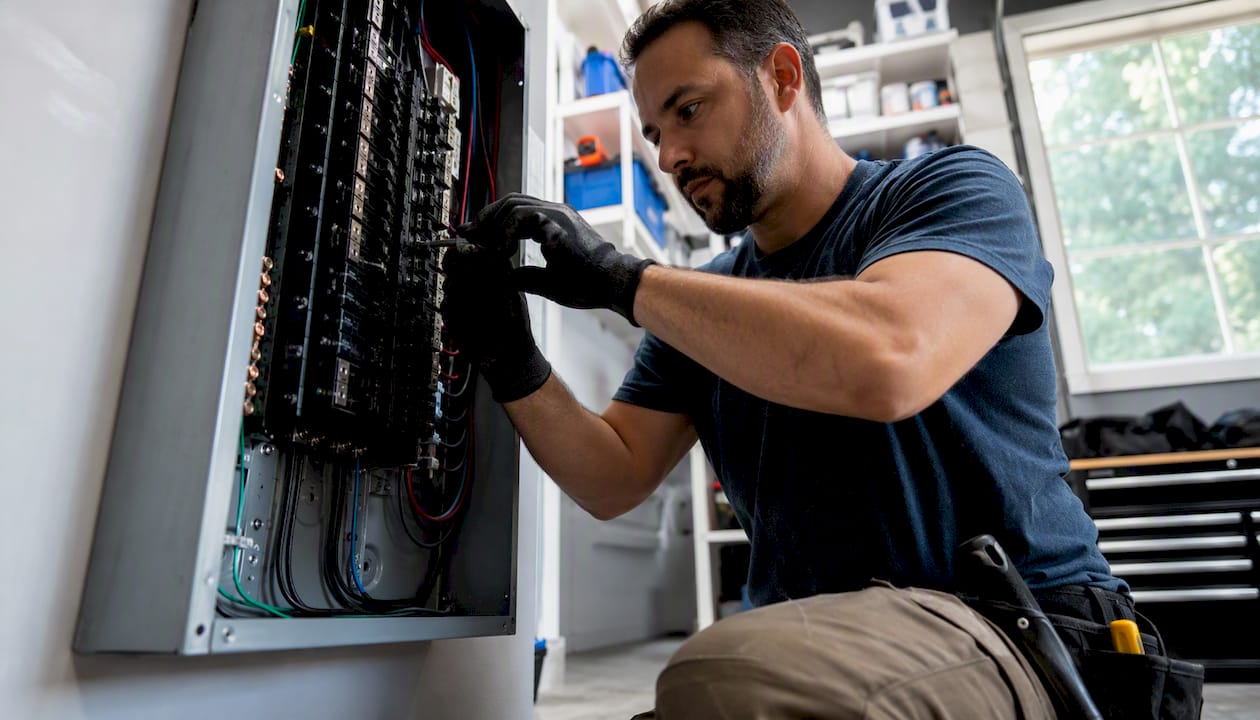
Tri-County’s panel upgrade service covers 100–400 amp upgrades with load calculations, permit coordination, and same-day power restoration where feasible.
Pro Tip: Ask your electrician to size the panel for your 10-year plan, not just today’s load. Adding EV charging, a hot tub, or a home addition later is far cheaper if the panel already has capacity.
Is your home’s wiring safe enough to upgrade around?
Rewiring is the upgrade homeowners most often want to skip. That instinct is understandable but dangerous. Knob-and-tube wiring, cloth-insulated wiring from the 1940s–1960s, and aluminum branch-circuit wiring from the 1960s–1970s all carry elevated fire and failure risks that a new panel or smart switch cannot address.
Common warning signs that wiring needs professional attention:
- Lights flicker or dim without a clear cause
- Outlets or switch plates feel warm
- A burning or plastic smell near outlets or the panel
- Two-prong ungrounded outlets throughout the home
- Aluminum wiring at device terminations (visible silver-colored wire at outlets or switches)
- Visible cloth or rubber insulation that is cracked, brittle, or deteriorated
The options a professional will typically present depend on what the inspection finds. Partial rewiring targets specific circuits or areas, which works well when a remodel is already opening walls in those zones. A full house rewire replaces all branch circuits and is the right call when knob-and-tube is widespread or when the home is being substantially renovated. Aluminum branch-circuit wiring can sometimes be addressed with approved splice connectors (CO/ALR-rated devices and anti-oxidant compound) rather than full replacement, but that assessment requires a professional inspection.
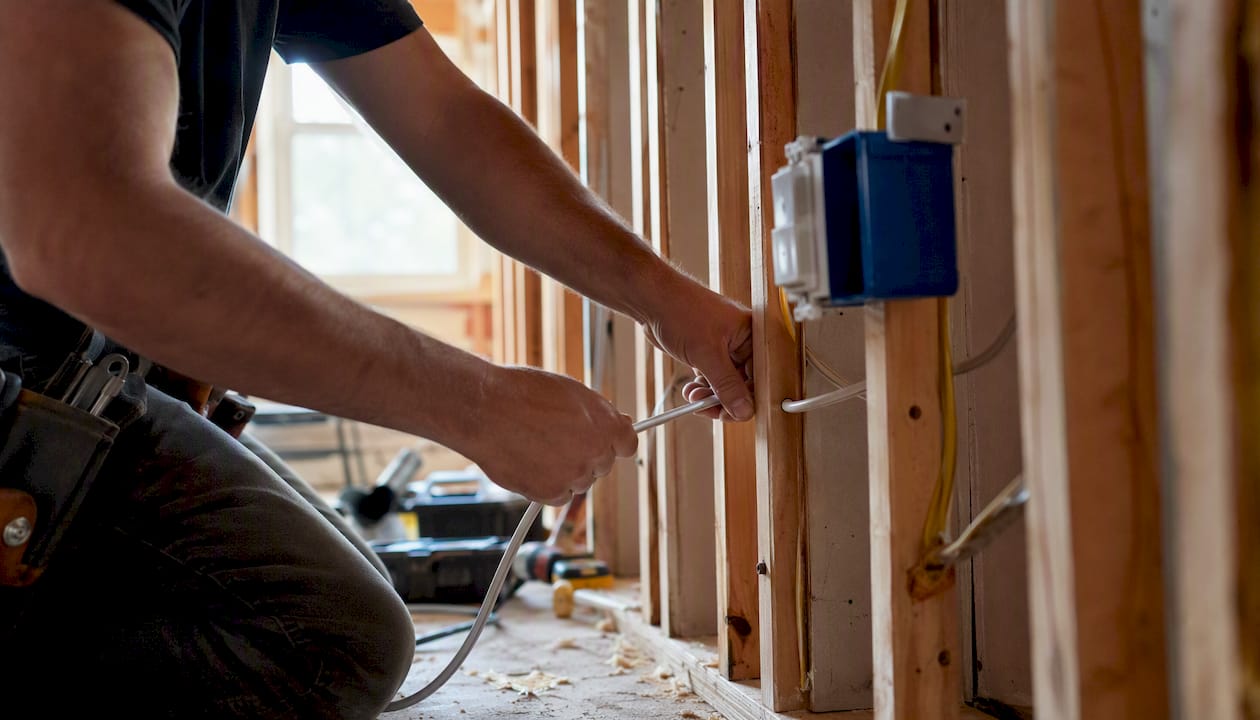
Cost drivers for rewiring include wall accessibility (open walls during a remodel versus pulling wire through finished walls), the number of circuits, panel changes required, and permit and inspection fees. Staging rewiring during a remodel, when walls are already open for other trades, is one of the most reliable ways to reduce both cost and disruption. Tri-County’s service panel upgrade process is designed around exactly this kind of coordinated scheduling.
Which lighting upgrades give you the best return?
LED retrofits and modern fixture wiring are among the fastest-payback electrical upgrades available. The energy savings are real, the maintenance drop is immediate (LED fixtures last far longer than incandescent or fluorescent alternatives), and the lighting quality improvement is noticeable from day one.
Practical lighting upgrades to prioritize during a remodel:
- LED recessed cans in kitchens, living areas, and hallways — replace older incandescent or fluorescent fixtures with airtight, IC-rated LED housings
- Dimmable circuits — requires compatible LED drivers and dimmer switches; not all LED fixtures are dimmable without the right pairing
- Layered lighting — separate circuits for ambient, task, and accent lighting give you far more control than a single overhead fixture
- Occupancy and vacancy sensors — useful in utility rooms, garages, and hallways where lights are routinely left on
- Under-cabinet and accent lighting — low-voltage LED strips wired to a dedicated circuit or plug-in transformer
Utility rebates and incentives are available in many areas for qualifying LED upgrades and energy-efficient fixture installations. The Home Energy Efficiency Upgrade Guide is a useful starting point for identifying what programs may apply to your project.
Pro Tip: Finalize your lighting layout before the electrician runs wire. Moving a recessed can location after wire is pulled costs time and money. Bring a lighting plan to the estimate appointment.
Where should you add outlets and what code rules apply?
Modern living creates electrical demand that homes built even 20 years ago were not wired for. Home offices need multiple dedicated circuits. Kitchens need GFCI-protected countertop outlets every four feet per NEC requirements. Garages, outdoor spaces, and bathrooms all have specific code-driven outlet placement rules, and ignoring them creates both safety risks and inspection failures.
High-value outlet and convenience wiring upgrades:
- Dedicated circuits for high-draw appliances — refrigerators, dishwashers, microwaves, and home office equipment all benefit from their own circuits
- Integrated USB-A/USB-C outlets — replace standard duplex outlets in bedrooms, home offices, and kitchens for cleaner charging without wall adapters
- GFCI protection — required by NEC in kitchens, bathrooms, garages, outdoor locations, unfinished basements, and near pools or spas
- AFCI protection — required in bedrooms, living rooms, dining rooms, and most habitable spaces in new work and many remodel scenarios
- Outdoor weatherproof outlets — GFCI-protected and in-use covers for patios, decks, and garage exteriors
- Media center and home theater circuits — dedicated circuits prevent interference and protect equipment
Adding outlets during a remodel, when walls are open, costs a fraction of what a stand-alone job costs later. A professional can also confirm which circuits need AFCI breakers versus standard breakers, which varies by NEC edition and local adoption. Skipping AFCI or GFCI protection to save money is a common mistake that creates both safety exposure and inspection failures.
Are smart switches and home automation worth the wiring effort?
Smart home upgrades are worth planning carefully, but the wiring decisions made during a remodel determine how well they work for the next decade. The most reliable smart-home electrical setups combine wired infrastructure (ethernet, low-voltage runs, proper neutral wires at every switch location) with wireless endpoints.
Smart-home electrical upgrades worth prioritizing:
- Smart switches and dimmers — require a neutral wire at the switch box; confirm this before purchasing devices, as many older switch locations lack one
- Hardwired smart hubs — a centrally located, wired hub is more reliable than one plugged into a random outlet
- Structured low-voltage wiring — ethernet runs to key rooms, a central patch panel location, and conduit in walls for future cable pulls
- Spare conductor runs — pull an extra wire or two while walls are open; the labor cost is minimal and the future flexibility is significant
- Compatible LED drivers — smart dimmers require dimmable LED fixtures with compatible drivers; mismatched combinations cause flickering and shortened bulb life
The interoperability landscape has improved with Matter protocol adoption, but the physical wiring still matters. A professional can confirm neutral wire availability, plan conduit runs for future flexibility, and integrate low-voltage and line-voltage work in a single visit rather than two separate trips.
What does EV charger installation actually involve?
An EV charger installation is not just a plug-in job. A Level 2 charger (the standard home charging setup) requires a dedicated 240V circuit, typically 40–50 amps, and the panel must have the capacity to support it. That last part is where homeowners most often get surprised.
Steps to expect for a home EV charger installation:
- Load calculation and panel assessment — a professional evaluates your current panel capacity and total home load before any equipment is purchased or installed
- Choose charger amperage and location — most Level 2 chargers run at 32–48 amps; garage wall mounting is standard, but some installations require outdoor-rated enclosures
- Run conduit and dedicated circuit — wire run length, conduit type, and breaker size depend on charger specs and local code
- Pull permit and schedule inspection — EV charger installations require permits in virtually every jurisdiction; a professional handles this
- Final connection and testing — the charger is connected, tested, and the inspection is completed before the job is closed
If the panel lacks capacity, the EV charger installation triggers a panel upgrade first. That is not a surprise a professional should spring on you mid-job. A proper load calculation at the estimate stage identifies this upfront. Tri-County’s EV charger installation service includes the load calculation and permit coordination as part of the process.
Federal tax credits and utility incentives for EV charger installations change periodically. Check current IRS guidance and your utility’s website for applicable programs before scheduling work.
What safety upgrades should every homeowner install?
Whole-home surge protection and correct AFCI/GFCI coverage are the two safety upgrades with the highest return relative to cost. Both protect against the most common causes of electrical fires and equipment damage, and both are straightforward to install during any panel or wiring project.
Safety upgrade checklist:
- Whole-home surge protector at the panel — protects all circuits and connected equipment from voltage spikes caused by lightning, utility switching, and large motor starts; learn how whole-house surge protection works
- AFCI breakers — required in living areas, bedrooms, and most habitable spaces; detect arc faults that standard breakers miss
- GFCI protection — required in wet locations; test monthly using the test/reset button on the outlet or breaker
- Interconnected smoke and CO alarms — when one triggers, all sound; placement per NEC (inside each bedroom, outside sleeping areas, on each level)
- Panel inspection — a seasonal panel inspection catches loose connections, overloaded circuits, and signs of heat damage before they become emergencies
Surge protection at the panel level is different from the power strip on your desk. A whole-home surge protector installed at the service panel intercepts large spikes before they reach any circuit in the house. Tri-County’s residential surge protection service covers installation, sizing, and homeowner education on what the device does and does not protect against.
These upgrades also matter at resale. Buyers and their inspectors look for AFCI/GFCI coverage, working smoke and CO alarms, and a surge protector. Missing any of them can trigger repair requests or price negotiations.
What do home electrical upgrades actually cost, and how do they affect home value?
Safety upgrades (panel, wiring, AFCI/GFCI, surge protection) improve buyer confidence and can directly affect insurability and appraisal. Lighting and smart upgrades improve appeal and lower energy bills. EV readiness is increasingly a selling point as more buyers arrive with electric vehicles.
Cost ranges reflect national variability. Final prices depend on the region, job complexity, panel condition, permit fees, and utility coordination. Northeast Ohio homeowners should request a written estimate from a professional before budgeting.
Prioritization order:
- Safety first: panel upgrade, unsafe wiring remediation, AFCI/GFCI coverage, surge protection
- Future-readiness next: EV circuit, subpanel for additions, structured wiring for smart home
- Convenience and appearance last: lighting upgrades, additional outlets, smart switches, USB outlets
Staging electrical work during a remodel, when walls are already open, consistently reduces total labor cost. A professional who coordinates with your general contractor can pull feeders, run new circuits, and install devices in a single mobilization rather than multiple trips.
How do you hire the right professional for electrical upgrades?
Hire a professional who handles load calculations, pulls permits, coordinates with the utility, and provides a written estimate and warranty. That is the baseline. Anything less is a risk to your safety, your home’s insurability, and your ability to sell the property later.
Vetting checklist before you hire:
- Confirmed credentials and state/local licensing requirements met
- Carries general liability and workers’ compensation insurance
- Pulls permits and handles inspection scheduling as part of the job
- Provides a written, itemized estimate before work begins
- Offers a written warranty on workmanship
- Has verifiable reviews or references from local homeowners
- Can explain the permit and inspection process in plain language
Red flags to walk away from:
- Vague scope with no written estimate
- “We can skip the permit on this one”
- Cash-only pricing with no paper trail
- No proof of insurance when asked
- Pressure to start immediately without an inspection or load calculation
What to expect during the job itself:
A professional crew will arrive, inspect the existing system, confirm the written scope, and pull the permit before starting major work. Power will be off for portions of the job. A final inspection by the local authority having jurisdiction (AHJ) closes the permit and confirms code compliance. You should receive permit documentation, a warranty, and a clear explanation of what was done and why.
Tri-County’s residential electrical repair and upgrade service covers this full process, from initial assessment through permit closeout.
How Tri-County Services Electric & Plumbing handles home electrical upgrades
Tri-County Services Electric & Plumbing has been serving Northeast Ohio homeowners since 1975. Every upgrade project starts with a load calculation and a written estimate before any work begins. Permits are handled by the Tri-County team, inspections are coordinated with the local AHJ, and same-day power restoration is the goal on panel swap jobs where feasible. Homeowners receive written warranty documentation at project close.
The company’s approach is built around minimizing disruption. Scheduling is flexible, and the team coordinates with remodeling contractors to stage electrical work while walls are open, which reduces both cost and the number of site visits. Services cover the full range of residential electrical upgrades:
- Panel and service upgrades (100–400 amp)
- Rewiring and circuit repairs
- EV charger installation with load calculation and permitting
- Whole-home surge protection
- Lighting upgrades and fixture wiring
- Outlet additions, GFCI/AFCI upgrades, and USB outlet installation
- Smart switch and low-voltage wiring integration
- Security camera installation
- Generator installation
Tri-County serves homeowners across Northeast Ohio, including Cleveland and Mentor, OH. The team’s residential contracting service handles full project coordination for homeowners managing larger remodels.
What the Tri-County team recommends before you start
Call a professional for a load calculation before buying a Level 2 EV charger, scheduling a kitchen remodel, or committing to a panel brand. The load calculation tells you what you actually have versus what you need, and it shapes every other decision on the list.
Bundle upgrades when you can. A panel upgrade, EV circuit, and surge protector installed in one mobilization costs less than three separate visits. The same logic applies to rewiring and lighting work during a remodel. Ask for permit handling and written warranty documentation on every job, and schedule electrical work early in the remodel sequence so other trades are not waiting on you.
Tri-County Services Electric & Plumbing: schedule your home upgrade estimate
For Northeast Ohio homeowners who want the work done right the first time, Tri-County Services Electric & Plumbing offers the full range of home electrical upgrades under one roof: panel upgrades, rewiring, EV charger installation, whole-home surge protection, lighting, outlets, and smart wiring.

Every job starts with a written estimate and a load calculation. Permits are pulled by the Tri-County team. Work is warranted in writing. The goal on every panel job is same-day power restoration where feasible, and scheduling is built around minimizing disruption to your household.
Request your estimate or call (440) 325-0136 to talk through your project. If you are mid-remodel and need electrical work staged with your other trades, the team can coordinate directly with your general contractor.
FAQ
How much does it cost to upgrade home electrical service?
A residential panel upgrade typically runs $2,500–$6,000 for most homes, with more complex jobs involving utility coordination or service entrance work pushing costs higher. Final price depends on panel size, region, permit fees, and site conditions.
Does upgrading to 200-amp service increase home value?
A 200-amp panel upgrade improves buyer confidence, insurability, and the ability to support modern loads like EV chargers and heat pumps, all of which support resale value. Buyers and inspectors routinely flag undersized or unsafe panels as negotiating points.
What is the most common electrical service upgrade in a residence?
Panel and service upgrades are among the most frequently requested residential electrical jobs, followed by GFCI/AFCI outlet and breaker upgrades, additional circuit installation, and whole-home surge protection.
Can you upgrade an electrical panel without rewiring the whole house?
Yes. A panel upgrade and a full house rewire are separate projects. Many homes get a new 200-amp panel while keeping existing branch-circuit wiring, provided a professional inspection confirms the wiring is in safe condition. If knob-and-tube or deteriorated wiring is found, remediation is recommended alongside or before the panel work.