
TL;DR:
- Warning signs like burning smells, sparks, or repeated breaker trips indicate immediate electrical hazards requiring professional help. Regular homeowner checks, such as testing GFCI outlets and visual inspections, can prevent dangerous failures. Older wiring types from before 1980 pose significant risks and should be inspected or replaced by a qualified electrician.
Your wiring is likely unsafe if you notice any of these: heat or discoloration around outlets, a burning or plastic smell, sparks, or breakers that trip repeatedly on the same circuit. Any one of those signs means you stop using that outlet or circuit immediately, unplug devices from it, and call a professional electrician. If you see smoke or an active fire, call 911 first.
Before anything else, scan for these highest-priority warning signs:
- Outlets or switch plates that feel warm or look scorched
- A burning smell, even faint or intermittent
- Visible sparks when plugging in or unplugging a device
- Breakers that trip more than once on the same circuit
- Buzzing, crackling, or sizzling sounds from walls or outlets
- Lights that flicker or dim without an obvious cause
None of these are “wait and see” situations. A faint smell that comes and goes is still a signal worth acting on. UL Solutions notes that intermittent symptoms like occasional flicker or a faint burning odor often precede larger failures. Early professional evaluation reduces fire risk significantly.
Table of Contents
- What are the warning signs of unsafe wiring?
- What can you safely check yourself at home?
- Does your home have high-risk wiring you should know about?
- How much does electrical repair typically cost and how long does it take?
- How do you choose a qualified electrician?
- Key Takeaways
- The part most homeowners get wrong
- Tri-County Services Electric & Plumbing is ready when you need us
- FAQ
What are the warning signs of unsafe wiring?
Some wiring problems announce themselves loudly. Others are easy to dismiss as minor annoyances until they aren’t. Knowing which symptoms matter most helps you decide how fast to act.
| Warning Sign | What It Likely Means | Urgency |
|---|---|---|
| Flickering or dimming lights | Loose connection, overloaded circuit, or failing fixture | Moderate to high |
| Frequent breaker trips | Circuit overload or short circuit | High |
| Burning or plastic smell | Overheating insulation or connection | Urgent |
| Warm or discolored outlet/switch | Loose or corroded connection behind the plate | Urgent |
| Buzzing or crackling sounds | Arcing inside the wall or at a connection | Urgent |
| Visible sparks | Active arcing; potential fire hazard | Emergency |
| Scorch marks on outlets | Past arcing or overheating event | Urgent |
| Mild shocks from appliances | Ground fault or missing ground | High |
A few of these deserve extra explanation. Flickering lights aren’t always a wiring problem. Large appliances like refrigerators or air conditioners draw a surge of current at startup, which can cause a brief, one-time dim on the same circuit. That’s a load issue, not necessarily a wiring defect. Persistent or random flickering across multiple rooms is a different story.
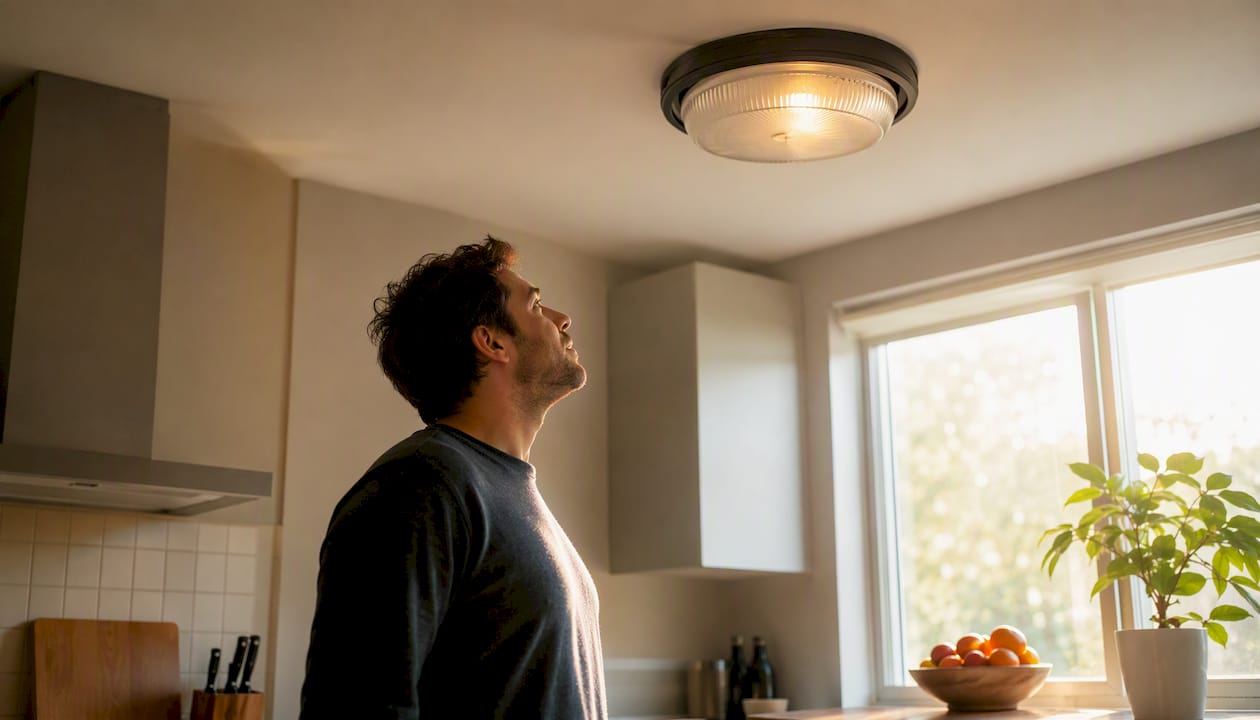
Frequent breaker trips are one of the clearest signs of unsafe wiring. A breaker that trips once after you plug in too many devices did its job. A breaker that trips repeatedly on the same circuit, even with a normal load, points to a fault in the wiring itself.
Relying on extension cords and power strips as permanent fixtures is also a red flag. It usually means the home doesn’t have enough outlets for its actual load, which pushes circuits beyond their design capacity.
What can you safely check yourself at home?
There’s a meaningful difference between a safe visual inspection and opening an electrical panel. The first is something every homeowner can do. The second is not.
Here’s a safe, step-by-step wiring safety check you can run right now:
- Test every GFCI outlet. Press the “Test” button; the outlet should go dead. Press “Reset” to restore power. CPSC recommends testing GFCIs monthly. If one doesn’t trip or won’t reset, it needs replacement.
What you should never do: remove an outlet cover to inspect the wiring behind it, open the service panel, or touch any wire. Those tasks require a professional. ESFI is clear that homeowner visual checks are useful but are not a substitute for professional inspection, which includes load testing and insulation resistance measurements that no consumer tool can replicate.
Pro Tip: Keep a simple log of symptoms: the date, which room or outlet was involved, what appliance was running, and what you noticed. That information helps a professional electrician diagnose the problem faster and more accurately.
You can also learn more from Tri-County’s homeowner electrical safety tips before scheduling a visit.
Does your home have high-risk wiring you should know about?
Older homes often contain wiring systems that were standard for their era but carry real risks by today’s standards. If your home was built before 1980, it’s worth knowing what might be inside the walls.
| Wiring Type | Era | Primary Risk |
|---|---|---|
| Knob-and-tube | Pre-1950 | No ground wire; insulation deteriorates with age; incompatible with modern loads |
| Aluminum branch-circuit | 1965–1973 | Oxidizes at connections, causing heat and arcing; requires special outlets and devices |
| Cloth-covered wiring | Pre-1960s | Insulation becomes brittle and crumbles; high fire risk when disturbed |
| Two-prong ungrounded outlets | Pre-1960s | No ground path; no shock protection; incompatible with three-prong devices |
A few things worth knowing about each:
- Aluminum wiring isn’t automatically dangerous, but it requires professional inspection and, in many cases, remediation at every connection point using approved methods.
ESFI recommends scheduling a professional inspection for any home older than 40 years, even without obvious symptoms.
How much does electrical repair typically cost and how long does it take?
Costs vary widely depending on the scope of work, the age of the home, and whether permits are required. These ranges are ballpark figures to help with planning, not firm quotes.
| Job Type | Typical Timeframe | Notes |
|---|---|---|
| Single outlet or switch replacement | 1–2 hours | Straightforward; may require permit depending on jurisdiction |
| GFCI/AFCI outlet installation | 1–3 hours | Required in kitchens, bathrooms, garages, and outdoors |
| Circuit repair or breaker replacement | 2–4 hours | Complexity increases with panel age |
| Partial rewire (one area or floor) | 1–3 days | Accessibility and home age are the biggest cost drivers |
| Full rewire | 3–7 days | Typically required for knob-and-tube or severely deteriorated wiring |
| Service panel upgrade | 4–8 hours | Requires utility coordination and permit; inspection required |
Permits add time but protect you. A permitted job means a local inspector signs off on the work, which matters for homeowner’s insurance and for resale. Skipping permits to save money often costs more when the work has to be redone to pass inspection later. Tri-County’s code corrections page explains what’s typically involved in bringing older systems up to current standards.
How do you choose a qualified electrician?
The right electrician gives you a written estimate before touching anything, carries insurance, and pulls the required permits. That’s the baseline.
Questions to ask before hiring:
- What is the full scope of work, and will you provide it in writing?
- Do you carry general liability and workers’ compensation insurance?
- Will you pull the required permits, and who handles the inspection?
- Can you provide references from similar jobs in the area?
- What warranty do you offer on parts and labor?
Red flags to walk away from:
- Demands a large cash payment upfront before any work begins
- Refuses to provide a written scope or estimate
- Arrives in an unmarked vehicle with no verifiable local address
- Pressures you to skip permits to “save money”
- Can’t provide proof of insurance when asked
Pro Tip: For Northeast Ohio homeowners, ask specifically about experience with panel upgrades and aluminum wiring remediation. These are common in the region’s older housing stock, and not every electrician handles them with the same level of care.
Understanding why regular home safety checks matter is a good starting point before you call anyone, and it helps you ask better questions when you do.
Key Takeaways
Unsafe wiring almost always gives warning signs first; acting on them early, with a professional inspection, is the single most effective way to prevent an electrical fire.
| Point | Details |
|---|---|
| Urgent warning signs | Heat at outlets, burning smell, sparks, and repeated breaker trips require same-day professional attention. |
| Safe homeowner checks | Test GFCIs monthly, inspect cords and outlet plates visually, and document symptoms before calling a pro. |
| High-risk wiring types | Homes built before 1980 may contain knob-and-tube, aluminum, or cloth-covered wiring that needs professional evaluation. |
| Never attempt internal repairs | Opening panels or touching internal wiring without professional training creates serious injury and fire risk. |
| Tri-County Services Electric & Plumbing | Serving Northeast Ohio since 1975, Tri-County provides inspections, panel upgrades, rewiring, and emergency electrical service. |
The part most homeowners get wrong
Most people treat electrical symptoms the way they treat a check-engine light: they notice it, they worry briefly, and then they adapt. The flickering light becomes background noise. The outlet that trips the breaker gets avoided. The faint smell gets attributed to something else.
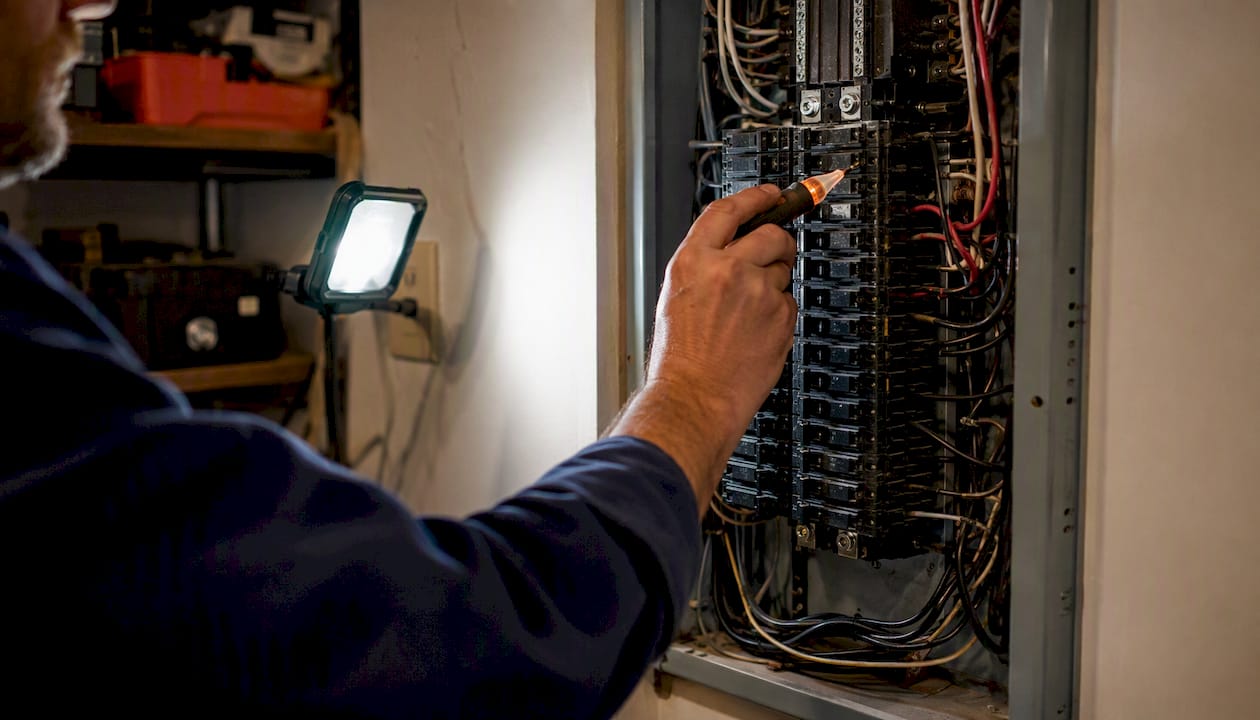
That pattern is exactly how small, fixable wiring problems become house fires.
What I find consistently underestimated is the gap between what a homeowner can observe and what’s actually happening inside the wall. A connection that’s arcing intermittently may look completely normal at the outlet face. The heat signature only shows up on a thermal camera. The insulation failure only registers on a resistance tester. By the time a problem is visible to the naked eye, it’s usually been building for months.
The other thing worth saying plainly: the internet is full of guides that walk homeowners through electrical repairs step by step. Some of those tasks are genuinely safe for a careful person. But the diagnostic work, figuring out why a circuit keeps tripping or where a burning smell is coming from, requires tools and training that most homeowners don’t have. Getting the repair right matters less than getting the diagnosis right first.
Schedule an inspection if your home is more than 40 years old, if you’ve noticed any of the warning signs in this article, or if you’re planning a renovation. That’s not overcaution. That’s the correct response to a system you can’t see.
Tri-County Services Electric & Plumbing is ready when you need us
Family-owned and serving Northeast Ohio since 1975, Tri-County Services Electric & Plumbing handles the full range of residential electrical work: emergency response, whole-home inspections, GFCI and AFCI installations, panel upgrades, partial and full rewires, and circuit repairs. When you call, you get a clear appointment window, a technician who documents findings in writing, and no pressure to approve work before you understand the scope.

If you’ve noticed any of the warning signs covered here, the right move is a professional inspection before the problem gets worse. Before your appointment, clear access to your electrical panel and write down any symptoms you’ve observed, including when they happen and which rooms or appliances are involved. That preparation makes the inspection faster and more thorough.
Schedule an inspection or call to discuss your situation. For panel upgrades and circuit repairs in Northeast Ohio, Tri-County’s service pages cover what to expect from start to finish.
Useful sources
- 8 Signs You May Have a Problem with Your Electrical Wiring | UL Solutions
- Home Electrical Safety Checklist | CPSC.gov
- Indoor electrical safety check booklet | ESFI
- Ground fault circuit interrupters (GFCIs) | SafeElectricity.org
- NFPA — Fire and electrical safety resources
- Energy Saver: LED lighting | energy.gov
- How to Tell If Your House Wiring Is Unsafe – Electrician Wireman
- Top 5 Electrical Safety Tips Every Homeowner Should Know | Tri-County Electric Service
FAQ
How can I tell if my house wiring is bad?
Look for warm or discolored outlets, burning smells, flickering lights, frequent breaker trips, or buzzing sounds from walls. Any of these signs warrants a professional inspection rather than a DIY fix.
Is 20-year-old wiring safe?
Wiring from the early 2000s is generally safer than older systems, but UL Solutions recommends a professional inspection periodically or after major renovations to ensure safety.
Is 1950s wiring safe?
Wiring from the 1950s often includes knob-and-tube or early cloth-covered systems with no ground wire and deteriorating insulation. A professional inspection is strongly recommended, and replacement is likely necessary for safe modern use.
Is 100-year-old wiring safe?
No. Wiring that old predates modern safety standards entirely. Insulation has almost certainly degraded, there is no grounding system, and the load capacity is far below what today’s homes require. Contact a professional electrician immediately to assess and replace it.