
Your water heater is the second-largest energy consumer in your home, and a water heater causing a high electric bill is one of the most common yet overlooked reasons for sudden spikes in electricity costs. Water heating accounts for 14–18% of total home energy use. A typical electric water heater consumes 4,000–5,500 kWh annually, which translates to roughly $640–$880 per year at average electricity rates. When something goes wrong inside that tank, your bill can climb far higher. Tri-County Services Electric & Plumbing has helped Northeast Ohio homeowners diagnose and fix these exact problems since 1975.
Is your water heater causing a high electric bill?
The short answer is yes, and more often than most homeowners expect. The factory default thermostat setting on most electric water heaters is 140°F. The U.S. Department of Energy recommends dropping that to 120°F. That single adjustment saves 6–10% annually on water heating costs without any noticeable difference in comfort.
Usage patterns matter just as much as settings. Long showers, back-to-back laundry loads, and running the dishwasher simultaneously all force the heating elements to cycle on repeatedly. Each cycle draws significant power. Over a month, that adds up fast on your electric bill.
Standby heat loss is the part most homeowners never think about. Even when no one is using hot water, the tank is constantly losing heat to the surrounding air and reheating to maintain temperature. This loss runs continuously, day and night, whether your family is home or on vacation.
Pro Tip: Lower your thermostat to 120°F and wrap the tank with an insulating blanket. Combine that with pipe insulation tips for the first 6 feet of hot water pipe leaving the tank. That combination targets the two biggest sources of wasted energy without touching any wiring or plumbing.
Key usage factors that drive electric water heater consumption higher:
- Showers longer than 8 minutes per person
- Washing clothes in hot or warm water cycles
- Running multiple hot water appliances at the same time
- Keeping the thermostat above 120°F year-round
- Failing to use off-peak electricity hours when your utility offers time-of-use rates
What common water heater faults cause unusually high electric consumption?
A sudden, sustained spike in your electric bill often signals a failing water heater rather than a usage change. Early signs of failure include longer recovery times after hot water use, rumbling or popping noises from the tank, and warm pipes far from the unit. These are not minor quirks. They are symptoms of specific mechanical faults that drive electricity consumption up sharply.
The four most common faults that cause runaway electric bills are:
- Sediment buildup on heating elements. Minerals in Northeast Ohio water, particularly calcium and magnesium, settle at the bottom of the tank over time. That layer of sediment acts as insulation between the element and the water. The element has to work longer and harder to heat through it. Sediment buildup can increase electricity consumption by 30–50%. A professional water heater flush removes that buildup and restores normal efficiency.
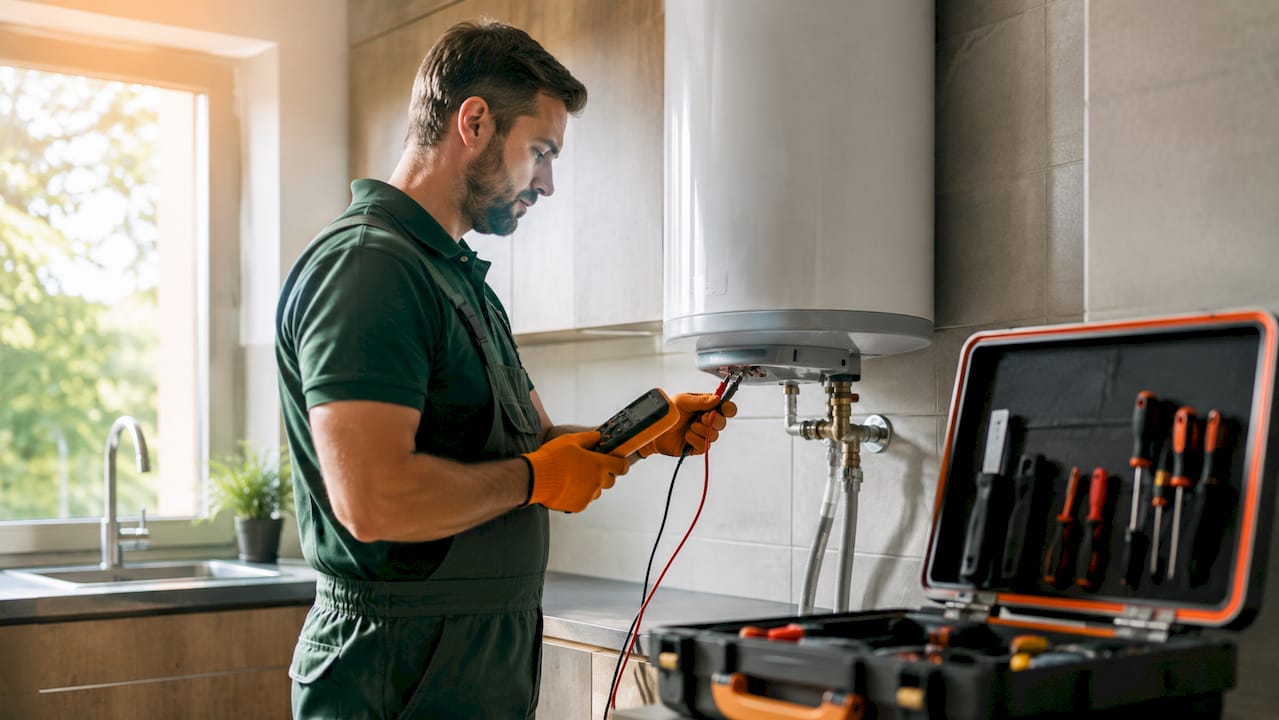
- Burnt or failing heating elements. Most electric water heaters have two elements: an upper and a lower. When the lower element fails, the upper element compensates by running almost continuously. That constant operation can add over $500 per month to your electric bill at standard rates. Replacing a failed element is a straightforward repair for a professional, but diagnosing which element has failed requires proper testing equipment.
- Hidden hot water leaks. A slow leak inside a wall or under a slab forces your water heater to reheat constantly because cold water keeps entering the tank to replace what is lost. An unnoticed continuous hot water leak can effectively double your electric bill. Slab leaks are particularly dangerous because they are invisible until structural damage appears.
- Faulty thermostats inside the tank. The internal thermostat controls when elements turn on and off. A stuck or miscalibrated thermostat can keep elements running past the target temperature, wasting electricity continuously.
Each of these faults requires professional diagnosis. A homeowner checking the tank visually will not find a failed element, a miscalibrated thermostat, or a slab leak. Calling a professional first avoids the cost of replacing parts that are not actually broken.
How does insulation and location affect water heater efficiency?
Where your water heater sits in your home has a direct effect on how much electricity it uses. Standby heat loss accounts for 20–45% of total water heating energy. That percentage climbs significantly when the unit sits in an unconditioned garage or a cold basement, which is common in Northeast Ohio homes during the winter months.
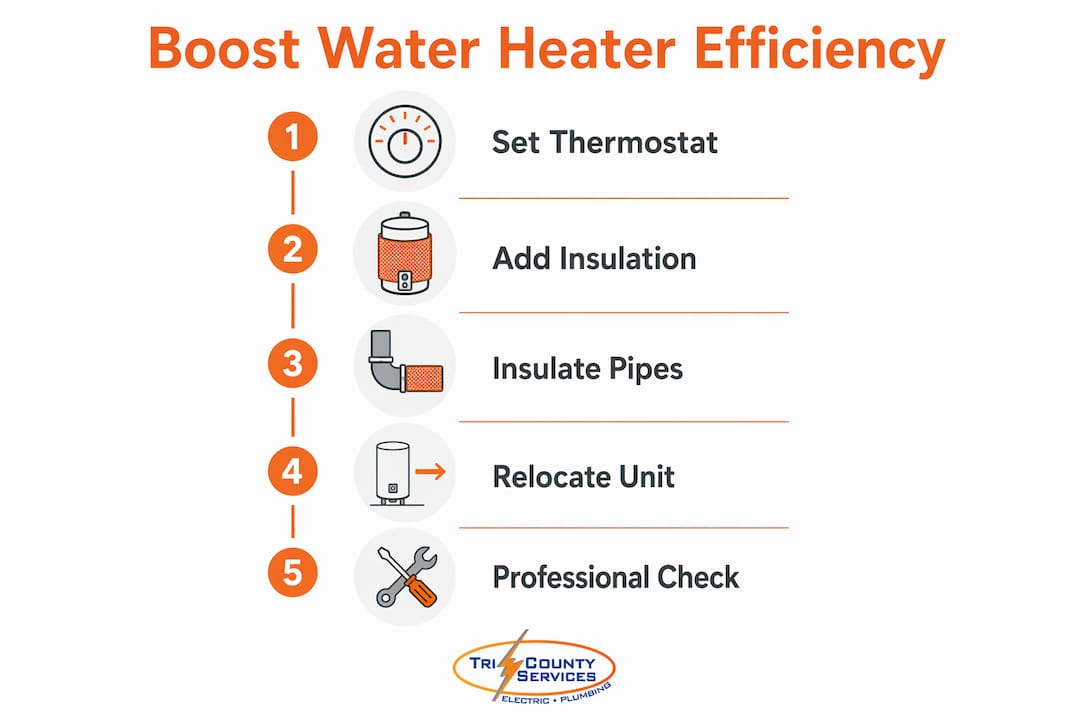
Insulation upgrades address standby loss directly. Adding a tank blanket and insulating the first 6 feet of hot water pipes boosts total savings to 12–22% compared to thermostat adjustment alone. The first 6 feet of pipe near the tank are where the most heat escapes, making that section the highest-return insulation investment.
| Upgrade | Estimated Energy Savings | Approximate Cost |
|---|---|---|
| Thermostat set to 120°F | 6–10% on water heating | Free |
| Tank insulating blanket | 4–9% additional savings | $20–$50 |
| First 6 feet pipe insulation | Up to 22% combined with above | $10–$30 |
| Moving unit to conditioned space | Varies by climate | Professional quote |
Pro Tip: If your water heater is in an unheated garage, ask a professional to assess whether relocating it or adding a dedicated insulated enclosure makes financial sense. In Cleveland winters, an uninsulated garage can drop below 20°F, forcing the tank to work far harder than it was designed to.
Pipe insulation is one of the few upgrades where the return on investment is nearly immediate. The materials are inexpensive, and the savings show up on the very next billing cycle. Professional installation takes the guesswork out of which pipe sections to prioritize and which insulation rating to use.
What professional solutions reduce water heater electric bills?
Repair, upgrade, and replacement each have a place depending on the age and condition of your unit. A professional evaluation from Tri-County Services Electric & Plumbing determines which path saves you the most money.
Repair options make sense when the unit is under 10 years old and the fault is isolated. Flushing sediment, replacing a heating element, or swapping a faulty thermostat restores normal efficiency quickly. These repairs cost a fraction of a new unit and deliver immediate bill reductions.
Upgrading to a heat pump water heater is the most impactful long-term solution for homeowners with older or chronically inefficient units. Heat pump water heaters save 60–70% on operating costs compared to standard electric models. They work by moving heat from the surrounding air into the water rather than generating heat directly, which requires far less electricity.
The financial case for upgrading is strong right now. A federal tax credit of 30%, up to $2,000, is available through 2032 under the Inflation Reduction Act for qualifying heat pump water heater installations. That credit significantly reduces the upfront cost.
Benefits of professional installation and service include:
- Accurate diagnosis before any parts are purchased or replaced
- Warranty protection on new units and installed components
- Code-compliant electrical connections for heat pump units, which require dedicated circuits
- Utility rebate paperwork handled correctly the first time
- Safety checks on pressure relief valves and anode rods during service visits
Water heater repair and replacement handled by a professional also protects your homeowner’s insurance coverage. Many policies exclude damage caused by unpermitted or DIY plumbing and electrical work. That is a risk most homeowners do not consider until a claim is denied.
Key Takeaways
A water heater causing a high electric bill almost always traces back to one of four fixable problems: sediment buildup, a failed heating element, a hidden leak, or poor insulation around the tank and pipes.
| Point | Details |
|---|---|
| Water heaters are major energy users | They account for 14–18% of home energy use and cost $640–$880 annually under normal conditions. |
| Thermostat setting matters immediately | Dropping from 140°F to 120°F saves 6–10% on water heating costs with no equipment changes. |
| Sediment and element failure are costly | Sediment alone can increase electricity consumption by 30–50%; a failed element can add $500 per month. |
| Insulation cuts standby loss | Tank blankets and pipe insulation combined can reduce water heating energy use by up to 22%. |
| Heat pump upgrades offer the biggest savings | Heat pump water heaters cut operating costs by 60–70%, with a 30% federal tax credit available through 2032. |
Why I always tell homeowners to call a professional before touching anything
I have seen the same pattern repeat itself too many times. A homeowner notices a high electric bill, assumes the water heater is running too hot, and adjusts the thermostat. The bill stays high. They flush the tank themselves using a YouTube tutorial. The bill stays high. Three months later, a plumber finds a slab leak that has been running the whole time, and now there is also water damage under the floor.
The problem with DIY diagnostics is not that homeowners are careless. It is that the most expensive faults are invisible. DIY repairs can overlook slab leaks or element faults that cause runaway electricity usage. You cannot see a failed lower element without a multimeter. You cannot detect a slab leak without pressure testing. You cannot know whether your utility usage history points to the water heater or something else without pulling and analyzing the data.
Prolonged inefficiency is also more expensive than most people realize. Every month you delay a professional evaluation, you are paying the cost of the fault plus the cost of the delay. A $150 element replacement done in month one costs far less than six months of inflated bills followed by an emergency replacement.
My honest recommendation: treat a sudden, unexplained spike in your electric bill the same way you would treat a warning light on your car. Get it checked by someone with the right tools before assuming you know the cause.
— Lindsay Paramore
How Tri-County Services Electric & Plumbing can help lower your water heater costs
Northeast Ohio homeowners have trusted Tri-County Services Electric & Plumbing for water heater diagnostics, repairs, and replacements since 1975. The team brings the right testing equipment to every job, which means faults get identified correctly the first time.
Whether your unit needs a sediment flush, a new heating element, or a full upgrade to a heat pump model, Tri-County Services Electric & Plumbing handles the electrical and plumbing work under one roof. That matters for heat pump installations, which require dedicated circuits and proper load calculations. The team also helps homeowners navigate the hot water tank replacement process and available federal tax credits. Call (440) 325-0136 or visit Tri-County Services Electric & Plumbing to schedule a water heater inspection today.
FAQ
How much does a water heater add to my electric bill?
A standard electric water heater costs roughly $640–$880 per year at average electricity rates. Faults like sediment buildup or a failed heating element can push that figure significantly higher.
What are the signs my water heater is wasting electricity?
Signs of a failing water heater include longer recovery times after hot water use, rumbling or popping noises, and a sustained spike in your electric bill without a change in usage habits.
Can lowering my thermostat really reduce my electric bill?
Yes. Dropping the thermostat from 140°F to 120°F saves 6–10% on water heating costs annually. Adding tank and pipe insulation pushes combined savings up to 22%.
What is a heat pump water heater and is it worth it?
A heat pump water heater moves heat from surrounding air into the water instead of generating heat directly. It cuts operating costs by 60–70% compared to a standard electric model, and a 30% federal tax credit up to $2,000 is available through 2032 under the Inflation Reduction Act.
Should I try to diagnose my water heater myself?
Professional diagnosis is the right first step. Hidden faults like slab leaks, failed heating elements, and faulty internal thermostats require testing equipment that most homeowners do not have, and a missed diagnosis leads to months of unnecessarily high electric bills.