
Why More Northeast Ohio Homeowners Are Upgrading to Tankless Water Heaters
If your home still relies on a traditional tank water heater, you may be paying more than you realize in energy waste, maintenance, and long‑term operating costs. As efficiency standards rise and homeowners look for smarter ways to reduce utility bills, tankless water heaters have quickly become one of the most popular upgrades across Medina, Summit, and Cuyahoga counties.
Below, we break down the real differences between tank and tankless systems — and why so many homeowners are making the switch.
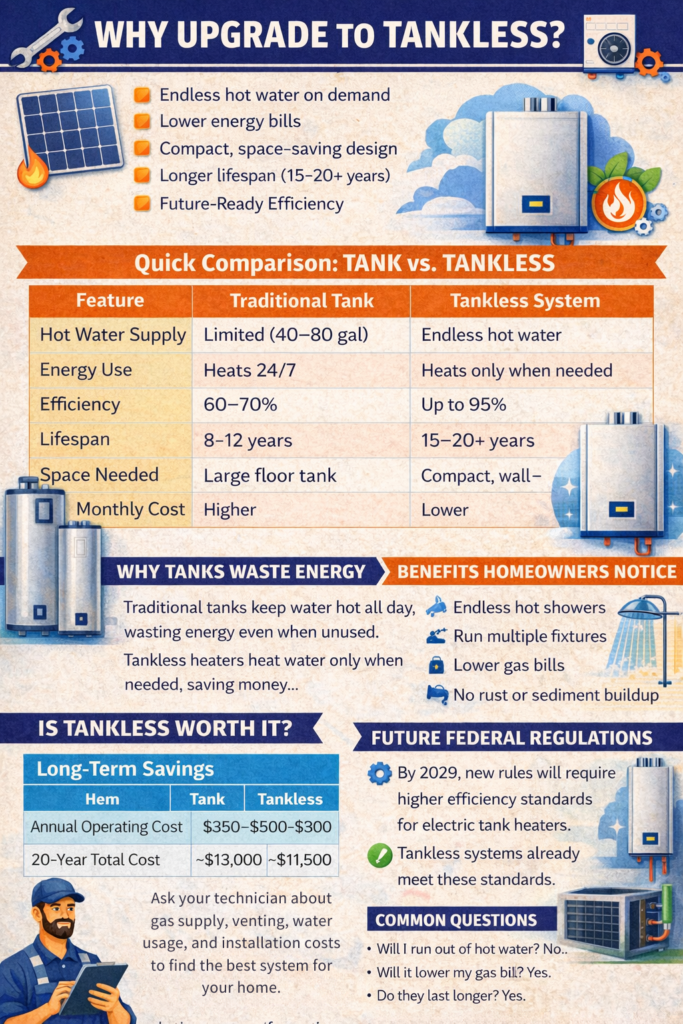
What Makes Tankless Water Heaters Different?
Traditional tank heaters store 40–80 gallons of hot water and keep it heated around the clock. Tankless systems work on demand, heating water only when you turn on a faucet or shower. That single design difference leads to major improvements in efficiency, performance, and lifespan.
Top Benefits of Going Tankless
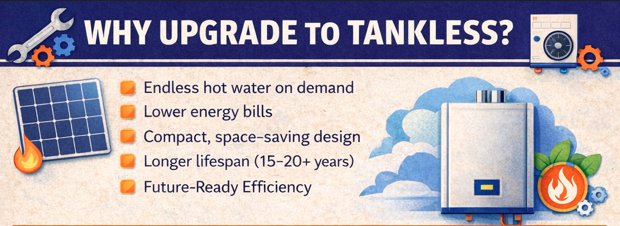
- Endless hot water — no more cold showers
- Lower monthly energy bills
- Compact, wall‑mounted design that frees up floor space
- Longer lifespan (15–20+ years)
- Future‑ready efficiency that meets upcoming federal standards
For busy households, tankless systems eliminate the frustration of running out of hot water during back‑to‑back showers or when multiple fixtures are running at once.
Tank vs. Tankless: A Quick Comparison
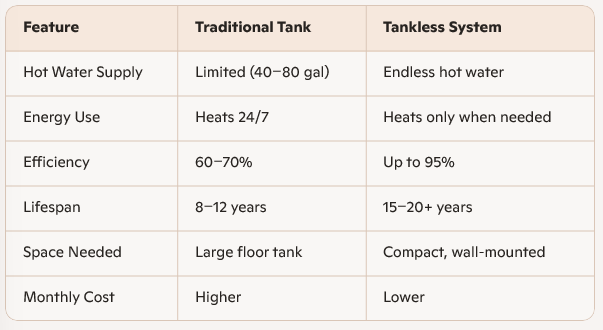
Tankless systems simply use less energy because they aren’t constantly reheating stored water. That translates into lower gas bills and a more efficient home overall.
Why Traditional Tanks Waste Energy
Tank heaters continuously heat water — even when you’re not home or not using hot water. This “standby heat loss” is one of the biggest reasons homeowners see higher utility bills.
Tankless water heaters eliminate this waste by heating water only when needed. That on‑demand design can significantly reduce energy consumption, especially in homes with fluctuating hot water usage.
Benefits Homeowners Notice Immediately
Homeowners who switch to tankless often report:
- Longer, hotter showers
- The ability to run multiple fixtures at once
- Lower gas bills
- Less risk of rust, sediment buildup, and tank leaks
Because there’s no tank storing water, the risk of catastrophic tank failure is also eliminated — a major plus for finished basements.
Is a Tankless Water Heater Worth It?
For many households, yes — especially when you look at long‑term operating costs.
Long‑Term Cost Comparison
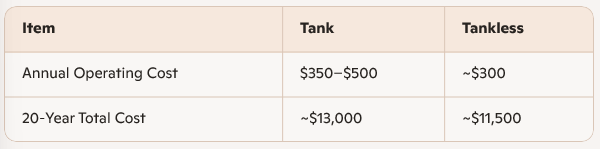
While tankless systems typically have a higher upfront installation cost, they last longer and cost less to operate over time. Most homeowners recoup the difference through energy savings and reduced maintenance.
What to Consider Before Upgrading
A professional technician will evaluate:
- Gas supply
- Venting requirements
- Water usage
- Installation location
- Home layout and fixture demand
Every home is different, so choosing the right tankless model is key to getting the performance and efficiency you expect.
Future Federal Regulations Are Changing the Market
By 2029, new federal rules will require higher efficiency standards for electric tank water heaters. Many traditional tanks won’t meet these requirements without major redesigns.
Tankless systems already meet — and often exceed — these upcoming standards, making them a future‑proof investment.
Common Questions About Tankless Water Heaters
Will I run out of hot water?
No — tankless systems provide endless hot water.
Will it lower my gas bill?
Yes. Tankless units only heat water when needed, reducing energy waste.
Do they last longer?
Yes. Most tankless systems last 15–20+ years with proper maintenance.
Ready to Upgrade Your Home’s Hot Water System?
If you’re considering a tankless water heater for your Northeast Ohio home, our licensed plumbing team can help you compare options, understand installation requirements, and choose the right system for your household.
Whether you’re looking to save money, improve efficiency, or eliminate cold showers for good, tankless technology is one of the smartest upgrades you can make.