

A tripped breaker or reset button is the most common reason an electric water heater stops producing hot water, while a pilot light that’s gone out is the top cause for gas units. Both are worth checking before anything else, and both typically take only a few minutes to rule out.
Start here:
- Electric unit: Check the breaker panel and press the red reset button on the thermostat.
- Gas unit: Check whether the pilot light is lit and follow the relighting instructions on the tank’s label.
- Either type: Confirm you actually have no power or gas supply to the unit at all, not just a weak flow of warm water.
If you smell gas, see water pooling around the tank, or notice scorched wiring, stop immediately. Shut off power or gas and call a professional. This isn’t a moment for troubleshooting.
Pro Tip: If the breaker trips again right after you reset it, don’t flip it a third time. A repeat trip usually means a deeper electrical fault, not a fluke.
Key Takeaways
Most water heater failures trace back to a tripped breaker, an extinguished pilot, or sediment buildup, and each has a distinct, checkable symptom pattern.
| Point | Details |
|---|---|
| Check power source first | Electric units: reset the breaker and ECO button once. Gas units: check the pilot light following the label instructions. |
| Watch for repeat trips | A breaker or reset button that trips again signals a grounded element or bad thermostat, not a fluke. |
| Identify the scope | Whole-house cold water points to the heater; one cold faucet often points to plumbing instead. |
| Flush sediment yearly | Annual flushing, more often in hard-water areas, prevents sediment from damaging heating elements. |
| Call Tri-County Services Electric & Plumbing | Their technicians diagnose electrical and plumbing causes together and handle repairs beyond safe DIY limits. |
Table of Contents
- Safety Checks Before You Touch the Water Heater
- Water Heater Troubleshooting: A Fast, Ordered Checklist
- Electric Water Heaters: What Usually Fails and What You Can Check
- Gas Water Heaters: Pilot, Thermocouple, and Ignition Problems
- Sediment, Dip Tubes, and Plumbing Problems That Mimic a Dead Heater
- When to Call a Professional and What Happens During a Visit
- Preventing the Next No-Heat Call
- Repair vs. Replacement: What It Usually Costs and Takes
- Why We Push Homeowners Toward a Professional Sooner
- How Tri-County Services Electric & Plumbing Can Help
- Sources
- FAQ
Safety Checks Before You Touch the Water Heater
Before you check anything, shut off power at the breaker labeled for the water heater, and if it’s a gas unit, know where the local gas shutoff valve is located. Skip these steps and you risk shock or a gas hazard for the sake of saving five minutes.
A strong gas odor, an active water leak, visible sparking, or rusted, corroded fittings around the tank are not homeowner-checklist items. They’re reasons to leave the room and call a professional.
A flashlight and a non-contact voltage tester (if you own one) are the only tools worth using for a quick look. Anything beyond a visual check belongs to a professional electrician or plumber.
- Shut off the breaker before inspecting anything electrical.
- Know your gas shutoff location if you have a gas unit.
- Never touch, tape, or bypass a tripped reset button repeatedly.
Water Heater Troubleshooting: A Fast, Ordered Checklist
Work through this in order. Skipping steps wastes time and can mask what’s actually wrong.
- Confirm the scope. Is it every faucet in the house, or just one? A single cold faucet often points to plumbing, not the heater itself.
- Identify the fuel type. Electric, gas, or tankless units fail differently, so this determines your next move.
- Check power or gas supply. Breaker for electric, pilot and gas valve for gas.
- Check the pilot or ignition system on gas units, following the label instructions exactly.
- Press the reset button on electric units, once.
- Inspect for leaks, rust, or unusual noises around the base and top of the tank.
After a reset or a pilot relight, give the tank time to recover before judging results. Electric units typically need 20 to 40 minutes to reheat a full tank; gas units often recover faster. Whole-house cold water usually points to a supply issue (power, gas, or a failed element), while one cold faucet often means a plumbing problem elsewhere in the house.
Electric Water Heaters: What Usually Fails and What You Can Check
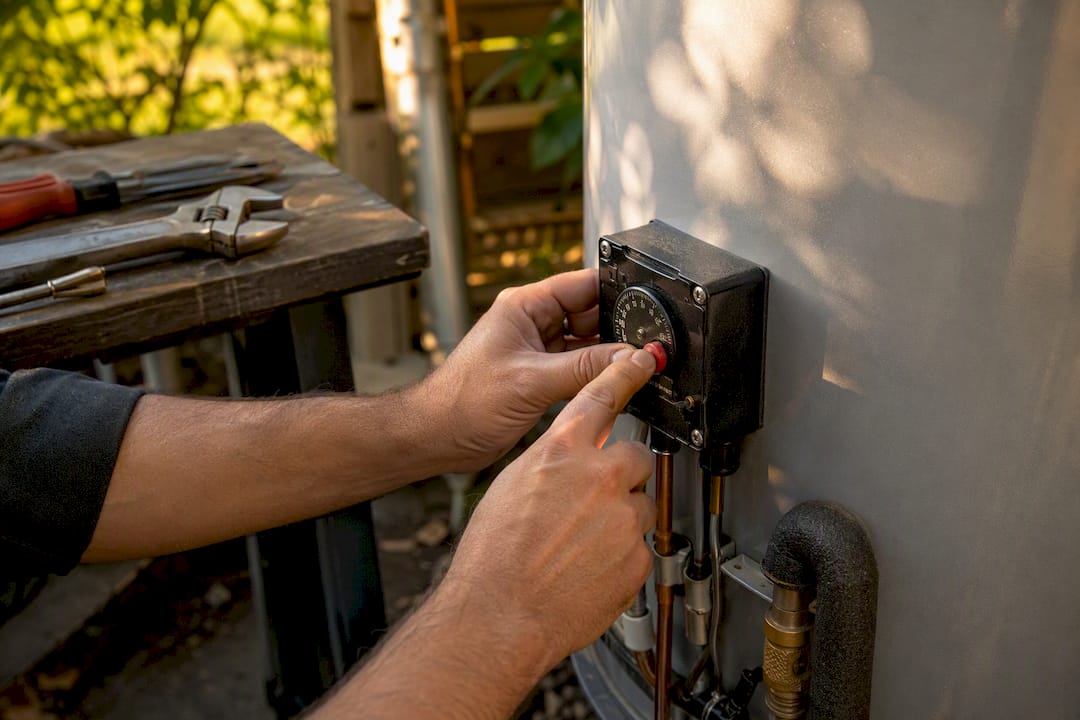
A tripped circuit breaker is the single most common cause of a dead electric water heater, and it’s the fastest thing to rule out. If the breaker holds but you still have no hot water, the reset button (technically called the ECO, or high-limit switch) may have tripped instead.
One reset attempt is reasonable. If it trips again, that repeat failure usually signals a grounded heating element or a bad thermostat, not a fluke. Electric water heaters typically run on two elements, an upper and a lower, and which one fails changes your symptoms: a failed upper element usually means no hot water at all, while a failed lower element often leaves you with a small amount of lukewarm water instead of a full loss.
- Reset the ECO button once. If it re-trips, stop.
- Never open the electrical access panel while the unit is powered.
- Leave element and thermostat replacement to a professional.
Pro Tip: A breaker that trips only when the water heater kicks on, and nothing else, almost always means the fault is inside the tank, not the panel.
Gas Water Heaters: Pilot, Thermocouple, and Ignition Problems
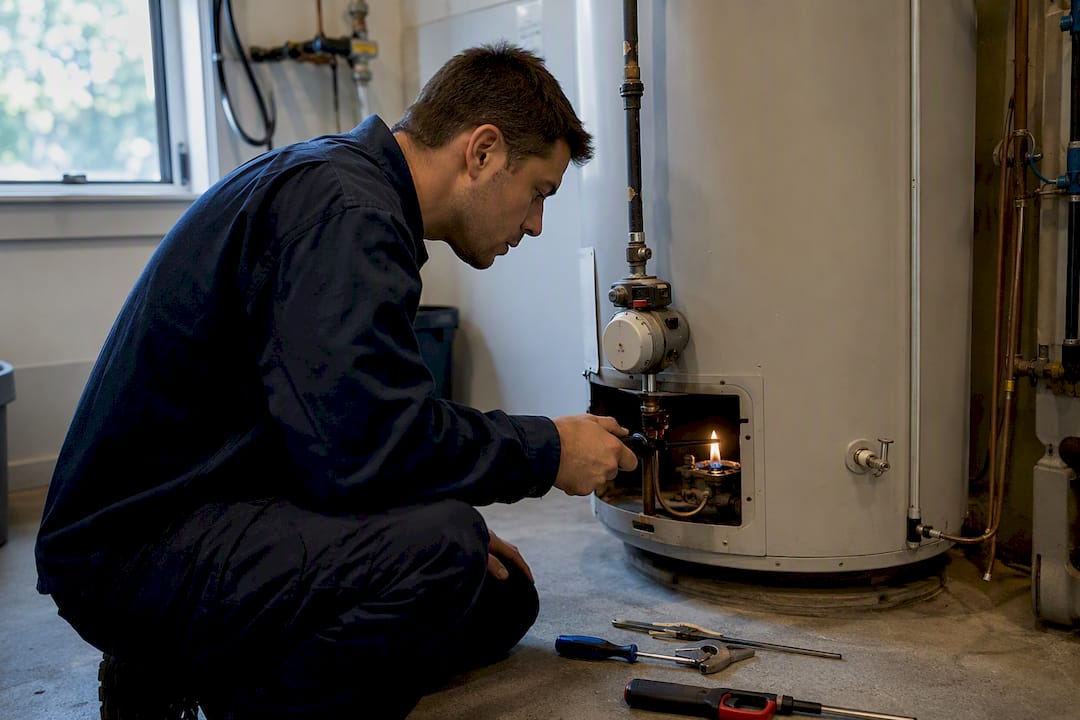
An extinguished pilot light is the most frequent cause of sudden hot water loss on gas units, and relighting it is usually a five-minute fix if you follow the instructions printed on the tank’s label exactly.
The trickier scenario is a pilot that lights but won’t stay lit. That pattern typically points to a failing thermocouple, a clogged pilot orifice, or an electronic ignition fault, none of which are homeowner repairs. Before assuming the heater is the problem, confirm your other gas appliances (stove, furnace) are working, which tells you whether the issue is the heater or the gas supply itself.
If the pilot won’t hold a flame after one relight attempt, or you smell gas at any point, stop. That’s not a DIY situation anymore.
Sediment, Dip Tubes, and Plumbing Problems That Mimic a Dead Heater
Not every “no hot water” complaint is actually about power or gas. Sediment buildup from hard water settles at the bottom of the tank, reduces usable capacity, and creates hot spots that stress and shorten the life of heating elements. A tank that rumbles, pops, or takes noticeably longer to heat is often carrying more sediment than it should.
A broken dip tube produces a different symptom: cold water mixes directly into your hot water supply, so you get lukewarm output even though the heater is technically working. If only one faucet runs cold while others are fine, the problem usually lives in your plumbing, not the tank. Addressing hard water buildup early also protects fixtures throughout the house, not just the heater.
- Rumbling or popping noises during heating often signal sediment.
- One cold faucet with others working normal points to plumbing, not the heater.
- Annual flushing in hard-water regions keeps sediment from shortening element life.
Pro Tip: If your water heater has never been flushed and it’s more than two years old, sediment is a reasonable first suspect for reduced hot water.
When to Call a Professional and What Happens During a Visit
Call now if you notice a gas odor, a breaker that keeps re-tripping, visible leaks, exposed or scorched wiring, or a pilot that won’t hold a flame after one relight attempt. These aren’t judgment calls. They’re the line where DIY checking ends.
Here’s what a technician typically runs through on a service visit:
- Confirms power at the panel and tests voltage to the unit.
- Uses a multimeter to test heating elements and thermostats for continuity and resistance.
- Checks the thermocouple and gas control valve on gas units.
- Inspects the tank for corrosion, leaks, and structural wear.
- Flushes sediment and checks the anode rod if the tank is due for maintenance.
Most straightforward repairs, like a thermostat or element swap, are same-day fixes. A full tank replacement usually takes longer and gets scheduled rather than handled on the spot.
Tri-County Services Electric & Plumbing has been diagnosing exactly these failures across Northeast Ohio since 1975, and catching a grounded element or a failing gas valve early is almost always cheaper than waiting for it to take out the whole unit.
Preventing the Next No-Heat Call
Most no-heat emergencies are preventable with a handful of routine checks.
- Set the thermostat to around 120°F. Higher settings waste energy and speed up wear.
- Flush the tank once a year, more often in hard-water areas, to clear sediment before it damages elements.
- Have the anode rod inspected every three to five years and the T&P valve checked during any maintenance visit.
Pro Tip: A yearly flush costs far less than an emergency call for a burned-out element, and it usually restores a chunk of your heater’s original efficiency.
Repair vs. Replacement: What It Usually Costs and Takes
A thermostat or heating element swap is typically a same-day repair. Thermocouple and igniter fixes on gas units are usually just as quick once the technician confirms the diagnosis.
Replacement makes more financial sense once a tank is in the 8 to 15 year range and showing repeated failures, rust-colored water, or active leaks. At that point, repeated repairs on an aging tank often cost more over time than one replacement.
- Emergency same-day calls usually cost more than scheduled maintenance visits.
- Rust-colored hot water is a strong signal the tank itself is corroding internally.
- Recurring failures on the same unit within a year or two point toward replacement, not another repair.
Why We Push Homeowners Toward a Professional Sooner
Electrical faults and gas component failures don’t get safer the longer they sit. Attempting element replacement or gas valve repair without training raises real risk of shock, fire, or a leak you won’t notice until it’s expensive. Run the checklist above first. It’ll make your call to a professional faster and more useful once you make it.
How Tri-County Services Electric & Plumbing Can Help
If the breaker keeps tripping, the pilot won’t hold, or you’re staring at a rusted tank wondering if it’s worth fixing again, that’s exactly where we come in. Tri-County Services Electric & Plumbing handles both the electrical diagnostics and the plumbing side of a dead water heater, so you’re not calling two different companies to figure out whose problem it actually is.

Before you call, jot down your heater’s age, fuel type, and whatever you’ve already tried. It speeds up diagnosis considerably. If repeated breaker trips point to a bigger issue in your panel, we also handle panel upgrades so the fix actually holds. We do the professional side of this job, including anything involving live wiring or gas components. That part isn’t a homeowner task, and we’d rather you call us before a small fault becomes a bigger repair. Schedule a water heater diagnostic and get a straight answer on repair versus replacement.
Sources
- Water Heaters | Department of Energy
FAQ
What’s the first thing to check when there’s no hot water?
Check the breaker if you have an electric unit, or the pilot light if you have a gas unit. Both take under five minutes and resolve the majority of sudden no-heat problems.
How do I reset my water heater?
Press the red reset (ECO) button on an electric unit’s thermostat once, or relight the pilot on a gas unit following the instructions printed on the tank’s label. If the reset button trips again right away, stop and call a professional.
How can you tell if a heating element is bad?
A failed upper element usually causes a complete loss of hot water, while a failed lower element often leaves you with only a small amount of lukewarm water. Confirming which element failed requires a multimeter test, which is best left to a professional.
What’s the most common problem with a water heater?
For electric units, a tripped breaker is the most common cause. For gas units, an extinguished pilot light is the top cause, and both are worth checking before anything else.
Should I try to fix a repeated breaker trip myself?
No. A breaker or ECO button that trips more than once usually points to a grounded element or thermostat fault, and that’s a job for Tri-County Services Electric & Plumbing rather than a repeated reset.