
Professionals locate underground water leaks without mass digging using acoustic listening equipment, leak noise correlators, and ground-penetrating radar. These tools pinpoint a leak’s exact position within inches, often before a single shovel touches the ground. If you suspect a leak, the safest first move is calling a professional, rather than probing the yard yourself, and having your utility lines marked through 811 before anyone breaks ground.
TL;DR:
- Acoustic detection works best on metal pipes and shallow depths, while ground-penetrating radar accurately locates non-metallic pipes in various soil conditions.
- Most leak detection begins with acoustic sweeps, followed by correlator or radar validation, before minimal digging occurs to confirm the leak’s exact location.
- Property owners should immediately confirm leaks with a meter test and call utility locators before attempting any digging or DIY repairs to avoid safety hazards and higher costs.
- Leak detection costs depend on pipe depth, site surface, and urgency, with detailed estimates separating diagnostic and repair expenses offering better clarity.
- Modern technology, including smart sensors and pattern recognition software, enhances speed and accuracy, but professional assessment remains essential for safe, reliable leak management.
Table of Contents
- Signs of an Underground Water Leak on Your Property
- How Non-Invasive Leak Detection Methods Actually Work
- What Happens During a Professional Leak Detection Visit
- What Underground Leak Detection and Repair Typically Cost
- How to Choose a Qualified Leak Detection Professional
- Tri-County Services Electric & Plumbing’s Leak Detection Approach
- The Environmental Cost of a Leak Left Undetected
- What You Can Check Before Calling a Professional
- Smart Sensors and AI Are Changing How Leaks Get Found
- An Editorial Take: Why Early Action Beats Cheap Fixes
- Schedule a Professional Leak Detection Visit With Tri-County
- Sources
- FAQ
Signs of an Underground Water Leak on Your Property
The clearest test takes two minutes: shut off every fixture and appliance in the house, then check your water meter. If the dial keeps spinning with nothing running, water is escaping somewhere between the meter and your home, a strong indicator of a main line break.
Watch for these signs, too:
- Soggy patches, unexplained puddling, or a small sinkhole forming in the yard, even during dry stretches
- A lawn area that stays greener or lusher than the rest of your property
- A water bill that jumps noticeably with no change in household usage
- Water pressure that drops steadily over days or weeks rather than all at once
- A hissing or rushing sound coming from inside a wall or from the ground when every tap is off
Pro Tip: Run the meter test twice, once in the morning and once before bed. A leak that only shows up at night sometimes points to a fixture cycling on a timer rather than a buried pipe, which changes the whole diagnosis.
If you notice any of these signs, resist the urge to start digging around the suspected area. Unmarked electrical or gas lines sit closer to water lines than most people assume, and hitting one turns a plumbing problem into a genuine emergency. Call 811 first, then bring in a professional to confirm what you’re dealing with.
How Non-Invasive Leak Detection Methods Actually Work
Underground water leak detection relies on a handful of core technologies, each suited to different pipe materials, depths, and site conditions. Understanding what a technician is doing on your property helps you evaluate whether a quote and scope of work actually make sense.
Acoustic detection is usually the starting point. Ground microphones and listening rods pick up the specific frequency water makes as it escapes a pressurized pipe. A technician moves the equipment along the suspected pipe route, listening for where the sound peaks, since leak sound intensifies as you get closer to the source. Acoustic methods work best on metal pipes and shallower depths; they lose accuracy under thick pavement, heavy soil, or on plastic pipe, which transmits sound poorly.
Leak noise correlators solve the range problem. Two sensors get placed at separate access points, such as valves or curb stops, on either side of the suspected leak. The correlator measures the tiny time difference between when the leak sound reaches each sensor and calculates distance from there. This method shines on long service runs or in noisy urban environments where a single listening device would pick up too much interference.
Ground-penetrating radar (GPR) takes a different approach entirely. It sends radar pulses into the soil and reads the reflections to map anomalies below the surface, including voids created by escaping water. GPR is particularly valuable for non-metallic pipe, since acoustic tools struggle there. Its accuracy depends heavily on soil composition. Dense clay reads differently than sandy soil, and both depth and moisture saturation affect resolution.
Infrared and thermal imaging picks up temperature differences at the surface, which makes it excellent for locating leaking hot water lines or leaks close enough to the surface to change soil temperature. It’s far less reliable on cold water leaks or in extreme ambient heat, where the temperature contrast disappears.
For large properties or municipal-scale surveys, satellite-based SAR moisture analysis can flag soil moisture anomalies across wide areas. This isn’t a typical residential service, but facility managers overseeing large commercial sites sometimes see it used as a first-pass screening tool before crews are dispatched.
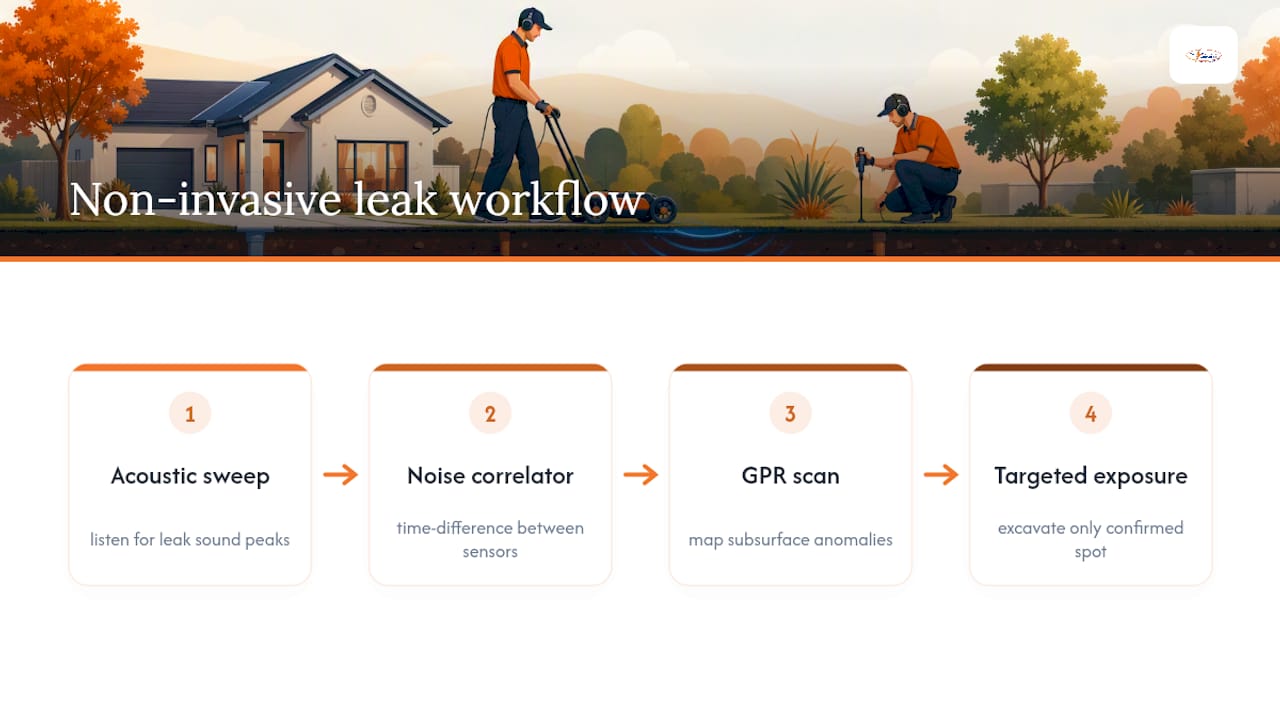
In practice, technicians rarely rely on one method alone. A common sequence is acoustic sweep first, correlator second to narrow the range on longer runs, then GPR to confirm the exact spot before anyone exposes the pipe.
What Happens During a Professional Leak Detection Visit
A competent detection job follows a predictable sequence, and knowing the steps helps you judge whether a contractor is doing this right.
- Confirm the leak. The technician repeats the meter test and reviews your water usage history to gauge urgency and rule out a fixture issue.
- Call 811. Before any equipment touches the ground, utility locates get marked so nobody hits a gas or electrical line during the search.
- Surface assessment and acoustic sweep. The tech walks the suspected pipe route with ground microphones or listening rods to identify a likely zone.
- Correlator or GPR validation. Multi-sensor correlation or radar narrows that zone down to a specific, small target area.
- Minimal exposure. Only after a positive pinpoint does anyone dig, and even then it’s usually a small pothole, not a trench. Pressure testing the exposed segment confirms the diagnosis before repair work begins.
- Repair options presented. You should receive a documented scope covering whether a spot repair will hold or whether the line needs a longer section replaced, along with warranty terms.
A few things separate a careful job from a rushed one:
- A written diagnostic report with marked locations, not just a verbal “it’s somewhere over there”
- Camera inspection offered when the pipe’s condition beyond the leak point is in question
- A clear answer about whether a spot repair or full line replacement makes more sense for your situation
What Underground Leak Detection and Repair Typically Cost
Detection-only visits and full repairs land in different price brackets, and the biggest cost drivers are pipe depth, what sits above it, and how fast you need someone on-site. A leak under a grass lawn is a different job than one running beneath a concrete driveway or a finished patio, and after-hours emergency calls carry a premium over scheduled daytime visits.
Timelines vary the same way. Detection itself is often a same-day or next-day visit. A straightforward spot repair, once the leak is pinpointed and exposed, frequently wraps up in a single day. Replacing an entire service line, especially one running under hardscape, can stretch to several days once permitting and restoration are factored in.
Permits matter more than most property owners expect. Many municipalities require a permit for water line work, particularly when it involves tying into the municipal main or working near the meter, and the coordination of meter shutoff typically falls to the utility rather than the homeowner. A qualified contractor should handle that coordination as part of the job, not leave you to sort it out.
When comparing bids, look past the bottom-line number:
- Does the estimate separate diagnostic cost from repair cost?
- Does it specify spot repair versus full replacement, and why one is recommended over the other?
- Are restoration costs (lawn, concrete, landscaping) included or itemized separately?
- Is there a written warranty on the repair itself?
A vague one-line quote with no breakdown is a sign to ask more questions before you sign anything.
How to Choose a Qualified Leak Detection Professional
Not every plumbing outfit owns acoustic equipment, a correlator, or a GPR unit, so it’s worth asking directly what tools a contractor uses before scheduling a visit. Experience matters here too. Someone who’s run hundreds of these jobs reads ambiguous acoustic signals differently than someone doing it for the fifth time.
Ask these questions before you commit:
- What method will you use first, and why?
- How will you validate the location before any digging happens?
- Will you call 811 for utility locates as part of the job?
- What’s the expected timeline from detection to repair?
- Can I get a written scope of work and warranty terms in advance?
Red flags are usually easy to spot once you know what to look for: vague answers about methodology, an immediate push toward broad trenching without attempting non-invasive detection first, or reluctance to put anything in writing. A detailed, itemized diagnostic report with marked locations and repair options is one of the clearest signals you’re working with a competent team rather than one that guesses and over-excavates.
Pro Tip: Ask to see a sample report from a past job. A contractor confident in their process usually has one ready to show you; one who hesitates might not be doing this kind of documentation at all.
Tri-County Services Electric & Plumbing’s Leak Detection Approach
Tri-County Services Electric & Plumbing has served Northeast Ohio as a family-owned business since 1975, and we’ve expanded our plumbing division to include leak detection and repair alongside our longstanding electrical work. That combination matters more than it might seem. Water line issues and electrical hazards often sit closer together underground than homeowners realize, and having one team that understands both reduces the risk of a detection job creating a separate problem.
Our detection visits follow the same non-invasive sequence outlined above: confirm the leak, coordinate utility locates, run acoustic and correlator diagnostics, and validate with minimal exposure before recommending a repair path. You get a written scope, not a guess.
- Family-owned and operating in Northeast Ohio since 1975
- Combined electrical and plumbing expertise under one company
- Diagnostic-first process before any excavation is discussed
Call (440) 253-0332 to schedule a professional leak detection visit.
The Environmental Cost of a Leak Left Undetected
An undiagnosed underground leak doesn’t just run up your water bill. It wastes a resource that municipal systems already struggle to manage efficiently. Non-revenue water loss, water that’s treated and pumped but never billed because it escapes somewhere along the way, costs U.S. utilities an estimated $7.6 billion annually, and residential and commercial leaks contribute directly to that total.
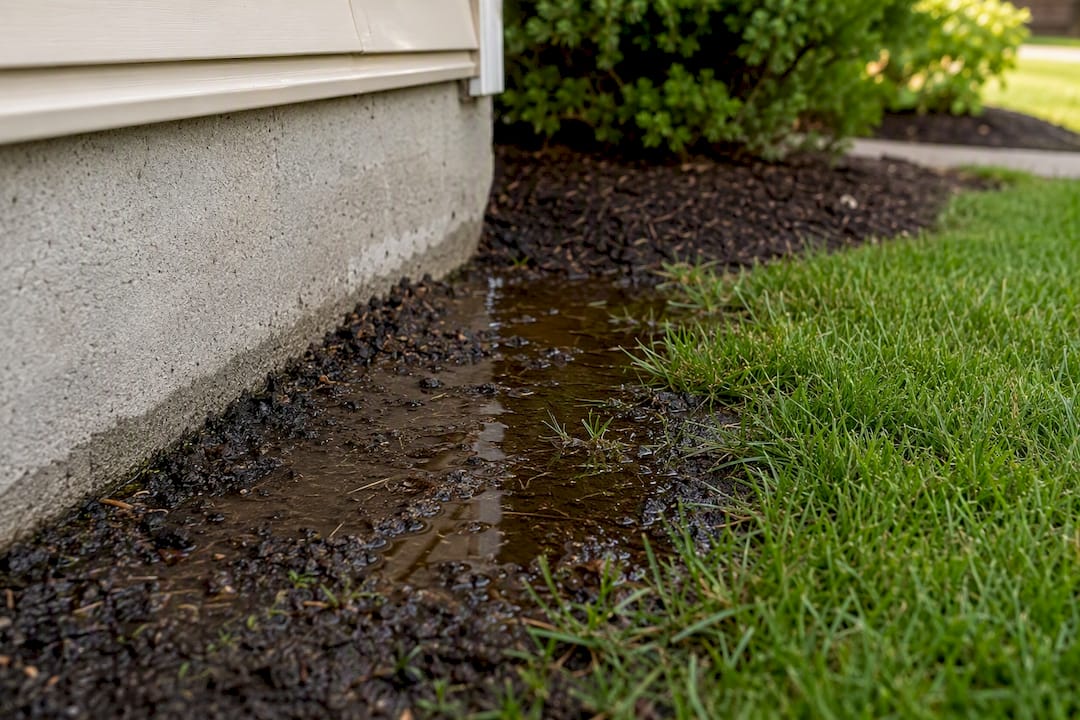
There’s a soil and structural dimension too. Water escaping continuously into the ground saturates soil around your foundation, driveway, or septic system. Over time, that saturation can threaten structural stability, and what starts as a slow, manageable leak can escalate into a foundation or pavement failure within a day or two if it’s ignored.
There’s also a contamination angle worth understanding. A leaking supply line under pressure typically pushes water out rather than pulling contaminants in, but if pressure drops significantly, backflow risk increases and soil bacteria or chemicals can potentially enter the water system through the break point. That’s one more reason a slow leak deserves prompt attention rather than a “we’ll deal with it eventually” approach.
None of this requires alarm, but it does argue against waiting. A leak that would cost a few hundred dollars to fix today can turn into a landscaping, paving, and foundation repair project if it runs unaddressed for months.
What You Can Check Before Calling a Professional
There’s a real, limited role for homeowners here, and it starts and ends with observation, not repair. Run the meter test described earlier. Walk your property and note where grass looks unusually green, where the ground feels soft underfoot, or where water pools after a dry week. Check your last two or three water bills side by side for unexplained jumps. Listen near interior walls and exterior faucets with everything shut off.
Write down what you find, including dates and rough locations. That information genuinely speeds up a professional visit, since it gives the technician a starting point instead of a blank property to search.
What you shouldn’t do is attempt to locate or repair the leak yourself. Consumer-grade leak detectors and phone apps can’t replicate what acoustic correlators and GPR do, and even if you narrow down a general area, digging without 811 clearance risks hitting a gas or electrical line. DIY fixes like epoxy, pipe wraps, or clamps are, at best, temporary stop-gaps, not permanent solutions, and they often mask a problem that keeps getting worse underground while looking fixed on the surface.
If you’re unsure where your main shut-off valve is, that’s worth learning now, before you need it, so you can limit water damage in the minutes before a professional arrives.
Smart Sensors and AI Are Changing How Leaks Get Found
The detection equipment itself hasn’t changed dramatically in recent years, acoustic sensors, correlators, and GPR remain the backbone of non-invasive detection, but how that data gets processed and acted on is shifting fast. Smart water sensors now sit inline at the meter or on individual fixtures, tracking flow patterns continuously and flagging anomalies the moment usage deviates from a household’s normal baseline, often before a homeowner would ever notice a bill spike.
Correlator and GPR data increasingly gets run through pattern-recognition software that helps technicians distinguish a genuine leak signature from background noise, traffic vibration, or nearby machinery. That doesn’t replace the technician’s judgment, but it does mean fewer false pinpoints and less exploratory digging.
Satellite-based moisture mapping, mentioned earlier as a utility-scale tool, is also becoming more accessible for larger commercial properties and campuses, letting facility managers screen wide areas before committing ground crews to a specific zone. It’s not a residential-scale tool yet, but the underlying technology is trickling down.
None of these advancements change the fundamental workflow: confirm, locate, validate, then repair. What they change is speed and confidence, cutting down the guesswork that used to require more exploratory excavation to resolve.
An Editorial Take: Why Early Action Beats Cheap Fixes
The biggest mistake I see property owners make isn’t ignoring a leak entirely, it’s waiting to see if it gets worse before calling anyone. That instinct makes sense with a lot of home problems. With an underground leak, it backfires, because soil saturation and water loss compound quietly while you wait, and the eventual repair bill grows right along with them.
Call a professional the moment your meter test comes back positive. Check the meter, call 811, then call a qualified technician. Waiting rarely saves money. It just delays the inevitable and often raises the price.
— Lindsay Paramore
Schedule a Professional Leak Detection Visit With Tri-County
Tri-County Services Electric & Plumbing is the direct alternative to guessing at a leak location yourself or hiring a crew that jumps straight to trenching. Because we combine plumbing and electrical expertise, our technicians know exactly what’s safe to work around underground, and our diagnostic-first approach means you get a written scope before any excavation happens.

Our leak detection and repair service covers the full process described throughout this article: confirmation, utility coordination, acoustic and correlator diagnostics, and minimally invasive validation. If the diagnosis points to a full water line repair or replacement, we’ll walk you through spot repair versus full replacement with real numbers, not vague estimates.
Call (440) 253-0332 to schedule a visit, or reach out through our site to get a technician out to your property.
Sources
For readers who want the underlying technical and procedural detail, the EPA’s utility emergency preparedness guide covers utility coordination and safety procedures. GPRS’s guide to locating underground leaks details industry detection methods, and ASTERRA’s resource on water line leak detection explains GPR and satellite-based technology in more depth.
- EPA — Safe Water Utility Emergency Preparedness and Response Guide
- How to Locate an Underground Water Leak — GPRS
- ASTERRA — Water line leak detection
FAQ
What’s the Easiest Way to Find an Underground Water Leak?
Start with the meter test: shut off every fixture and appliance, then watch the meter for continuous movement, which confirms a leak between the meter and your home. From there, a professional using acoustic detection and a correlator can pinpoint the exact location without guesswork.
How Much Does Underground Leak Detection Cost?
Costs vary based on pipe depth, what’s above the pipe (grass versus pavement), and whether the visit is scheduled or emergency service. Getting a written estimate that separates diagnostic cost from repair cost is the best way to compare bids fairly.
Can I Use My Phone to Detect an Underground Water Leak?
Consumer phone apps can’t replicate what acoustic ground microphones, correlators, or GPR do, since they lack the sensitivity to isolate a leak’s specific frequency underground. A phone can help you document visible signs, like wet spots or meter readings, but locating the actual leak requires professional equipment.
Is There a Device That Can Detect a Water Leak Underground?
Yes. Professionals use ground microphones, listening rods, leak noise correlators, and ground-penetrating radar, often in combination, to detect and pinpoint underground leaks. Tri-County Services Electric & Plumbing uses this same non-invasive sequence to locate leaks before recommending a repair plan.