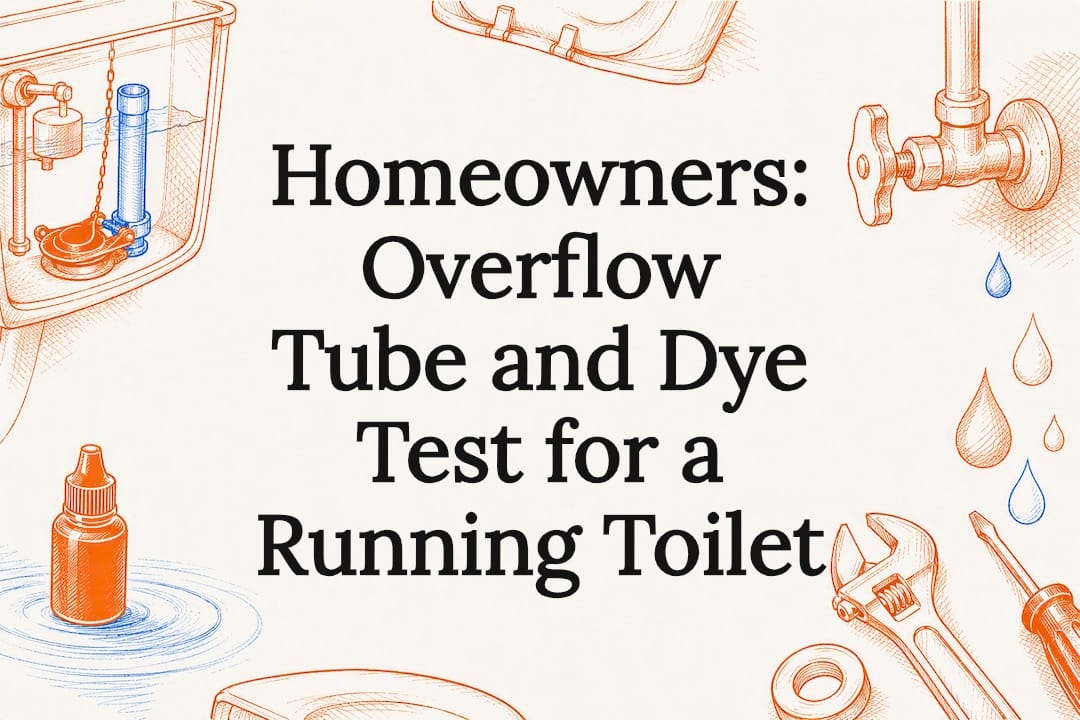


A toilet that keeps running is almost always leaking past the flapper into the bowl or overfilling into the overflow tube. Check the overflow tube first, then run a food-coloring dye test. If the water won’t stop rising or the sound won’t quit after 20 minutes, shut off the supply valve behind the toilet before you do anything else.
TL;DR:
- A running toilet is typically caused by a faulty flapper, incorrect fill valve adjustment, or a siphoning refill tube, which can waste over 6,000 gallons per month.
- The dye test, overflow tube observation, and waterline monitoring are the key diagnostics to identify whether the leak is from the flapper or the fill valve.
- Adjusting or replacing the flapper, float, or refill tube can fix most issues, but persistent leaks may involve worn flush-valve seats or damaged tank components requiring professional repair.
- Water pooling at the base indicates a failed wax ring seal, which is a more complex repair often best handled by a professional due to the risks of improper installation.
- Routine maintenance, such as cleaning mineral buildup and checking parts every few months, can prevent leaks caused by hard water or aging components.
Table of Contents
- Why Is My Toilet Running? Quick Diagnostic Checklist
- What You Need Before You Touch the Tank
- How to Fix a Toilet That Won’t Stop Running
- When the Leak Is Coming From the Base, Not the Tank
- Simple Habits That Keep Your Toilet From Running Again
- What a Running Toilet Actually Costs You Over Time
- When to Call a Professional Instead of Fixing It Yourself
- Tri-County Services Electric & Plumbing: Professional Repairs and How to Reach Us
- Where to Learn More
- Sources
- FAQ
Why Is My Toilet Running? Quick Diagnostic Checklist
Most running-toilet problems trace back to one of two systems: the fill valve that refills the tank, or the flapper that seals water into the bowl. A short round of checks tells you which one is failing before you buy a single part.
- Watch the overflow tube. Take the tank lid off and look at where the water line sits. If water is pouring or trickling into that vertical overflow tube, the fill valve or float is set too high, or it’s not shutting off.
- Run the dye test. Add a few drops of food coloring to the tank water, wait 10 to 15 minutes without flushing, then check the bowl. Colored water in the bowl confirms a flapper or flush-valve leak, a method FixUpFirst and other plumbing guides point to as the fastest way to catch a tank-to-bowl leak.
- Try mark-and-wait for slow leaks. Shut off the supply, mark the waterline with a pencil, and check it again in a few hours. This catch drips too slow for the dye test to show, a method University of Nebraska extension research notes is more reliable for very gradual leaks.
- Lift the float or press the flapper. If lifting the float stops the water, your fill valve is the culprit. If pressing the flapper down stops a hiss, it’s not sealing right.
Continuous hissing or visible overflow points to the fill side. A slow color change in the bowl or a dropping waterline points to the flapper or flush-valve side.
What You Need Before You Touch the Tank
Before removing anything, find the shutoff valve behind or below the toilet and turn it clockwise until it stops. Flush once to drain most of the tank, then sponge out what’s left.
Have these on hand:
- Adjustable wrench and pliers
- Screwdriver (flathead and Phillips)
- A replacement flapper sized to your toilet model
- Old towels and a small bucket
- Rubber gloves
Stop and call a professional if you see water pooling on the floor, notice a hairline crack in the tank, or the shutoff valve won’t budge without excessive force. Those aren’t jobs to push through with more torque.
Pro Tip: Set the tank lid on a towel instead of the floor or counter. Porcelain chips easily, and a cracked lid is a more expensive fix than the running toilet you started with.
How to Fix a Toilet That Won’t Stop Running
Work through repairs in this order, matching what your diagnostic checks actually showed. Replacing a fill valve when the flapper is the real problem just costs you a second trip to the hardware store.
- Start with the flapper if the dye test showed color in the bowl. Lift the tank lid, disconnect the chain, and pull the old flapper off its pegs or ring. Check the seal for warping, cracking, or a chalky mineral coating. If it’s stiff or misshapen, replace it. A new flapper costs $5 to $15 and takes about 10 minutes to swap.
- Fix the chain and handle next. A chain that’s too long can bunch under the flapper and hold it open; too short and it won’t seal fully. Aim for about half an inch of slack, roughly one or two links of play, so the flapper drops flat every time. While you’re in there, snug the handle nut if the lever feels loose.
- Check the refill tube for siphoning. That small flexible tube should clip onto the top of the overflow pipe with its tip sitting above the waterline, not down inside it. A tube pushed too far down siphons tank water continuously into the bowl. This is a common cause of what people call “phantom flushing,” where the toilet runs briefly on its own with nobody touching it, an issue tied directly to refill-tube position.
- Adjust or replace the float and fill valve if water was pouring into the overflow tube. On a ball-arm float, gently bend the arm down about half an inch. On a cup-style float, squeeze the clip and slide it down the shaft. Turn the supply back on and watch the tank refill; it should shut off cleanly below the overflow line. If it keeps running or hisses after adjustment, the valve itself needs replacing, a $10 to $20 part. EPA WaterSense treats a fill valve that won’t shut off as a high-waste failure and recommends replacing it once adjustment fails to solve the problem. Debris trapped in the fill-valve cap is a frequent cause here too. Kohler’s troubleshooting guidance notes that sediment lodged in the cap can prevent proper shutoff, and cleaning or replacing the valve usually clears it.
- Inspect the flush-valve seat if a new flapper doesn’t fix the leak. Run a finger around the rim where the flapper seats. Roughness, pitting, or mineral ridges there mean a new flapper still won’t seal, no matter how many times you swap it. Replacing the whole flush-valve assembly is a more advanced repair involving removing the tank from the bowl, which is where many DIYers decide to stop and call in help.
A running toilet is not a minor annoyance you can put off. One continuously leaking or overfilling fixture can waste over 6,000 gallons a month in extreme cases, according to figures cited by the City of Gahanna, which is enough to noticeably spike a water bill in a single billing cycle.
After each fix, repeat the dye test or mark-and-wait check before you call it done. A repair that looks fine right after you finish can still leak once the tank refills under normal pressure.
When the Leak Is Coming From the Base, Not the Tank
Water pooling around the base of the toilet points to a different problem entirely: the wax ring seal between the toilet and the drain flange has failed, not anything in the tank.
Start by checking whether the toilet rocks when you push on it from the side. A wobbly bowl almost always means the wax ring has broken its seal, letting water (and sometimes sewage odor) seep out with every flush. Look for water stains on the ceiling below if the bathroom is upstairs, or discoloration on the floor around the base.
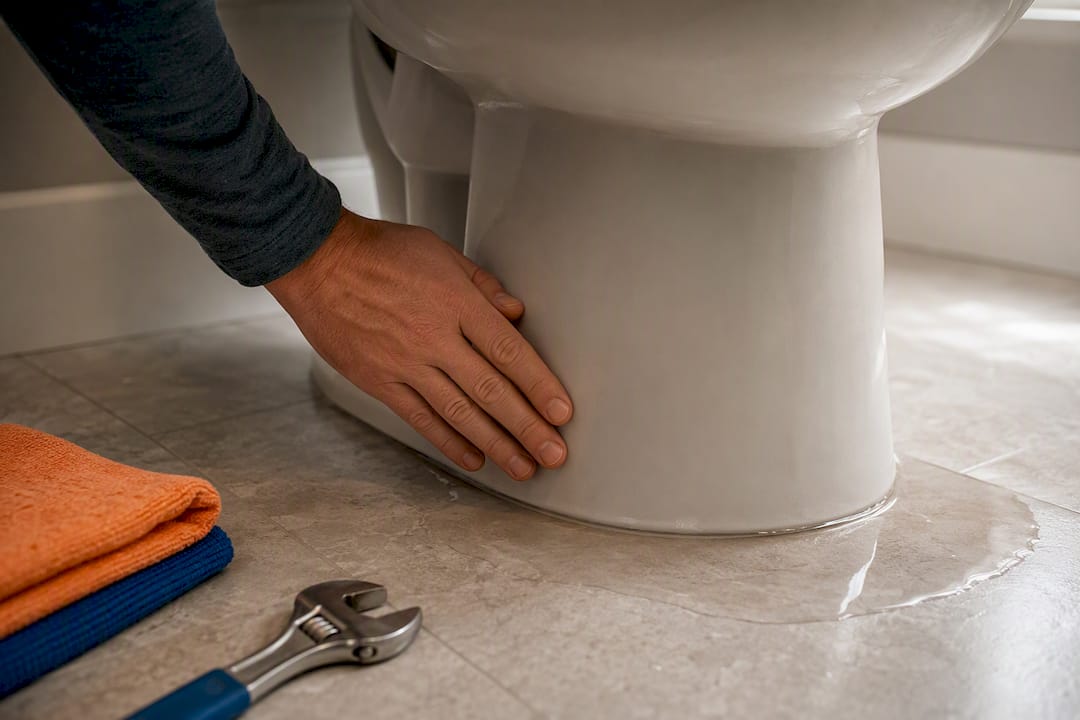
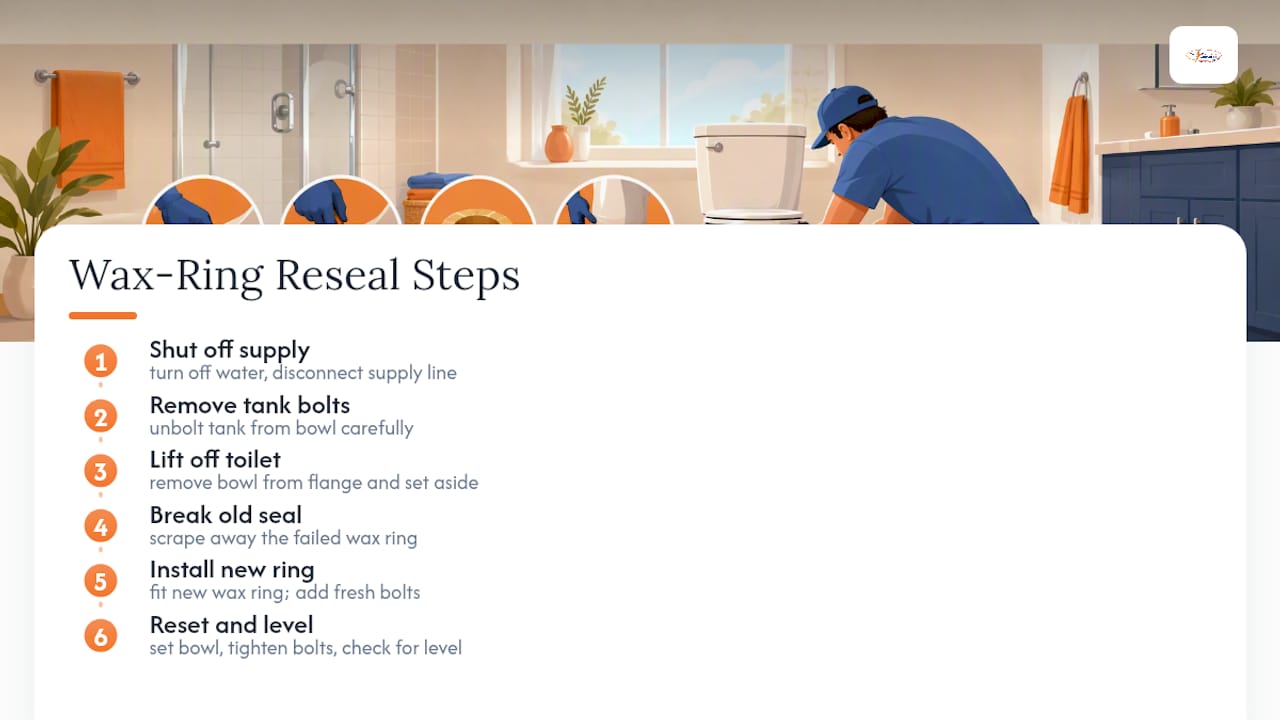
Confirming this diagnosis means pulling the toilet off the flange entirely, which is a bigger job than anything covered in the fill valve or flapper repairs above. It involves shutting off and disconnecting the supply line, removing the tank bolts, breaking the old wax seal, and setting a new ring before resetting the bowl with fresh bolts and a level check.
The stakes are higher here than a running tank. A poor reseal can leak into the subfloor, and a cracked flange or an uneven bathroom floor can keep a new wax ring from sealing correctly no matter how carefully it’s installed. Rotted subfloor from a long-ignored base leak is a far more expensive repair than the toilet repair itself.
If you’re seeing rocking, staining, or a persistent odor near the base, this is one of the clearer signals to bring in a professional rather than working through it solo. Getting the reseal wrong means doing the whole job twice, and the second time often includes floor repair.
Simple Habits That Keep Your Toilet From Running Again
A few minutes every few months prevents most repeat failures. Hard water is the biggest long-term enemy of flappers and fill valves. Mineral buildup gradually stiffens rubber seals and clogs valve mechanisms, which is why research on hard water’s effects on plumbing fixtures points to routine cleaning as the best defense against repeat failures. If your area has notably hard or mineral-heavy tap water, that buildup happens faster than most homeowners expect. You can check what’s in your local water supply through resources like the Ohio drinking water contaminant data tracked by TapWaterIndex.
Wipe down the flapper and the flush-valve seat every few months to clear early mineral deposits before they harden. Check the chain slack whenever you replace a flapper. Test the fill valve’s shutoff point twice a year by watching a full refill cycle. Swap flappers proactively every four to five years rather than waiting for a leak, since rubber degrades even without visible damage.
Keep a small log of your water bill. A sudden unexplained jump is often the first sign of a slow leak long before you hear or see it.
What a Running Toilet Actually Costs You Over Time
A running toilet doesn’t announce itself the way a burst pipe does. It just quietly adds gallons to your usage every single day, and most homeowners don’t notice until the bill arrives.
EPA WaterSense identifies leaking and running toilets as one of the most common sources of wasted water in homes, precisely because the failure is silent and continuous rather than sudden. A leak that seems minor, just a faint trickle or a brief refill cycle every few minutes, adds up across weeks into hundreds of extra gallons, and across months into thousands.
That waste has a cost beyond your own bill. Every gallon pulled through a home’s supply line was treated and pressurized by a municipal water system built to serve an entire community, not one leaking fixture. Multiply one running toilet by every home on a street where nobody’s caught the problem yet, and the strain on local water infrastructure and treatment resources adds up fast.
The fix is rarely about willpower or vigilance. It’s about running the right diagnostic test the first week you notice a change in sound or a bill that looks off, rather than living with it for a season. A toilet that’s been quietly running for three months before you fix it has already cost you far more in water than the part itself would have.
When to Call a Professional Instead of Fixing It Yourself
Some situations call for a professional the moment you spot them, not after a failed repair attempt. Water pooling on the floor, a cracked tank, a shutoff valve that won’t turn, or a pressure-assist toilet all fall into that category. Pressure-assist systems in particular hold water under real force and aren’t a safe place to learn as you go.
A professional visit also covers ground DIY skips entirely: checking the flush-valve seat for pitting, inspecting the supply-line connection for corrosion, torquing tank bolts correctly so the porcelain doesn’t crack, and replacing the full flush-valve assembly when the seat itself is worn out. Most standard toilet-running repairs run a service visit plus parts, with more involved jobs like a flush-valve or wax-ring replacement taking longer and costing more. Exact pricing depends on your specific toilet and what’s actually failing, which is worth a call rather than a guess.
If you’ve swapped a flapper and fill valve and it’s still running, that’s the clearest sign the problem is bigger than a $15 part. Call Tri-County Services Electric & Plumbing at (440) 253-0332 for a straight answer before you buy a third part that doesn’t fix it, either.
Tri-County Services Electric & Plumbing: Professional Repairs and How to Reach Us
Tri-County Services Electric & Plumbing has served Northeast Ohio homes since 1975, and toilet running repairs are one of the most common calls our plumbing team fields. What separates a lasting fix from a repeat visit usually comes down to matching the right part to your specific toilet model and torquing everything correctly the first time, especially on flush-valve seats and supply-line connections that DIY repairs often miss.

Hiring a professional means you skip the trial-and-error of buying a second flapper after the first one didn’t solve anything, and you get a repair backed by someone who checks the whole system, not just the part that’s obviously loose. If your toilet is still running after you’ve tried the fixes above, or you’re dealing with a cracked tank, a stuck shutoff valve, or a leak at the base, call our office at (440) 253-0332 to can schedule a visit. You can also see the full scope of what we handle on our residential plumbing services page or check out leak detection and repair options if you suspect the problem runs deeper than the tank. Either way, get it scheduled before another billing cycle passes.
Where to Learn More
- EPA WaterSense covers indoor water waste and toilet efficiency standards.
- Kohler Assist offers model-specific troubleshooting for Kohler toilets.
- Home Depot’s repair guide walks through step-by-step part replacement.
Sources
- Residential toilets — EPA WaterSense
- Toilet Constantly Leaking or Running — Kohler Assist
- How to fix a running toilet — Home Depot
- How to fix a running toilet — FixUpFirst
FAQ
How Do You Fix a Toilet That Keeps Running?
Start with the overflow-tube check and a dye test to find out whether the fill valve or the flapper is failing, then replace or adjust that specific part. Most running-toilet problems resolve with a new flapper, an adjusted float, or a repositioned refill tube.
What Happens if I Ignore a Running Toilet?
The leak keeps wasting water around the clock, and in severe cases can waste over 6,000 gallons a month, showing up as a sharp spike on your water bill. Ignoring it long enough can also let mineral buildup or seal damage spread to other components.
What Is the Most Common Cause of a Constantly Running Toilet?
A worn, warped, or mineral-fouled flapper is the most frequent cause, letting tank water leak into the bowl and triggering the fill valve to keep refilling. A misadjusted float or a fill valve clogged with debris is the next most common culprit.
Why Is Water Constantly Trickling Into My Toilet Bowl?
This usually means the flapper isn’t sealing fully, or the refill tube has slipped down into the overflow pipe and is siphoning tank water into the bowl. Both point to the flush side rather than the fill valve, and both show up clearly on a dye test.