

Ohio winters have a reputation for being unforgiving, and your plumbing system often feels the impact first. When temperatures drop quickly, water inside your pipes can freeze, expand, and create pressure that leads to cracks or full‑on bursts. The good news is that a few simple preventive steps can dramatically reduce your risk of winter plumbing emergencies.

Why Frozen Pipes Are Such a Big Problem
When water freezes, it expands — and that expansion can stress your pipes from the inside out. Even a small crack can release hundreds of gallons of water once the line thaws. Beyond the immediate mess, homeowners often face structural damage, mold growth, and costly repairs. Preparing ahead of the coldest days is the best way to keep your home protected.
Simple Steps to Prevent Frozen Pipes
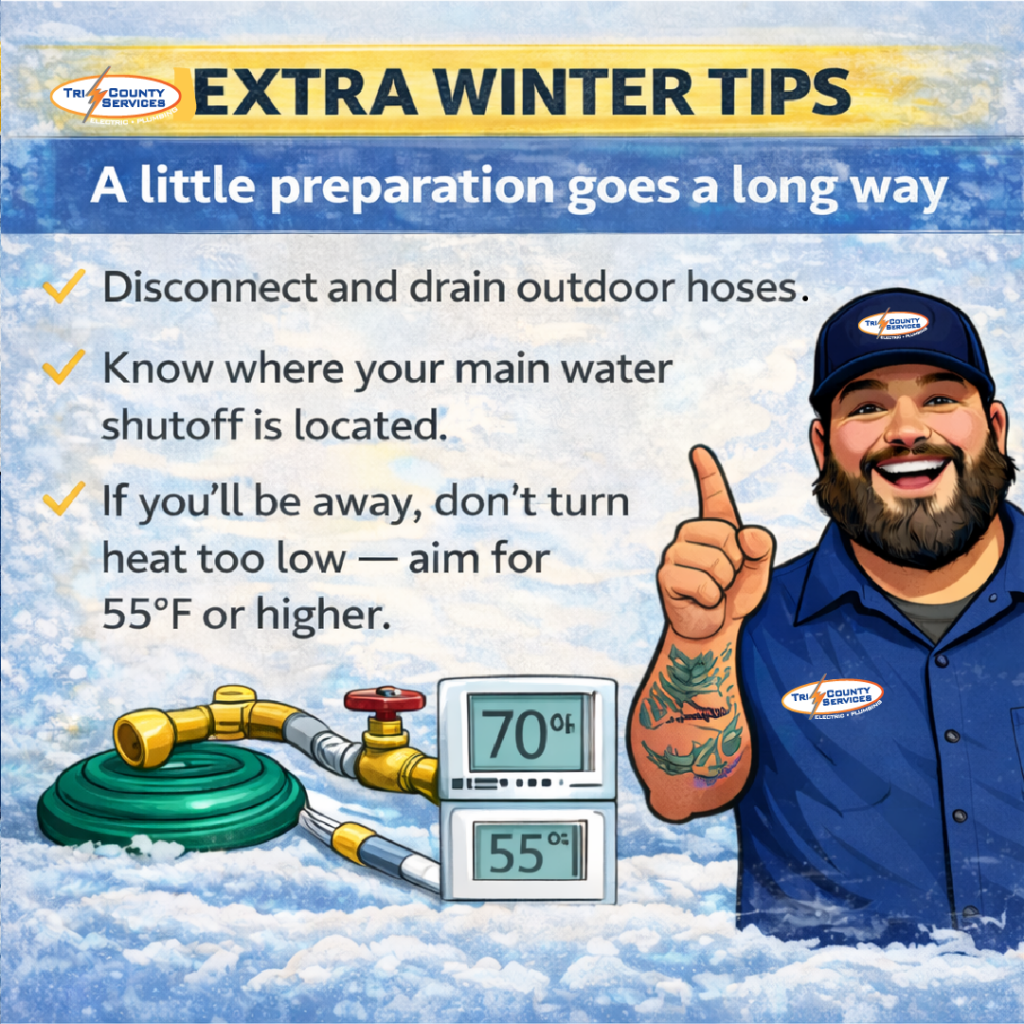
A little preparation goes a long way. These homeowner‑friendly steps can help safeguard your plumbing system all winter:
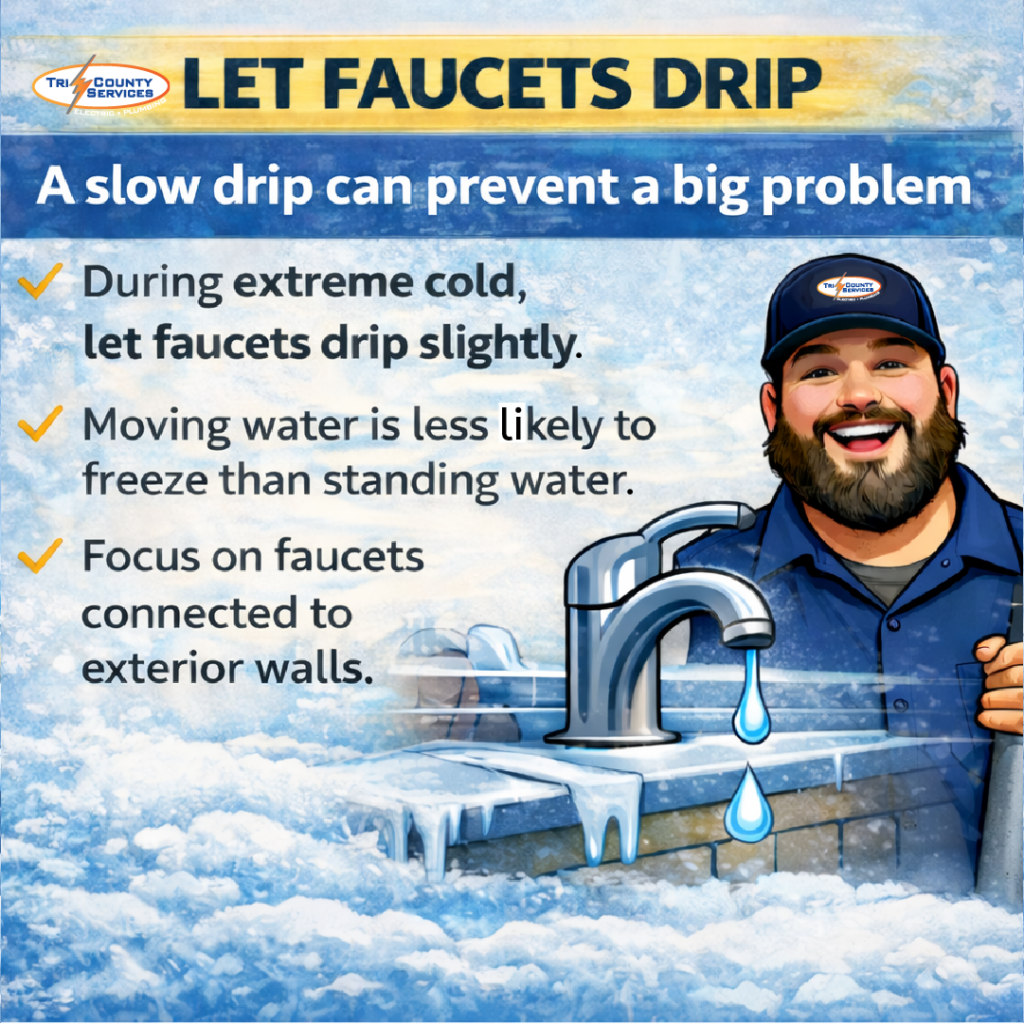
Let faucets drip during extreme cold
A slow, steady drip keeps water moving just enough to prevent freezing.
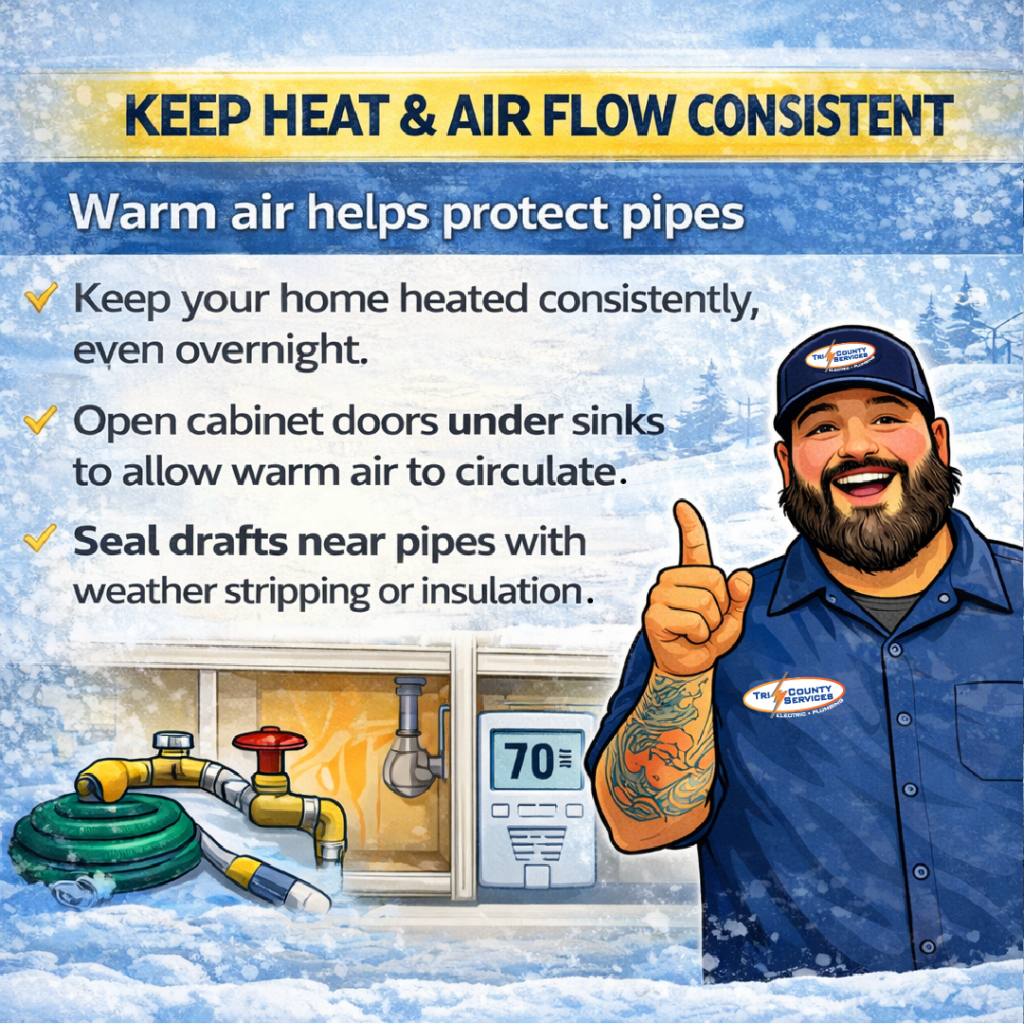
Maintain consistent heat and airflow
Cold spots — like under sinks or in basements — are common freeze points. Keeping warm air circulating helps prevent ice buildup.
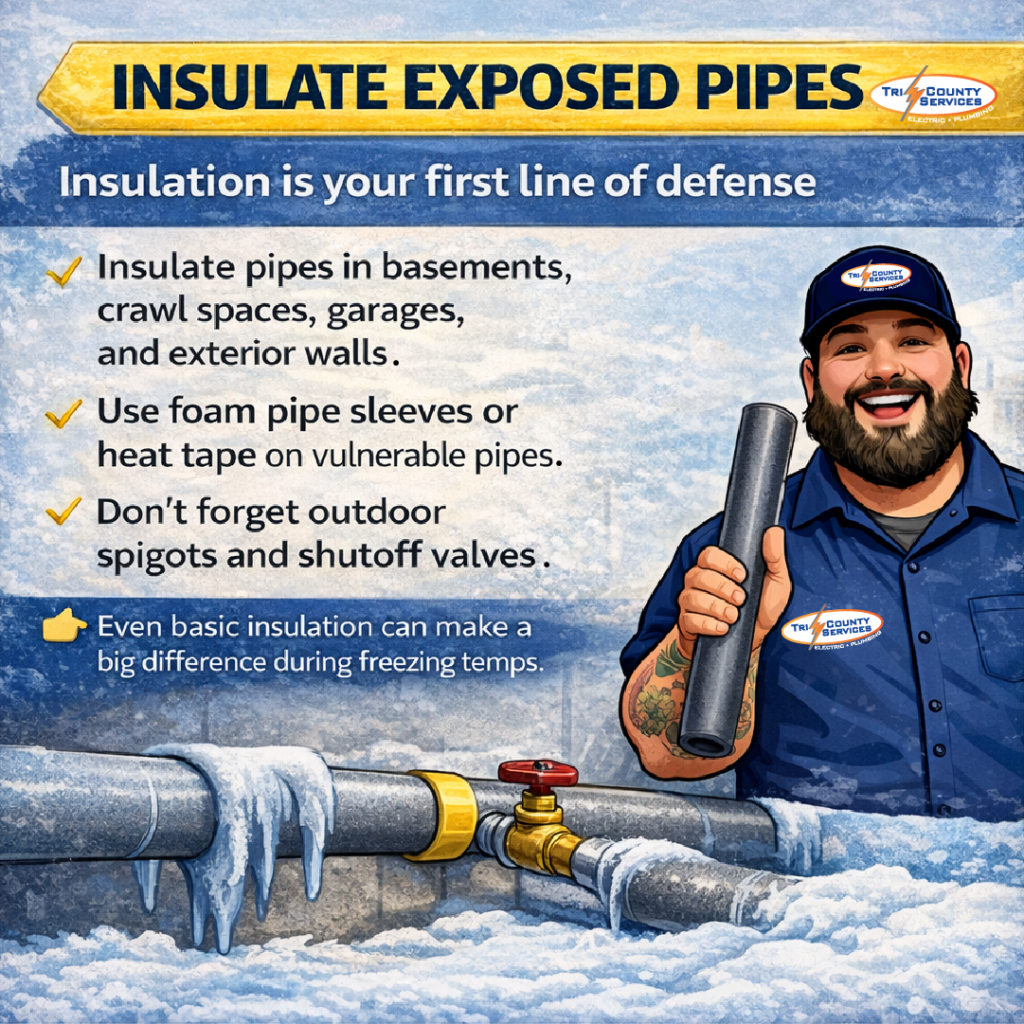
Insulate exposed or vulnerable water lines
Pipes in garages, crawl spaces, and exterior walls benefit from added insulation to keep temperatures stable.
- When in Doubt, Call a Professional
If you’re unsure whether your home is ready for freezing temperatures, Tri‑County Services is here to help. Our licensed plumbers can inspect vulnerable areas, recommend targeted improvements, and provide trusted solutions to keep your water flowing safely all winter long.
Save our number before the next cold snap. We’re here when you need us.