
A five to ten minute weekly routine prevents most household drain clogs before they start. Clearing strainers, pulling loose hair from stoppers, and running hot tap water through kitchen and bathroom drains handles the majority of buildup that leads to slow drains. Chemical cleaners should be treated as a last resort after trying other safe methods, as recommended by professionals.
TL;DR:
Regularly checking and cleaning strainers, stoppers, and running hot water weekly can prevent most household drain clogs with minimal effort.
Chemical cleaners are a last resort and should only be used after safe methods like plunging and snaking have failed, due to risks to pipes and health hazards.
Persistent issues such as multiple slow fixtures, sewer odors, or recurring clogs require professional inspection and hydrojetting rather than repeated DIY efforts.
Monthly maintenance with enzyme cleaners and trap checks helps prevent organic buildup and sewer gas leaks, especially in rarely used floor drains.
Calling a professional early is essential when DIY measures do not resolve slow drainage or symptoms indicate deeper pipe or line problems.
Table of Contents
-
[Monthly and Seasonal Checks That Back Up the Weekly Routine](#monthly-and-seasonal-checks-that-back-up-the-weekly-routinehttpsgsgporteveronacompostbenefici-manutenzione-annuale-guida-pratica-2026)
-
How Tri-County Services Electric & Plumbing Supports Your Drain Care
-
When It’s Time to Call Tri-County Services Electric & Plumbing
Maintenance Tip Monday: The 5-Minute Weekly Drain Checklist
Pick one day, put it on the calendar, and treat it like any other recurring chore. Monday works well because it catches whatever built up over a weekend of cooking and extra showers. This is the whole idea behind Maintenance Tip Monday: a short, repeatable habit that keeps water moving instead of pooling.
Here’s the order that actually gets results:
-
Pull and check every mesh strainer on kitchen sinks, showers, and tubs. Rinse off soap scum and food particles before they wash back down.
-
Clear visible hair and film from stoppers and grates. A flexible hair snake, sold for a few dollars at any hardware store, pulls tangled hair out in seconds without opening the trap.
-
Run hot tap water through kitchen and bathroom drains for about 90 to 120 seconds. This loosens grease and soap film before it hardens into a real blockage, a step that shows up across most professional maintenance guides as a core weekly habit.
-
Run the garbage disposal the right way: cold water on before, during, and after grinding. Skip eggshells and coffee grounds, since both tend to compact rather than break down.
-
Prime low-use floor drains by pouring in a cup of water. Basement and utility drains that rarely see water can dry out at the trap.
Pro Tip: Keep a small pitcher near any floor drain in the basement or laundry room. A dry trap seal is one of the most common causes of a random sewer smell, and pouring a cup of water in once a week solves it completely.
The full loop takes less time than waiting for coffee to brew, and it’s the single biggest lever homeowners have against clogs that build up slowly and announce themselves at the worst possible moment.
What to Do When a Drain Is Already Slow
Weekly upkeep prevents most clogs, but not all of them. When water starts backing up in a sink, tub, or shower, work through these steps in order and stop the moment something feels wrong.
-
Remove the stopper or strainer and check by hand. Gloves on, pull out any visible hair, soap buildup, or debris sitting right at the opening.
-
Plunge it properly. Seal any overflow opening with a wet rag, use a cup plunger for sinks and tubs (a flange plunger for toilets), and push in firm, measured strokes rather than fast pumping. Matching plunger shape to fixture type matters more than most people realize, according to testing and advice from plumbers.
-
Try a hand auger or flexible drain snake if plunging doesn’t clear it. Feed it in slowly and stop the instant you hit hard resistance. Forcing it past a hard stop risks cracking a fitting or pushing the clog somewhere harder to reach.
-
Consider a chemical drain cleaner only as a last resort, and only one product at a time. Wear gloves and eye protection, follow the label exactly, and never combine it with another cleaner already sitting in the pipe.
-
Call a professional if none of the above works, or if you notice any red flag below.
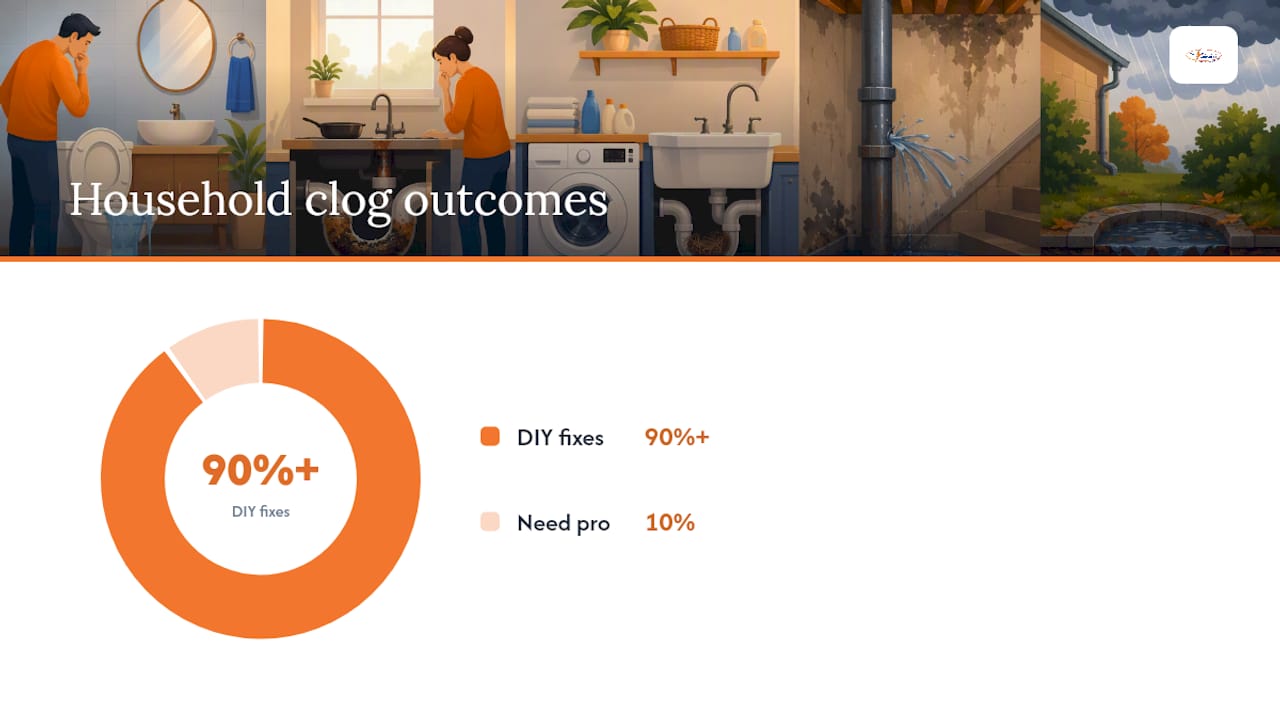
More than 9 in 10 household clogs clear using nothing but a plunger, hand tools, and about ten minutes of effort, according to a step by step breakdown of the safe order of operations. That statistic is worth remembering, because it means chemicals are rarely necessary at all.
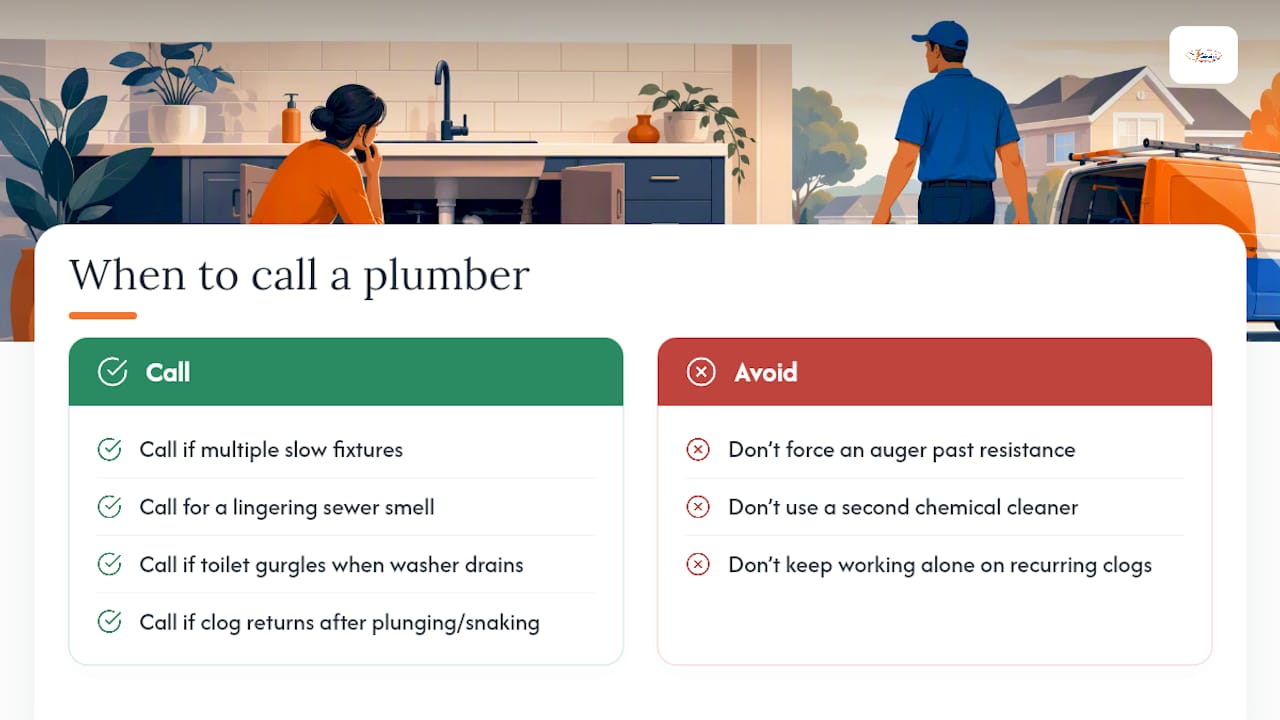
Stop and call a professional if you notice: slow drainage in more than one fixture at the same time, a sewer smell anywhere in the house, gurgling or bubbling from a toilet when you run water elsewhere, or a clog that keeps coming back after repeated plunging and snaking. Any of those point to a branch line or main line issue that a plunger cannot fix, and pushing harder on your own only risks turning a service call into a repair bill.
Monthly and Seasonal Checks That Back Up the Weekly Routine
Weekly care handles the surface-level buildup, but a few slower tasks each month protect the pipes themselves.
-
Run a baking soda and vinegar treatment, or a store-bought enzyme cleaner, once a month, followed by a hot water rinse. Enzyme treatments digest organic buildup gradually and are gentler on pipes and septic systems than harsh chemical cleaners, though they work as maintenance rather than a fix for an active clog.
-
Check P-traps under sinks for buildup. Keep a small bucket underneath before loosening any slip nut so you’re not mopping up standing water.
-
Prime every floor drain in the house, not just the ones you use often. A dry trap seal lets sewer gas drift into the house, a problem that shows up as a mystery odor months after the drain last saw water.
-
Watch for recurring slow drains even after weekly and monthly care. A repeated pattern is the cue to schedule a camera inspection or professional hydrojetting rather than trying another round of DIY fixes.
What Pros Wish Homeowners Knew About Drain Safety
Chemical drain cleaners get reached for too often, and that’s a mistake. They can eat away at pipe seals and rubber fittings over repeated use, and the fumes alone are reason enough to treat them as a last resort rather than a first move. The bigger danger is mixing them: combining bleach with ammonia or vinegar based cleaners releases chlorine and chloramine gases, which the CDC flags as a genuine health hazard, not just an unpleasant smell.
Boiling water deserves a caution too. It feels like a natural, chemical-free fix, but pouring it straight into a drain can warp PVC pipe and loosen joints over time. Hot tap water does the same grease-cutting job without the risk.
Stop DIY efforts and call a professional if you notice multiple slow fixtures at once, persistent sewer smells, gurgling toilets, recurrent clogs after clearing, or exposure to fumes from chemical cleaners, as these indicate more serious plumbing issues. None of those are DIY situations, and treating them as one usually turns a small problem into an expensive one. Tri-County Services Electric & Plumbing advises calling a professional early whenever symptoms show up in more than one fixture. That pattern almost always points to something deeper in the line than a sink stopper or a hand snake can reach.
— Lindsay Paramore
How Tri-County Services Electric & Plumbing Supports Your Drain Care
Tri-County Services Electric & Plumbing has worked on Northeast Ohio homes since 1975, and drain issues follow a pattern the team has seen for decades: small warning signs get ignored until a fixture backs up completely. Weekly checks and monthly maintenance catch most of that early.
When a homeowner’s routine hits its limit, professional support fills the gap:
-
Trap cleaning and clearing for buildup a hand snake can’t reach
-
Camera inspections to find exactly where a line is blocked
-
Hydrojetting for grease and scale that keeps coming back
-
Emergency unclogging when a drain backs up without warning
Keep doing the weekly checks. Just don’t wait on a red flag hoping it resolves itself.
When It’s Time to Call Tri-County Services Electric & Plumbing
Weekly strainer checks and hot water flushes handle everyday buildup, but some situations call for a professional the moment they appear. Multiple slow fixtures, a lingering sewer smell, a toilet that gurgles when the washing machine drains, or a clog that keeps returning after you’ve already plunged and snaked it are not situations to keep working on alone. Continuing to force a hand auger past resistance, or reaching for a second chemical cleaner because the first one didn’t work, tends to turn a manageable fix into a bigger repair.
Tri-County Services Electric & Plumbing is the option to call when a weekly routine turns into a recurring problem. This is a team built on decades of Northeast Ohio homes, not a one-time visit from someone unfamiliar with your plumbing’s history, and that matters when a drain issue points to something further down the line. From drain unclogging to full camera inspections and hydrojetting service in the Cleveland area, the goal is catching the real cause instead of just clearing the symptom. If you’re not sure whether a clog needs a professional, this rundown of what to check before calling a plumber walks through what to look for first. When it’s time to book, call the office at (440) 253-0332 or visit Tricountyelectricservice to get on the schedule.
Sources
-
How to Unclog a Drain: The Safe Order of Operations (2026) | HandymanCan
-
Unclogging the truth: Is drain cleaner bad for pipes? | Crisbro
-
What Plumbers Wish You Knew Before Unclogging Your Sink | Wirecutter / The New York Times
FAQ
Can I put in a maintenance request for a clogged drain?
Yes. If you rent, contact your property manager or landlord directly, since drain lines are typically their responsibility to maintain. Homeowners can schedule a professional inspection or cleaning any time a clog resists basic plunging and snaking.
What is the 135 rule for plumbing?
This isn’t a standard or widely recognized plumbing rule, and definitions of it vary by source. Rather than guess at a number, focus on the maintenance steps that are well documented: weekly hot water flushes, monthly trap checks, and calling a professional when a clog crosses multiple fixtures.
How much does it typically cost to unclog a drain?
Cost varies by location, the severity of the clog, and whether it requires a camera inspection or hydrojetting. A simple plunger and hand-tool fix costs nothing beyond a few dollars in supplies, while professional service for a stubborn or recurring clog runs higher depending on what the technician finds.
What is the best drain cleaner for routine maintenance?
For monthly upkeep, a baking soda and vinegar rinse or an enzyme-based cleaner followed by hot water works well and is gentler on pipes than harsh chemical formulas. Save chemical drain cleaners for situations where plunging and snaking have already failed, and never mix two products together.
When should I stop DIY drain cleaning and call a professional?
Call Tri-County Services Electric & Plumbing at (440) 253-0332 if you notice slow drainage in more than one fixture, a persistent sewer smell, gurgling toilets, or a clog that keeps returning after repeated attempts. Those signs usually point to a problem beyond what a plunger or hand snake can fix safely.