
TL;DR:
- Professional drainage correction identifies and fixes yard flooding causes like poor grading and soil issues. It requires expert assessment to prevent ongoing structural damage and standing water problems. Repair timing is best in early fall for optimal lawn recovery.
Why drainage correction for yard flooding demands professional help
Standing water that lingers more than more than a couple of days after rain is not just an eyesore. It signals a structural problem with how your property manages water, and the longer it sits, the more damage it does. Drainage correction is the professional process of diagnosing and fixing the root causes of yard flooding: improper grading, compacted soil, and misdirected runoff pathways.
Industry standards call for a minimum 2% slope away from your home’s foundation that allows water to flow properly and prevents pooling. Without it, water pools against your foundation, seeps into basements, and slowly compromises structural integrity.
Common causes of yard flooding:
- Ground that slopes toward the house instead of away
- Clay-heavy or compacted soil that absorbs water at a fraction of the rate sandy soil does
- Clogged or undersized gutters dumping concentrated runoff near the foundation
- Flat terrain with no outlet for surface water to escape
- Low spots or depressions that collect and hold water
Proven professional solutions:
- Regrading with laser-level precision to achieve the correct slope
- Swales to channel surface runoff cost-effectively
- French drains, catch basins, and underground pipe systems
- Downspout extensions moving water a significant distance away from the home
Ignoring these problems accelerates foundation cracking, kills grass through root suffocation, and creates standing water that breeds mosquitoes. A professional assessment catches all of this before it compounds.
Pro Tip: Before any drainage work begins, a thorough property assessment covering soil type, grading, water table depth, and existing runoff patterns is non-negotiable. Skipping this step is the single biggest reason DIY drainage fixes fail.
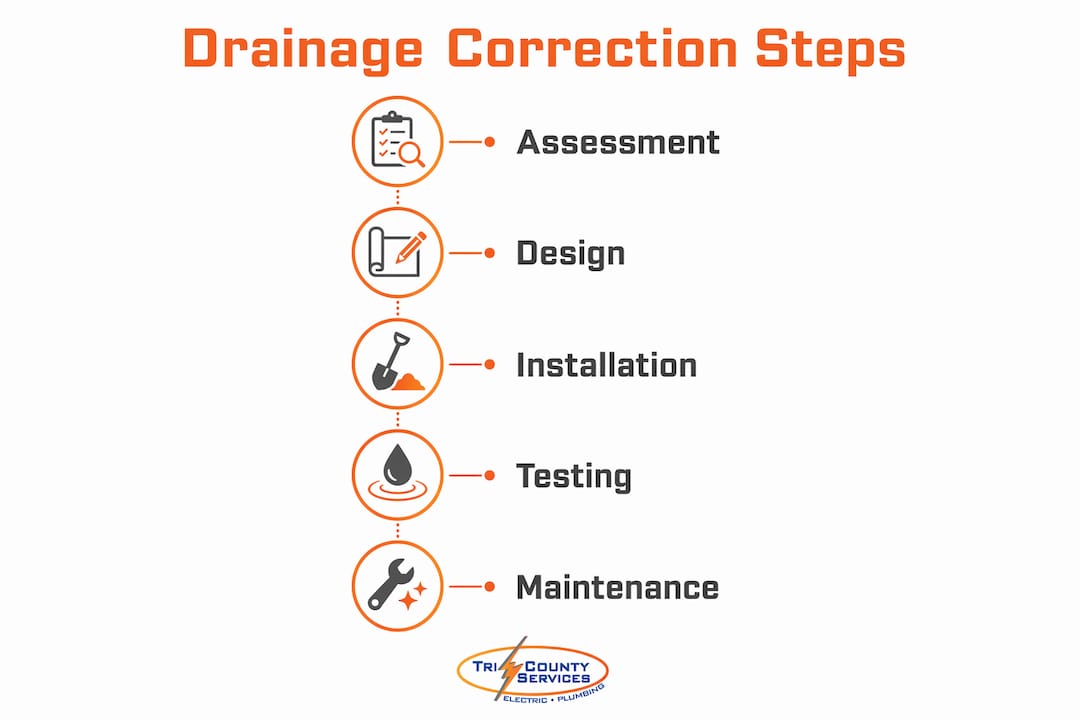
Table of Contents
- How to spot the signs and causes of yard flooding on your property
- Tri-County Services Electric & Plumbing handles your drainage problems right
- Key Takeaways
- FAQ
How to spot the signs and causes of yard flooding on your property
Your yard tells you when drainage is failing. The question is knowing what to look for.
Observable warning signs:
- Puddles or soggy patches that persist more than two days after rain
- Yellowing grass in consistently wet zones due to roots suffocating from lack of oxygen
- Water pooling near downspouts or along the foundation
- Basement or crawl space moisture after heavy storms
- Muddy patches appearing even during dry spells
Most DIY drainage fixes ignore groundwater interaction and regional regulations, which is why they fail repeatedly. A professional assessment includes water table evaluation, soil testing, and precise grading analysis. Without that data, you are guessing.
Northeast Ohio’s clay-heavy soils make this especially relevant. Clay infiltrates water far more slowly than sandy soil, meaning surface water sits longer and the margin for grading error is smaller. Seasonal timing matters too: lawns sustain damage when standing water temperatures exceed 80°F, so summer flooding is more destructive than spring flooding. The best window for aeration and reseeding after drainage correction is early fall.
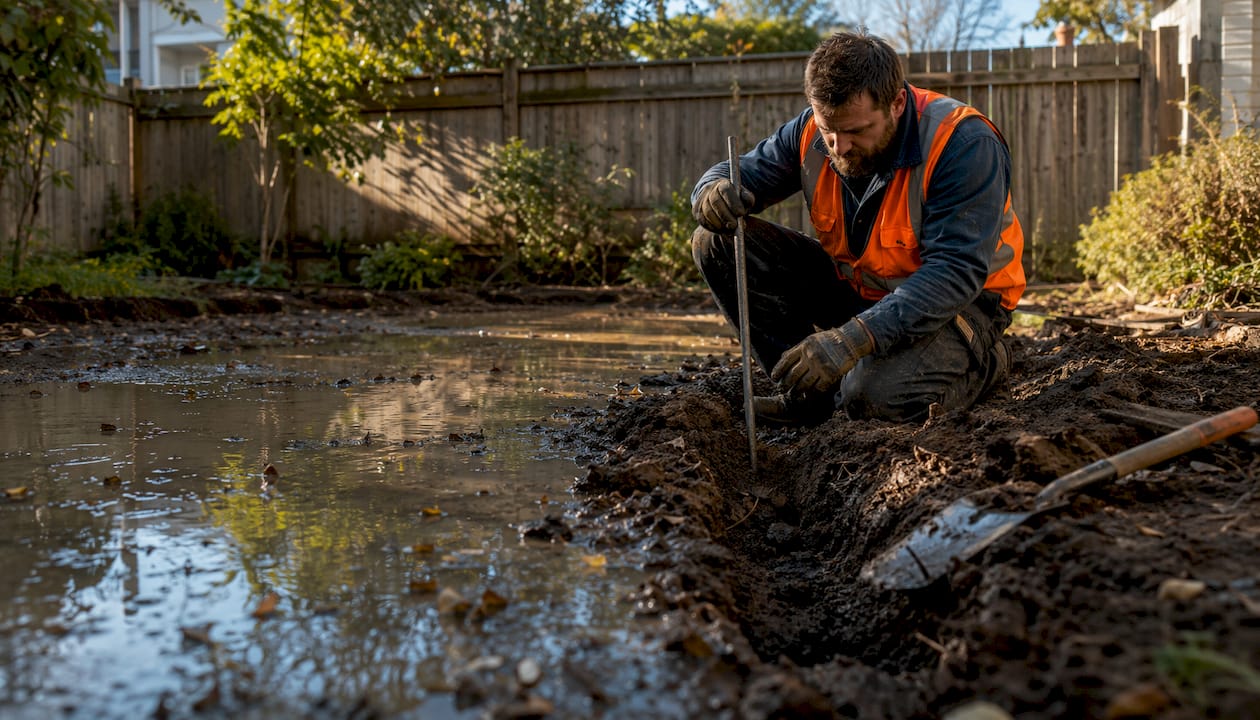
Tri-County Services Electric & Plumbing brings professional drainage expertise to assess both surface and subsurface water behavior, design the right solution, and handle the installation correctly the first time. Understanding the difference between storm drains and sanitary sewers also matters when connecting any drainage system to a municipal outlet. For commercial properties, roof drainage management is often a critical piece of the same puzzle.
Tri-County Services Electric & Plumbing handles your drainage problems right
Persistent yard flooding in Northeast Ohio calls for more than a shovel and a YouTube video. Tri-County Services Electric & Plumbing has served residential and commercial clients across the region since 1975, combining electrical and plumbing expertise to address drainage problems that touch both disciplines.

When standing water threatens your foundation or your property’s electrical systems, the fix requires professionals who understand the full picture. Tri-County Services Electric & Plumbing evaluates your property, designs a drainage solution matched to your specific conditions, and completes the work with the care and accountability a family-owned business builds its reputation on. Call (440) 325-0136 or visit tricountyelectricservice.com to schedule your assessment.
Key Takeaways
Effective drainage correction requires professional diagnosis of grading, soil type, and water flow before any installation begins.
| Point | Details |
|---|---|
| Minimum slope standard | Industry standards require at least a 2% slope away from the foundation to prevent pooling. (1 foot drop over 50 feet) |
| more than a couple of days after rain | Water persisting more than two days signals soil absorption failure that needs professional attention. |
| Seasonal repair timing | Early fall is the best window for aeration and reseeding after drainage correction work. |
| DIY risk | Most DIY fixes miss groundwater interaction and local regulations, leading to recurring failures. |
| Tri-County Services Electric & Plumbing | Serving Northeast Ohio since 1975 with professional drainage assessment and plumbing solutions for residential and commercial properties. |
FAQ
How long does yard drainage correction take?
Professional drainage projects typically move through assessment, design, installation, and testing phases, completing within a few weeks after the initial evaluation.
What does professional yard drainage correction cost?
Costs vary widely based on scope, ranging from a few hundred dollars for minor regrading to several thousand for full drainage system installation. A professional assessment gives you an accurate estimate for your specific property.
Can poor yard drainage damage my foundation?
Yes. Standing water near a foundation creates structural pressure over time, leading to cracked basement walls and moisture intrusion. Correcting drainage before that damage occurs is far less expensive than repairing it after.
Why shouldn’t I just fix yard flooding myself?
DIY drainage fixes frequently fail because they miss the root causes: water table depth, soil type, and proper outlet routing. A poorly placed French drain or catch basin can redirect water onto a neighbor’s property or create new low spots on your own.
When is the best time to repair a flooded lawn in Northeast Ohio?
Early fall is ideal for aeration and reseeding after drainage correction. Avoid major lawn restoration during peak summer heat, when warm water temperatures accelerate grass damage from oxygen deprivation.