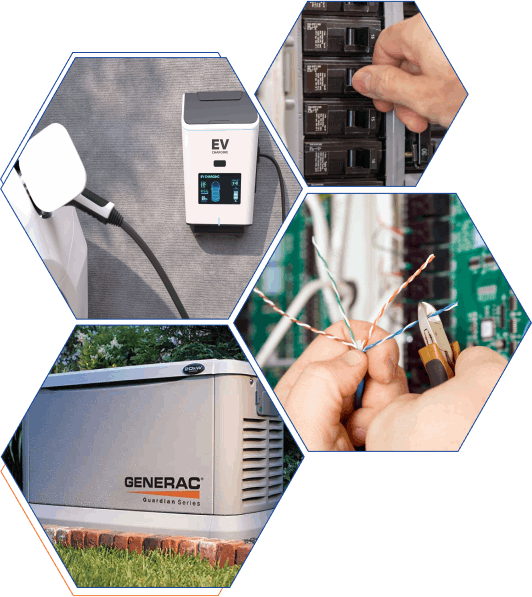

Yes, Tri-County Services Electric & Plumbing installs EV chargers for homeowners across Northeast Ohio. Their residential service covers Level 2 home charger installations, including the dedicated 240V circuit, panel review, permit handling, and final testing. Family-owned since 1975, the company brings decades of residential electrical experience to every install.
Here is what you get when you call:
- A professional on-site assessment before any work begins
- A dedicated 240V circuit sized correctly for your vehicle and charger
- Panel capacity review, with upgrade options if your current service is short
- Full permit application and municipal inspection coordination
- Final testing and a walkthrough before the technician leaves
To schedule an assessment or get a quote, call (440) 325-0136 or visit the EV charger installation page directly.
Key Takeaways
Tri-County Services Electric & Plumbing installs Level 2 EV chargers for Northeast Ohio homeowners, handling everything from the on-site assessment and dedicated circuit to permits, inspection, and final testing.
| Point | Details |
|---|---|
| Yes, they install EV chargers | Tri-County Services Electric & Plumbing offers full residential Level 2 EV charger installation in Northeast Ohio. |
| Typical cost: $800–$2,500 | Complete installs including hardware, labor, and permits fall in this range; panel upgrades add cost. |
| Permits are included | Tri-County Services files the permit and coordinates the municipal inspection on your behalf. |
| Timeline: 3–6 weeks | End-to-end timeline depends mainly on permit lead times in your municipality. |
| Next step | Call (440) 325-0136 or visit the EV chargers page to book an on-site assessment and written estimate. |
Table of Contents
- Does Tri-County Services cover everything in an EV charger install?
- Where does Tri-County Services install EV chargers?
- What is the typical timeline for a residential Level 2 install?
- How much does a Level 2 home charger installation cost?
- Why permits and inspections matter for your EV charger
- Why you should hire a professional electrician instead of attempting DIY
- How to prepare your home before the technician arrives
- Questions to ask Tri-County Services before you book
- How to schedule, what to expect on payment, and post-install support
- Ready to get your EV charger installed in Northeast Ohio?
- Sources
- FAQ
Does Tri-County Services cover everything in an EV charger install?
Short answer: yes, from the first site visit to the final inspection sign-off. Here is what the service actually includes.
The technician starts with an on-site assessment, checking your electrical panel’s available capacity, the best route for new wiring, and your preferred charger location. From there, the crew installs a dedicated 240V circuit, which is the backbone of any Level 2 setup. Depending on your preference and the charger model you choose, they can wire a hardwired unit directly or install a NEMA 14-50 outlet for a plug-in charger.
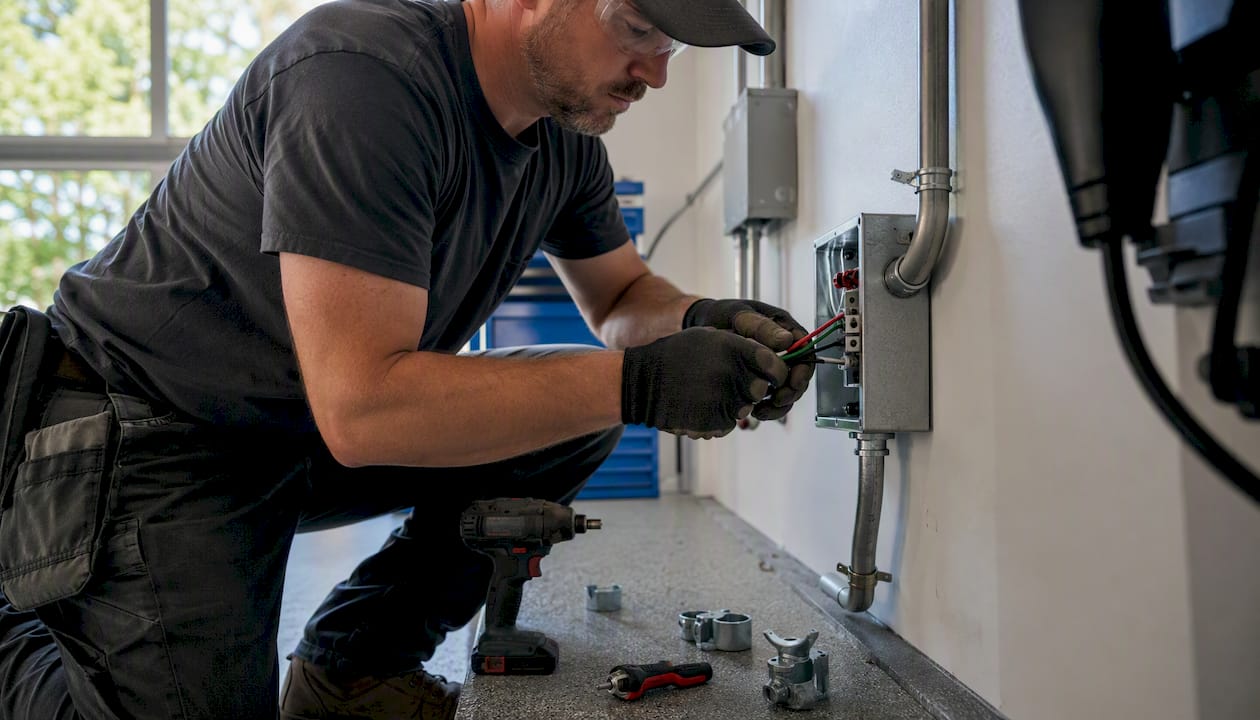
If your panel does not have enough spare capacity, the team will flag that upfront and provide a panel upgrade estimate rather than letting it surface as a surprise on installation day. Permit applications, inspection scheduling, and final commissioning are all part of the job. Professional installers routinely verify charger compatibility with the home’s existing wiring, manage permits and inspections, and back their work with an installation warranty period.
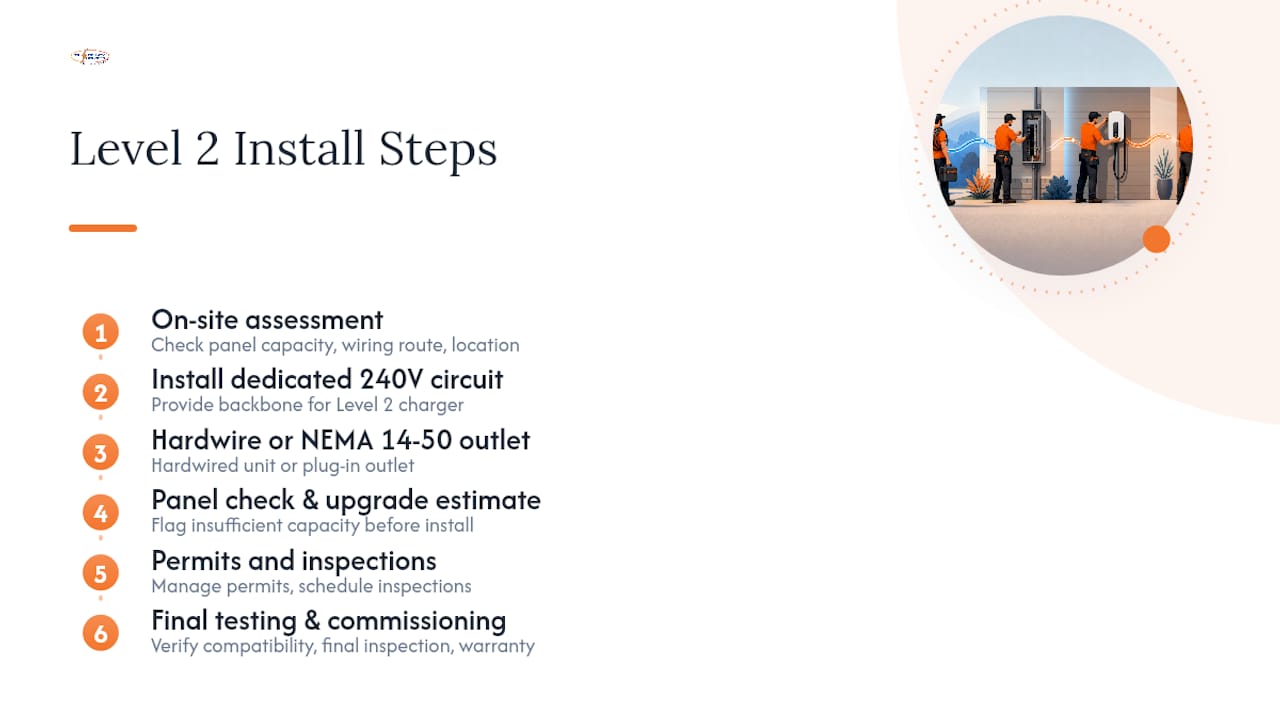
Most straightforward installs, where the panel is adequate and the charger location is close to the electrical room, wrap up in a single day. Jobs that require a panel upgrade or longer conduit runs typically take two visits.
Pro Tip: Choosing a charger location on the same wall as your electrical panel, or on an adjacent interior wall, cuts conduit length and keeps labor costs down. If your garage shares a wall with the utility room, that is usually the most cost-effective spot.
Where does Tri-County Services install EV chargers?
Tri-County Services Electric & Plumbing serves homeowners throughout Northeast Ohio. Their primary coverage area includes:
- Cuyahoga County — Cleveland, Parma, Lakewood, Euclid, and surrounding suburbs
- Summit County — Akron, Richfield, Peninsula, and nearby communities
- Medina County — Medina, Brunswick, and surrounding areas
- Portage and Geauga Counties — selected communities; call to confirm
If you are outside these core counties, it is worth calling anyway. The team handles service-area inquiries directly and can often accommodate nearby locations. For homeowners in Richfield and surrounding towns, a dedicated service-area page confirms local coverage. Call (440) 325-0136 to verify your address before booking.
What is the typical timeline for a residential Level 2 install?
End-to-end, most homeowners should plan for 3–6 weeks from first contact to final inspection. Permits and municipal inspection schedules are the most variable piece. Here is how the process unfolds:
-
Initial inquiry. Call or submit an online request. Have your vehicle make and model ready, along with your preferred charger location and any known electrical issues. The team will ask a few pre-screening questions to flag obvious panel concerns before the visit.
-
On-site assessment. A technician visits to check panel capacity, map the wiring route, and confirm the charger location. This visit typically takes 30–60 minutes and produces a written estimate.
-
Written estimate and permit application. Once you accept the estimate, Tri-County Services files the permit with your municipality. Permit lead times vary by city; some offices turn them around in a few days, others take two to three weeks.
-
Installation day. The crew arrives, runs the dedicated circuit, mounts the charger or outlet, and connects everything to the panel. A straightforward install usually takes 2–4 hours on site. Panel upgrades or longer conduit runs add time and may require a second visit.
-
Inspection and handover. The municipal inspector signs off, and the technician walks you through the charger operation, confirms the circuit is functioning correctly, and answers any questions before leaving.
Common causes of a longer timeline: panel upgrades, exterior conduit or trenching to a detached garage, and busy permit offices during peak construction season (typically spring and summer in Northeast Ohio).
How much does a Level 2 home charger installation cost?
Most homeowners pay between $800 and $2,500 for a complete Level 2 installation, covering hardware, labor, and permits. That range is wide because home-specific variables move the number significantly.
The main cost drivers:
- Charger model. Entry-level Level 2 units start around $200–$400; smart chargers with Wi-Fi and scheduling features run $400–$800 or more.
- Distance to the panel. Every additional foot of conduit adds material and labor cost.
- Panel upgrade. If your service panel is at capacity or too old to safely add a 40–50 amp breaker, a panel upgrade is required before the charger can be installed. This is the single biggest cost variable.
- Conduit and trenching. Running conduit underground to a detached garage or outbuilding adds both material and excavation cost.
- Permit and inspection fees. These vary by municipality but are typically $50–$200 in most Northeast Ohio jurisdictions.
How rebates and tax credits reduce your out-of-pocket cost
Two programs are worth checking before you finalize your purchase. The federal Alternative Fuel Vehicle Refueling Property Credit (IRS Form 8911) provides a tax credit covering a portion of qualified EV charger hardware and installation costs for residential installations. Check current IRS guidance for eligibility details, as income and property requirements apply.
At the local level, Tri-County Electric Cooperative offers a $250 rebate for smart Level 2 chargers priced at $500 or more. The rebate applies to the equipment cost, not installation labor, so factor that in when comparing charger models. Additional EV resources and tools from the cooperative can help you find local charging options and plan your home setup.
Because every home is different, the only reliable number is the one on your written estimate. Call Tri-County Services for a site-specific quote.
Why permits and inspections matter for your EV charger
Pulling a permit for a residential EV charger installation is not optional in most Ohio municipalities, and skipping it creates real problems down the road.
The typical permitting process looks like this:
- The electrical contractor (Tri-County Services) submits a permit application with a wiring diagram and equipment specs.
- The municipality reviews and issues the permit, usually within a few days to three weeks.
- The installation proceeds under the permit.
- A municipal inspector visits after installation to verify the work meets the National Electrical Code (NEC) and local amendments.
- The inspector signs off, and the permit is closed.
Why this matters to you as a homeowner: unpermitted electrical work can void your homeowner’s insurance coverage for related claims, create disclosure obligations when you sell the home, and, most practically, leave you with wiring that has never been independently verified as safe. A 240V, 50-amp circuit carries enough current to cause a serious fire if it is wired incorrectly. Tri-County Services handles the permit application and inspection coordination as part of the installation, so you do not have to manage that process yourself.
Why you should hire a professional electrician instead of attempting DIY
A Level 2 EV charger installation is not a weekend project. It involves a dedicated 240V circuit, a new breaker in your service panel, and work that must meet NEC requirements and pass a municipal inspection. Getting any of those elements wrong creates a fire or shock hazard that may not show up immediately.
Red flags that signal a job needs a professional:
- Your service panel is 100 amps or less, or has no spare breaker slots
- The panel is older than 25 years or uses a brand with known reliability issues
- You want the charger in a detached garage, requiring underground conduit
- Your home has aluminum branch-circuit wiring
- You are in a multi-family building with shared electrical infrastructure
Beyond the safety case, professional installation protects your warranty. Most EV charger manufacturers require installation by a qualified electrician to honor the equipment warranty. Homeowners’ insurance policies increasingly ask the same question.
What to expect from Tri-County Services’ technicians: they arrive with the correct tools and materials, explain what they are doing before they start, protect floors and walls during the work, and leave the space clean. They size the breaker correctly for the charger’s amperage draw, verify GFCI and AFCI requirements for the circuit location, and do not cut corners on conduit fill or wire gauge.
Pro Tip: If you are buying a new EV and have not yet chosen a charger, ask the Tri-County Services technician during the assessment. They can confirm which units are compatible with your panel setup and flag any models that would require a larger breaker than your panel can accommodate.
How to prepare your home before the technician arrives
A little preparation before the assessment visit saves time and reduces the chance of a revised estimate after the fact.
Before the visit, gather:
- Your vehicle’s make, model, and year (the technician will confirm the recommended charging amperage)
- Your preferred charger location and a second option if the first is not feasible
- A recent photo of your service panel, including the breaker directory if one is posted
- Any known electrical issues: tripping breakers, flickering lights, or recent repairs
On installation day, clear a path from your electrical panel to the charger location. Move stored items away from the panel door and the wall where the charger will be mounted. If the route runs through a finished wall or ceiling, the technician will discuss the best approach during the assessment rather than on the day of the install.
Pro Tip: Scheduling your assessment in late fall or winter often means shorter permit wait times, since construction activity slows and municipal permit offices are less backlogged. If you can be flexible on timing, you may shave a week or two off the total timeline.
Questions to ask Tri-County Services before you book
Before you accept an estimate, make sure you have clear answers to these:
- What does the estimate include? Confirm whether the charger hardware, conduit, mounting hardware, permit fees, and inspection are all itemized or bundled.
- Is a panel upgrade included or quoted separately? If the assessment flagged a capacity issue, get the upgrade cost in writing before the install date.
- Which charger models are compatible with my panel? Ask for two or three options at different price points.
- How long is the labor warranty? Get the specific duration in writing.
- Who handles the permit and inspection scheduling? Tri-County Services manages this, but confirm the timeline expectation for your municipality.
- What is the deposit policy? Understand what is due at estimate acceptance versus at job completion.
- Who do I call if the charger has a fault after installation? Clarify whether post-install support goes through Tri-County Services or directly to the manufacturer.
How to schedule, what to expect on payment, and post-install support
Scheduling with Tri-County Services is straightforward. Call (440) 325-0136 or submit a request through the EV chargers page. Have your address, vehicle details, and preferred charger location ready when you call; it speeds up the pre-screening and helps the technician arrive prepared.
On payment: the typical workflow is a written estimate, a deposit at acceptance, and final payment after the municipal inspection passes. Confirm the exact deposit amount and accepted payment methods when you book.
On warranties: Tri-County Services backs their labor, and the charger manufacturer covers the equipment separately. Keep your installation paperwork, the permit closure document, and the manufacturer’s warranty card together; you will need all three if a warranty claim comes up. For ongoing peace of mind, a quick visual check of the charger mount and the circuit breaker once a year is all the routine maintenance most installations need.
What local installers know that generic guides miss
The most common surprise during a Northeast Ohio EV charger install is not the charger itself. It is the panel. A lot of homes in this region were built in the 1960s through 1980s with 100-amp service and panels that were already near capacity before EV charging was a consideration. When a technician opens the panel door and finds two breakers doubled up on a single slot, or a 100-amp main with no room for a 40-amp EV breaker, the conversation shifts quickly from “where do you want the charger?” to “let’s talk about a panel upgrade first.”
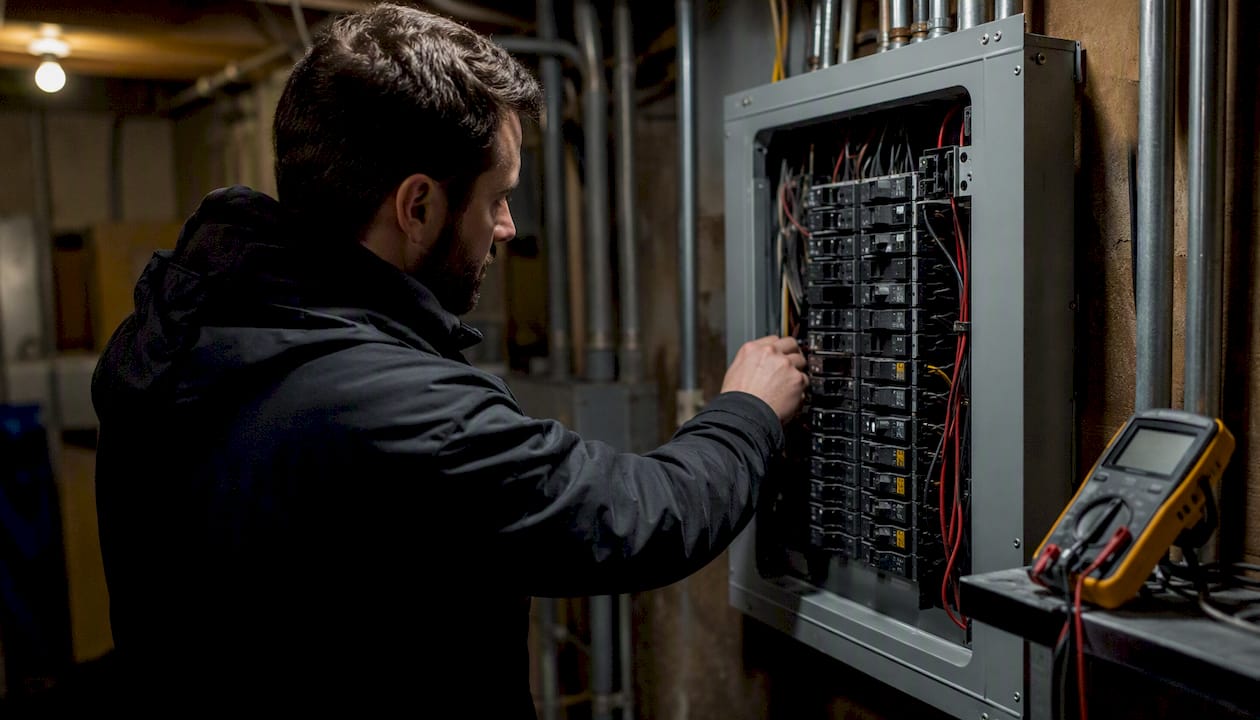
That is not a sales pitch. It is a code requirement. A 40-amp dedicated circuit for a Level 2 charger on a panel that is already drawing 90 amps at peak load is a fire waiting to happen. Tri-County Services’ technicians flag this during the assessment, not after the conduit is already run, which is exactly why the site visit happens before any work is quoted or scheduled. The team treats your home the way they would treat their own, and that means telling you what the panel actually needs, not just what you came in asking for.
Ready to get your EV charger installed in Northeast Ohio?
Tri-County Services Electric & Plumbing gives Northeast Ohio homeowners a faster path from “I need a charger” to “it’s installed and inspected.” No chasing down a permit yourself, no guessing whether your panel can handle the load, no wondering if the wiring was done to code. The team handles the full scope: assessment, dedicated circuit, permit filing, installation, and inspection sign-off.

For homeowners whose panels need work before the charger goes in, Tri-County Services also covers panel upgrades and circuit repairs as part of the same project, so you are not coordinating two separate contractors. Call (440) 325-0136 or schedule your EV charger installation online to get a written estimate from a team that has been doing residential electrical work in Northeast Ohio since 1975.
Sources
- Rebates – electronic | Tri-County Electric Cooperative
- EV Charger Installation | Find Certified Installers Near You
- EV Charger Installation | Lowe’s
FAQ
How much does a Level 2 EV charger installation cost?
Most homeowners pay between $800 and $2,500 for a complete Level 2 installation covering hardware, labor, and permits. Panel upgrades, longer conduit runs, or underground trenching to a detached garage push costs higher.
How much does it cost to install a 240V outlet for an EV charger?
A dedicated 240V outlet (NEMA 14-50) installation typically falls within the $800–$2,500 range for the full circuit, outlet, and permit. The exact cost depends on distance from the panel and whether any panel work is needed.
Who can install an EV charger at my home?
A professional electrician with residential wiring experience should handle EV charger installations. Tri-County Services Electric & Plumbing installs Level 2 chargers throughout Northeast Ohio, managing the permit and inspection process as part of the job.
Can any electrician install an EV charger?
Most residential electricians can install a Level 2 charger, but the job requires knowledge of NEC requirements for dedicated circuits, correct breaker sizing, and GFCI/AFCI compliance. Tri-County Services Electric & Plumbing’s technicians handle these requirements routinely and coordinate permits with local municipalities.
How long does the full installation process take?
End-to-end, plan for 3–6 weeks from initial contact to final inspection. The installation itself typically takes 2–4 hours on site for a straightforward job; permit processing and municipal inspection scheduling account for most of the total timeline.