
The best way to prevent a burst pipe is to keep water from freezing inside it. That means insulating pipes in unheated spaces, sealing cold air leaks, disconnecting outdoor hoses, keeping your heat steady, and letting faucets drip on the coldest nights. A professional plumber should check the spots you can’t judge yourself. A burst pipe can release hundreds of gallons into your walls and ceilings, so the work is cheaper before the freeze than after.
At Tri-County Services Electric & Plumbing, we have served Northeast Ohio families since 1975. We see the same pattern every winter: the pipe that bursts is almost always one a homeowner meant to deal with “next weekend.” This guide walks through why pipes burst, how to protect them, and what to do if one lets go. If you want a professional to look at your plumbing before the cold hits, call our office at (440) 253-0332.
TL;DR
- Pipes burst when ice blocks the line and pressure builds in the trapped water, so the goal is to stop that first ice from forming.
- Insulate pipes in attics, crawl spaces, garages and exterior walls, and disconnect and drain outdoor hoses before the first hard freeze.
- Keep the thermostat steady day and night, and never let it drop below 55°F when you are away.
- If a pipe bursts, shut off the main water valve first, then call a plumber and your insurance agent.
- Call a professional before winter, not after: a pre-season check costs far less than water damage. Our office number is (440) 253-0332.
Table of Contents
- What actually makes a pipe burst
- Where pipes freeze first in a Northeast Ohio home
- Before the cold arrives: the prevention checklist
- When the temperature drops: what to do night by night
- Pipes on an outside wall
- Warning signs that a pipe is freezing
- If a pipe bursts: the first ten minutes
- Why call a professional first
- What professional help looks like and what it costs
- Our perspective
- Have us check your plumbing before the freeze
- FAQ
- Sources
What actually makes a pipe burst
Most people assume ice expands and splits the pipe at the frozen spot. The reality is a bit more subtle, and it explains why prevention works the way it does.
Water expands when it freezes, and that puts heavy pressure on metal or plastic pipes that can cause them to break. Research on freezing and bursting water pipes describes the mechanism more precisely: an ice blockage forms, and further ice growth applies dangerously high pressure to the water trapped between the blockage and a closed faucet. The break often happens not at the ice itself but in the stretch of pipe between the ice plug and the tap.
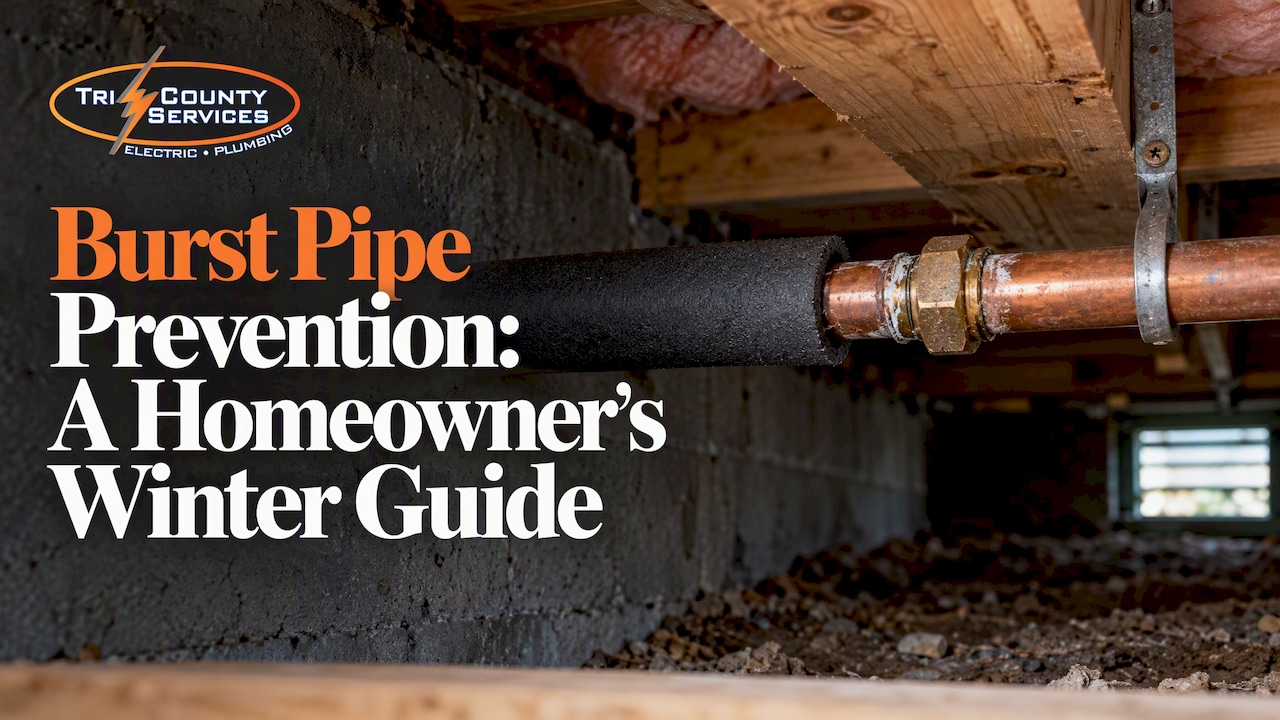
The plastic pipe industry’s own technical report adds another angle. It cites a 2006 paper describing a piston effect from non-uniform freezing, where ice blockages push water inward and can generate extremely high pressures. In that study, poorly applied insulation that tapered unevenly contributed to the uneven freezing. Good insulation is continuous, snug and complete, not patchy.
Two more points matter for homeowners:
- Fittings fail too. Bursting can be just as much due to a weak fitting as to a weak spot in the pipe, and plastic piping is not immune, especially as it ages. A newer pipe is not a guarantee.
- The cost is real. Insurance company estimates cited in that research put more than $4 billion spent on repairs for burst pipes over a ten-year span. That figure comes from a 1996 study, and today’s repair costs are certainly not lower.
Where pipes freeze first in a Northeast Ohio home
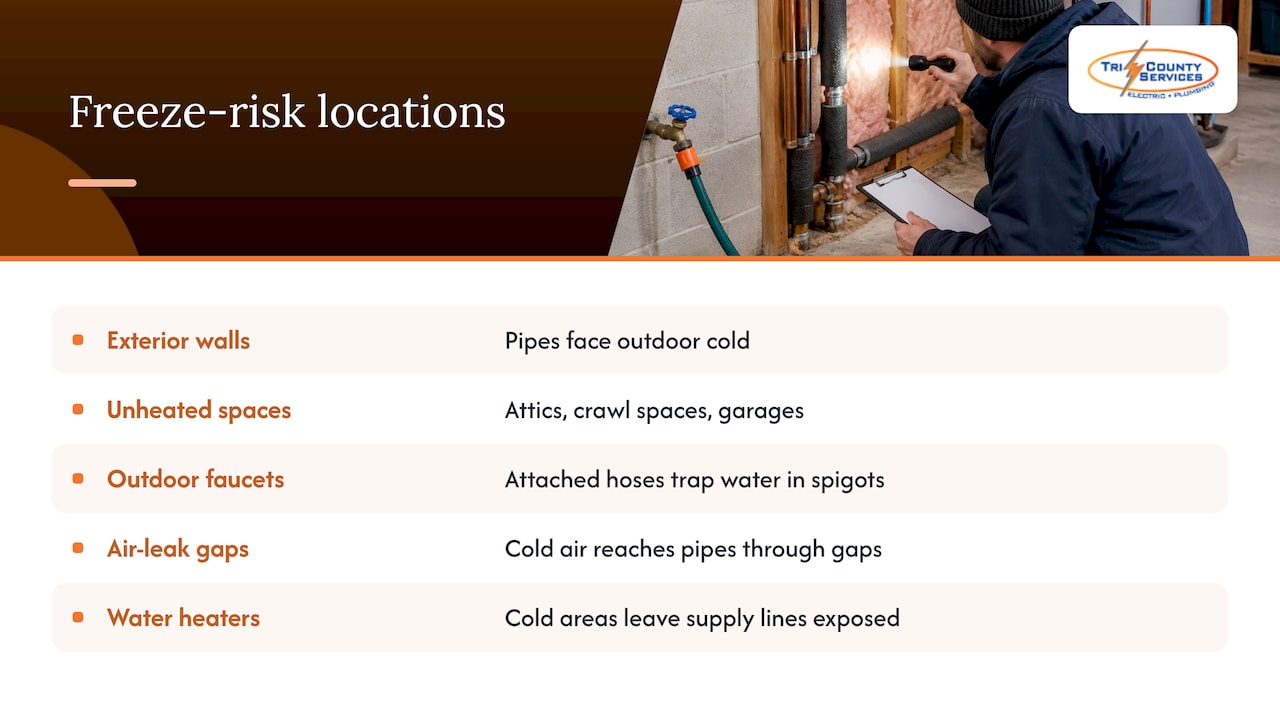
A frozen pipe is rarely random. The same spots show up again and again, and walking through your house with this list in mind is the fastest way to find your risk.
Exterior walls. Pipes that run through a wall facing the weather sit between your heated rooms and the cold outside. Kitchen and bathroom sinks on outside walls are the classic trouble spots.
Unheated spaces. Attics, crawl spaces, unfinished basement corners and garages. The Red Cross advises insulating exposed pipes in attics, crawl spaces and garages.
Outdoor faucets and hose connections. A hose left attached can trap water in the spigot and the line behind it. We cover this in detail in our guides on winterizing outdoor faucets and hose bib freeze protection in an Ohio winter.
Gaps where cold air gets in. Holes around cables, dryer vents and pipes passing through walls or the foundation can send a stream of cold air onto a pipe. Sealing those gaps is one of the cheapest fixes there is.
Water heater areas. A water heater in a cold basement corner or garage has plenty of exposed supply lines nearby. Our water heater winter preparation guide for Northeast Ohio covers what to check.
Before the cold arrives: the prevention checklist
Do these in the fall, before the first hard freeze. If any of it is beyond your comfort or you can’t reach the pipe safely, a plumber can handle the whole list in one visit.
- Insulate exposed pipes. Use pipe sleeves or UL-listed heat tape on pipes in unheated areas, as the Red Cross recommends. Heat tape needs to be the right type for your pipe material and installed correctly, which is a good reason to have a pro do it, since misapplied heat products create a fire risk.
- Disconnect outdoor hoses. Remove, drain and store them so no water sits in the spigot.
- Seal air leaks. Caulk or foam gaps near pipes, especially where lines enter the house.
- Locate your main shut-off valve. Everyone in the household should know where it is and how to close it. If you aren’t sure, read our article on where your main water shut-off valve is.
- Test that valve. A valve that has not moved in years can seize. If yours is stuck, stop before you force it and have a plumber replace it, because a snapped valve in the middle of a leak is the worst-case version of this problem.
- Get a professional look at old or suspect plumbing. Aging pipes and fittings are more likely to fail. A plumber can spot corrosion, weak joints and poorly insulated runs that you would walk past.
For a shorter version of this list, see our winter plumbing checklist and our guide to protecting your home from frozen pipes during Ohio’s harsh winter.
When the temperature drops: what to do night by night
Prevention does not end once the insulation is on. During a cold snap, small daily habits make the difference.
- Keep the heat on and steady. Hold the thermostat at the same temperature day and night. If you travel, leave the heat set no lower than 55°F.
- Open cabinet doors. Under kitchen and bathroom sinks on outside walls, open the doors so warmer room air reaches the pipes.
- Let faucets drip. In very cold weather, let cold water drip from faucets served by exposed pipes. Moving water is harder to freeze, and an open tap relieves pressure if ice does form.
- Don’t forget the garage. Garage pipes and the water supply to a garage utility sink are easy to forget. Keeping that space warmer helps, and a closed, well-sealed door matters. Our neighbors in the garage trade have a useful take on garage door winter preparation that pairs well with insulating any pipes inside.
Pipes on an outside wall
This is one of the most common questions homeowners ask, and the answer has layers.
First, get warm air to the pipe: open the cabinet doors under the sink and keep the thermostat constant. The Red Cross also suggests pipe sleeves or heat tape on exposed pipes.
Second, deal with the wall itself. If a pipe freezes every winter in the same spot, the wall is probably under-insulated, has an air leak, or the pipe was routed too close to the exterior. Adding sleeves to a pipe that keeps freezing only treats the symptom. A plumber can tell you whether the pipe should be rerouted or the wall opened up and insulated, and that is a one-time fix instead of a yearly worry.
Warning signs that a pipe is freezing
Catching a frozen pipe early can save the pipe. Watch for:
- No water coming out of a faucet.
- Only a trickle.
- Water flowing more slowly than usual.
Those are the classic warning signs. Other clues are frost on a visible pipe, a bulge, or a smell from a drain, which can suggest a blockage.
If a faucet only trickles, don’t reach for a blowtorch or any open flame, and don’t leave a thawing attempt unattended. Our safety guide on what to do if your pipes freeze explains the risks. The safest first move is to call a plumber, because a pipe that is frozen in one spot may already be cracked in another, and thawing a cracked pipe starts a leak. Our team can find the frozen section and the damage together.
If the water is out or leaking and you also see signs of trouble such as ceiling stains, sagging drywall or the sound of running water when everything is off, read our list of the top 5 signs you need emergency plumbing service.
If a pipe bursts: the first ten minutes
Speed matters more than anything else in these minutes. Follow this order:
- Shut off the water at the main valve. Official guidance is clear that if pipes freeze or burst you should use the master shut-off valve to cut the water flow to the building immediately.
- Call a plumber, then your insurance agent. Maine’s emergency management agency lists calling a plumber and contacting your insurance agent as the next steps after shutting off the water.
- Stay away from electricity near water. If the leak is near outlets, a panel, light fixtures or appliances, do not touch them or stand in standing water. Shut off power only if you can reach the panel without stepping into water, and call an electrician if you can’t. We handle both trades, so one call to (440) 253-0332 covers the plumbing and the electrical safety check.
- Contain what you can. Move valuables, put down buckets and towels, and photograph the damage for your insurance claim.
A stuck main valve turns a bad day into a disaster, which is why we tell every homeowner to test theirs in the fall.
Why call a professional first
It is natural to want to handle a pipe problem yourself. The trouble is that plumbing failures are rarely what they look like from the outside.
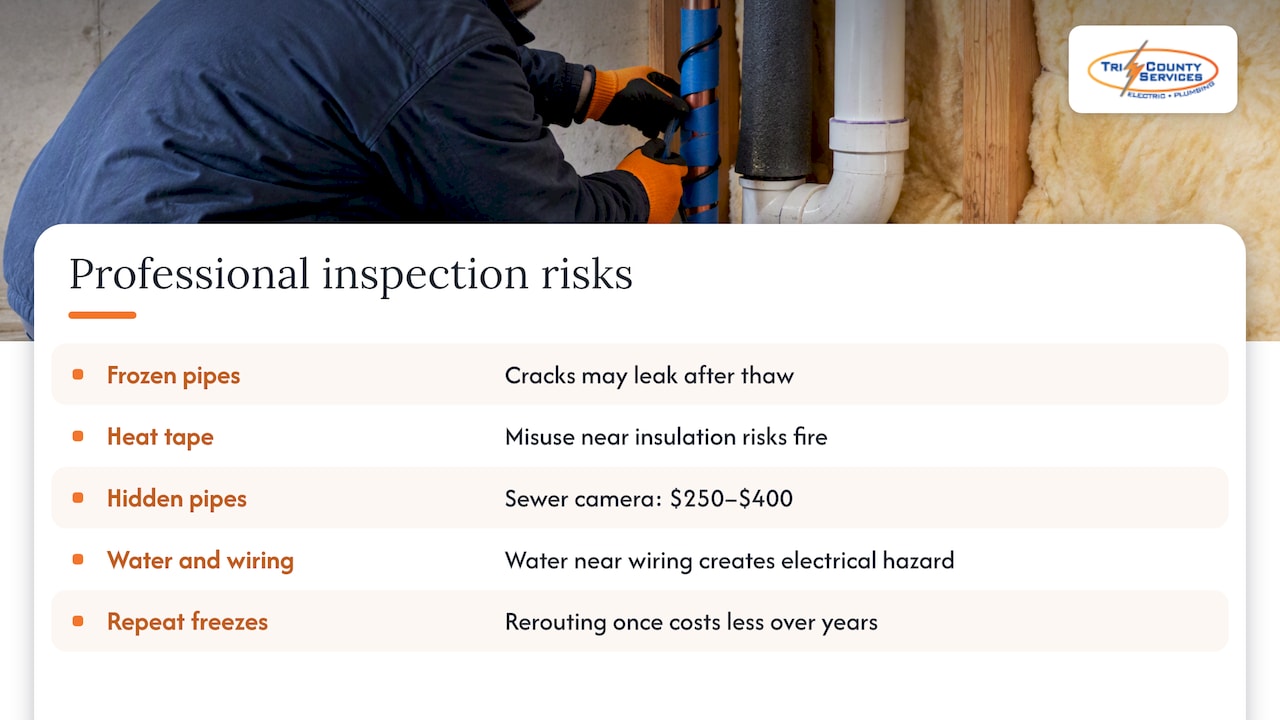
A frozen pipe may already be damaged. Ice can crack a pipe or fitting without any visible leak until it thaws. A professional can inspect the line and test it before you turn the water back on. That is the difference between a controlled repair and a flooded wall.
Insulation and heat tape have to be installed correctly. As the research on uneven insulation showed, poor installation can make freezing worse, not better. Heat tape misused near insulation or the wrong pipe material is also a fire concern.
Hidden pipes need trained eyes. Pipes inside walls, ceilings and crawl spaces are where the worst bursts happen, and you can’t protect what you can’t see. A plumber can find vulnerable runs and a sewer camera can check lines you can’t reach. Our sewer camera inspection typically runs $250-$400, which is a small amount against the cost of a ruined basement.
Water and electricity are a dangerous mix. A burst pipe near wiring is an electrical hazard as well as a plumbing one. Having a team that handles both is a real advantage when the water reaches an outlet or panel.
Fixing the cause is cheaper than repeating the repair. If a pipe freezes every winter, patching it each time costs more over the years than rerouting or insulating properly once.
We ask our customers to treat plumbing like they treat the furnace: have a professional check it before the season, not during the emergency.
What professional help looks like and what it costs
Prices vary with the home and the job, and we publish ranges so you know what to expect. On our plumbing pricing guide, the figures as listed are:
| Service | Published range |
|---|---|
| Drain cleaning | $250-$600 |
| Sewer camera inspection | $250-$400 |
| Faucet installation | $500-$900 |
| Toilet installation | $500-$800 |
Pipe leak repair, water heater repair and replacement, and hydro jetting are quoted after we see the job. If a faucet or fixture has frozen and cracked, replacement is a common outcome, and we can look at it on the same visit. Our team also offers water heater repair, installation and maintenance, which is useful when a cold snap exposes an aging unit.
On the electrical side, a burst pipe or flooded basement can leave you with questions about your wiring. Our electrical troubleshooting is listed at $300-$500.
Our perspective
Every winter, the calls we dread are the ones that start with water coming through a ceiling. Nearly every time, the homeowner tells us they noticed a slow faucet or a cold room days earlier and hoped it would sort itself out. It rarely does.
We built Tri-County Services Electric & Plumbing on one idea: treat your home the way we would treat our own. Since 1975, that has meant showing up when we say we will, scheduling around your life, and explaining what we find in plain language. Because we are a family-owned team based in Northeast Ohio, we know how quickly a freeze-and-thaw week can turn a small weakness into a flooded basement.
Our advice is simple. Do not wait for the pipe to fail, and do not guess at what is behind the wall. A pre-winter plumbing check, a tested main shut-off valve and properly installed insulation are the three things that keep our customers out of emergency mode. And if something does go wrong, call us first. We handle plumbing and electrical, so if water has reached your outlets or panel, one team can make the house safe.
Lindsay Paramore
Have us check your plumbing before the freeze
Our technicians can inspect exposed and hard-to-reach pipes, test your main shut-off valve, check your water heater and recommend the right protection for each trouble spot in your home. We offer flexible scheduling to minimize disruption, and we respect your home while we work.

See our plumbing services and pricing or call our office at (440) 253-0332 to schedule a visit. If you already have a leak, call now and shut off your main water valve while you wait. You can also learn more about our drain cleaning, hydro jetting and sewer inspections in Cleveland.
FAQ
What is the most effective way to prevent burst pipes?
Insulate exposed pipes in unheated areas, seal air leaks, and keep your heat on at a steady temperature. In very cold weather, open cabinet doors and let cold water drip from faucets on exposed lines. Have a plumber inspect pipes in walls, attics and crawl spaces before winter so weak points are fixed early.
How do I keep pipes from freezing on an outside wall?
Open the cabinet doors under the sink so warm air circulates, and keep the thermostat constant day and night. Pipe sleeves or heat tape can add protection on exposed sections. If the same pipe freezes each year, call a plumber to see whether the wall needs insulation or the pipe needs rerouting.
What should I do if a pipe bursts?
Shut off the water at the main valve right away, then call a plumber and your insurance agent. Stay out of standing water near outlets or appliances, and call an electrician if power needs to be shut off safely. Call us at (440) 253-0332 and we will get a team scheduled.
What causes pipes to burst?
When water freezes, it expands and creates an ice blockage. As more ice forms, pressure builds in the water trapped between the blockage and a closed tap, and that pressure can split the pipe or a fitting. Weak fittings and older plastic pipe can fail as well.
Is it safe to thaw a frozen pipe myself?
We recommend calling a professional first. A frozen pipe may already be cracked, and thawing it can start a leak you can’t see. Never use an open flame. Our team can thaw the line safely and check for damage before water flows again.
Sources
- An Investigation into Freezing and Bursting Water Pipes, University of Illinois
- Preventing & Thawing Frozen Pipes, American Red Cross
- PPI TR-52: Resistance of PEX Pipe to Breakage When Frozen
- Why do freezing pipes burst?, Live Science
- Preventing or Thawing Frozen Water Pipes, Maine Emergency Management Agency
- OUCC Fast Facts: Preventing Frozen Pipes, Indiana Office of Utility Consumer Counselor
- How to Prepare Your Garage Door for Winter