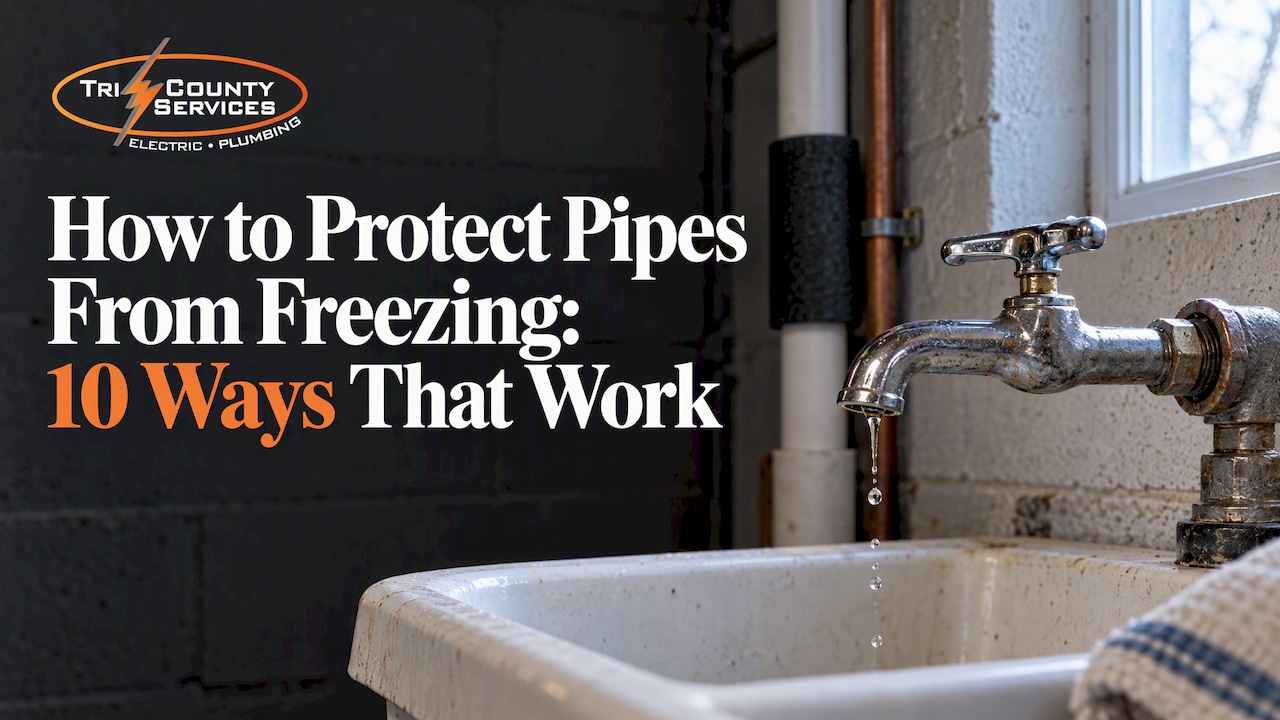

The best way to protect pipes from freezing is to keep them warm and keep cold air away from them. Insulate pipes in unheated spaces, seal drafts near plumbing, disconnect and drain outdoor faucets, keep your thermostat steady, and let a faucet drip during a deep freeze. Do most of it before the first hard cold snap. In Northeast Ohio that means doing it in the fall, which is right now.
We are Tri-County Services Electric & Plumbing, a family-owned business serving Northeast Ohio since 1975. Below is what we would tell a neighbor, plus the points where a professional visit saves you from a costly mistake. If you suspect a problem now, call our office at (440) 253-0332.
TL;DR
- Pipes in attics, crawl spaces, garages, basements and exterior walls freeze first, along with outdoor hose bibs.
- Insulate exposed pipes, seal cold air leaks, and disconnect and drain hoses and outdoor faucets before freezing weather.
- Keep the heat on, no lower than 55°F if you travel, and let a faucet fed by exposed pipes drip in very cold weather.
- If a faucet slows to a trickle, treat it as a possible frozen pipe and call a professional plumber before trying to thaw it.
- Call Tri-County Services Electric & Plumbing at (440) 253-0332 for a pre-winter plumbing check or an emergency.
Table of Contents
- Why pipes freeze and why it matters
- Which pipes freeze first
- The best ways to protect pipes from freezing
- Can bubble wrap insulate pipes?
- Quick reference: what to do and when
- Our perspective: prevention is cheaper than a flood
- What to do if you think a pipe is frozen
- Get ahead of the freeze with Tri-County Services Electric & Plumbing
- Frozen pipes and insurance
- Protecting pipes if your water is off
- FAQ
- Sources
Why pipes freeze and why it matters
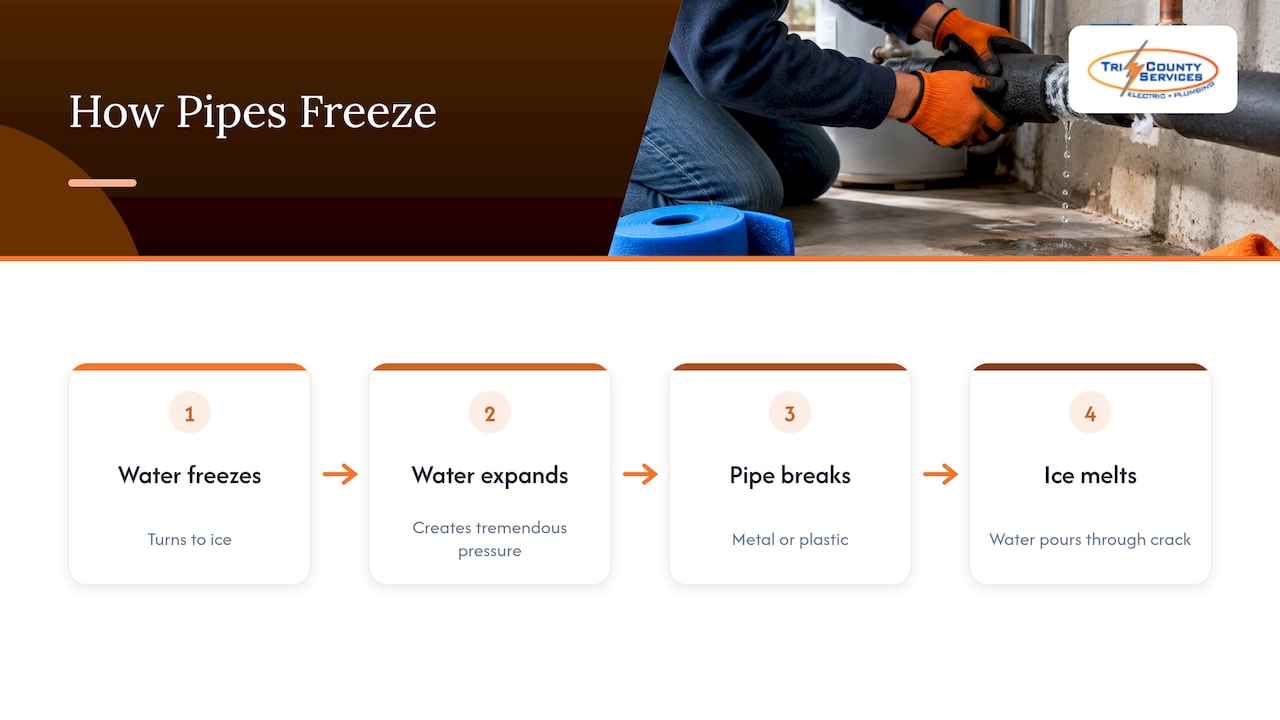
Water expands as it turns to ice. That expansion creates tremendous pressure that can break metal or plastic pipes, no matter how strong the material is. The break often does not show up until the ice melts and water starts pouring through the crack.
That is why frozen pipes are costly. They rank among the most common causes of winter-related interior water damage claims filed with insurers. A split pipe inside a wall can soak drywall, insulation, flooring and belongings in a matter of hours.
Cold-weather water damage can also start on the roof, where melting and refreezing snow forces water under shingles. If you are winterizing the whole house, read about protecting your roof from ice dams alongside this plumbing list.
Which pipes freeze first
Knowing where to look makes everything else easier. According to the American Red Cross, the pipes most at risk are:
- Outdoor hose bibs, sprinkler lines and pool supply lines
- Pipes in unheated areas such as attics, basements, crawl spaces and garages
- Pipes inside kitchen cabinets, especially on exterior walls
- Pipes along exterior walls with little or no insulation
In our service area, older homes with uninsulated crawl spaces, attached garages with water lines overhead, and bathrooms built over porches or overhangs are the usual trouble spots. Walk through your house and mark each of these spots. That list becomes your to-do list.
The best ways to protect pipes from freezing
1. Insulate exposed pipes in unheated areas
Insulation is the foundation of freeze protection. Foam pipe sleeves, fiberglass wrap and similar products slow heat loss so water inside stays above freezing longer. Start with the pipes you identified in attics, crawl spaces, garages and along exterior basement walls. Cover them end to end, including elbows and valves, because the gaps are where freezing starts.
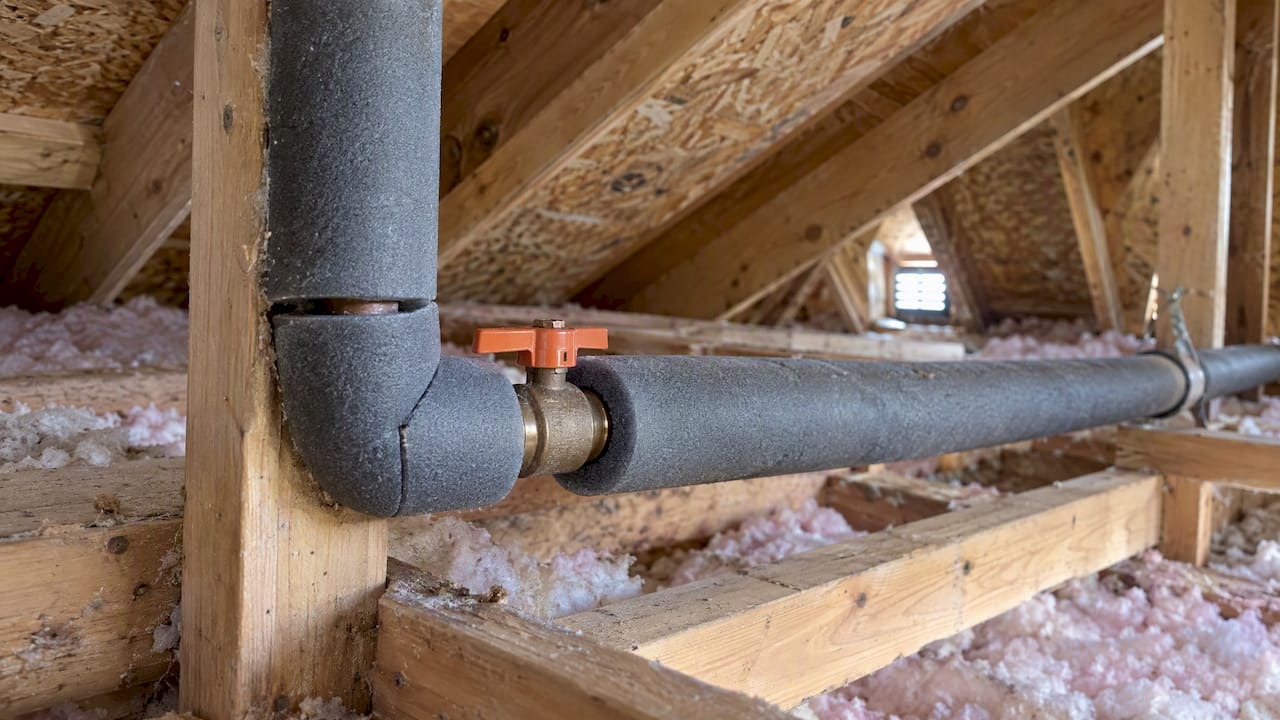
Insulation slows freezing. It does not stop it in a sustained deep freeze, because it only holds heat that is already there. Pair it with the sealing and heat steps below.
2. Seal the cold air leaks around plumbing
A small draft can freeze a pipe that is otherwise well protected. Caulking, sealing and weather stripping, along with other energy efficiency work, can help lower the risk of a frozen pipe. Check where pipes pass through exterior walls, rim joists, sill plates and foundation vents, and close those openings.
On a windy night, hold your hand near those spots. If you feel moving air, cold air is reaching your plumbing.
3. Disconnect hoses and drain outdoor faucets
Outdoor spigots are the most common failure point we see. Remove, drain and store garden hoses before freezing weather, because a connected hose traps water against the faucet. The Red Cross also lists removing and draining outdoor hoses as a core prevention step.
Many Ohio homes have an interior shutoff valve feeding each outdoor faucet, and the right way to use it depends on how your lines were built. Our guides on winterizing outdoor faucets and hose bib freeze protection in an Ohio winter walk through what to expect. If you are unsure which valve controls which line, have a professional plumber show you once, and you will know for every winter after.
4. Open cabinet doors on exterior walls
Kitchen and bathroom vanities hide pipes against cold walls. On very cold nights, open the cabinet doors so warmer air can circulate around the plumbing. If you have small children or pets, move cleaning products and other hazards out of reach first.
5. Keep the thermostat steady, day and night
Resist the urge to set the heat way back overnight during a cold snap. The Red Cross advises keeping the thermostat at the same temperature day and night. The extra heating cost is small compared with a burst pipe repair.
6. Let a faucet drip in very cold weather
When the weather turns very cold, letting cold water drip from a faucet served by exposed pipes helps prevent freezing. Choose the faucet on the exterior wall or at the end of the run, and keep the drip steady, about the width of a pencil lead. Moving water is harder to freeze, and an open faucet relieves pressure if ice does form.
If you have a fire sprinkler system, be careful about shutting water off at all. Shutting off the water deactivates the sprinklers, so ask a professional before you close any main valve.
7. Use UL-listed heat tape or cable correctly
For pipes you cannot insulate enough, UL-listed heat tape or cables can be used on exposed pipes. This is where electrical and plumbing meet, and where we see the most mistakes: damaged cords, overlapping tape, tape on the wrong pipe material, and overloaded or ungrounded outlets. Heat tape needs a safe, properly rated circuit. Because we handle both trades, we can check the pipe and the power supply in one visit, and add a dedicated circuit when the outlet is not up to the job.
8. Keep the heat on when you travel
If you leave home in cold weather, leave the heat on and set the thermostat no lower than 55°F. Ask a neighbor to check your home regularly, especially on extremely cold days. A furnace failure or power outage while you are gone is exactly how a small freeze becomes a flooded basement.
A backup generator keeps the furnace running through an outage, which is part of why we install home generators alongside our electrical work.
9. Prepare the water heater and mechanical areas
Water heaters and their supply lines often sit in the coldest corner of a basement or garage. Insulate the supply and discharge lines you can reach, and keep the area above freezing. Our Northeast Ohio water heater winter guide covers what to look at before the cold arrives. A water heater that is already struggling is likely to fail first when demand and cold peak together.
10. Get a professional pre-winter check
Some risks are invisible: a pipe buried in an uninsulated wall cavity, a slow leak that worsens when it freezes, or an old supply line near its end of life. A professional can find these before a cold snap. Our seasonal plumbing maintenance guide and winter plumbing checklist show what a thorough check covers.
Can bubble wrap insulate pipes?
Bubble wrap is a common question, and the honest answer is that it is a stopgap at best. It traps a little air, but it is thin, it is not made for the job, and it can leave gaps at joints and fittings. Purpose-made foam sleeves or wraps are designed to fit tightly and hold up in cold, damp spaces, and they cost little. If you are in a tight spot before a freeze, call us at (440) 253-0332 and we will tell you the right product for that pipe and location.
Quick reference: what to do and when
| Action | Where it applies | When to do it |
|---|---|---|
| Insulate pipes | Attics, crawl spaces, garages, exterior walls | Fall, before the first freeze |
| Seal drafts | Rim joists, foundation vents, wall penetrations | Fall |
| Remove and drain hoses | Outdoor faucets | Before the first hard freeze |
| Open cabinet doors | Kitchen and bath vanities on exterior walls | Very cold nights |
| Drip a faucet | Faucet on an exposed line | During deep freezes |
| Keep heat at 55°F or higher | Whole home, especially when away | All winter |
| Professional check | Whole plumbing system | Early fall |
Our perspective: prevention is cheaper than a flood
We have been serving Northeast Ohio homes since 1975, and the pattern every winter is the same. Homeowners who call in October have a short, calm visit. Homeowners who call in January have water running through a ceiling.
Freeze protection looks like a simple weekend project, but a pipe that looks protected can still fail. The weak point is usually a gap in the insulation, a shutoff valve nobody tested, or a heat tape cord on an overloaded outlet. A professional knows where those hide, and because we handle both electrical and plumbing, we can look at the pipe and the power supply together.
That is why we encourage you to call a professional first, not after something goes wrong. We schedule around your day to keep disruption low, and we treat your home with respect while we work.
Lindsay Paramore
What to do if you think a pipe is frozen
The warning sign is a faucet that produces only a trickle. Do not wait for it to get worse.
- Call a professional plumber at (440) 253-0332. Not all plumbing systems are the same, and attempting to thaw a pipe without professional help or advice can lead to serious, expensive damage.
- Leave the affected faucet open so water can flow as the ice melts.
- While you wait, the Red Cross notes that gentle heat from a heating pad, hair dryer or hot towels is the safe range. Never use an open flame, and keep electrical devices away from standing water.
- If you see water leaking, or you cannot find the frozen section, shut off the main water supply if you can reach it safely and call us right away.
Our safety guide for frozen pipes goes deeper, and these two pages help you decide how urgent it is: signs you need emergency plumbing service and what counts as a plumbing emergency.
Get ahead of the freeze with Tri-County Services Electric & Plumbing
We help Northeast Ohio homeowners and businesses get through winter without water damage. Our plumbing team can find and repair leaks, replace worn supply lines, service water heaters and clear drains. Our electricians can make sure heat tape and backup power are set up safely. You can see what we offer on our plumbing services and pricing page, or check leak detection and plumbing repair if you suspect a hidden problem.

We offer flexible scheduling and clear, upfront pricing. Call our office at (440) 253-0332 to schedule a pre-winter check before the cold arrives.
Frozen pipes and insurance
People often ask whether homeowners insurance covers frozen pipes. Coverage depends on your policy and on the circumstances, so we cannot answer it for you. Call your insurance agent before winter and ask how your policy treats burst pipes, and ask what the insurer expects you to do to prevent them. Keeping the heat on and following the steps above is a sensible foundation either way. For a burst pipe, call us to stop the damage and repair the line, and document everything with photos for your claim.
Protecting pipes if your water is off
Shutting off the water reduces the amount of water that can leak, but it does not make plumbing immune to freezing. Water left in the lines can still freeze and expand. A main shutoff also has consequences, such as disabling a fire sprinkler system. Before you winterize a vacant home or second property, talk to a professional plumber about draining the system properly, rather than just closing a valve.
FAQ
Can pipes still freeze if the water is turned off?
Yes. Water that remains in the lines can freeze and expand even when the main valve is closed. Shutting off the supply limits how much water spills if a pipe splits, but it is not a substitute for draining the system properly. Call a professional plumber before winterizing a vacant property.
How cold does it have to be before I should drip a faucet?
The Red Cross recommends dripping during very cold weather and does not give a single cutoff. Start when a hard freeze is forecast and your pipes are in exterior walls or unheated spaces. Use the faucet at the far end of the exposed line.
Is it safe to use heat tape on my pipes?
It can be, if the tape is UL-listed, is used on the right pipe type, and plugs into a safe, properly rated outlet. Damaged cords and overloaded circuits are real fire risks. We can inspect the installation and add a dedicated circuit if needed.
What should I do first if a faucet only trickles?
Call a professional plumber at (440) 253-0332 and leave the faucet open. A trickle can mean a frozen pipe, and thawing it the wrong way can cause costly damage. Never use an open flame.
Should I leave my heat on when I go on vacation?
Yes. Keep the thermostat at 55°F or higher and have a neighbor check the house. If you want extra security, ask us about a backup generator.
Sources
- Preventing & Thawing Frozen Pipes, American Red Cross
- Preventing Frozen Pipes, Indiana Office of Utility Consumer Counselor
- Preventing Frozen Pipes, Michigan.gov
- Tips To Prevent Freezing Water Lines, Orem.gov
- How to prevent frozen pipes during a winter storm, AccuWeather