
Call a professional immediately if you notice warmth, sparks, a burning smell, or intermittent operation at a switch, or if the wiring inside the box looks unfamiliar. A like-for-like swap is only reasonable when the wiring is intact, grounded, and you’ve done this kind of work before. NFPA code guidance backs this up, and Tri-County Services Electric & Plumbing sees the consequences of guessing wrong every week. If you’re unsure at all, call (440) 253-0332 before you touch the plate.
TL;DR:
- Most switch repairs are straightforward if the wiring is intact, grounded, and the device shows no signs of warmth, sparking or burning odors.
- Signs of wiring or connection failure include warmth, crackling, sparks, flickering, or intermittent operation, which require immediate professional attention.
- A typical like-for-like switch replacement takes under an hour when no hidden damage or code issues are involved, but complex repairs can extend to several hours.
- Costs vary based on work complexity, with simple swaps often unpermitted, while replacing or upgrading wiring and panels may require permits and higher fees.
- Always verify a professional’s insurance, warranty, experience with older wiring, and willingness to handle permits before hiring, especially for extensive or advanced repairs.
Table of Contents
- What Symptoms Signal a Switch Problem vs. a Wiring Problem?
- What Does a Professional Check During a Switch Repair?
- How Much Does Switch Repair Cost and How Long Does It Take?
- When Does a Switch Repair Become a Code and Safety Issue?
- What Should You Ask Before Hiring a Switch Repair Professional?
- Our Approach to Switch Repair at Tri-County Services
- Schedule a Switch Repair or Inspection
- Sources
- FAQ
What Symptoms Signal a Switch Problem vs. a Wiring Problem?
A switch that just stops responding is usually the easiest case. Worn contacts or a stripped terminal screw wear out from years of flipping on and off, and the fix is often a straightforward device replacement. But not every symptom points to the switch itself.
Here’s what to watch for and what it typically means:
- No response at all — often a dead device, but sometimes a tripped breaker or loose connection upstream.
- Intermittent operation — usually a loose neutral or traveler wire in a three-way setup, not the switch itself.
- Flickering — frequently a dimmer mismatched to LED bulbs, since many older dimmers weren’t built for LED loads.
- Crackling sounds when flipped — a strong sign of arcing at a loose or corroded connection.
- Warmth to the touch — a classic sign of excess resistance at the terminal, and a genuine fire risk under NFPA/NEC guidance.
- Visible sparks or a burning odor — stop using the switch now and call a professional.
A warm or hot switch, crackling when flipped, or visible sparking are signs that the device or its connections are failing and need professional attention, not a quick swap and a hope for the best, according to Patton Home Solutions.
Some causes hide behind the wall entirely. Box overfill, aluminum branch wiring, and knob-and-tube systems from older homes all raise the stakes considerably. If your house predates the 1970s and you’ve never had the wiring updated, treat any switch issue as a signal to call, not a weekend project. For a quick first look before you decide, our troubleshooting checklist covers what’s safe to check yourself.
What Does a Professional Check During a Switch Repair?
A technician doesn’t start by pulling the plate off. The process follows a specific order designed to keep everyone safe and catch problems a homeowner would miss.
- Verify the breaker position and confirm the circuit is actually off, not just the switch.
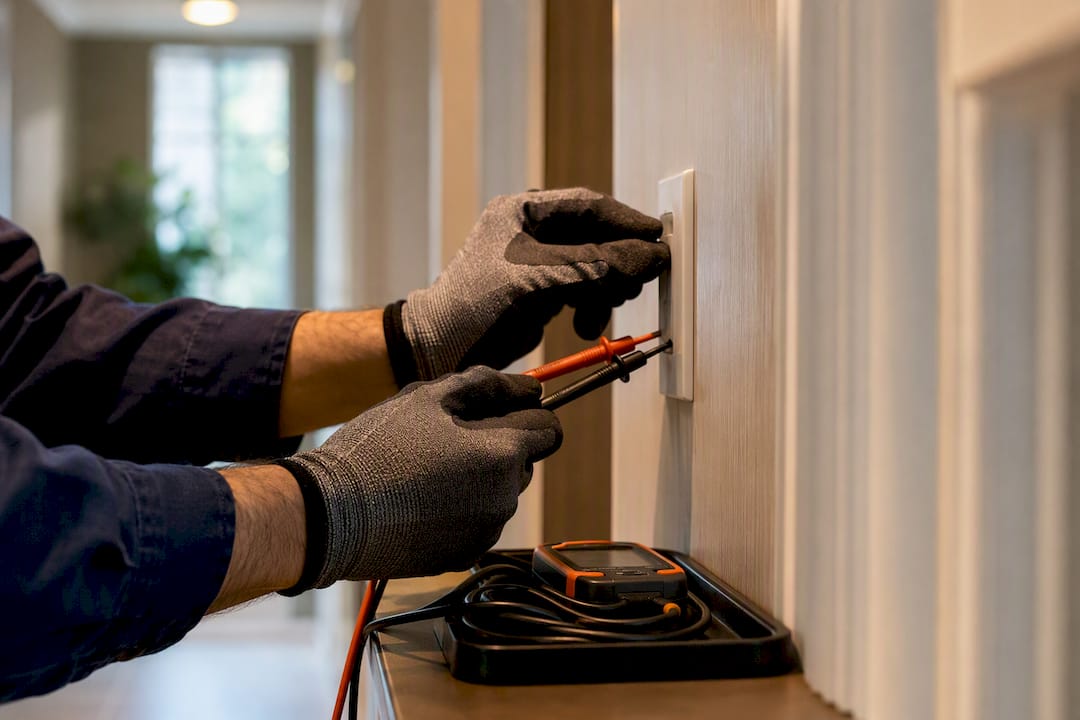
- Test with a non-contact voltage tester, then a contact tester, to confirm the conductors are de-energized before touching anything.
- Remove the plate and inspect the device, checking terminal screw tightness, wire condition, and whether the connections were ever pigtailed correctly.
- Check box fill and grounding continuity, since an overcrowded box or missing ground is a repair in itself.
- Make the fix, whether that’s retightening and pigtailing existing wires, swapping in a new single-pole, three-way, or dimmer device, or extending the box to meet code.
- Test the repair under load before closing everything back up.
Most like-for-like device replacements finish in about an hour, since the workflow starts at the breaker and moves quickly once the box is open, according to Putnam’s service overview. But if the box is overfilled, the conductors are degraded, or there’s arcing evidence inside the wall, the visit escalates. That might mean running new cable, extending the box, or recommending a permit and inspection before closing the wall back up. Our electrical repair service handles both scenarios on the same visit whenever possible.
Pro Tip: Ask the technician to test the switch under an actual load, not just with the tester, before they leave. A connection that reads fine cold can still heat up once the circuit is carrying real current.
How Much Does Switch Repair Cost and How Long Does It Take?
Timeline and cost both hinge on what’s behind the wall plate, not what’s visible on the surface.
A straight, like-for-like device swap, where the wiring is intact and grounded, is usually the fastest and least expensive option and can often be finished in under an hour. Once the job involves box work, a neutral pull for a smart switch, or upstream wiring repair, plan for several hours or even a half day, especially if a permit inspection is involved.
Several factors move the price beyond a simple swap:
- Time on site — inspection and testing take longer when hidden damage is involved.
- New cable runs — required if the existing wiring can’t safely support the fix.
- Box extension — needed when the existing box is overfilled or too small for code-compliant wiring.
- GFCI or commercial-voltage requirements — common in kitchens, bathrooms, and commercial spaces.
- Permit and inspection fees — apply once the work goes beyond maintenance-level replacement.
- Special materials — AL-rated devices for aluminum wiring or extra wiring for smart-switch neutral requirements.
Replacing a like-for-like switch is often considered maintenance and may not require a permit, but adding new switch locations or running new cable typically does, according to guidance from Expert Electrical Repair. Quotes vary by region and by exactly what’s inside the wall, which is why a phone estimate is always a starting point, not a final number. If your switch issue points toward a bigger capacity problem, it’s worth reviewing what panel upgrades typically cost before assuming a simple fix will solve it.
When Does a Switch Repair Become a Code and Safety Issue?
Loose connections don’t just cause flickering. They generate heat at the point of contact, and heat inside a wall cavity with no ventilation is exactly how electrical fires start. Reversed polarity and missing grounding raise a different risk: shock, especially in bathrooms, kitchens, and outdoor circuits where moisture is present.
NFPA and NEC standards address exactly this: conductor termination integrity, device heat under normal load, box fill limits, and where GFCI protection is required. These aren’t arbitrary rules. They exist because loose terminations and improper conductor connections are a documented fire hazard, not a theoretical one.
Unpermitted or improperly performed electrical work can lead to denied insurance claims and failed home inspections down the road, particularly when a fire or damage claim traces back to work that was never inspected or permitted.
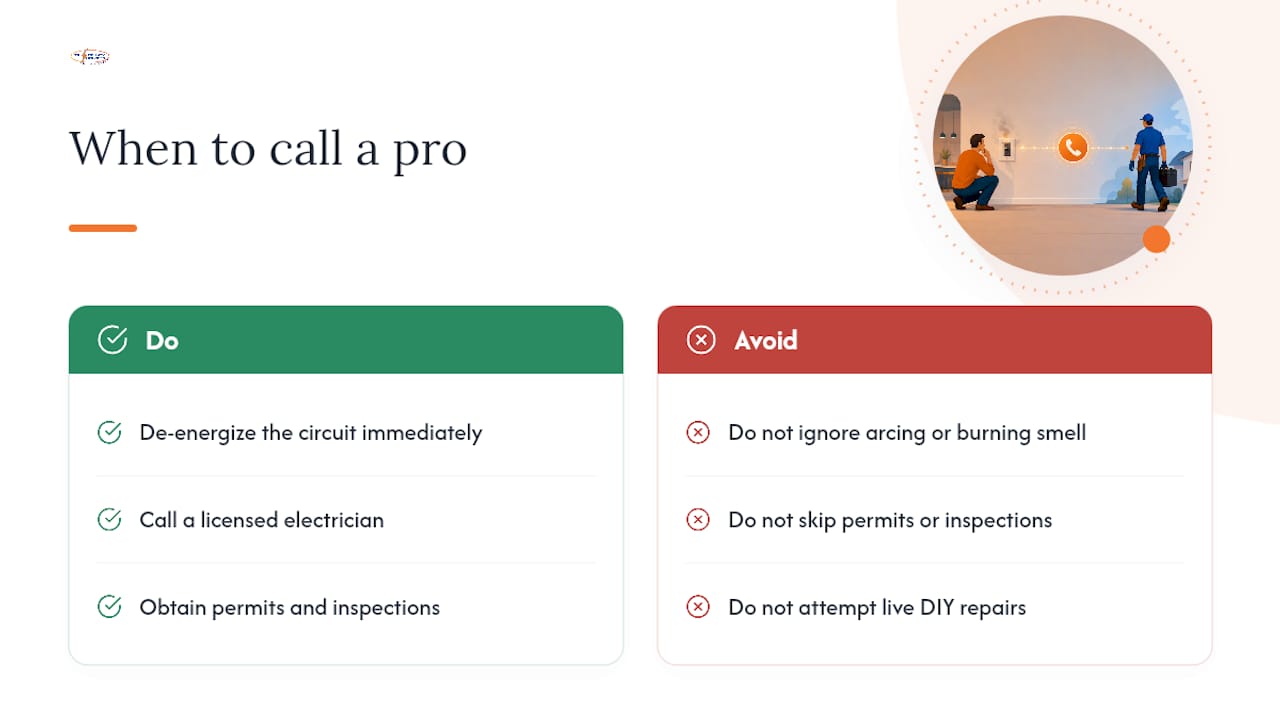
That’s the real cost of skipping the paperwork. A twenty-minute permit process is cheap insurance against a much larger problem later, and DIY electrical shortcuts rank among the most common reasons claims get denied. If you see arcing inside a wall, smell anything burning, or a breaker keeps tripping no matter what you try, de-energize the circuit and call a professional immediately.
What Should You Ask Before Hiring a Switch Repair Professional?
A five-minute phone call before scheduling saves a lot of headaches later. Ask these questions up front:
- Are you insured for residential and commercial electrical work?
- Do you offer a labor warranty on repairs, and how long does it last?
- Have you worked with older wiring types, including aluminum or knob-and-tube?
- Will you handle the permit if the job requires one?
- What’s your estimated timeline and how is pricing structured, flat rate or hourly?
Reputable services back up their answers with real documentation: a written estimate before work begins, proof of insurance on request, and diagnostic tools like voltage testers and thermal imaging to catch faults you can’t see. Warranties and diagnostic equipment are common markers of a trustworthy electrical service, and their absence is worth noticing, according to ElectricnSign.
Watch for red flags too. A contractor who brushes off permits, gives vague answers about warranty coverage, or asks for a large cash-only deposit before showing up is not someone you want inside your walls.
Pro Tip: If a quote comes in dramatically lower than everyone else’s, ask specifically whether it includes a permit and inspection. Missing paperwork is the most common way a “cheap” repair turns expensive later.
Our Approach to Switch Repair at Tri-County Services
We’ve been doing electrical work in Northeast Ohio since 1975, and one thing hasn’t changed: most switch problems are simple until they aren’t. Our technicians start with a quick, safe swap when the wiring supports it. When something’s hiding behind the wall, whether that’s aluminum conductors, an overfilled box, or a missing neutral, we run full diagnostics before recommending next steps.
Safety inspections aren’t an upsell for us. They’re how we catch the problems that turn into fires or failed insurance claims later. Our skilled technicians handle everything from switch repairs to EV charger installations and generator work, and now plumbing too. When you call, expect a clear estimate, a straightforward inspection, and scheduling that works around your day, not ours.
— Lindsay Paramore
Schedule a Switch Repair or Inspection
If any of this sounds like what’s happening in your home or building right now, don’t guess at the fix. Tri-County Services Electric & Plumbing handles switch and outlet repairs, wiring corrections, panel upgrades, EV charger installations, generator work, and plumbing services like clogged drain repair across Northeast Ohio.

Here’s what we cover for switch and wiring issues specifically:
- Switch, outlet, and wiring diagnostics and repair
- Panel and circuit upgrades when a switch issue points to a bigger capacity problem
- EV charger and generator installation for homes adding new load
- Plumbing services, including clogged drain repair
Call (440) 253-0332 or visit our residential electrical repair page to schedule. After you call, expect a clear estimate, an on-site inspection to confirm what’s actually happening behind the wall, a scheduling window that fits your day, and warranty coverage on the finished repair. If the problem turns out to be bigger than a single switch, we’ll walk you through what a panel or circuit upgrade would involve before any work starts.
Sources
- NFPA — codes and standards
- What to expect when a professional fixes your light switch | Putnam
- Light switch repair — Expert Electrical Repair
FAQ
Can I Replace a Light Switch Myself?
A like-for-like swap is sometimes reasonable if the wiring is intact, grounded, and you have real experience, but any warmth, sparking, or unfamiliar wiring means it’s time to call a professional instead.
How Long Does a Professional Switch Repair Take?
A straightforward, like-for-like device replacement often takes under an hour, while wiring or box work can run several hours or a half day depending on what’s found inside the wall.
Why Is My Light Switch Warm to the Touch?
A warm switch usually means excess resistance at a loose or corroded terminal connection, which NFPA and NEC guidance flags as a genuine fire risk that warrants replacement.
Do I Need a Permit to Replace a Switch?
A simple like-for-like replacement is usually considered maintenance and may not require a permit, but adding new switch locations or running new cable typically does.
What’s the Difference Between a Switch Problem and a Wiring Problem?
If a new device fixes the issue, it was the switch; if the problem persists, flickers under load, or involves warmth and crackling, it usually points to a wiring or connection issue that needs professional diagnosis.