
If you’re seeing multiple warning signs at once, backups, slow drains throughout the house, sewage odors, stop troubleshooting and call a professional for a camera sewer inspection before anything else. That single step usually determines whether you need a $300 cleaning or a $10,000 replacement. Skipping it, or letting a contractor skip it, is how homeowners end up overpaying or fixing the wrong problem entirely.
TL;DR:
- A camera sewer inspection is essential to accurately diagnose issues like root intrusion, bellies, or collapses before choosing a repair method, preventing overpaying or unnecessary work.
- Trenchless repair methods such as pipe bursting and lining are typically more cost-effective overall than open-trench excavation, especially when the pipe remains mostly intact.
- Multiple slow drains, backups in lower fixtures, gurgling sounds, sewage odors, and soggy yard patches indicate a main-line sewer problem requiring prompt professional assessment.
- Most residential sewer repairs cost between $5,000 and $15,000, with trenchless options averaging $60 to $250 per linear foot, often reducing surface restoration costs.
- DIY sewer repairs are risky and often more expensive long-term; professional camera inspections and expert diagnoses ensure proper, safe, and lasting solutions.
Table of Contents
- Quick Options: Which Sewer Line Repair Method Fits Your Problem
- What Are the Warning Signs of a Main-Line Sewer Problem?
- How Do Camera Inspections Diagnose a Sewer Line Problem?
- Sewer Line Repair Methods Explained in Depth
- How Much Does Sewer Line Repair Cost?
- How Do I Choose a Sewer Repair Professional?
- Timeline, Permits, and Restoration: What to Expect
- Preventing Sewer Line Problems Before They Start
- Tri-County Services Electric & Plumbing’s Approach to Sewer Line Work
- Why You Should Call a Professional Before Attempting DIY Sewer Repair
- Schedule Your Sewer Line Inspection With Tri-County Services Electric & Plumbing
- Sources
- FAQ
Quick Options: Which Sewer Line Repair Method Fits Your Problem
Not every sewer problem needs a shovel and a weekend. The right fix depends entirely on what’s actually wrong with the pipe, which is why diagnosis always comes before method selection.
- Cleaning and root removal. Mechanical cleaning or hydro-jetting clears roots, grease, and buildup from an otherwise structurally sound pipe. It’s fast and affordable, but it’s maintenance, not repair. If the pipe itself is cracked or collapsed, jetting buys time at best.
- Spot or sectional repair. When damage is limited to a short section, joint separation, a single crack, a localized root intrusion, a contractor can patch just that segment instead of the whole line.
- CIPP lining (cured-in-place pipe). A resin-saturated liner is inserted into the existing pipe and cured to form a new pipe within the old one. It works well for corrosion and small cracks but needs a mostly intact host pipe to lie against.
- Pipe bursting. A bursting head fractures the old pipe outward while pulling a new HDPE pipe through in its place. It handles more damage than lining but still needs a somewhat continuous path.
- Open-trench excavation and replacement. The old-school approach: dig up the yard, remove the damaged pipe, and install a new one. It’s disruptive but unavoidable for collapsed sections or bellies (sagging low spots) where trenchless methods can’t get a new pipe through.
The trade-off is straightforward. Trenchless methods cost more per linear foot but usually spare your driveway, patio, and landscaping. Open-trench work costs less per foot but adds restoration expenses that can erase the savings. As a rule of thumb, if the pipe has collapsed or bellied badly enough that a camera can’t push through it, excavation becomes the only realistic option.
What Are the Warning Signs of a Main-Line Sewer Problem?
A single slow drain in one sink usually means a local clog, hair, grease, a wad of paper towels, and a plunger or a call about that one fixture solves it. Main-line sewer problems announce themselves differently: they show up in more than one place at once, because everything downstream of the blockage backs up together.
- Multiple drains running slow simultaneously. If the kitchen sink, bathtub, and toilet are all sluggish on the same day, water is struggling to get past a blockage in the main line, not just one fixture’s trap.
- Backups in the lowest drain in the house. Basement floor drains and lower-level toilets are usually the first to back up because sewage takes the path of least resistance, which is often straight up through the lowest point.
- Gurgling sounds from drains or toilets. That bubbling noise is trapped air escaping past a partial blockage, a sign something downstream is restricting flow.
- Sewage odors indoors or outdoors. A persistent rotten-egg or sewage smell near drains, or outside near your yard, often means gases are escaping through a crack or an unsealed joint.
- Soggy, unusually lush, or sunken patches in the yard. Sewage leaking underground acts like fertilizer, so a strangely green strip of grass tracking from your house toward the street is a classic (if strange) tell.
- Repeated backups after snaking or plunging. If the same clog keeps returning within weeks, the real problem is usually downstream, roots, a belly, or a partial collapse, not the spot you keep clearing.
If you’re seeing two or more of these at once, treat it as an emergency-adjacent situation: stop running water into drains where you can, avoid flushing anything you don’t have to, and call a professional promptly. A backed-up main line can push sewage back into your home through the lowest fixtures, which is a health hazard as well as a mess.
How Do Camera Inspections Diagnose a Sewer Line Problem?
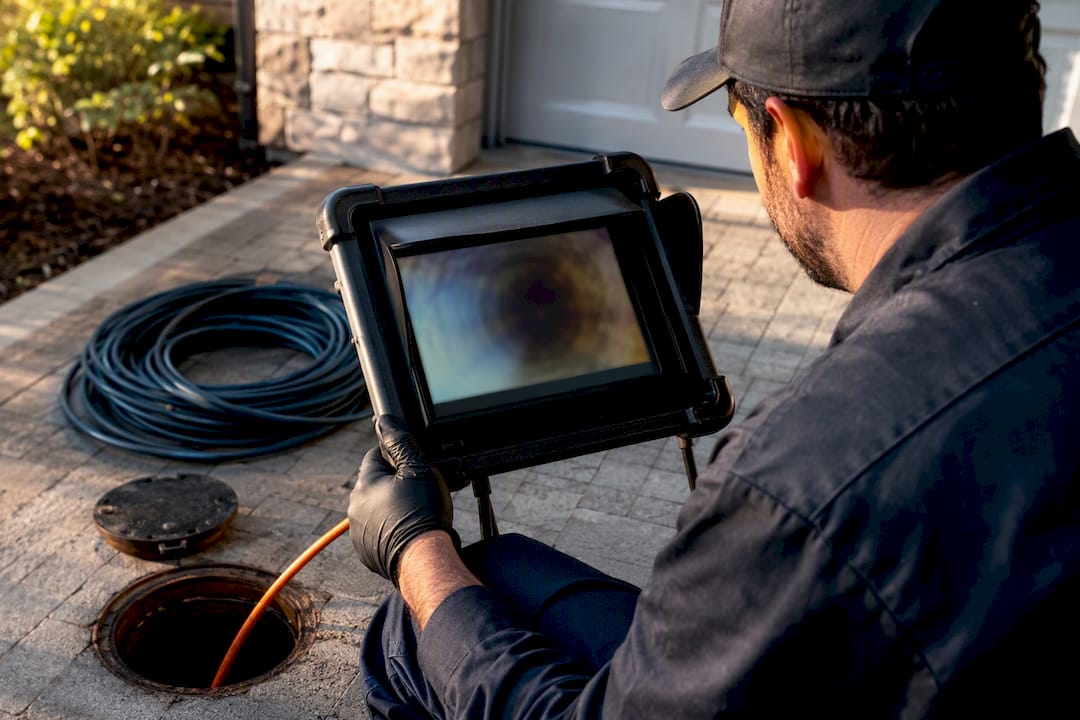
Nothing about sewer repair should start with a guess. A video camera inspection sends a waterproof camera through the line to show exactly what’s happening underground, root intrusion, bellied sections, separated joints, or full collapse, before anyone recommends a repair method. That inspection typically costs between $100 and $500, and it’s the cheapest insurance you can buy against overpaying for the wrong fix.
Here’s what technicians are actually looking for on that footage:
- Root intrusion at joints and cracks, often the single most common cause of blockages in older clay or cast-iron lines.
- Bellies, low spots where the pipe has sagged and waste pools instead of flowing downhill.
- Joint separation, common in older pipe materials as ground shifts over decades.
- Full or partial collapse, which rules out lining or bursting and points straight to excavation.
Hydro-jetting and mechanical root cutting come up constantly in these inspections, and it’s worth being clear about what they do and don’t fix. Jetting blasts roots and buildup out of an intact pipe and can restore flow immediately. But it doesn’t repair structural damage, so if the camera shows a cracked or collapsed section, jetting is a stopgap, not a solution.
Locating the exact path of the lateral (the pipe running from your house to the municipal main) also matters more than most homeowners expect. If your line runs under a driveway, sidewalk, or the street right-of-way, that location affects permitting requirements and can add both time and cost to the job.
Pro Tip: Ask any contractor to show you the camera footage, not just describe what they saw. A reputable company keeps recorded video precisely because it protects both sides if a dispute comes up later.
Sewer Line Repair Methods Explained in Depth
Once the camera work is done, you’re choosing between four real categories of repair. Understanding what each one actually involves helps you evaluate whether a contractor’s recommendation makes sense, rather than just trusting a number on a quote.
Open-trench excavation is the original method, and it’s still sometimes the right one. Crews dig a trench along the pipe’s path, remove the damaged section (or the entire line), and install new pipe before backfilling and restoring the surface. It’s unavoidable when a pipe has fully collapsed, when a belly is severe enough that no liner or burst-head can pass through, or when the pipe material has degraded so extensively that trenchless methods have nothing solid to work with. The trade-off is visible: torn-up lawns, driveways, or landscaping, and a restoration bill that can rival the repair cost itself.
Pipe bursting threads a bursting head through the existing pipe. That head fractures the old pipe outward into the surrounding soil while simultaneously pulling a new HDPE (high-density polyethylene) pipe through in its place. It requires access pits at each end rather than a continuous trench, so it disturbs far less surface area than full excavation. It shines on longer runs where digging the whole path would be prohibitively disruptive, and it can even upsize the pipe diameter in the process. It’s not ideal for lines with tight bends or where nearby utilities sit too close to the fracture zone.
CIPP lining (cured-in-place pipe) works differently. A liner saturated with epoxy resin is pulled or inverted into the existing pipe, then cured with heat, UV light, or ambient air until it hardens into a smooth new pipe inside the old one. The appeal is minimal digging, often just small access points, and a finished surface resistant to root intrusion. The catch is that CIPP needs a host pipe with enough structural integrity to hold the liner’s shape during curing. A badly bellied or collapsed section simply won’t support it.
Spot or sectional repairs apply when damage is isolated, a single cracked joint or a short run of root intrusion rather than a systemic problem along the whole lateral. These are typically the least expensive and least invasive option, but they only make sense when the camera inspection confirms the rest of the line is sound. Patching one bad spot while ignoring three others waiting to fail isn’t a repair strategy, it’s a delay tactic.
Here’s the practical rule that ties all of this together:
- Intact pipe with isolated damage → spot repair
- Widespread root intrusion or corrosion in an otherwise round pipe → CIPP lining
- Damaged pipe needing a wider or sturdier replacement without full excavation → pipe bursting
- Collapsed or significantly bellied pipe → open-trench excavation, no way around it
Any contractor who proposes lining or bursting without having seen camera footage confirming an intact host pipe is skipping a step that protects you from a failed repair.
How Much Does Sewer Line Repair Cost?
Sewer line repair costs swing widely depending on method, length, depth, and what has to be restored afterward. For context, most residential jobs land between $5,000 and $15,000, though the specific method changes that range considerably.
On a typical 50-foot residential lateral, open-trench replacement commonly runs $8,900 to $16,300 before restoration is even added. Trenchless methods run $60 to $250 per linear foot, which sounds steep until you factor in what open-trench restoration actually costs on top of the base repair.
That per-foot premium on trenchless work is exactly why it often ends up cheaper overall. Ripping out a driveway or mature landscaping to dig a trench adds real restoration costs, sometimes thousands of dollars, that a bursting or lining job never triggers because the surface stays intact.
A handful of line items separate a complete quote from a stripped-down lowball one:
- Camera inspection, usually billed separately from the repair itself.
- Excavation and shoring, needed for depth and soil stability on open-trench jobs.
- Surface restoration, lawn, concrete, or driveway repair after the pipe is in.
- Permits and right-of-way fees, especially when the lateral runs under public property.
Insurance is worth checking before you’re mid-crisis. Standard homeowners policies typically exclude sewer-line failure caused by gradual deterioration or root intrusion, which covers the vast majority of real-world cases. A service-line endorsement, usually a modest add-on to your existing policy, specifically covers underground service pipes and is worth asking your insurer about before you need it, not after.
How Do I Choose a Sewer Repair Professional?
The quote itself tells you almost everything about whether a contractor does this work right. A complete written quote should spell out the repair method, exact footage involved, restoration scope, who’s responsible for permits, and what warranty covers the pipe and the restoration work. If any of those five items is missing, ask why before you sign anything.
A short script helps on the phone and at the estimate visit:
- “Will you run a camera inspection before quoting a method, and can I see the footage?”
- “What’s included in this quote, permits, restoration, warranty, or are those separate?”
- “What warranty do you offer on the pipe itself versus the restoration work?”
- “Who pulls the permit, and is right-of-way work included in this price?”
- “If you hit something unexpected once digging starts, how does that change the price?”
Treat certain answers as hard red flags: a contractor who quotes a full replacement without ever inspecting the line, one who pressures you to sign same-day, or one who can’t clearly explain why they’re recommending excavation over a trenchless option. None of those are how a legitimate repair process works.
Pro Tip: If two quotes differ by more than a few thousand dollars for what’s supposedly the same scope, ask both companies for their camera footage. Nine times out of ten, they’re not actually quoting the same repair.
Getting a second opinion costs you an inspection fee and a day of waiting. It’s cheap compared to a five-figure mistake, and any professional worth hiring won’t discourage you from getting one.
Timeline, Permits, and Restoration: What to Expect
Trenchless repairs, pipe bursting or CIPP lining, typically finish in a single day for a standard residential lateral. Open-trench replacement usually takes two to five days depending on length, depth, and how much restoration follows.
Permits add lead time you should plan for. Most municipalities require a plumbing permit for sewer-line work, and right-of-way permits for public-side work add both fees and inspection scheduling on top of that. Ask your contractor for a realistic permit timeline before you commit to a start date.
Restoration costs vary by surface: reseeding a lawn is inexpensive, while replacing a section of concrete or driveway can add a meaningful chunk to the final bill. Once the job wraps, insist on a follow-up camera pass to confirm the repair looks right internally, along with warranty paperwork for both the pipe and any restoration work performed.
Preventing Sewer Line Problems Before They Start
A little routine maintenance goes a long way toward avoiding another five-figure surprise down the road.
- Schedule preventive camera scopes every few years, especially in homes with mature trees or pipes older than 30 years.
- Have roots managed proactively through periodic jetting rather than waiting for a full backup to force the issue.
- Never flush wipes, grease, or “flushable” products that aren’t actually flushable. They’re a leading cause of blockages regardless of pipe condition.
- Keep new tree plantings well away from your lateral’s path, and choose root systems less aggressive than willows, maples, or elms near existing lines.
- Watch your yard for early warning signs, unusual wet spots or lush patches, between scheduled inspections.
Tri-County Services Electric & Plumbing’s Approach to Sewer Line Work
Tri-County Services Electric & Plumbing has served Northeast Ohio homeowners and businesses since 1975, and that camera-first philosophy carries directly into how the plumbing side of the business handles sewer line problems. The process starts with a drain camera inspection to confirm exactly what’s happening underground before any repair method gets recommended.
A written quote should tell you the method, the materials, the restoration scope, and who’s handling permits, not just a bottom-line number. That’s the standard we hold every estimate to.
From there, the workflow is straightforward: diagnose with camera footage, present options with real trade-offs (cleaning versus lining versus excavation), handle permit and right-of-way coordination when the lateral crosses public property, complete the repair, and verify the result with a follow-up camera pass before closing out the job.
If you’re dealing with warning signs right now, call the office at (440) 253-0332 to get a camera inspection scheduled.
Why You Should Call a Professional Before Attempting DIY Sewer Repair
Sewer line work looks simple from a YouTube thumbnail and gets complicated fast in practice. You’re dealing with confined excavation hazards, potential contact with raw sewage, and, if your lateral runs anywhere near the right-of-way, permit and code requirements that a DIY attempt can violate without you realizing it. Get the diagnosis wrong, cut into the wrong section, or backfill improperly, and you can turn a $2,000 repair into a $12,000 one.
The bigger issue is that DIY skips the step that actually saves money: an accurate diagnosis. A professional doesn’t just fix what’s visible, they run a camera, confirm the failure mode, and build a restoration plan around what the pipe actually needs. That sequence is what keeps a repair from becoming a repeat repair six months later.
If you’re seeing any of the warning signs covered above, the smartest next move is a professional camera inspection, not a rented drain snake.
Schedule Your Sewer Line Inspection With Tri-County Services Electric & Plumbing
Here’s the practical advantage: you get a camera-first diagnosis, a written quote covering method, materials, and restoration, and a team that coordinates permits and right-of-way paperwork so you’re not managing that on your own. Tri-County Services Electric & Plumbing handles the full range of sewer line repair work for Northeast Ohio homeowners and property managers, video camera inspections, trenchless pipe bursting and CIPP lining, full open-trench replacement when that’s genuinely necessary, and restoration coordination so your yard or driveway doesn’t sit torn up longer than it has to.

Every job starts the same way: an honest look at what’s actually happening in the pipe before anyone talks about cost. If you’re seeing slow drains, backups, or a suspiciously soggy patch in the yard, don’t wait for it to get worse. Call our office at (440) 253-0332 to schedule an inspection or get a free estimate, or visit our Richfield, Ohio service area page to see the full range of plumbing and electrical services we offer locally.
Sources
The EPA’s septic system guidance offers useful background on wastewater sanitation risks, even though septic and municipal sewer systems differ. Angi’s cost breakdown and ProjectCostPro’s sewer line calculator back the pricing figures throughout this guide, and This Old House’s sewer repair overview informed the cleaning-versus-structural-repair distinction.
- Sewer Line Replacement Cost (ProjectCostPro)
- Sewer Line Replacement Cost (Angi)
- Sewer line replacement cost 2026 (PlumbingSniper)
- Sewer line repair and replacement (This Old House)
FAQ
How Much Does It Cost to Have a Sewer Line Fixed?
Most residential sewer repairs fall between $5,000 and $15,000, though a simple spot repair can cost far less and a long open-trench replacement with heavy restoration can run higher.
Is Relining a Sewer Pipe Worth It?
CIPP lining is often worth it when the existing pipe is structurally sound enough to support the liner. It costs $60 to $250 per linear foot but typically avoids the yard, driveway, or landscaping restoration costs that come with excavation.
Can I Repair a Sewer Line Myself?
Sewer line repair involves excavation hazards, sewage exposure, and permit requirements in most municipalities, so it’s not a safe or practical DIY project. Calling a professional for a camera inspection first is the safer and usually cheaper path in the long run.
Can You Fix a Sewer Line Without Digging?
Yes, trenchless methods like pipe bursting and CIPP lining repair or replace a sewer line through small access points instead of a full trench. They only work when the existing pipe isn’t fully collapsed or too severely bellied, which is exactly what a camera inspection is used to confirm.