

Hire a professional electrician for any TV project involving in-wall wiring, outlet relocation, dedicated circuits, or heavy wall mounts on drywall without proper backing. Surface mounting on a stud with exposed cables is often fine to handle through a retailer service, but anything that opens a wall, touches your electrical panel, or holds a 60-inch-plus television needs code-compliant work. Call Tri-County Services Electric & Plumbing at (440) 253-0332 for an estimate before you drill a single hole.
TL;DR:
- In-wall wiring for TVs over 60 inches or mounted on non-solid framing requires licensed electrical work with proper permit and code compliance.
- Surface-mounted TVs with visible cables or simple wall mounts are safe for retailer installation, but complex wiring, outlet moves, or new circuits demand a licensed electrician.
- Most installations involve assessing wall type, routing rated low-voltage cables, and adding dedicated power circuits with surge protection for safety.
- A typical in-wall wiring job can take several hours, with larger projects possibly requiring a full day and multiple trades for multi-room setups.
- Confirm cable ratings, permit responsibility, and insurance coverage in the estimate to avoid safety risks and legal issues later.
Table of Contents
- What Does a TV Wiring Electrician Actually Do?
- When Do You Actually Need an Electrician (Not a Retailer or DIY)?
- How Long Does a Professional TV Wiring Job Take?
- Why Wiring Codes and Cable Ratings Actually Matter
- How to Prepare and What to Ask Before You Hire
- Why Tri-County Services Electric & Plumbing for This Job
- What Homeowners Get Wrong About TV Wiring
- Get Your TV Wired Right the First Time
- Sources
- FAQ
What Does a TV Wiring Electrician Actually Do?
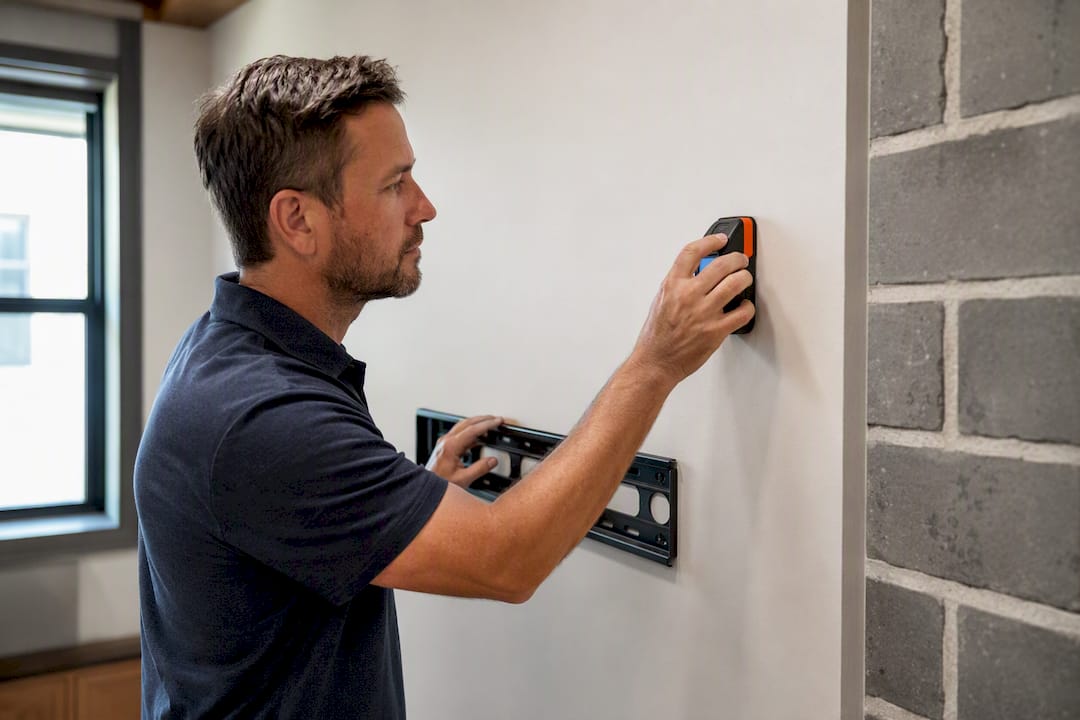
A TV wiring electrician handles the parts of a home theater install that go beyond hanging a bracket. The work starts with structural mounting, which means finding real anchor points across drywall, plaster, brick, or masonry rather than trusting a single toggle bolt.
From there, the job moves into low-voltage territory: routing HDMI, speaker cable, and Cat6 through wall cavities using CL2 or CL3 rated cable, or running everything through a raceway or smurf tube when a wall isn’t accessible. Power work follows, often including in-wall power kits, outlet relocation behind the TV, added dedicated circuits, and surge protection for the receiver and other gear.
The final stretch covers the AV side: connecting components, basic configuration, and testing the picture and sound before cleanup. A proper home theater setup accounts for acoustic placement and control configuration, not just a mounted screen.
- Structural mounting with verified anchor points for the wall type
- In-wall routing of HDMI, speaker wire, and Ethernet using rated cable
- Power work: outlet relocation, in-wall kits, dedicated circuits, surge protection
- AV hookup, testing, and cleanup once everything is live
When Do You Actually Need an Electrician (Not a Retailer or DIY)?
Some TV jobs genuinely don’t need an electrician. A television going on a single wall, surface-mounted with visible cable or a cord cover, sits comfortably within what a retailer install team or a careful homeowner can manage.
Everything changes once you’re opening drywall or touching power. Any of the following calls for a professional:
- Adding or moving an outlet behind the TV
- Running in-wall power kits or new circuits
- Mounting a television over 60 inches or on anything other than solid framing
- Wiring a multi-room speaker system with in-wall runs
- Any work that a local permit office would require a permit for
Retailer services, including Best Buy’s installation tiers, typically cover basic mounting and limited wire concealment, with add-on fees once the job needs in-wall power kits or custom routing. What they don’t carry is the same accountability for code compliance or the insurance coverage a licensed operation provides if something goes wrong behind that wall.
Pro Tip: If you’re not sure whether your job needs a permit, ask before you book. A trustworthy electrical repair provider will tell you upfront, not after the invoice.
How Long Does a Professional TV Wiring Job Take?
Most professional installs follow a predictable sequence, and knowing it helps you evaluate a quote that seems too fast or too slow.
- Site visit and assessment. The technician checks wall type, existing wiring, TV weight, and whether a permit applies.
- Written quote. You get a scope of work, materials, and a price before anything starts.
- Rough-in wiring and power work. This includes cable runs, outlet relocation, or new circuits.
- Mount and conceal. The bracket goes up, cables get routed and hidden.
- Hookup, testing, and demo. Components connect, the system gets tested, and the crew walks you through it.
A basic surface mount usually takes a few hours. In-wall wiring with outlet work often requires several hours, and multi-room speaker distribution can take a full day or longer depending on the number of rooms.
Costs vary by scope, and any number you get should be treated as a planning estimate rather than a quote until a technician sees the wall. Basic mounts sit at the low end, in-wall power and outlet relocation add a meaningful jump, and full AV wiring across multiple rooms is typically billed at a day rate. Always get more than one written estimate, and confirm who’s responsible for pulling permits if your job requires one.
Why Wiring Codes and Cable Ratings Actually Matter
The cable running through your wall isn’t just about picture quality. In-wall runs need CL2 or CL3 rated jacketing, and anything passing through a plenum space (shared HVAC returns, for example) needs an even higher fire rating. This is NEC-aligned guidance that inspectors check for a reason: standard cable jacketing can release toxic fumes in a fire.
Low-voltage cable also needs separation from AC power lines running through the same wall cavity. Too close, and you get hum, interference, or dropouts on your audio and video signal. Electricians route around this with proper spacing or conduit, and reach for a smurf tube when a wall isn’t otherwise accessible, which also preserves flexibility for future upgrades.
Power capacity is the other piece. A receiver, subwoofer, and streaming gear pulling from an already loaded circuit is how nuisance breaker trips start. Depending on your panel’s existing load, a dedicated 15A or 20A circuit may be worth adding, which touches your panel’s total capacity. Surge protection and correct power provisioning protect the equipment on the other end.
Pro Tip: Ask whether your estimate includes pulling a permit for in-wall power work. Skipping it might save a few dollars now but can cause real problems if you ever sell the house.
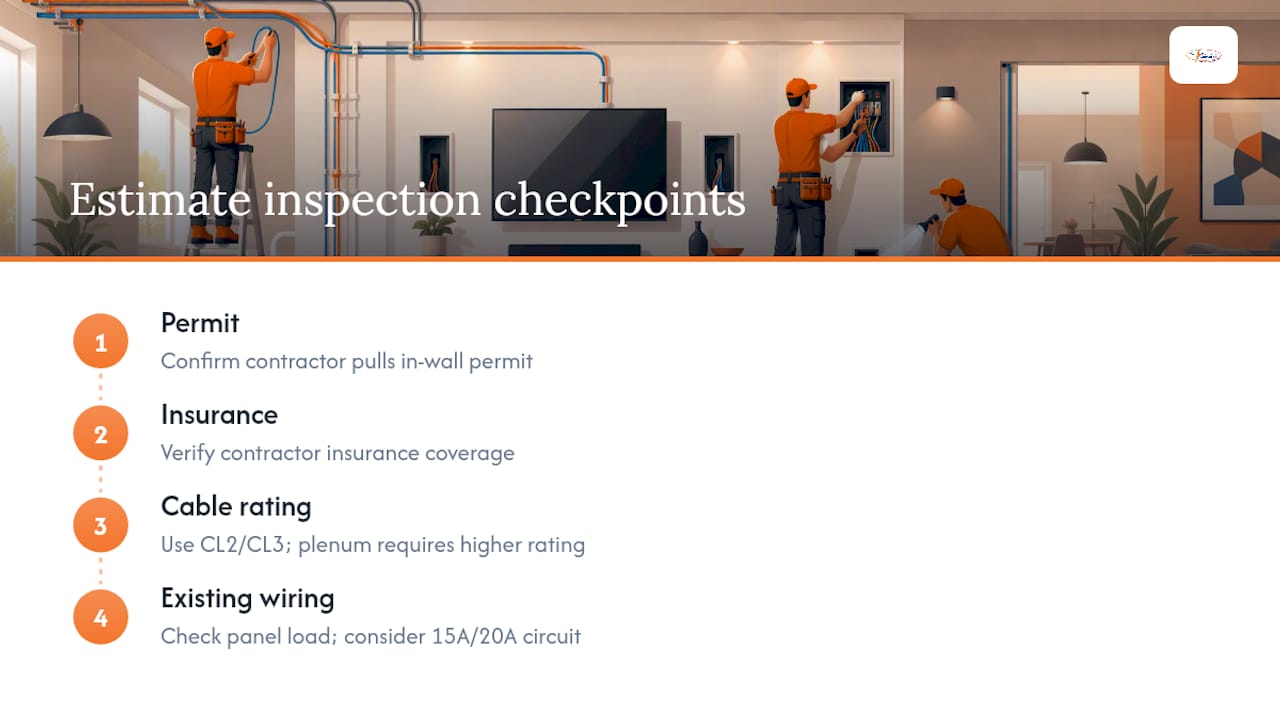
A written estimate should spell out permit responsibility, insurance coverage, and exactly which cable ratings will be used. If a bid doesn’t mention any of that, ask before you sign. Confirming your home’s existing wiring is safe before adding new circuits also saves headaches down the line.
How to Prepare and What to Ask Before You Hire
A little prep work before the technician arrives keeps the visit efficient and the quote accurate.
- Measure the TV and check the manufacturer’s weight and mount specs.
- Identify your wall type (drywall over studs, plaster, brick, or masonry).
- List every device that needs to connect (streaming box, soundbar, gaming console).
- Clear the wall area and note where existing outlets and cables sit.
When you’re comparing quotes, ask these directly: proof of insurance, whether a permit is needed for your specific job, what cable rating they’ll use in-wall, what workmanship warranty applies, the expected timeline, and their cleanup policy.
Watch for red flags: no written quote, vague or evasive answers about insurance, or a contractor who waves off permit requirements that clearly apply. Those are signs to keep looking.
Why Tri-County Services Electric & Plumbing for This Job
Tri-County Services Electric & Plumbing has operated as a family-owned business in Northeast Ohio since 1975, and TV wiring projects get the same safety inspection standard as any electrical job on the books. Certified technicians assess the wall, plan the cable routing, and handle outlet or circuit work before a single bracket goes up.
The process runs assessment, written scope, rough-in, mount and conceal, then full equipment testing and cleanup before the crew leaves. Flexible scheduling means the work fits around your household instead of the other way around.
Ready to talk specifics? Call (440) 253-0332 or check out phone, data, TV, and speaker installation services for the full scope of what’s covered.
What Homeowners Get Wrong About TV Wiring
The biggest misconception is that TV wiring is a mounting problem. It’s an electrical and low-voltage planning problem that happens to end with a television on the wall. Homeowners fixate on bracket quality and cable management on the surface while ignoring what’s happening inside the cavity, which is exactly where the actual risk lives.
Conventional advice tends to treat cost as the deciding factor between a retailer service and an electrician. That’s backwards. The deciding factor should be scope: does this job open a wall, touch a circuit, or hold serious weight on framing you haven’t verified? If yes, the “cheaper” retailer quote usually isn’t cheaper once you account for the parts of the job it can’t legally or safely touch.
If there’s one thing to prioritize first, it’s asking about cable rating and permit responsibility before comparing prices. A contractor who can’t answer either question clearly hasn’t earned your business yet, regardless of how good the bid looks on paper.
— Lindsay Paramore
Get Your TV Wired Right the First Time
Skip the guesswork between a retailer’s basic mount and a full electrical job. Tri-County Services Electric & Plumbing handles the whole scope in one visit: TV mounting on any wall type, in-wall wiring with properly rated cable, outlet relocation, dedicated circuits, and surge protection for your AV gear.

Every job starts with a written estimate so you know the scope and cost before anything gets opened up, and every install gets a workmanship check before the crew leaves your home. If your project involves adding a circuit or moving power behind the wall, our electrical repair service page covers what that process looks like from start to finish. Larger installs sometimes mean coordinating with other trades too, similar to how HVAC installation projects require multiple specialists working in sequence.
Call (440) 253-0332 to schedule a site visit and get a written quote for your TV wiring project.
Sources
For technical background on cable ratings and low-voltage planning, see the whole house audio planning guide and Dolby’s home theater setup guide. Homeowners ready to book can visit Tri-County’s residential electrical services.
- 3 ways a proper home theater system outperforms any off-the-shelf setup
- Home theater setup (Dolby guide)
- Best Buy TV & home theater services
FAQ
How do you get TV wires through walls?
A technician cuts low-voltage access points behind the TV and near the outlet, then fishes CL2 or CL3 rated cable through the cavity using a fish rod or vacuum-assisted line, avoiding AC wiring runs along the way.
Do electricians fix wires?
Yes, electricians diagnose and repair damaged, outdated, or unsafe wiring, and that same skill set applies to running new low-voltage or power lines for a TV installation.
How much does electrical wiring installation cost?
Costs depend heavily on scope: a basic mount runs 1 to 2 hours of labor, while in-wall power or outlet relocation adds significant time and materials, so a written estimate from a visit is the only reliable number.
What do you call a person who does electrical wiring?
The general term is an electrician, and for TV-specific work, some homeowners search for a “TV wiring electrician” to describe the same professional handling in-wall cable and power for a home theater setup.
Can I just use a retailer’s TV mounting service instead?
Retailer services work fine for basic surface mounts and simple concealment, but anything involving in-wall power, outlet moves, or heavy mounts on unverified framing needs a professional electrician for safety and code compliance.