

For most homeowners, a combo unit or a standalone 12V battery backup paired with a deep-cycle battery is the best way to protect a basement during a power outage. If you need longer run time or higher pumping capacity, a water-powered backup or an inverter/generator system fills that gap. Consumer Reports tests backup units with a 12-volt, 75 Ah deep-cycle battery and typically measures 6 to 8 hours of intermittent runtime on a fresh charge.
- Combo units replace your primary pump and add a backup in one install, the simplest for aging pumps.
- Standalone battery backups cost less upfront but need separate piping and a battery purchase.
- Water-powered or inverter systems trade higher complexity for unlimited or extended runtime.
Tri-County Services Electric & Plumbing sees the combo route work best for homes with an already-aging primary pump and a straightforward pit.
Key Takeaways
A reliable sump pump battery backup depends on matching battery capacity to measured pump amp draw, not marketing runtime claims, and on professional installation for the electrical and plumbing work involved.
| Point | Details |
|---|---|
| Combo units fit most upgrades | Best when replacing an aging primary pump since backup comes built in. |
| Expect 6 to 8 hours from a fresh battery | A 12V, 75Ah deep-cycle battery under intermittent duty is the standard test benchmark. |
| Budget accordingly for most installs | Adding a backup or choosing a combo unit typically falls in this professional-installed range. |
| Test twice a year | Run a full discharge cycle to confirm the float switch, pump, and alarm all work together. |
| Tri-County Services Electric & Plumbing handles the full install | Evaluates pit compatibility, sizes the battery, and wires the dedicated circuit correctly. |
Where to Read Manufacturer Specs and Independent Tests
- Consumer Reports publishes independently measured amp-draw and runtime data.
- Zoeller’s product page lists manufacturer specs and monitoring features.
- Angi and U.S. Waterproofing break down realistic cost ranges.
Trust measured amp-draw figures over GPH claims printed on retail packaging.
Table of Contents
- Which Type of Backup Sump Pump Is Right for You?
- How Does a Battery Backup System Actually Work?
- How Do You Choose the Right Backup System?
- How Long Will a Battery Backup Run Your Sump Pump?
- What Does a Battery Backup Sump Pump Cost?
- How Do You Maintain and Test a Backup Sump Pump?
- Which Battery Backup Models Do Homeowners Commonly Buy?
- When Should You Call a Professional for Backup Sump Pump Installation?
- How Tri-County Services Electric & Plumbing Can Help
- Sources
- FAQ
Which Type of Backup Sump Pump Is Right for You?
Combo units bundle a new primary pump with a built-in battery backup in a single housing. They’re the easiest upgrade path when your existing pump is already old, since you’re replacing it anyway and skipping a second install.
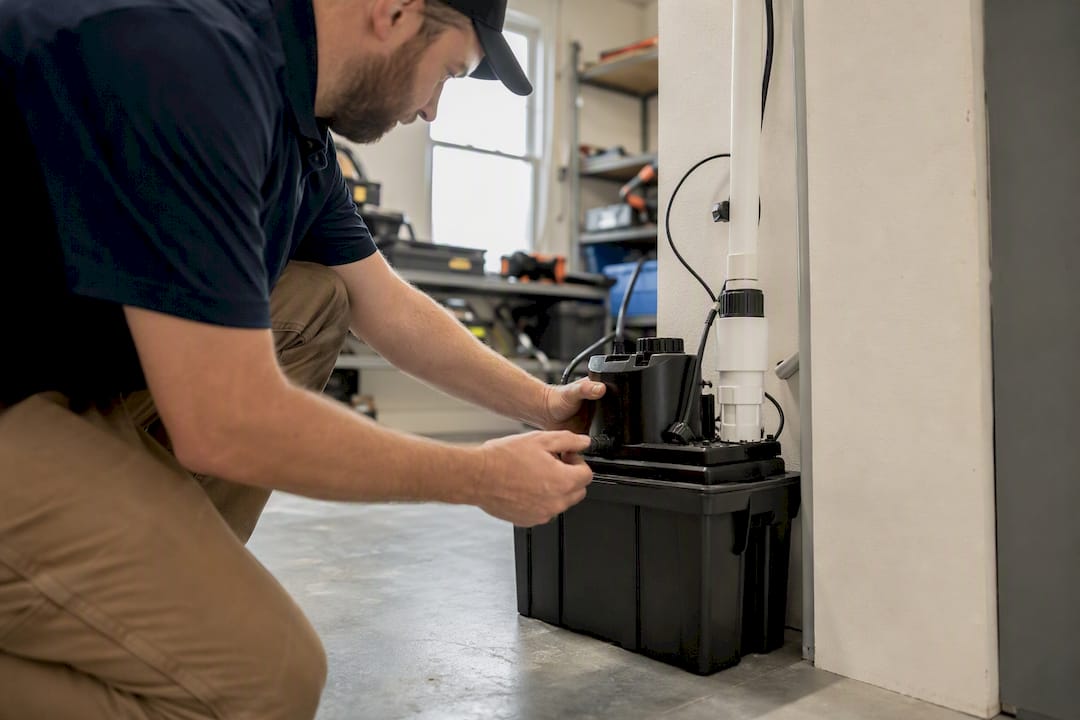
Standalone battery backups keep your current primary pump in place and add a separate backup pump, controller, and battery. Upfront hardware costs run lower, but you’ll need extra discharge piping and a battery sold separately in most cases, as with Zoeller’s AquaNot Fit 508.
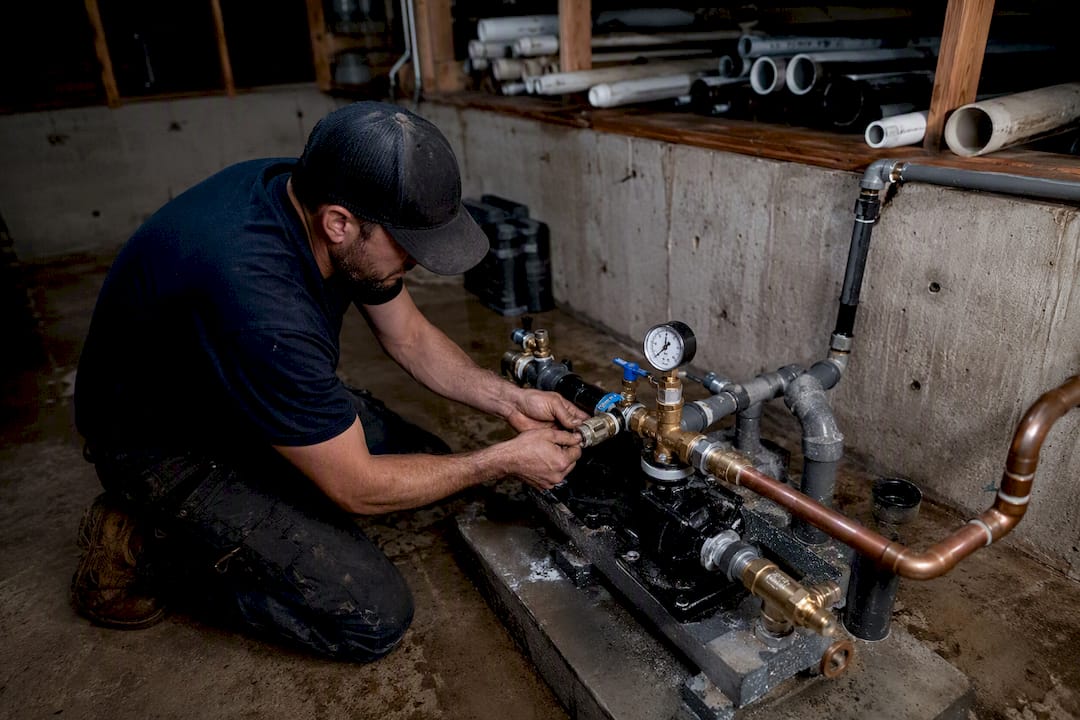
Water-powered backups tap your municipal water line to drive a venturi pump. Runtime is effectively unlimited and some brands claim 20-plus years of service life, but they need reliable city water pressure and more complex plumbing, making them a poor fit for well-water homes.
Inverter and generator-class systems, including 2000W-class kits, can power your primary pump directly and automatically transfer to battery when AC fails. They cost more and demand real electrical planning, but they handle higher loads than a typical 12V backup pump.
| System Type | Runtime | Cost | Installation |
|---|---|---|---|
| Combo (primary + backup) | 6-8 hours intermittent | Moderate | Simple, one install |
| Standalone battery backup | 6-8 hours intermittent | Lower hardware cost | Extra piping needed |
| Water-powered | Unlimited | Higher | Complex plumbing |
| Inverter/generator | Hours to days | Higher | Electrical work required |
How Does a Battery Backup System Actually Work?
A battery backup relies on a handful of parts working together: a 12V DC pump, a deep-cycle battery rated in amp-hours, a charger and float controller, and a dedicated discharge line with its own check valve.
When your primary pump loses power or can’t keep pace with rising water, a second float switch triggers the backup automatically. Some controllers, like Zoeller’s Z Control, self-test regularly and send alerts for power loss, high water, or battery faults.
Real-world failures usually trace back to a handful of causes:
- A battery that’s lost capacity with age and can’t hold a charge.
- A float switch stuck against the pit wall or fouled with debris.
- An air-locked pump body that spins without moving water.
- A failed or missing check valve letting discharged water flow back down.
- Wiring run to a shared circuit instead of a dedicated outlet.
How Do You Choose the Right Backup System?
Start by sizing up your actual risk before shopping for hardware.
- Estimate your basement’s flood risk and how many gallons per hour your primary pump handles under normal conditions.
- Think through your area’s typical outage length. Ten minutes is different from ten hours.
- Check whether your sump pit and utility area have room for a battery box and controller.
- Decide if you want monitoring or alarm features that text or call you during an outage.
- Set a real budget that includes the battery, not just the pump.
When you talk to a professional, bring a specific list of questions:
- What’s my panel’s spare capacity, and do I need a dedicated circuit?
- What battery amp-hour rating do you recommend for my pump’s amp draw?
- How will discharge piping route, and is freeze protection needed?
- Are permits required in my area, and what’s covered under warranty?
- Would a combo unit or a separate backup fit my existing pit better?
Watch for red flags in any quote: no mention of a check valve, a vague or undersized battery recommendation, no dedicated outlet or GFCI protection, and runtime promises with no amp-draw data behind them.
Pro Tip: Ask for the measured amp draw of the specific pump model, not just the GPH rating on the box. Two pumps rated at the same gallons-per-hour can drain a battery at very different rates.
How Long Will a Battery Backup Run Your Sump Pump?
The math behind runtime is simpler than it looks. Battery amp-hours multiplied by voltage, divided by the pump’s amp draw, gives you a rough hour estimate, adjusted downward for usable depth of discharge and any inverter losses.
Here’s a worked example using the same setup Consumer Reports uses for testing:
- Take a 12V, 75Ah deep-cycle battery, the standard test unit Consumer Reports uses.
- Divide the battery’s watt-hour capacity by the pump’s measured amp draw under load.
- Factor in that most deep-cycle batteries are only safely discharged to about 50% of rated capacity for longevity.
- Land on an estimate. Consumer Reports found this setup delivers roughly 6 to 8 hours of intermittent cycling on a fresh battery.
A fresh 75Ah battery under intermittent duty typically buys you 6 to 8 hours of protection, but that number drops as the battery ages.
AGM batteries hold up better than flooded lead-acid types under vibration and heat, while lithium units cost more but last longer and hold voltage more consistently as they discharge. Expect to replace a standard deep-cycle battery every 3 years or so, with AGM and lithium options stretching closer to the higher end of that range depending on use.
What Does a Battery Backup Sump Pump Cost?
Budget varies widely depending on whether you’re adding a backup to an existing pump or replacing everything at once.
Parts that push cost up include the deep-cycle battery itself, discharge piping, a check valve, a dedicated outlet with GFCI protection, and any monitoring controller.
- A dedicated circuit and outlet aren’t optional extras. They’re often required for the system to work safely and reliably.
- Big-box pump kits frequently exclude the battery, extra piping, and a proper check valve.
- Labor on backup systems runs higher than a basic pump swap because of the added wiring and plumbing.
Anyone comfortable with both plumbing and electrical work might handle a straightforward battery-backup swap. Most homeowners are better served calling a professional electrician and plumber, since incorrect wiring or a missed dedicated circuit turns a backup system into a liability rather than protection.
How Do You Maintain and Test a Backup Sump Pump?
A backup system that’s never tested is a backup system you can’t trust.
- Do a quick visual check monthly. Look for corrosion, loose connections, or debris near the float.
- Check battery voltage every quarter with a simple meter.
- Run a full discharge test twice a year: unplug the primary pump and let the backup cycle on its own.
- Replace deep-cycle or AGM batteries every 3 years or so, following manufacturer guidance for lithium units.
Watch for warning signs between scheduled checks: shorter-than-expected runtime, a battery that feels warm or looks swollen, or slow recharging after a test. Swap the check valve whenever you replace the pump itself, since a worn valve lets water siphon back into the pit.
Which Battery Backup Models Do Homeowners Commonly Buy?
A few names come up again and again when homeowners start comparing options, each representing a different category rather than a single “best” pick.
- Wayne WSS30VN is a combo unit built for homeowners replacing an aging primary pump who want backup protection without a second install.
- Zoeller STBC101 is a battery-powered backup pump aimed at homeowners keeping their existing primary pump in place.
- Superior Pump 92900 is a budget-friendly backup pump often chosen for smaller pits with modest pumping needs.
- PumpSpy’s 2000W-class backup power system functions more like an inverter setup, built for homes wanting higher capacity and longer runtime than a standard 12V unit offers.
- Generic inverter kits, like the URJWAN-style backup system, offer automatic transfer to battery power and can run a primary pump directly during longer outages.
Pro Tip: Many of these systems sell the battery separately. Factor that cost in before comparing sticker prices, and ask for the pump’s measured amp draw rather than trusting the GPH number on the box.
When Should You Call a Professional for Backup Sump Pump Installation?
Certain jobs call for professional hands, not because the parts are exotic, but because the stakes of getting it wrong are high.
- Wiring a dedicated circuit and GFCI outlet for the backup system.
- Routing discharge piping correctly, including freeze protection where lines run outside.
- Wiring the float switch and setting up the controller so it triggers reliably.
- Load testing the system and measuring actual amp draw against manufacturer claims.
- Handling permits or code requirements where they apply.
Electrical work near water, sealed battery handling, and proper grounding all carry real safety and liability weight. Tri-County Services Electric & Plumbing can evaluate your pump and pit setup and put together a bundled installation and battery replacement plan for homes across the service area.
Pro Tip: A warranty on a backup system usually requires proof of professional installation. A DIY wiring mistake can void coverage even if the pump itself never fails.
Balancing Cost and Reliability for Homeowners
Every homeowner weighing this decision faces the same tension: a combo unit or high-capacity deep-cycle battery costs more today, while a water-powered or generator setup asks for more complexity upfront. Unless you’re genuinely comfortable with both plumbing and electrical work, professional installation is the safer bet for a system you’re counting on during the worst possible moment.
How Tri-County Services Electric & Plumbing Can Help
Tri-County Services Electric & Plumbing gives Northeast Ohio homeowners something most backup pump retailers can’t: a team that handles the plumbing, the electrical, and the battery sizing under one roof, instead of leaving you to coordinate a pump installer and a separate electrician.

Our technicians evaluate your existing sump pit and primary pump, recommend the backup type that actually fits your risk and budget, and size the battery correctly instead of guessing. That includes installing a dedicated circuit and GFCI protection, routing discharge piping with freeze protection, and setting up a maintenance and testing schedule so you’re not finding out your battery is dead during a storm. If your panel needs more capacity to support a backup system or a future whole-home generator, we can handle that upgrade too. For homeowners dealing with recurring basement moisture beyond pump capacity, a flood cleanup specialist can help address standing water after the fact. Schedule an inspection or request a quote through our residential electrical services page and get a real assessment of what your basement needs before the next outage hits.
Sources
- Best Sump Pump Backup Systems – Consumer Reports
- Sump pump battery backup cost – Angi
- Water-Powered vs Battery Backup Sump Pumps • Which Is Best?
FAQ
Are Sump Pump Battery Backups Worth It?
Yes, for most homes at real flood risk. A backup system covers the exact scenario a primary pump can’t handle: a power outage during a storm, when flooding risk is highest.
Can I Add a Battery Backup to My Existing Sump Pump?
Yes, standalone battery backup pumps are designed to work alongside an existing primary pump, though they need their own discharge piping, check valve, and dedicated circuit.
How Long Will a Battery Backup Run a Sump Pump?
A fresh 12V, 75Ah deep-cycle battery typically delivers 6 to 8 hours of intermittent runtime, dropping as the battery ages.
What Is the Best Backup Battery for a Sump Pump?
AGM and lithium deep-cycle batteries generally outlast standard flooded lead-acid batteries and hold voltage more consistently, though they cost more upfront and still need replacement every few years.