

If your home has original galvanized plumbing, replacement is the right call for most homeowners, not a maybe. The core reason is water quality. EPA guidance confirms that galvanized pipes can trap lead from older lead service lines and release it into your tap water over time, often long after the original lead source has been removed. On top of that, corroded galvanized pipes routinely cause low water pressure, brown or metallic-tasting water, and leaks that get worse with every passing season.
Your two immediate steps:
- Test your water for lead through an EPA-recognized lab or your water utility’s free testing program before you drink or cook with tap water.
- Schedule a professional inspection with Tri-County Services Electric & Plumbing to document your pipe locations, assess corrosion severity, and get a written quote before committing to any work.
Key Takeaways
Replacing galvanized pipes is a health and safety decision first, a cost decision second, and the right call for most homes with original pre-1970 plumbing.
| Point | Details |
|---|---|
| Test water before anything else | Use an EPA-recognized lab or your utility’s free program; collect a first-draw sample after six hours of no use. |
| Lead risk is real and hidden | Galvanized pipes can trap and release lead from former lead service lines even after those lines are replaced. |
| Full repipe beats spot repairs | Partial fixes create galvanic corrosion at mixed-metal joints and leave the rest of the corroded system in place. |
| PEX vs copper depends on your priorities | PEX costs less and installs faster; copper lasts longer and adds resale value. Both are lead-free. |
| Tri-County Services Electric & Plumbing | Provides documented inspections, written quotes, permit handling, and pre/post water testing for Northeast Ohio homeowners. |
Table of Contents
- How can you tell if your home has galvanized pipes?
- What problems do corroded galvanized pipes actually cause?
- What does it cost to replace galvanized plumbing?
- PEX, copper, or CPVC: which replacement material is right for you?
- What happens during a galvanized pipe replacement?
- Why you should call a professional before attempting any DIY repipe
- How to test your water for lead and what to do in the meantime
- Project timelines, warranties, and what insurance typically covers
- What EPA guidance and utility practice say about galvanized pipes and lead
- A note from our team at Tri-County Services Electric & Plumbing
- Ready to schedule a repipe inspection in Northeast Ohio?
- Sources
- FAQ
How can you tell if your home has galvanized pipes?
Galvanized pipes were the standard choice for residential plumbing from roughly the 1880s through the 1960s. If your home was built before 1970 and has never been repiped, there is a reasonable chance the original plumbing is still in place.
Where to look first:
- The main water service line entering the house through the foundation or basement floor
- Exposed pipes in the basement, crawl space, or utility room
- Pipes running to older bathrooms, laundry rooms, or the kitchen
- Outdoor hose bibs and irrigation connections
What galvanized pipe looks like:
- Dull gray or silver exterior, often with visible rust streaks or white mineral deposits
- Threaded joints at every connection point (copper sweats; PEX uses crimp rings or push-fit fittings)
- Flaking rust or pitting on the outer surface, especially near joints
- A magnet sticks to it. Copper and PEX are non-magnetic, so a simple refrigerator magnet is a fast field test.
Functional warning signs you can check yourself:
- Brown or rust-colored water, especially after the water has been sitting unused overnight
- Metallic taste or smell at the tap
- Noticeably low pressure at multiple fixtures simultaneously
- Rust stains in sinks, tubs, or on laundry
When you find galvanized pipes, photograph them, note their locations, and bring that documentation to your professional inspection. A plumbing leak detection appointment can turn those photos into a full pipe map.
What problems do corroded galvanized pipes actually cause?
Galvanized pipes are steel pipes coated with zinc. The zinc layer was designed to prevent rust, but it breaks down over decades. Once the zinc is gone, the steel corrodes from the inside out, and that corrosion creates two categories of problems: performance failures and health risks.
Performance failures you will notice:
- Progressively lower water pressure as rust buildup narrows the pipe’s interior diameter
- Discolored water ranging from light tan to dark brown, particularly after any disturbance to the system
- Recurring leaks at joints and fittings as corrosion eats through the pipe wall
- Brown stains in toilets, sinks, and on laundry that no amount of cleaning removes
The health risk most homeowners miss:
Rust and mineral buildup are visible problems. Lead is not. According to the EPA, galvanized pipes that were once connected to lead service lines can adsorb lead particles into their rust scale. That lead can then be released into your drinking water, sometimes years after the lead service line itself has been replaced. There is no safe level of lead exposure for children, and chronic low-level exposure in adults is linked to cardiovascular and kidney effects.
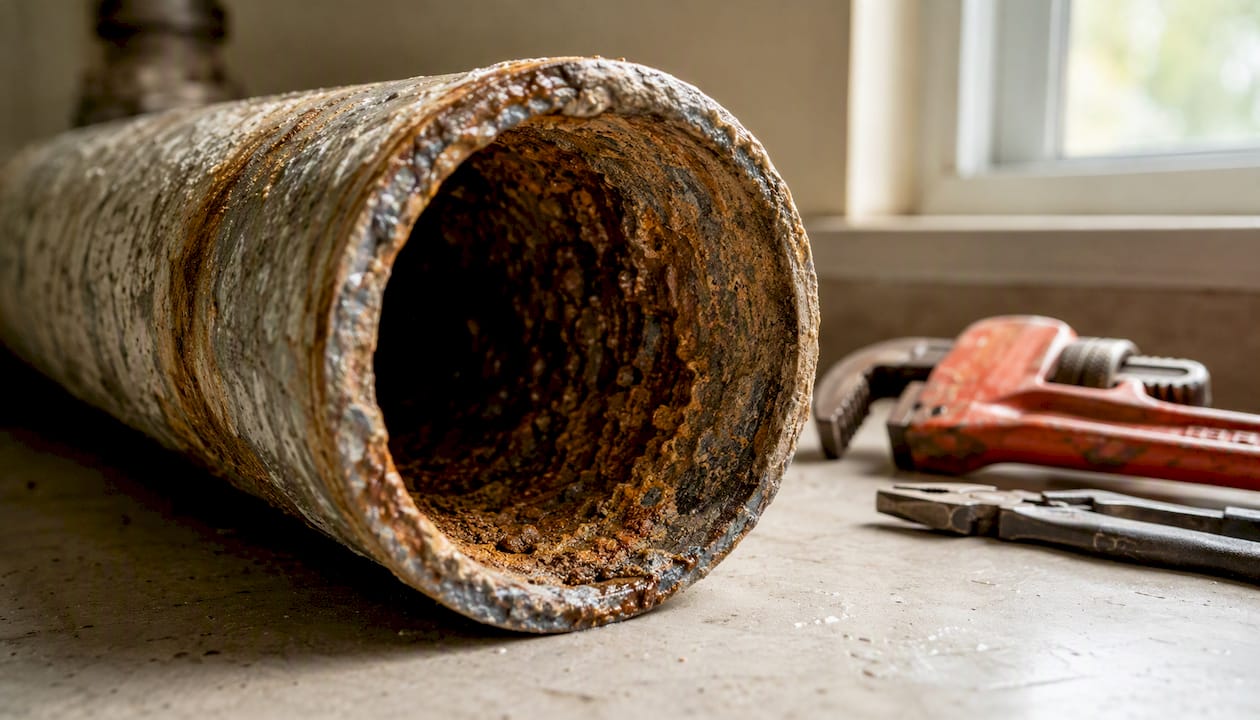
Galvanized pipes typically last 40–70 years, and water chemistry can shorten that range significantly. A home with original 1955 plumbing is already past the upper end of that lifespan.
What does it cost to replace galvanized plumbing?
A whole-house repipe commonly runs $5,000–$30,000, with most single-family homes landing somewhere in the middle of that range. The spread is wide because several variables push the number up or down significantly.
| Cost Factor | Lower End | Higher End |
|---|---|---|
| Home size | Small homes | Large homes |
| Pipe accessibility | Open basement, exposed pipes | Finished walls, tile, concrete slab |
| Material choice | PEX throughout | Copper throughout |
| Number of fixtures | 1–2 bathrooms | 3+ bathrooms, multiple kitchens |
| Access and patching | Minimal drywall cuts | Extensive tile or plaster repair |
| Local labor rates | Rural or lower-cost markets | High-cost metro areas |
What a complete quote should include:
- Materials (pipe type, fittings, valves)
- Labor for removal and installation
- Access work (cutting drywall, tile, or concrete)
- Patching and finish restoration
- Permit fees
- Pressure testing and final water flush
A quote missing any of those line items is incomplete. Access and patching costs are where many low bids quietly disappear, and you end up paying for them separately at the end.
On partial repairs: Replacing only the worst sections of galvanized plumbing is rarely a sound investment. The rest of the system is corroding at roughly the same rate, and mixing new copper or PEX with old galvanized steel without proper dielectric unions creates galvanic corrosion that accelerates failure at every new connection. Spot repairs buy time, not solutions.
PEX, copper, or CPVC: which replacement material is right for you?
PEX and copper are both significantly more reliable than galvanized steel, but they serve different priorities.
Choose PEX when:
- Budget is the primary concern
- The home is in a freeze-prone climate (PEX expands rather than bursting)
- The repipe needs to be completed quickly with minimal wall damage
- The home’s water chemistry is aggressive or acidic
Choose copper when:
- Long-term durability and resale value matter more than upfront cost
- Local water chemistry is neutral and compatible with copper
- The project is part of a larger renovation where walls are already open
One rule that applies to both: if any old galvanized sections remain in the system, use dielectric unions at every point where new pipe meets old metal. Skipping this step creates galvanic corrosion that will fail faster than the original galvanized pipe did.
What happens during a galvanized pipe replacement?
Most whole-house repipes follow a predictable sequence. Knowing it in advance helps you plan for water shutoffs and temporary disruption.
- Pre-inspection and pipe mapping. A professional walks the home, photographs every accessible pipe section, and documents the system layout. This becomes the basis for the written quote and the permit application.
- Permits and code review. Your contractor pulls the necessary permits and confirms local code requirements for materials and installation methods. This step protects you if you sell the home or file an insurance claim later.
- Water shutoff. The main supply is shut off at the start of each work day. For most homes, water is off for 4–8 hours per day during the active repipe phase.
- Old pipe removal or bypass. Depending on access, the old galvanized lines are either removed entirely or capped and bypassed. Full removal is cleaner and eliminates any residual lead-capture risk.
- New pipe routing. PEX or copper is run through walls, ceilings, and floors. PEX’s flexibility means fewer wall cuts; copper requires more access points for soldering.
- Pressure testing. Before walls are closed, the new system is pressure-tested to confirm there are no leaks at any fitting or connection.
- Flushing. The system is flushed thoroughly to clear any debris from installation. A post-repipe water test confirms lead and sediment levels are within safe limits.
- Wall patching and cleanup. Drywall, tile, or plaster is restored. A reputable contractor leaves the home in the same cosmetic condition it was in before work began.
What to prepare in advance:
- Fill several large containers or a bathtub with water for drinking and toilet flushing during shutoff hours
- Arrange for pets to be out of the work area
- Clear access to walls, under-sink cabinets, and the basement or crawl space
Why you should call a professional before attempting any DIY repipe
Repiping a house is not a weekend project. The risks of getting it wrong go beyond a leaky fitting.
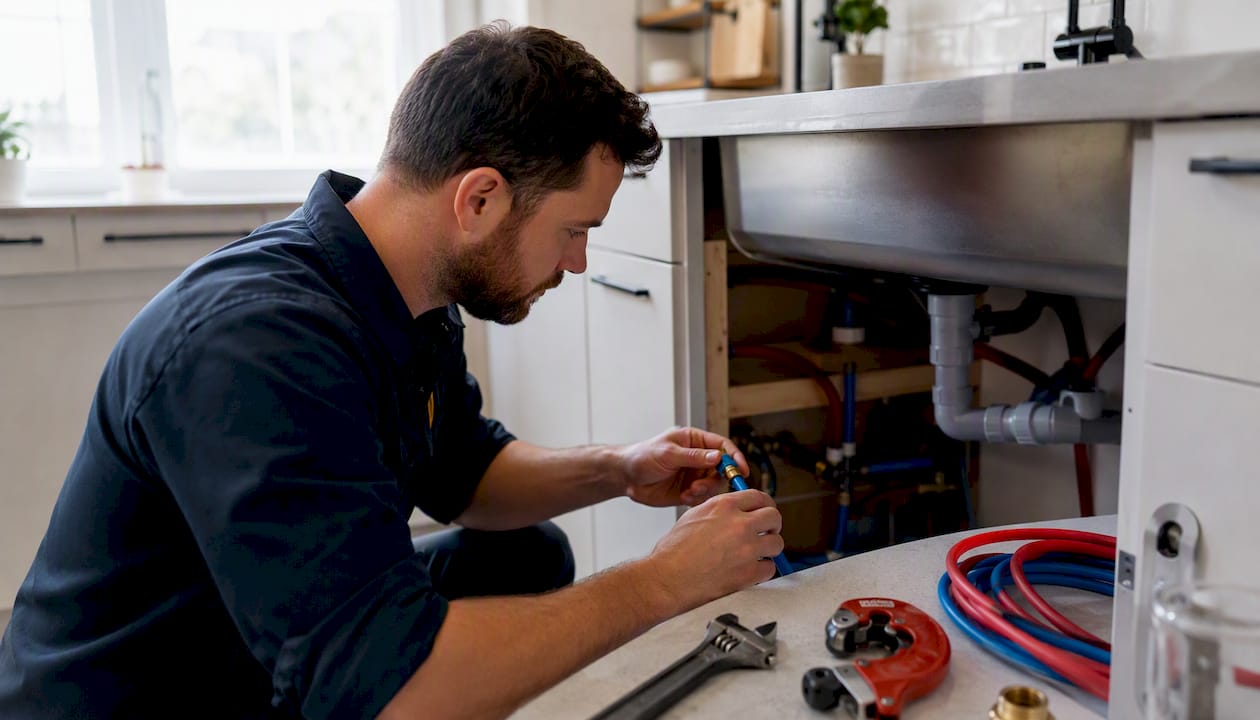
Galvanized plumbing is often connected to the main water service line, which requires permits and inspections in most jurisdictions. Installing new pipe without a permit can void your homeowner’s insurance, create problems at resale, and leave you personally liable if a failure causes water damage. Beyond permits, a professional will spot hidden damage, assess whether the service line itself needs replacement, and identify any lead service line connections that affect your water-testing strategy.
Questions to ask every contractor before signing anything:
- How do you assess the full extent of corrosion before quoting?
- What material do you recommend for this home, and why?
- Does the quote include a photographed pipe map and written scope?
- Who pulls the permits, and are they included in the price?
- Do you test water before and after the repipe?
- What workmanship warranty do you offer, and is it in writing?
- How do you handle access and patching, and is that included in the quote?
- What is the realistic timeline from start to finished water test?
Red flags on any quote:
- Vague scope (“replace pipes as needed”) with no line-item breakdown
- No mention of permits
- No post-repipe water testing or pressure test
- No written warranty
- Access and patching listed as “extra” with no estimate
Pro Tip: Request a photographed pipe map and a line-item cost breakdown before you sign. Any professional willing to do the work correctly will have no problem providing both. If a contractor resists, that is your answer.
How to test your water for lead and what to do in the meantime
Water testing is not optional when galvanized pipes are involved. It is the only way to know whether lead is actually present at your tap, and it gives you a documented baseline for comparison after the repipe.
When to test:
- As soon as you notice signs of corrosion (brown water, low pressure, metallic taste)
- Before any repipe work begins, to document pre-replacement conditions
- After the repipe is complete, to confirm the problem is resolved
- After any plumbing work that disturbs the system, including repairs or utility work on the street
How to test:
- Contact your water utility. Many offer free lead testing kits or will send a technician.
- Order a test kit from an EPA-recognized laboratory. The EPA maintains a list of certified labs by state.
- Follow the first-draw sampling protocol: collect water that has been sitting in the pipes for at least six hours without flushing, typically first thing in the morning.
Short-term steps while you wait for results or schedule a repipe:
- Flush cold water taps for 30–60 seconds before using water for drinking or cooking, especially after the water has been sitting overnight
- Use a point-of-use filter certified to NSF/ANSI Standard 53 or 58 for lead reduction; not all filters remove lead, so the certification matters
- Use bottled water for infant formula, drinking, and cooking until you have a clean test result
Flushing and filtering reduce exposure but do not eliminate the source. If your test results show elevated lead, replacement is the permanent fix. No filter maintenance schedule substitutes for removing the pipe.
Project timelines, warranties, and what insurance typically covers
Typical timeline from first call to finished repipe:
- Initial inspection and written quote: 1–3 days after contact
- Permit approval: varies by municipality, commonly 3–10 business days
- Active repipe work: 2–5 days for most single-family homes; larger homes or complex access situations can run longer
- Post-repipe water test results: 3–7 days depending on the lab
Warranties to request in writing:
- Workmanship warranty covering labor and installation defects (1–5 years is common; ask what is standard for the contractor)
- Manufacturer warranty on pipe materials (PEX and copper both carry long manufacturer warranties)
- Written confirmation that the work passed permit inspection
What homeowner’s insurance typically covers:
Most standard policies cover sudden and accidental water damage, such as a pipe that bursts without warning. Gradual corrosion and wear-and-tear, which is exactly what galvanized pipe failure looks like, is routinely excluded. That means the repipe itself is almost always an out-of-pocket expense.
Document the pipe condition with photos before work begins. If a section fails suddenly and causes water damage to flooring or walls, that damage claim is stronger with pre-existing documentation showing the pipe’s condition at the time of the event.
What EPA guidance and utility practice say about galvanized pipes and lead
The science behind galvanized pipe replacement is not just contractor advice. It is regulatory policy.
The EPA requires lead-free pipes, fittings, and fixtures for all drinking water systems under the Safe Drinking Water Act. Replacing old galvanized plumbing with modern lead-free materials directly eliminates one pathway for lead to enter your water.
East Bay Municipal Utility District (EBMUD) describes this as the GRR category, short for “galvanized requiring replacement.” Utilities that track GRR properties notify affected customers, remove lead pigtails connecting the service line to the main, and offer testing and remediation steps. If your utility has flagged your property as GRR, that notification is a strong signal to act immediately rather than monitor.
Practical steps if you receive a GRR notice or suspect your pipes were connected to a lead service line:
- Contact your water utility to confirm the status of your service line
- Request a free lead test through the utility’s program
- Schedule a professional inspection to assess the interior condition of your galvanized lines
- Follow the utility’s recommended timeline for replacement
A note from our team at Tri-County Services Electric & Plumbing
Older homes in Northeast Ohio are exactly where we do most of our repipe work. A house built in the 1950s or 1960s with original galvanized plumbing has been running on borrowed time for at least a decade, and the failure mode is rarely a single dramatic burst. It is a slow accumulation of low pressure, rust stains, and small leaks that homeowners patch one at a time until the system finally gives out in a way that causes real damage.
What we have learned from nearly 50 years of working in these homes is that the homeowners who fare best are the ones who get ahead of it. They test the water, get a documented inspection, and make a planned decision rather than an emergency one. A repipe on your schedule, with permits pulled and walls patched properly, costs less and causes less disruption than one done after a failure.
We document every pipe we touch, pull our own permits, and test water before and after every repipe. That is not a sales point. It is just how the work is supposed to be done.
Ready to schedule a repipe inspection in Northeast Ohio?
Tri-County Services Electric & Plumbing has been serving homeowners across Northeast Ohio since 1975. When you book a repipe inspection, you get a documented pipe map, a written line-item quote, material recommendations specific to your home, and a clear timeline from permit to finished water test.

The inspection is the right first move whether you are ready to repipe now or still deciding. You will leave with real information: what your pipes look like, what the water test shows, and what replacement would actually cost. No pressure, no vague estimates.
Our Cleveland-area plumbing team serves Independence, Parma, North Olmsted, and communities throughout the region. Call (440) 325-0136 or Tricountyelectricservice to book your inspection.
Sources
- Sources of lead in drinking water | EPA
- Lead information | East Bay Municipal Utility District (EBMUD)
This article is general information, not a substitute for advice from a qualified doctor. Consult a qualified healthcare professional about your own circumstances before acting on anything here.
FAQ
Is it worth replacing galvanized pipes?
Yes, for most homes with original galvanized plumbing. The combination of lead-capture risk, progressive pressure loss, and recurring leaks makes replacement more cost-effective than ongoing repairs, and it permanently removes the lead exposure pathway that corroded galvanized lines create.
Will insurance cover replacing galvanized pipes?
Typically no. Most homeowner’s policies cover sudden and accidental damage but exclude gradual corrosion and wear-and-tear. Document your pipe condition with photos before any work begins so you have a record if a sudden failure causes secondary water damage that may be covered.
Can you replace galvanized pipes yourself?
Repiping is not a practical DIY project for most homeowners. It requires permits in most jurisdictions, and unpermitted work can void your insurance and create problems at resale. A professional will also identify hidden damage, lead service line connections, and galvanic corrosion risks that are easy to miss without experience.
What should you replace galvanized pipes with?
PEX and copper are the two most common choices. PEX costs less, installs faster, and handles freezing better. Copper lasts longer and adds resale value. Both are lead-free and far more reliable than galvanized steel. Your professional can recommend the better fit based on your home’s water chemistry, budget, and how long you plan to stay in the house.