
Summer puts more demand on your home’s electrical system than any other time of year. Between air conditioners, fans, pool equipment, window AC units, and outdoor appliances, even a reliable system can feel the strain. An older or overloaded setup can lead to nuisance breaker trips, damaged equipment, or serious safety risks.
Use this summer electrical safety checklist to help protect your home, your family, and your peace of mind — and know when it’s time to call a professional electrician for help.
1. Schedule an Electrical Inspection if Your Panel Is Older
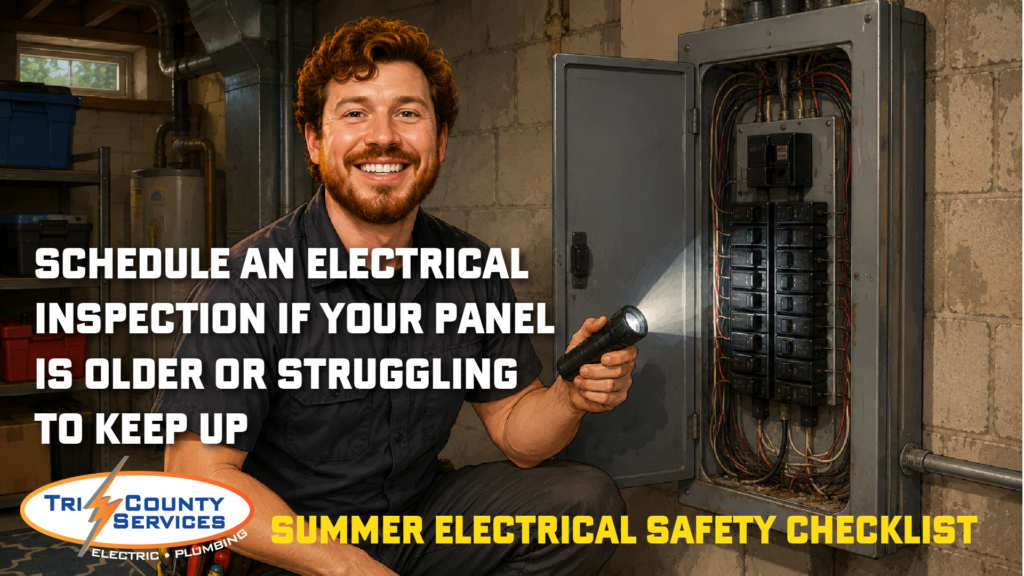
Your electrical panel is the control center of your home’s power. If it hasn’t been inspected in years or was installed decades ago, summer is a smart time to take a closer look.
You should consider a professional inspection if:
- Your panel is 20+ years old
- Breakers feel warm or loose
- You notice corrosion or rust
- Your home has added new appliances, HVAC equipment, or outdoor features
A seasonal inspection helps confirm your panel can safely handle increased summer electrical usage.
2. Watch for Flickering Lights or Tripped Breakers
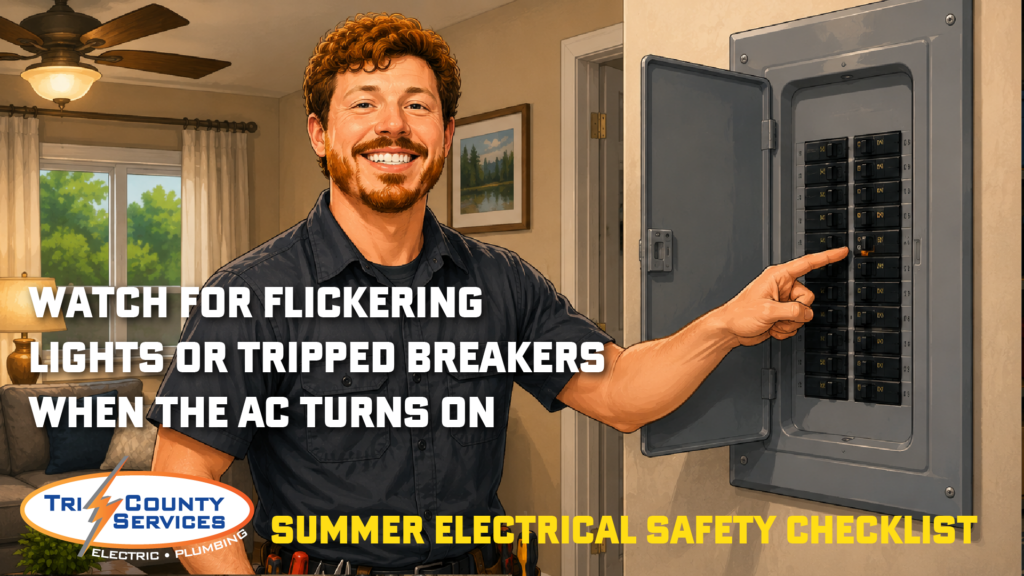
Flickering lights or frequently tripped breakers — especially when the AC turns on — are common summer warning signs. While an occasional trip might not seem serious, repeated issues often signal:
- Overloaded circuits
- Aging breakers
- Undersized electrical service
- Wiring issues behind walls
Addressing these problems early can help prevent equipment damage or larger electrical failures later.
3. Test GFCI Outlets in High‑Risk Areas
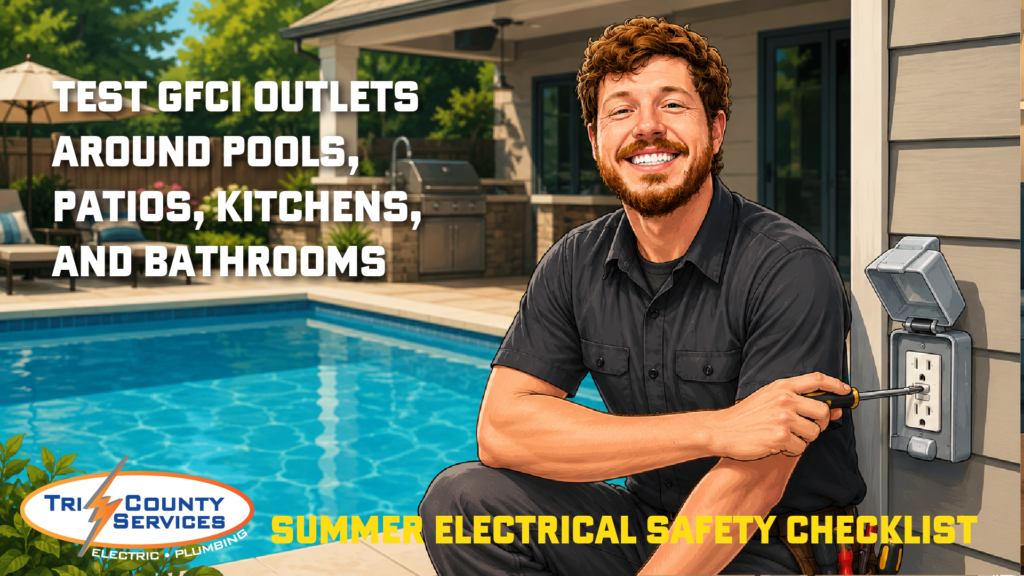
GFCI outlets are designed to shut off power quickly in areas where moisture is present — which makes them especially important during summer.
Be sure to test GFCI outlets regularly in:
- Pool and spa areas
- Outdoor patios and decks
- Kitchens
- Bathrooms
If an outlet fails to trip or reset properly, it may no longer provide protection and should be serviced or replaced.
4. Avoid Overloading Outlets with Fans and AC Units
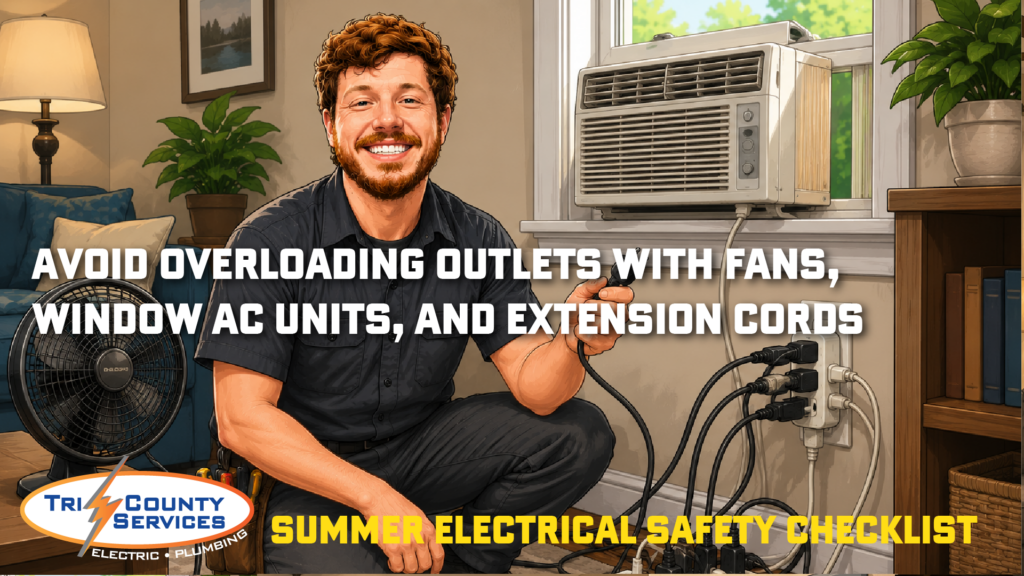
Window AC units, box fans, and portable cooling devices are lifesavers during heat waves — but they can strain your electrical system if not used correctly.
To reduce risk:
- Never plug window AC units into extension cords
- Avoid running multiple high‑wattage devices on one outlet
- Don’t rely on power strips for cooling equipment
- Use outlets designed to handle larger electrical loads
If your home doesn’t have enough outlets for safe summer use, adding dedicated circuits can make a big difference.
5. Use Extra Caution with Outdoor Electricity
Summer means more time outside — grilling, entertaining, and enjoying the yard. Make sure outdoor outlets are weather‑rated, properly covered, and ground‑fault protected.
Replacing cracked outlet covers, keeping cords dry, and unplugging equipment when not in use can help prevent shocks and power interruptions.
Take Electrical Warning Signs Seriously
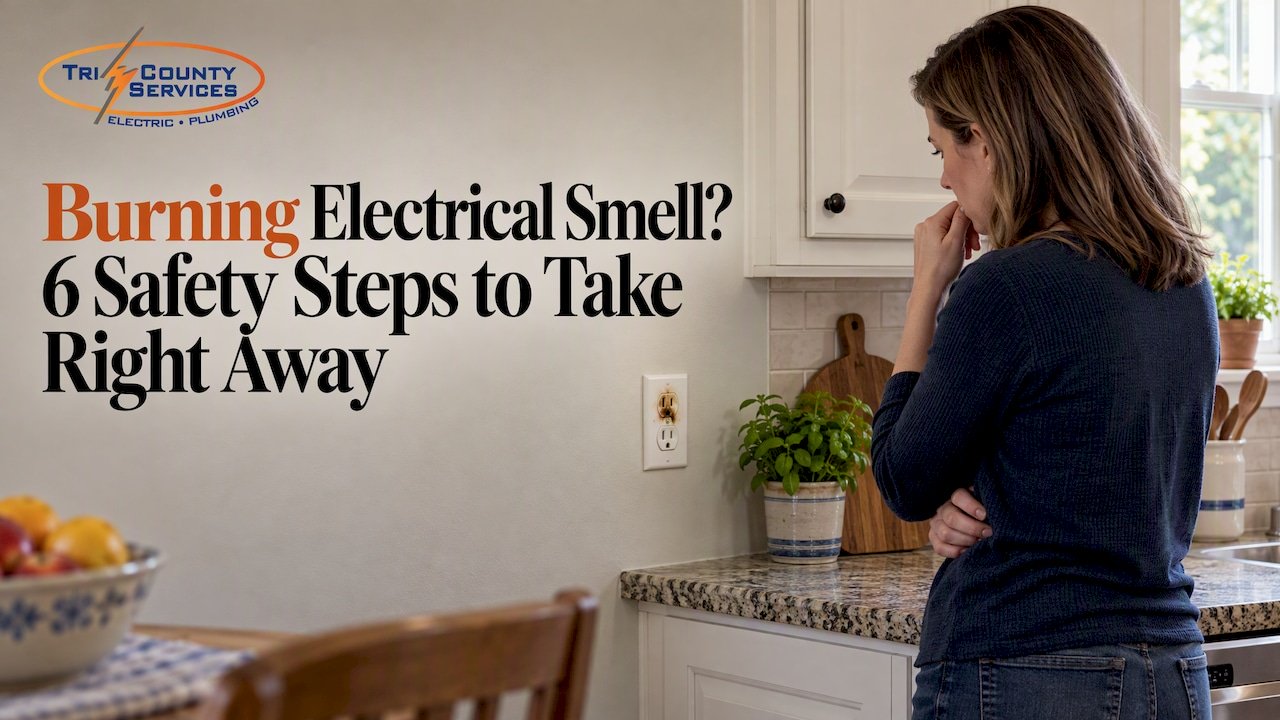
Unusual smells, buzzing sounds, sparking outlets, or breakers that won’t reset are never normal, especially during peak summer usage. These signs should always be addressed promptly to reduce the risk of electrical damage or fire.
Schedule Your Summer Electrical Safety Check Today
High summer demand can expose hidden electrical issues fast — and waiting often makes problems more expensive to fix.
✅ Protect your home
✅ Reduce unexpected outages
✅ Improve electrical reliability during extreme heat
Contact Tri‑County Services today to schedule an electrical inspection, panel evaluation, or safety upgrade. Our experienced team is ready to help keep your home cool, safe, and powered all summer long.
👉 Call today or book your summer electrical check online.